

Information only. This article explains what a treatment is and how it is usually carried out. It is not medical advice, not an offer and not a recommendation to have any procedure. Whether it suits you can only be decided by a licensed doctor after an examination.
PRP Hair Treatment is a non-surgical procedure for people experiencing hair thinning or early-stage hair loss. If you are considering this treatment in Istanbul, this guide explains what the procedure involves, what to expect during and after, typical risks and recovery, and important questions to discuss with a doctor before deciding.
PRP works by concentrating growth factors from your own blood and injecting them into thinning areas of the scalp. The procedure takes 30–60 minutes per session, with most treatment plans involving 3–4 sessions spaced several weeks apart. Results, when they occur, typically appear after several months of treatment.
Quick answer: PRP Hair Treatment involves drawing a small amount of blood, processing it to concentrate the platelets, and then injecting this platelet-rich plasma directly into the scalp. Platelets contain growth factors and proteins that naturally promote healing and tissue regeneration, and when concentrated and applied to hair follicles, these growth factors can help revitalize dormant follicles and encourage new hair growth. Results, healing and effects differ from person to person, and results are not permanent.
At a Glance
| Total time | 45–60 minutes per session; initial course typically 3–4 sessions over 3–4 months |
|---|---|
| Typical cost | ₺₺₺ |
What You Need Before You Start
- Consultation with a licensed dermatologist or doctor to assess your hair loss stage and medical suitability
- Blood test or health screening to ensure you are a candidate (important if you take blood-thinning medications)
- Commitment to attend 3–4 sessions spaced 4–6 weeks apart for initial treatment
- Written treatment plan from your doctor outlining the procedure, expectations, and follow-up care
- Plan for follow-up care with your home-country doctor after treatment
- No special fasting or preparation needed, though some doctors recommend hydration before the appointment
Compare Your Options
| Option | Duration | Price | Notes |
|---|---|---|---|
| Standard PRP (three or four sessions, 4–6 weeks apart) | 45–60 minutes per session; initial course 3–4 months total | Most common protocol used in clinical studies. Typically recommended for people with early to moderate hair thinning who still have active hair follicles in the treatment area. Each session is an outpatient visit. | |
| PRP with microneedling | 60–90 minutes per session | Some clinics combine PRP injections with microneedling, which creates tiny punctures in the scalp to enhance absorption. May increase recovery time and scalp sensitivity for a few days. Discuss with your doctor whether this variation may benefit your specific hair loss pattern. | |
| PRP as an adjunct to hair transplant surgery | Variable; part of a larger surgical procedure | PRP can be used during or after hair transplant surgery to enhance healing and transplant survival. This is a specialized application done by your transplant surgeon if relevant to your case. | |
| Maintenance sessions after initial course | 45–60 minutes per session, spaced 3–6 months apart | After completing the initial 3–4 sessions, some people choose periodic maintenance sessions to sustain results. Frequency varies depending on individual response and doctor recommendation. |
₺ budget · ₺₺ moderate · ₺₺₺ upscale · ₺₺₺₺ splurge. Price levels are estimates compared with typical prices for visitors.
Step-by-Step Instructions
Step 1: Consultation and scalp assessment
Meet with your doctor to discuss your hair loss pattern, medical history, and expectations. Your doctor will examine your scalp and explain the procedure, potential results, and realistic timelines. This is the time to disclose any medications, especially blood thinners, allergies, or conditions that might affect suitability. Ask the doctor to explain in writing what you can expect and arrange how follow-up care will be handled when you return home.
Tip: Bring a list of all medications you take, as blood thinners and some supplements can affect the procedure.
Step 2: Numbing the scalp
The dermatologist applies a topical numbing cream or local anesthetic early so it takes effect while your blood is processed. This usually takes 15–20 minutes to work. You may feel mild tingling as the numbing begins.
Step 3: Blood draw
A small vial (about 10 to 60 ml) is drawn from your arm, similar to a standard blood test. This is a quick, routine procedure. You will feel a brief pinch as the needle enters.
Step 4: Processing in centrifuge
The blood is placed in a specialized centrifuge that separates the platelets from other blood components. This process takes approximately 10 minutes and results in a concentrated platelet solution that contains significantly higher levels of growth factors than normal blood. You will wait while this happens; the clinic may apply more numbing cream during this time.
Tip: This is a good time to ask any final questions about the injection phase.
Step 5: Scalp injections
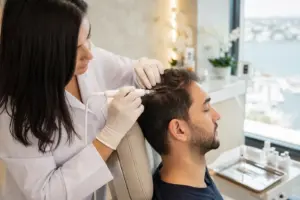
The clinician injects platelet-rich plasma in a grid of shallow injections across thinning areas of the scalp after numbing. The injections aim to reactivate dormant hair follicles, increase blood supply, and encourage thicker, healthier strands over time. The procedure itself usually takes 15–20 minutes. You may feel pressure and slight discomfort despite the numbing.
Tip: Let your doctor know immediately if you feel sharp pain; they can apply more numbing medication.
Step 6: Immediate aftercare
After receiving PRP treatment, a person can usually return to their regular activities without any limitations. You may experience a tender, tight scalp with small bumps for a day or two. Some people report mild headache. Avoid touching the treated area, washing your scalp vigorously, or using harsh hair products for 24–48 hours.
Tip: Wear loose, clean clothing and avoid hats for the first day if possible.
Step 7: Waiting for results and follow-up sessions
Hair growth is gradual, and changes in the hair cycle generally occur over months rather than days or weeks. Clinical studies commonly evaluate results after several months of treatment. Most treatment plans include 3–4 sessions spaced 4–6 weeks apart. Attend all scheduled sessions as planned, as consistent treatment is part of the protocol. After the initial course, maintenance sessions may be recommended.
Tip: Keep notes on any changes you notice and discuss them with your doctor at each follow-up session.
Common Mistakes to Avoid
- Assuming results will appear after one session. PRP works gradually; results, if they occur, typically appear after 3–4 months or longer of treatment. Visible change is judged in months, not weeks.
- Not attending all scheduled sessions. The treatment protocol is designed around spaced sessions, usually 3–4 sessions over several months. Skipping sessions reduces the likelihood of a measurable effect.
- Expecting PRP to work on completely bald areas. PRP works best on areas with thinning or weakened hair. If the scalp is already completely bald with no active follicles, PRP has limited ability to restore hair density.
- Failing to disclose blood-thinning medications or supplements. These can increase bleeding during injection and affect results. Tell your doctor about all medications before your first session.
- Starting treatment without a clear treatment plan in writing. Before beginning, ask your doctor to provide a written plan explaining the number of sessions, cost, what results to expect, and how follow-up care will be managed.
- Not arranging follow-up care in your home country. Because results develop over months and occasional touch-up sessions may be needed, plan how you will follow up with a doctor at home, whether for assessment or for future maintenance sessions.
Tickets, Payment and Booking
PRP Hair Treatment is performed at private dermatology clinics and aesthetic medicine centers in Istanbul. To book a session:
- Contact clinics directly by phone or through their website to schedule a consultation and treatment.
- Payment methods vary by clinic. Most accept Turkish lira cash, credit cards, and bank transfers. Check with your chosen clinic about payment options for foreign visitors and whether they accept international cards or require currency exchange.
- Advance booking is recommended, as popular clinics may have waiting times.
- Avoid clinics or practitioners offering unusually cheap prices or making exaggerated claims about permanent results or hair regrowth.
- Verify the clinic’s licence and the doctor’s qualifications through the official health authority of Turkey before treatment.
Good to know
- Hydration matters. Some doctors recommend drinking plenty of water for several days before and after treatment, as it supports your body's healing response and may improve blood processing during the procedure.
- Schedule your sessions in advance. Because PRP requires a planned series spaced 4–6 weeks apart, book all your initial sessions when you book the first one to secure your preferred dates and avoid gaps in your treatment schedule.
- Avoid blood thinners and NSAIDs before treatment. If you take aspirin, ibuprofen, or prescription blood thinners, ask your doctor when to pause them before your appointment, as they can increase bleeding during injection.
- Arrange aftercare at home in advance. PRP results develop over months. Before you leave Istanbul, ask your doctor which local practitioners or clinics near your home can monitor your progress and administer maintenance sessions if needed.
- Take photos before treatment. Document the treatment area before your first session so you and your doctor can compare changes objectively over the months of treatment.
Explore Nearby PRP Hair Treatment
Related guides
 Best Restaurants by Cuisine: Turkish, Ottoman, Mediterranean and More
Main image: AI-generated illustration. It may not show the place exactly as it looks.
 Best Shopping Districts by Style: Eight Istanbul Neighborhoods for Every Shopper
Main image: AI-generated illustration. It may not show the place exactly as it looks.
 How to Keep Your Valuables Safe in Istanbul: Practical Protection in Crowded Areas
Main image: AI-generated illustration. It may not show the place exactly as it looks.
 Beyoğlu and Galata Walk: Modern Istanbul from Taksim to the Tower
Main image: AI-generated illustration. It may not show the place exactly as it looks.
 Istanbul Budget Travel Essentials: Free Sights, Transport Cards and Pay-What-You-Wish Tours
Main image: AI-generated illustration. It may not show the place exactly as it looks.
More guides
 Mesotherapy Hair Treatment
Main image: AI-generated illustration. It may not show the place exactly as it looks.
 Hair Density Check
Main image: AI-generated illustration. It may not show the place exactly as it looks.
 PRP Therapy
Main image: AI-generated illustration. It may not show the place exactly as it looks.
Browse more: All Other · All Treatments
FAQ
How long does it take to see results from PRP Hair Treatment?
Most people see improvement in hair thickness and health after 3–6 months of regular sessions. Results develop gradually as the hair growth cycle changes. Some people see changes within this timeframe; others take longer.
How many PRP sessions will I need?
Most patients require 3 to 4 initial PRP sessions spaced 4 to 6 weeks apart to achieve visible density improvements. After the initial course, maintenance sessions may be recommended by your doctor.
Is PRP Hair Treatment permanent?
PRP is not a permanent hair loss solution. In most cases, the treatment stimulates the growth phase of the hair cycle, increasing hair count and thickness. Results are temporary and may require maintenance sessions.
Who is PRP Hair Treatment suitable for?
Research suggests that PRP may be most effective for patients in the early to moderate stages of hair loss, where follicles are still present but producing thinner, weaker hair. PRP works on existing follicles; it does not create new hair from completely bald skin.
Can I return to work the same day?
Yes. PRP is an outpatient procedure with no downtime. You can return to normal activities immediately after treatment, though your scalp may be tender or have small bumps for 1–2 days.
What should I avoid after PRP treatment?
Avoid touching or washing your scalp vigorously for 24–48 hours. Do not use harsh hair products or dye immediately after treatment. Avoid blood-thinning medications unless prescribed by your doctor. Ask your clinic for specific aftercare instructions.
Will I feel pain during the procedure?
The dermatologist applies a topical numbing cream or local anesthetic early so it takes effect while your blood is processed. You may feel pressure and slight discomfort during injections, but severe pain is unusual and should be reported immediately.
Can PRP be combined with other hair loss treatments?
Some doctors combine PRP with other treatments such as microneedling or recommend it alongside medications or hair transplant surgery. Discuss with your doctor whether combination therapy is appropriate for your specific hair loss.
Not legal advice. This is general information for visitors. Rules on visas, entry, registration, customs and similar matters change often and can depend on your nationality. Check the official source and, if in doubt, ask your embassy or a qualified adviser.
Before you decide anything
Risks and possible complications
- Scalp tenderness, tightness, and small bumps at injection sites, usually lasting 1–2 days
- Mild headache or scalp discomfort for a day or two after treatment
- Bleeding or bruising at injection sites, particularly if you take blood-thinning medications
- Infection at the injection site, though rare
- Temporary increase in hair shedding in some cases
- Allergic reaction to the local anesthetic used for numbing (rare)
- No permanent hair regrowth; results are not durable indefinitely without maintenance
Alternatives to talk about with a doctor
- Topical or oral medications prescribed by a doctor for hair loss (discuss with your doctor which may suit your case)
- Hair transplant surgery for more advanced hair loss where PRP is unlikely to be effective
- Combination therapy: using PRP alongside other treatments, as recommended by your doctor
- Lifestyle and nutrition changes to support overall hair health, discussed with your doctor
Questions to ask a licensed doctor
- Is PRP suitable for my stage and type of hair loss? (PRP works best for early to moderate thinning with active follicles still present.)
- What are realistic results for my specific hair loss pattern, and how long will they take to appear?
- How many sessions will I need, and what is the timeline?
- What is included in the treatment cost, and will I need maintenance sessions?
- Do you have written information about the procedure, risks, expected recovery, and aftercare?
- What medications should I avoid before and after treatment, and are there any supplements that could interfere?
- What is your clinic's licence status, and how can I verify your qualifications and registration?
- If I need follow-up care or maintenance sessions after I return home, how will that be arranged? Can I see a local doctor for this?
- What should I do if I experience severe pain, fever, bleeding, or signs of infection after treatment?
- This page is information. It is not medical advice and not a recommendation to have any treatment or to choose any clinic, doctor or country.
- Every medical procedure has risks, and results and healing differ from person to person. A licensed doctor who has examined you decides whether a treatment is suitable.
- Talk to a doctor in your home country before you decide, and plan follow-up care at home: problems can appear after you return.
- Check that the clinic and the doctor are licensed in the official register of the Türkiye Cumhuriyeti Sağlık Bakanlığı, and ask for a written treatment plan and a consent form you understand.
- After a procedure, get urgent medical help for severe pain, fever, heavy bleeding or breathing problems. In an emergency call the local emergency number.
Kontrendikasyonlar olabilir. Bir uzmana danışmak gerekir.

Take this guide with you
Get a free PDF of this guide to print or read offline: key facts, tips and a map link on a few clean pages.
Report an issue on this page
How we research and update our guides
About this page: AI assistance and accuracy
This page was prepared with the help of AI and checked by automatic rules. It is general information only, not medical advice and not a recommendation to have any treatment or to choose any clinic. Mistakes can still happen and details can change without notice. Please check important details with the official source and talk to a licensed doctor before you decide anything.
