
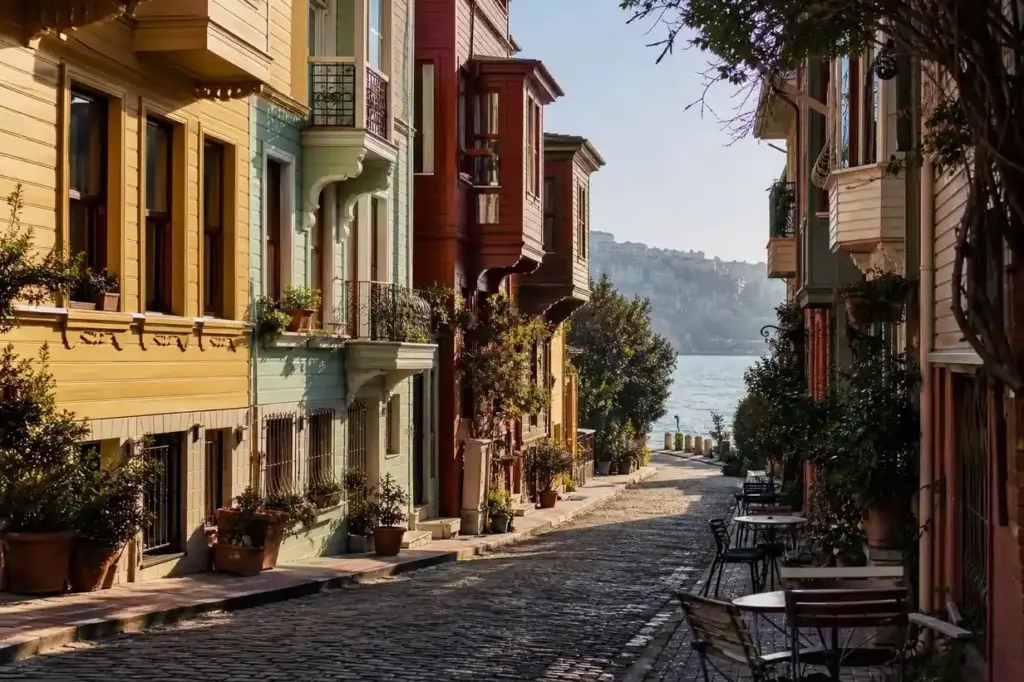
Kuzguncuk is a charming village in Üsküdar, situated on the Bosphorus and surrounded by rolling hills. It is a working residential neighborhood on the Asian shore of the Bosphorus, bordered by Beylerbeyi to the south and the Bosphorus waterfront to the west, within Üsküdar district.
Streets are lined with original late Ottoman wooden houses painted in mustard, sea-green, and terracotta. Cats occupy most staircases. The formal name is Kuzguncuk Mahallesi, meaning Kuzguncuk neighbourhood, and it has no entrance gate, no ticket booth, and no operating hours. The waterfront and streets are accessible at any time of day or night.
Quick Facts
| Address | Kuzguncuk Mahallesi, Üsküdar, Istanbul Google MapsApple MapsYandex Maps |
|---|---|
| District | Üsküdar |
| Metro | Üsküdar (T1 (Tram), Then bus 15 series or dolmuş toward Beylerbeyi, 10–15 min) Kadıköy (M4 (Metro), Then ferry to Üsküdar, then bus or dolmuş to Kuzguncuk) |
| Admission | Free |
| Best time to visit | Weekdays in spring (April–May) and autumn (September–October) offer the most pleasant weather and fewer crowds. Weekends, especially Saturday and Sunday afternoons, draw local families and visitors, making the main street crowded but lively. Winter is mild but can be grey and wet. Summer (June–August) brings heat and peak tourism. Early mornings (before 10 a.m.) on any day offer the quietest, most authentic village atmosphere. |
What Is (and Isn't) Part of a Visit to Kuzguncuk?
| Part | Status | Notes |
|---|---|---|
| Kuzguncuk neighborhood streets and waterfront | Included in the standard ticket | Walking the neighborhood, viewing exterior architecture, and exploring the waterfront are always accessible at no charge. |
| Agios Panteleimonas Greek Orthodox Church | Separate ticket or institution | A functioning church; visitors may enter during non-service hours with respect for active worship. Check opening times locally. |
| Agios Georgios Greek Orthodox Church | Separate ticket or institution | A working parish church; access depends on service schedules and visitor respect for worship. |
| Beth Ya'akov Synagogue | Separate ticket or institution | The only functioning synagogue in Kuzguncuk; visitors welcome on weekends when community maintains it, but check in advance. |
| Kuzguncuk Gasworks Cultural Centre | Separate ticket or institution | A redeveloped cultural facility hosting exhibitions and events; entry depends on current programming. |
| Kuzguncuk Bostanı (community garden) | Included in the standard ticket | A working vegetable garden maintained by residents; visitors may view from the perimeter with respect for its function. |
| Beylerbeyi neighborhood to the south | Outside / not part of it | A separate residential area with its own sights, accessible but distinct from Kuzguncuk proper. |
| Fethi Pasha Grove (Fethi Paşa Korusu) | Separate ticket or institution | A public recreation area and nature preserve adjacent to Kuzguncuk with hiking trails; managed separately by Istanbul Metropolitan Municipality. |
Why Visit Kuzguncuk?
It has kept a slow, human scale that much of the city has lost: pastel timber houses, narrow lanes, a shore where the strait is always in view, and a main street where people still greet the grocer by name. Historically, it has been home to people with different religions; you can see a church and a mosque next to each other across the Kuzguncuk Pier. There are also two synagogues in Kuzguncuk.
Kuzguncuk houses lots of lovely coffee shops and local restaurants. In the last couple of years, many cafes replaced by new ones as they become more and more popular among visitors from the outside.
How Kuzguncuk Is Laid Out
The main artery is İcadiye Caddesi, which runs from the waterfront up into the residential core. It is wide enough for a single lane of traffic, lined with small grocers, a few independent cafés, and the kind of hardware shop that has not changed its shop sign. Kuzguncuk Orchard where locals grow vegetables, is a nice place to sit and drink your takeaway coffee when you can’t find a seat at your favourite coffee shop. To the north lies Beylerbeyi, to the east Burhaniye, to the south İcadiye and Sultantepe, and to the west the Bosphorus waterfront. Allow 45 minutes to an hour for a basic walk of the main streets, or 2–3 hours to explore cafés, side streets and the waterfront.
Highlights of Kuzguncuk
İcadiye Street (Main Street)
On Simitçi Tahir Street, you can find the famous, colourful mansions of Kuzguncuk, where everyone takes pictures in front. In the late 19th and early 20th centuries, a parade of balconied wooden houses was built along its main street, Icadiye Caddesi, with a few stone buildings in baroque and art deco styles thrown in later. The street climbs gently from the Bosphorus waterfront inland, lined with cafés, small independent shops, grocers and hardware stores. Walk it slowly to spot the pastel-painted wooden houses and their distinctive balconies.
Tip: Visit early morning or on weekdays to avoid weekend crowds on the main street.
Agios Panteleimonas Greek Orthodox Church
Agios Panteleimonas Greek Orthodox Church is a Greek Orthodox church dedicated to Saint Pantaleon located in Kuzguncuk neighborhood of Üsküdar district. The beautiful Church of Hagios Panteleimon, which was built in 1831 on the site of a church dating back to 550 during the reign of Emperor Justinian. The church stands on İcadiye Street with its distinctive red exterior. It is open to visitors; check for service times before entering.
Tip: The church's bell and interior woodwork reflect its Greek Orthodox heritage and late Ottoman repairs.
Agios Georgios Greek Orthodox Church
Agios Georgios Greek Orthodox Church is a Greek Orthodox church dedicated to Saint George located in Kuzguncuk neighborhood of Üsküdar district. According to an inscription, the church underwent a complete renovation in 1821. A working church situated near the Bosphorus shore, it stands as witness to Kuzguncuk's long Christian heritage. The church exterior is modest but its location on the waterfront offers views across the strait.
Tip: Visitors should check whether the church is open before entering; it remains active but may have limited visiting hours.
Beth Ya'akov Synagogue
Originally built as a summer services synagogue in 1878, the Beth Ya'akov Synagogue is the only synagogue that still functions in Kuzguncuk. Although many of the synagogues' former members have relocated within Istanbul, the synagogue is visited on the weekends to keep it from closing. It is the last functioning synagogue in the neighborhood, a tangible reminder of Kuzguncuk's once significant Jewish population.
Tip: The synagogue is best visited on Saturdays or for Shabbat services; contact local tourism for current visiting arrangements.
Kuzguncuk Waterfront (Sahil)
You can see a church and a mosque next to each other across the Kuzguncuk Pier. The waterfront offers unobstructed views of the Bosphorus, with passing ferries and the European shore visible from the shore walk. The pier area is the symbolic heart of Kuzguncuk's multicultural past, where places of worship stand in close proximity. On clear days, views extend to the Golden Horn and the European shore.
Tip: The waterfront is especially pleasant in late afternoon when light reflects off the water and the breeze picks up.
Kuzguncuk Bostanı (Community Garden)
At its heart are the still thriving historic bostan, or allotments, popular in Ottoman Istanbul. The garden is a working vegetable plot maintained by local residents in the Ottoman tradition. It offers a rare glimpse into how Istanbul's waterside neighborhoods once sustained themselves, and it remains a quiet gathering spot for locals. The garden is open to visitors who respect its working character.
Tip: Visit on weekday mornings to see residents tending plots and to avoid weekend crowds.
Kuzguncuk Gasworks Cultural Centre
Kuzguncuk Gasworks, also known as Beylerbeyi Palace Gasworks, was a gasworks in Istanbul. It was built in 1864, and functioned until 1940. After 1992, it was redeveloped as a cultural and social facility. The gasworks was built during the Ottoman Empire to meet the need of coal gas to illuminate and heat the Beylerbeyi Palace in first instance, and to supply street lighting. The historic industrial buildings now host cultural events and exhibitions.
Tip: Check the Istanbul Metropolitan Municipality website for current exhibition schedules and opening hours before visiting.
Atmosphere
Pastel timber houses, narrow lanes, a shore where the strait is always in view, and a main street where people still greet the grocer by name. Although a little more homogeneous today, it still radiates an old village feel, while also boasting numerous modern cafes and art galleries. On weekday mornings the neighborhood is quiet, with locals shopping at small grocers and residents tending the garden. Weekends bring visitors and families who fill the cafés along İcadiye Street and crowd the waterfront. The pace is deliberately slow, the architecture invites lingering, and the sound of the Bosphorus is always present in the background.
History of Kuzguncuk
During Byzantine time, this area was being called as Khrysokeramos (Hrisokeramos) which means golden tile since there was a church in Kuzguncuk with a gilded roof. The name derives from a church with a roof covered in gilded tiles, likely built during the Byzantine era.
The name kuzguncuk means either a little raven or barred window of a prison door in Turkish. The name is claimed to derive from Kuzgun Baba who lived in this town during the time of Mehmet the Conqueror, who was an Ottoman sultan. After the Ottoman conquest of Constantinople in 1453, the neighborhood gradually transformed from a Byzantine Christian settlement to a cosmopolitan Ottoman village.
Spain and Portugal and accepted into the Ottoman Empire in the late 15th century were among the settlers in the neighbourhood. As voluntary immigrants, they had more freedom concerning their place of residence, and many left the traditional Jewish quarters of Istanbul such as Balat for villages along the Bosphorus such as Kuzguncuk. The earliest evidence of Jewish presence in the neighborhood is a tombstone dated 1562. Sephardic Jews who had been expelled from Spain in 1492 settled here in significant numbers.
Armenians began settling in Kuzguncuk in the 18th century and had become a sizable group by the 19th century. Ottoman records show an 1834 request that their nighttime religious services be allowed to continue without interference. In 1835, their first church was built. Greeks also lived in Kuzguncuk, and by the 19th century the neighborhood had become a thriving multicultural enclave.
In the late 19th and early 20th centuries, a parade of balconied wooden houses was built along its main street, Icadiye Caddesi, with a few stone buildings in baroque and art deco styles thrown in later. The gasworks was built in 1864, and functioned until 1940. It was built during the Ottoman Empire to meet the need of coal gas to illuminate and heat the Beylerbeyi Palace in first instance, and to supply street lighting.
There was no mosque until 1952. In the 15th century, it became the first Jewish settlement on the Asian side of the city, and Armenians arrived in the 18th century. The Kuzguncuk Mosque is located on the grounds of the Armenian church. It was built in 1952 with funds donated by the Armenian community.
The Jewish population, once sizable in Kuzguncuk, decreased rapidly. Many members of Istanbul’s minority groups emigrated in the mid-20th century. Most of the non-Muslim residents left in the mid-20th century, and very few live there today. Kuzguncuk emptied and became down at heel in the mid-20th century as most of the Christians and Jews left. But its dinky churches and synagogues survive, as have many historic buildings and public spaces. The result is a district that has retained the character of old Istanbul but with a stylish, independent-spirited new spin.
Legends and Myths about Kuzguncuk
Kuzgun Baba and the Origin of the Name
Legend – historically unreliable. The name kuzguncuk means either a little raven or barred window of a prison door in Turkish. The name is claimed to derive from Kuzgun Baba who lived in this town during the time of Mehmet the Conqueror. Local tradition credits a holy man named Kuzgun Baba with the neighborhood's name, though historians note that the etymology remains uncertain and the connection to a specific person is unverified.
Golden Tile Church of Chrysokeramos
Legend – historically unreliable. During Byzantine time, this area was being called as Khrysokeramos (Hrisokeramos) which means golden tile since there was a church in Kuzguncuk with a gilded roof. The neighborhood's Byzantine name reflects a church distinguished by its roof of gilded tiles, though no trace of this structure survives today and its exact location is unknown.
The Last Stop Before the Holy Land
Legend – historically unreliable. Kuzguncuk, one of the first Jewish settlements and defined by Jews as 'the last stop before reaching the Holy Land', has a great place in the memory of the city. Jewish travelers and pilgrims departing Istanbul for the Levant viewed Kuzguncuk as their final waypoint before embarking on the journey to Palestine, giving the neighborhood symbolic and spiritual significance in the Jewish diaspora experience.
Tickets and Booking for Kuzguncuk
Kuzguncuk is a free, open neighborhood with no gate, ticket booth or operating hours. The streets, waterfront, and public spaces are accessible at any time of day or night for independent exploration. The churches and synagogue within the neighborhood are functioning places of worship with their own visiting guidelines; contact local tourism or check signage for service times and visitor policies. The Kuzguncuk Gasworks Cultural Centre hosts exhibitions and events; check the Istanbul Metropolitan Municipality website or local information for current programs and hours.
Suggested itineraries Kuzguncuk
45 minutes to 1 hour
Quick walk: Start at Kuzguncuk Pier on the waterfront, walk up İcadiye Street to see the colorful wooden houses and churches, visit the Beth Ya'akov Synagogue, and return to the waterfront for views of the Bosphorus.
2 hours
Relaxed exploration: Begin at the waterfront pier, stroll İcadiye Street with café stops, visit both Agios Panteleimonas and Agios Georgios churches, explore the community garden, and linger at a waterfront café with a view of the European shore.
Half day
Full immersion: Spend the morning exploring the neighborhood, visiting churches and the functioning synagogue, exploring side streets and the market garden. Have lunch at a local café, then walk the Fethi Pasha Grove trails or visit the Kuzguncuk Gasworks Cultural Centre if exhibitions are open. End with evening drinks at the waterfront as light fades on the Bosphorus.
How to Get to Kuzguncuk
By Ferry and Bus: Take a ferry from the European side (Eminönü, Beşiktaş or Kadıköy) to Üsküdar. From Üsküdar Pier, take bus 15 series or a dolmuş (shared minibus) heading toward Beylerbeyi or Kuzguncuk; alight at the Kuzguncuk stop (approximately 3 stops, 10–15 minutes). The bus will drop you at the main street (İcadiye Caddesi) or the waterfront area.
By Taxi or Private Car: From the European side, cross the Bosphorus Bridge and head toward Üsküdar. The neighborhood is roughly between Üsküdar centre and Beylerbeyi. Parking is limited and street parking fills on weekends; arrive early or use a taxi/rideshare for drop-off.
From Kadıköy Metro: Take the M4 metro to Kadıköy, exit and walk to the ferry pier, take the Üsküdar ferry, then bus or dolmuş as described above (total journey 30–40 minutes).
Accessibility
Kuzguncuk's streets are narrow, mostly cobblestone, and step-filled, with steep inclines from the waterfront to the upper neighborhoods. The main street (İcadiye Caddesi) has some uneven paving. The waterfront area is more level and accessible. Wheelchair users will find many areas challenging; the neighborhood's charm rests partly in its tight, traditional layout. Public toilets are not prominently marked; cafés may allow use of facilities. There are no lifts or ramps at the churches. No formal accessibility information is published by the municipality; assess on-site or contact local tourism before visiting if mobility is a concern.
Food Nearby
The neighborhood has numerous small independent cafés, restaurants and bakeries, primarily along İcadiye Street. Most serve Turkish tea, coffee, and simple meals (menemen, börek, sandwiches). A few restaurants, such as İsmet Baba near the waterfront, offer seafood and meze with Bosphorus views. Expect home-style Turkish food at modest prices; many places are cash-only. Grocers and a bakery are scattered throughout. Avoid chain restaurants; Kuzguncuk's appeal lies in its independent, local establishments.
What to Bring
Comfortable walking shoes (cobblestone and steep streets). A small backpack or shoulder bag for exploring. Sun protection (sunscreen, hat) on clear days, especially on the waterfront. A light jacket or cardigan for the waterfront breeze, even in summer. The neighborhood has no security concerns, but bags and small items should be kept close in crowded weekend areas.
Best Views and Photo Spots of Kuzguncuk
Kuzguncuk Pier (Sahil)
The Bosphorus framed by waterfront buildings, ferries passing, and the European shore (Beşiktaş, Ortaköy) in the distance. Evening light is especially warm and golden.
Best time: Late afternoon (3–5 p.m.), or golden hour just before sunset for soft, directional light on the water.
Simitçi Tahir Street (colorful houses corner)
A vibrant street corner with mustard, sea-green and terracotta painted wooden houses with balconies, framed by narrow lanes and greenery. This is the iconic Kuzguncuk photo spot.
Best time: Mid-morning (9–11 a.m.) when light hits the facades without harsh shadows; weekday mornings avoid tourist crowds.
İcadiye Street looking toward the waterfront
The main street descending toward the Bosphorus, lined with cafés, wooden shop fronts, and the strait visible in the distance. Pedestrians and café life create authentic street atmosphere.
Best time: Late morning or early afternoon on weekdays when the street is active but not packed.
Agios Panteleimonas Church exterior
The red-painted church building with its distinctive dome and bell tower, set on a narrow street. The architectural detail and color contrast with surrounding wooden houses.
Best time: Morning (8–10 a.m.) when light rakes across the building and few tourists are present.
Kuzguncuk Bostanı (community garden)
Rows of vegetable plots, with wooden fences and local residents tending the garden, framed by neighborhood buildings and hills behind. A rare glimpse of Ottoman-era urban agriculture.
Best time: Weekday mornings (8–11 a.m.) when residents are gardening; weekends are busier but less authentic.
Photography Rules
Photography of exteriors and public spaces is unrestricted and encouraged; the colorful wooden houses and waterfront views reward photographers. No tripods, drones or flash photography inside churches or the synagogue. Respect worshippers and ask permission before photographing people. Interior church lighting is dim; high ISO or available-light techniques work better than flash.
Family Suitability
Kuzguncuk is best suited to families with older children (8+) who can manage steep cobblestone streets and narrow lanes. Strollers are impractical due to uneven paving and steps. The pace is slow and the neighborhood is safe, making it pleasant for older kids interested in history and architecture. Toddlers and younger children may struggle with the terrain. The waterfront area is more level and accessible. Cafés welcome families, and the quiet, walkable scale appeals to families seeking a break from Istanbul's bustle. No dedicated children's facilities (playgrounds, museums) exist here; the appeal is visual and atmospheric rather than activity-based.
Istanbul Vibes Tips
- Arrive before 10 a.m. on a weekday. The neighborhood transforms on weekends—İcadiye Street fills with crowds, café tables spill onto narrow lanes, and the sense of residential authenticity fades. Early morning weekdays feel like stepping back in time.
- Walk the neighborhood in the reverse direction: start from the upper residential streets (around Simitçi Tahir), descend slowly through side alleys toward İcadiye Street, then end at the waterfront. This avoids the main street crowds and reveals the neighborhood's residential core first.
- Bring cash. Many small cafés, bakeries and shops in Kuzguncuk are cash-only; ATMs exist but are not abundant. Card payments are becoming more common but not universal.
- Do not confuse Kuzguncuk with Beylerbeyi. Beylerbeyi is to the south, a separate (and larger) neighborhood with its own sights (Beylerbeyi Palace). They are adjacent but distinct; ask the bus driver or locals to confirm you alight at Kuzguncuk, not Beylerbeyi.
- The churches and synagogue are active places of worship, not museums. If you visit during service times, entry may be restricted. Dress respectfully (cover shoulders and knees). Check with local tourism or signage for visitor hours.
- The waterfront and main street are scenic but narrow. If you seek solitude and photography without people in the frame, visit on a grey weekday morning rather than a sunny weekend.
Explore Nearby Kuzguncuk
Sights near Kuzguncuk
 Bosphorus Cruise · typical visit: 2–6 hours depending on cruise type
Main image: AI-generated illustration. It may not show the place exactly as it looks.
 Ortaköy Waterfront – about 1.4 km away (~22 min walk) · typical visit: 2–3 hoursOpen 24 hours
Main image: AI-generated illustration. It may not show the place exactly as it looks.
 Golden Horn · typical visit: 1–3 hours (waterfront walk or boat tour)
Main image: AI-generated illustration. It may not show the place exactly as it looks.
 Fethi Pasha Grove – about 750 m away (~12 min walk) · typical visit: 1–2 hoursOpen daily 09:00–18:00
Main image: AI-generated illustration. It may not show the place exactly as it looks.
 Bosphorus Bridge – about 1.0 km away (~17 min walk) · typical visit: 1–2 hoursOpen 24 hours
Main image: AI-generated illustration. It may not show the place exactly as it looks.
 Beylerbeyi Palace – about 1.1 km away (~18 min walk) · typical visit: 1–1.5 hoursOpen 09:00–17:00, closed Mon
Main image: AI-generated illustration. It may not show the place exactly as it looks.
Nightlife near Kuzguncuk
 Tower Pubabout 1.3 km away (~21 min walk)
Main image: AI-generated illustration. It may not show the place exactly as it looks.
Train stations and river piers near Kuzguncuk
 Üsküdar Ferry Terminalabout 1.6 km away (~25 min walk)
Main image: AI-generated illustration. It may not show the place exactly as it looks.
Related guides
 Üsküdar: The Asian Shore’s Authentic Neighborhoods and Bosphorus Views
Main image: AI-generated illustration. It may not show the place exactly as it looks.
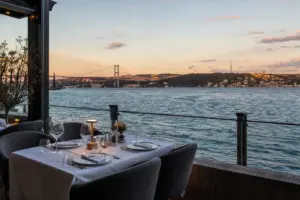 Best Restaurants with Bosphorus Views in Istanbul: Six Tables
Main image: AI-generated illustration. It may not show the place exactly as it looks.
 Turkish Meyhane Guide: How to Order Rakı, Meze and Fish
Main image: AI-generated illustration. It may not show the place exactly as it looks.
 Best Seafood Restaurants in Istanbul: Bosphorus Fish Dining Guide
Main image: AI-generated illustration. It may not show the place exactly as it looks.
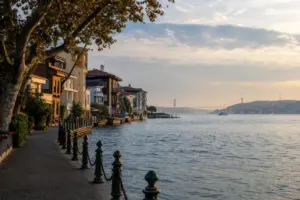 Where to Stay in Istanbul for a Quiet Holiday
Main image: AI-generated illustration. It may not show the place exactly as it looks.
Browse more: More in Üsküdar · All Hidden Istanbul · All Neighborhoods
FAQ: Kuzguncuk
Is Kuzguncuk a museum or a historical site with an entrance fee?
No. Kuzguncuk is a living residential neighborhood with no entrance gate, ticket booth or operating hours. Streets and public spaces are free and accessible at any time. Individual churches and the synagogue have their own visitor policies as active places of worship; they are not museums.
How long does it take to visit Kuzguncuk?
A quick walk of the main street and waterfront takes 45 minutes to 1 hour. A relaxed visit with café stops and exploration of side streets takes 2–3 hours. Many visitors return multiple times because the slow pace and layered history reward lingering.
What is the best way to get to Kuzguncuk from the European side?
Take a ferry from Eminönü, Beşiktaş or Kadıköy to Üsküdar Pier. From Üsküdar, take bus 15 series or a dolmuş (shared minibus) toward Beylerbeyi and alight at Kuzguncuk (about 10–15 minutes). Alternatively, use a taxi or rideshare from Üsküdar centre (5–10 minutes).
Can I visit the churches and synagogue in Kuzguncuk?
Yes, but with respect. The churches and synagogue are active places of worship, not museums. Agios Panteleimonas and Agios Georgios are Greek Orthodox churches open to visitors outside service times (check locally for hours). Beth Ya'akov Synagogue is visited by community members on weekends; advance inquiry is recommended. Dress modestly (cover shoulders and knees).
Is Kuzguncuk safe for solo travelers and families?
Yes. The neighborhood is quiet, walkable, and has a strong community presence. Crime is low; locals know each other and visitors are treated respectfully. The narrow streets and residential character make it safer than busier areas. Families with older children (8+) will enjoy the pace; younger children may struggle with the steep, uneven terrain.
What is the difference between Kuzguncuk and Beylerbeyi?
They are neighboring but separate neighborhoods. Kuzguncuk is smaller, quieter and more village-like, with colorful wooden houses and a waterfront setting. Beylerbeyi is larger and includes Beylerbeyi Palace (a major imperial site open to visitors). Beylerbeyi is south of Kuzguncuk; confirm your bus stop to avoid confusion.
Is there public transport from Kuzguncuk to other parts of Istanbul?
Yes. Buses 15 series and dolmuşes connect Kuzguncuk to Üsküdar centre. From Üsküdar, take ferries to the European side or metro/tram to other Asian neighborhoods. Taxis and rideshare apps are also available, though street hailing can be challenging on narrow neighborhood streets.
When is the best time to visit Kuzguncuk?
Weekday mornings in spring (April–May) or autumn (September–October) offer pleasant weather and the most authentic village atmosphere. Avoid weekend afternoons when the neighborhood becomes crowded with visitors and locals. Winter is quiet but can be grey and damp; summer is hot and touristy.
Istanbul Vibes is a one-person project. A coffee keeps it going

Take this guide with you
Get a free PDF of this guide to print or read offline: key facts, tips and a map link on a few clean pages.
Report an issue on this page
How we research and update our guides
About this guide: AI assistance and accuracy
This guide is created with the help of AI and is based on official sources where available. Mistakes can still happen. Opening hours, prices, rules and other details are given to the best of our knowledge as of the date shown and can change without notice. It offers general recommendations only, not professional, legal or travel advice. Please confirm important details with the official source before you travel; you are responsible for your own plans and decisions.
* Affiliate link: as an Amazon Associate we earn from qualifying purchases at no extra cost to you.
