
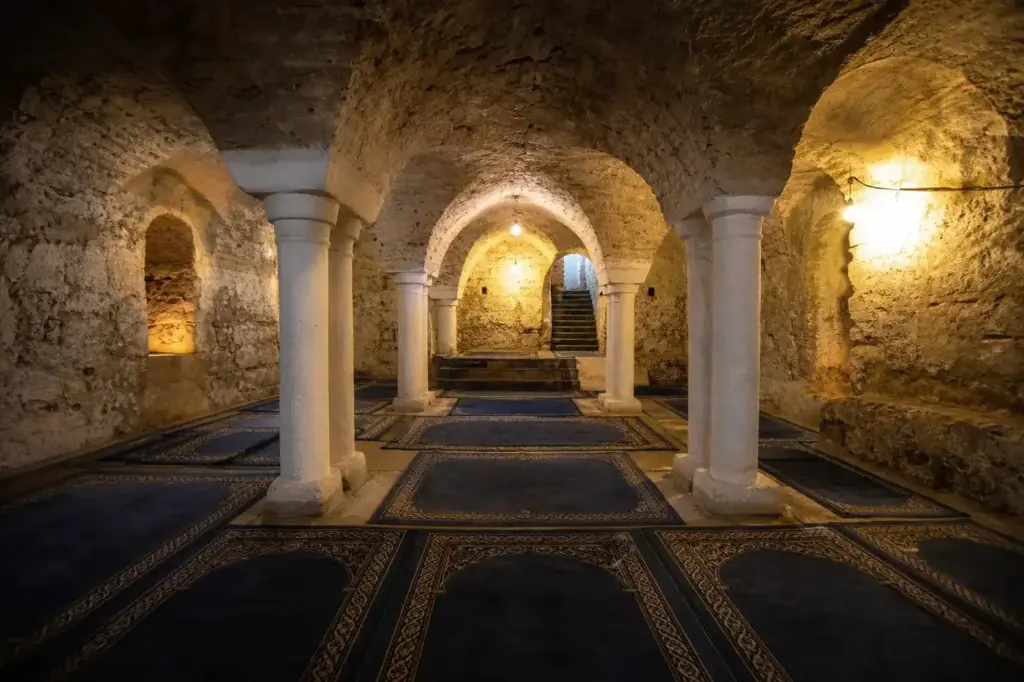
Yeralti Camii, or the Underground Mosque, is located in the Karaköy part of Beyoğlu district, named for the fact that its prayer hall and main features are all underground. This small, intimate place of worship occupies the vaulted crypt of what was once part of a Byzantine fortress controlling the entrance to the Golden Horn.
After the 1453 Ottoman conquest, the cellar was used for ammunition storage and as a cistern before being converted into a mosque in 1753 by Ottoman vizier Köse Bahir Mustafa Pasha. After an earthquake destroyed the structure in 1754, Ottoman Sultan Mahmud I ordered it rebuilt, with the current mosque dating from 1756. Today it remains an active mosque, little changed since its founding and rarely crowded.
Quick Facts
| Turkish name | Yeraltı Camii |
|---|---|
| Built / opened | 1756 |
| Address | Kemankeş Karamustafa Paşa, Kemankeş Cd. No:23, 34425 Beyoğlu/İstanbul Google MapsApple MapsYandex Maps |
| District | Beyoğlu |
| Metro | Karaköy (T1 Tram, 5 min walk along waterfront) |
| Admission | Free |
| Best time to visit | In summer it is not strange to find people napping inside, owing to the cool underground temperature. Visit on a weekday in late afternoon, outside prayer times, for the calmest, most meditative experience. Avoid midday when the Karaköy alleyways are busiest. Rain does not affect the underground interior. Winter offers the most dramatic temperature contrast: the cool, damp stone feels protective.Early morning (before 8 a.m.) is quiet; evening visits (after 5 p.m. in winter, after 7 p.m. in summer) also tend toward solitude. Friday afternoons are typically busier with local worshippers. The mosque has no seasonal closures. |
What Is (and Isn't) Part of a Visit to Yeralti Camii?
| Part | Status | Notes |
|---|---|---|
| Underground prayer hall with pillars and vaulted ceilings | Included in the standard ticket | Main space of the mosque; free to visit outside prayer times. |
| Tombs of Amr ibn al-As and Wahb ibn Husayra | Included in the standard ticket | Located in a side chapel; glass-fronted wooden cenotaphs (not original graves). |
| Byzantine fortress above | Not open to visitors | Destroyed in 1754 earthquake; crypt below is all that survives; not accessible to visitors. |
| Golden Horn chain anchoring point | Outside / not part of it | Legendary anchor for the chain that defended the harbor; not visible; the fortress is gone. |
| Hagia Irene | Separate ticket or institution | A different mosque-turned-museum; located in Topkapi Palace grounds, not here. |
Why Visit Yeralti Camii?
The space is created by a low-ceilinged, vaulted maze supported by squat pillars arranged in six rows of nine, forming little compartments for private prayer. The quiet, candlelit atmosphere—electric lights illuminate a few areas—feels entirely separate from the bustle of Karaköy above.
The mosque’s primary draw is the tombs of two Companions of Muhammad, placed here after a Naqshbandi dervish claimed their presence was revealed to him in a dream, resulting in two wooden cenotaphs. Unlike Istanbul’s grand, ornate mosques, Yeralti Camii offers an intimate, meditative experience steeped in layers of history.
Highlights of Yeralti Camii
The Vaulted Underground Prayer Hall
The prayer space consists of a low-ceilinged, vaulted maze supported by squat pillars arranged in six rows of nine, forming compartments for private prayer. Electric lighting and small windows on the Bosphorus side provide illumination. The entire effect is cool, serene and utterly unlike any other mosque in Istanbul. Simply being underground changes the acoustic and spiritual quality of the space.
Tip: Allow your eyes a few minutes to adjust to the low light as you descend; bring a small flashlight or use your phone light to read the information plaques if desired.
Tombs of Two Companions
In a side chapel are the tombs of Amr ibn al-As and Wahb ibn Husayra, Companions of Muhammad. After the Ottoman conquest, the site was used for ammunition storage until, in 1640, a Nakşibendi religious leader discovered the bodies of two Arab martyrs, believed to be soldiers from the failed Arab siege of Constantinople in the 7th century, along with valuable items sealed in lead. Visitors may see glass-fronted wooden cenotaphs.
Tip: Ask a local guide or read the plaques for the fuller historical context; the spiritual significance of these tombs matters more than architectural detail.
Byzantine Fortress Foundations
The fortress was built around 700 during the reign of Tiberius II and is first mentioned in connection with the siege of the city in 717–718. The original tower belonged to the Galata Fortress and housed the famous chain that was once used to block access to the Golden Horn, with the other end attached to a fortification in what is now Eminönü. The crypt below is all that survives.
Tip: This mosque is the ghost of military history; stand beneath the vaults and imagine the fortress above, destroyed centuries ago.
Street-Level Entrances
The mosque is accessed from two entrances at street level, which lead down a short tunnel into the earth via a very low ceiling and dark space illuminated by lamps. The upper entrance is marked but easy to miss among the narrow alleyways of Karaköy. The lower, waterside entrance is more atmospheric.
Tip: Use the waterfront (lower) entrance if you find the main alley entrance; it is less congested and offers a more dramatic descent.
Islamic and Ottoman History
The subterranean space was converted into a mosque under the auspices of Grand Vizier Bahir Mustafa Paşa in 1757. The building, which for a long time even lacked a minaret, has two entrances at street level. The sparse, austere interior reflects early Ottoman respect for sacred space without ornament; the restraint of the design is its power.
Tip: Visit during off-peak hours (late afternoon on a weekday) to experience the full silence and spiritual calm the space offers.
Atmosphere
Stepping down into Yeralti Camii feels like entering a different era. The air is cool and still; the stone vaults muffle street noise almost entirely. A few oil lamps and electric bulbs cast a soft, amber glow across the whitewashed pillars. The space smells faintly of stone, carpet and incense.
Worshippers—mostly local men—slip off their shoes and spread prayer mats between the columns. A handful of visitors tread carefully through the low-ceilinged chambers, speaking in hushed voices. The effect is meditative, almost monastic. In summer, locals sometimes rest here in the cool; there is no crowd, no photography light, no tour groups. The mosque exists quietly, as if time moves differently underground.
History of Yeralti Camii
The fortress above was built around 700 during the reign of Byzantine Emperor Tiberius II and is first mentioned in connection with the siege of the city in 717–718, during which Arab forces attempted to capture Constantinople. It is believed that soldiers from the failed Arab siege participated in the assault, and their dead were interred here along with valuable items sealed in a vault with lead.
After the 1453 Ottoman conquest of Constantinople, the cellar was used as a storage for ammunition and as a cistern. For nearly two centuries, the space served purely practical purposes, its history buried.
In 1640, a religious leader of the Nakşibendi sect discovered the bodies of two Arab martyrs inside the cellar. This spiritual discovery transformed the space. The tombs were recognized as sacred, and devotion began. In 1753, the Ottoman vizier Köse Bahir Mustafa Pasha officially converted the cellar into a mosque.
In 1754, a fortress and the mosque were destroyed by an earthquake. Ottoman Sultan Mahmud I ordered the mosque to be rebuilt, so the current structure dates from 1756. Since then, Yeralti Camii has remained a quiet place of worship, little changed, serving both local devotees and occasional visitors drawn by its singular history and atmosphere.
Legends and Myths about Yeralti Camii
The Arab Martyrs' Discovery
Legend – historically unreliable. The location of the graves of two Arab warriors killed in the first Arab siege was revealed to a Naksibendi dervish in a dream in 1640. According to tradition, the dervish's vision led to the excavation of these tombs and the recognition of the site as sacred. This dream revelation transformed a Byzantine military cellar into a place of Islamic veneration and set the stage for its later conversion into a mosque.
The Golden Horn's Protective Chain
Disputed by historians. The original fortress tower belonged to the Galata Fortress and housed the famous chain that was once used to block access to the Golden Horn, with the other end attached to a fortification in what is now Eminönü. Byzantine defenders would stretch this massive chain across the water to prevent enemy ships from entering the harbor. The chain represented the technological and strategic ingenuity of the fortress above.
Tickets and Booking for Yeralti Camii
Entry to Yeralti Camii is free. Simply arrive and descend at either the street-level entrance or the waterside entrance in Karaköy. There is no advance booking, no ticket office, and no capacity limits. The mosque is open to visitors outside of the five daily prayer times (approximately dawn, mid-morning, noon, late afternoon, and evening). If you arrive during prayer, wait outside or return later.
The interior is modest; bring a flashlight or use your phone light if you wish to read plaques and explore shadowed corners. Respectful dress is expected: remove shoes before entering, wear modest clothing (covered shoulders and legs), and maintain a quiet, reverent demeanor. Women may use a dedicated prayer section. Photographs are permitted outside prayer times, but avoid photographing worshippers.
Suggested itineraries Yeralti Camii
30 minutes
Enter at street level, descend into the prayer hall, walk the perimeter to see the pillars and vaulted ceilings, view the tombs in the side chapel, and ascend. Ideal for a quick spiritual pause while exploring Karaköy.
45 minutes
Spend 10 minutes reading the plaques and history boards. Explore both entrance routes (upper alley and lower waterside) to compare the two approaches. Sit quietly for 10–15 minutes in the prayer hall, then visit the tombs. Reflect on the layers of history above and below.
Half day in Karaköy
Begin at Yeralti Camii (30 min), walk to the nearby Galata Bridge observation point (15 min walk), then explore the alleyways and cafes of Karaköy (1–2 hours). End with a waterfront meal or tea. The mosque anchors a deeper understanding of the district's medieval and Ottoman past.
How to Get to Yeralti Camii
By Tram: Take the T1 tram line toward Kabataş and alight at Karaköy station. Walk toward the waterfront and follow the narrow alleyways north. The main entrance is marked; it is a 5-minute walk. The lower waterside entrance is reached by walking along the harbor edge toward Galata Bridge.
By Tünel (underground funicular): Exit Karaköy station and head toward the waterfront; same walking directions as above.
By foot from nearby landmarks: From Galata Tower (15 min walk south), descend toward the harbor. From Galata Bridge (10 min walk southeast), turn north along the waterfront. From Spice Bazaar (Eminönü, 10 min walk south), cross the bridge and continue as above.
By taxi or walking: The address is Kemankeş Karamustafa Paşa, Kemankeş Cd. No:23. Street parking is extremely limited; do not rely on it.
Accessibility
Access is a significant barrier. Entry requires descending a steep, narrow stone staircase—approximately 15–20 steps—into the underground chamber. A second entrance at water level involves a similarly steep tunnel. The ceiling is very low throughout (under 2 m in places); tall visitors may need to duck. The floor is uneven stone covered with prayer carpets. Wheelchair users cannot access the underground space. Visitors with mobility issues, claustrophobia, or difficulty with stairs should reconsider.There are no lifts, railings, or modern accessibility features. Toilets are not available on site. The space is damp and cool; those sensitive to temperature or humidity may find it uncomfortable. Guides are not required but may be helpful for understanding the historical significance.
Food Nearby
Karaköy has numerous casual eateries within a 2–5 minute walk: small tea gardens, kebab stands, and breakfast cafes line the alleyways. The waterfront holds a few seafood restaurants and casual spots serving fish sandwiches and meze. For a sit-down meal, walk toward Tophane (a further 5 min) or back toward the Spice Bazaar area. Coffee and pastries are abundant. Avoid eating or drinking inside the mosque.
What to Bring
Bring comfortable, closed-toe shoes (you will remove them before entering). A small flashlight or phone light helps in the dimly lit interior. A scarf is useful if you wish to cover your head or shoulders; modest clothing is respectful. In summer, a light jacket or sweater—the underground is noticeably cooler. A small notebook if you wish to take notes on the history. Water is not sold on site; bring your own.
Best Views and Photo Spots of Yeralti Camii
Central prayer hall among the six columns
Looking down the rows of whitewashed pillars receding into shadow, with the low vault above and amber light from sparse fixtures. The geometric repetition creates striking depth.
Best time: Late afternoon or evening when interior lamps are on and external light is low, creating strong contrast.
Tombs in the side chapel
The glass-fronted cenotaphs under focused lighting, with stone walls and the sense of enclosure that emphasizes their spiritual importance.
Best time: Midday or afternoon, when chapel lighting is steadiest.
Upper stairs descending into the prayer hall
The transition from the bright alley above to the shadowed vault below, showing the dramatic shift in atmosphere.
Best time: Late afternoon (after 3 p.m.) when the contrast between sunlit alley and dark interior is most dramatic.
Waterside entrance from the harbor
The low tunnel entry with stone arch, harbor light filtering in, emphasizing the hidden, fortified nature of the structure.
Best time: Morning or midday, when harbor light is strongest.
Photography Rules
Photography is allowed outside prayer times. No flash or tripods. Interior light is low; a phone camera with a steady hand or a camera with high ISO sensitivity works best. Do not photograph worshippers or people at prayer. Respect the sacred nature of the space; photography is permitted as documentation, not entertainment.
Family Suitability
Suitable for older children (age 8+) and teenagers with an interest in history, provided they can navigate stairs confidently and feel comfortable in confined, dimly lit spaces. Very young children may find the steep stairs, low ceilings, and shadowed environment frightening or difficult. Strollers cannot be brought into the underground chamber. Families should emphasize the historical significance and encourage quiet, respectful behavior. Fifteen to thirty minutes is a reasonable visit duration for families; longer visits risk restlessness. The cool temperature is pleasant in summer.
Istanbul Vibes Tips
- Use the waterside entrance near the harbor if the alleyway entrance feels confusing; it is less hidden and offers a more dramatic arrival.
- Visit outside prayer times; if you arrive during prayer, wait in the alleyway or return later rather than entering. Check typical prayer times beforehand (dawn, mid-morning, noon, late afternoon, evening) to plan your visit.
- Bring a flashlight or use your phone light to read the information plaques on the walls; interior lighting is limited and plaques contain important historical context.
- Spend 10–15 minutes sitting quietly in the prayer hall after the initial exploration; the spiritual atmosphere deepens with stillness and is easily missed if rushing through.
- Do not confuse this mosque with others in Istanbul (Hagia Irene, Blue Mosque, Suleymaniye). Yeralti is tiny, underground, and entirely unmarked from street level; easy to walk past. Use a map or GPS as you approach.
- Ask a local shop owner or cafe staff in Karaköy for directions if you become lost in the alleyways; many residents are familiar with visitors seeking the mosque and can point you to the correct entrance.
Explore Nearby Yeralti Camii
Sights near Yeralti Camii
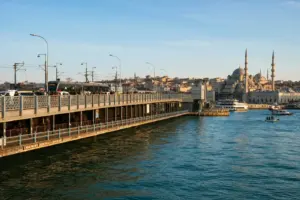 Galata Bridge – about 400 m away (~7 min walk) · typical visit: 30 minutes to 1 hour10 min on foot from Haliç metro, Open 24 hours
Main image: AI-generated illustration. It may not show the place exactly as it looks.
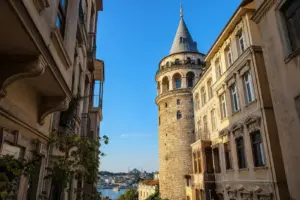 Galata Tower – about 400 m away (~7 min walk) · typical visit: 1–2 hours4 min on foot from Şişhane metro, Open daily 08:30–23:00
Main image: AI-generated illustration. It may not show the place exactly as it looks.
 Golden Horn Metro Bridge – about 850 m away (~13 min walk) · typical visit: 30 minutes to 1 hour1 min on foot from Haliç metro, Open 24 hours
Main image: AI-generated illustration. It may not show the place exactly as it looks.
 Kara Mustafa Mosque – about 100 m away (~2 min walk) · typical visit: 30 minutes10 min on foot from Şişhane metro
Main image: AI-generated illustration. It may not show the place exactly as it looks.
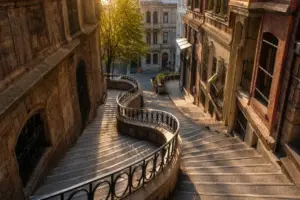 Kamondo Stairs – about 300 m away (~5 min walk) · typical visit: 15–30 minutes7 min on foot from Şişhane metro, Open 24 hours
Main image: AI-generated illustration. It may not show the place exactly as it looks.
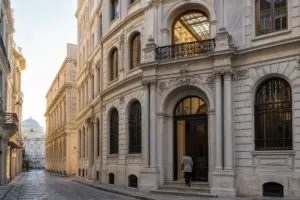 SALT Galata – about 350 m away (~5 min walk) · typical visit: 1–2 hours7 min on foot from Şişhane metro
Main image: AI-generated illustration. It may not show the place exactly as it looks.
Metro stations near Yeralti Camii
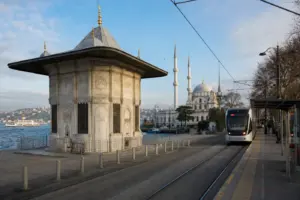 Tophaneabout 600 m away (~10 min walk)
Main image: AI-generated illustration. It may not show the place exactly as it looks.
 Şişhane – about 700 m away (~11 min walk)Open daily 06:09–00:09
Main image: AI-generated illustration. It may not show the place exactly as it looks.
 Tünelabout 700 m away (~11 min walk)
Main image: AI-generated illustration. It may not show the place exactly as it looks.
Restaurants and cafes near Yeralti Camii
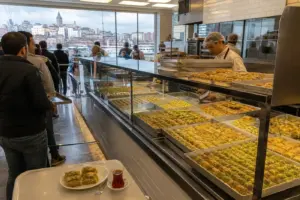 Karaköy Güllüoğlu – about 150 m away (~3 min walk)12 min on foot from Şişhane metro, Open daily 07:00–23:00
Main image: AI-generated illustration. It may not show the place exactly as it looks.
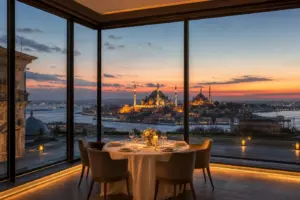 Neolokal – about 300 m away (~5 min walk)7 min on foot from Şişhane metro
Main image: AI-generated illustration. It may not show the place exactly as it looks.
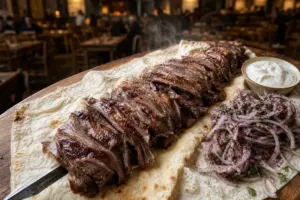 Şehzade Cağ Kebap – about 300 m away (~5 min walk)11 min on foot from Haliç metro
Main image: AI-generated illustration. It may not show the place exactly as it looks.
 Ali Ocakbaşı Karaköy – about 350 m away (~5 min walk)8 min on foot from Haliç metro, Open daily 12:00–23:00
Main image: AI-generated illustration. It may not show the place exactly as it looks.
Nightlife near Yeralti Camii
 The Bank Roof Bar – about 250 m away (~4 min walk)8 min on foot from Şişhane metro, Open daily 12:00–02:00
Main image: AI-generated illustration. It may not show the place exactly as it looks.
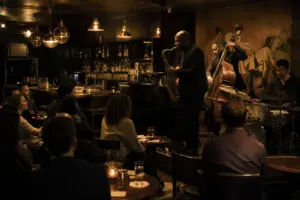 Asia-Khai Jazz Club – about 300 m away (~5 min walk)6 min on foot from Şişhane metro
Main image: AI-generated illustration. It may not show the place exactly as it looks.
Train stations and river piers near Yeralti Camii
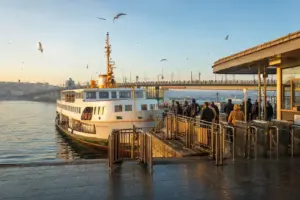 Karaköy Ferry Terminalabout 100 m away (~1 min walk)
Main image: AI-generated illustration. It may not show the place exactly as it looks.
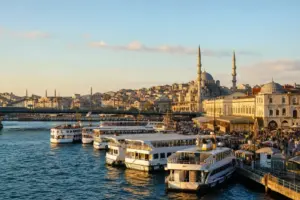 Eminönü Ferry Terminalabout 750 m away (~12 min walk)
Main image: AI-generated illustration. It may not show the place exactly as it looks.
Events and traditions near Yeralti Camii
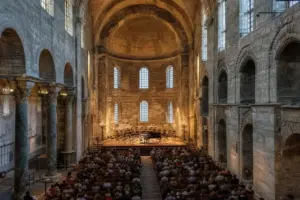 Istanbul Music Festivalabout 1.7 km away (~28 min walk)
Main image: AI-generated illustration. It may not show the place exactly as it looks.
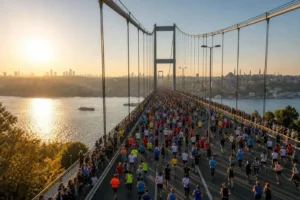 Istanbul Marathonabout 1.9 km away (~31 min walk)
Main image: AI-generated illustration. It may not show the place exactly as it looks.
Related guides
 Spice Bazaar and Grand Bazaar Route: Two Markets, Six Centuries
Main image: AI-generated illustration. It may not show the place exactly as it looks.
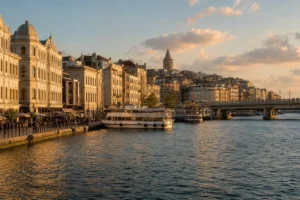 Karaköy: Istanbul’s Historic Waterfront at the Golden Horn
Main image: AI-generated illustration. It may not show the place exactly as it looks.
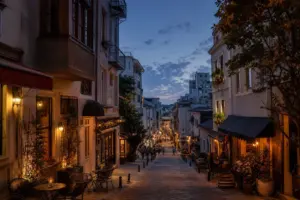 Beyoğlu Nightlife Streets: Nevizade to Asmalımescit
Main image: AI-generated illustration. It may not show the place exactly as it looks.
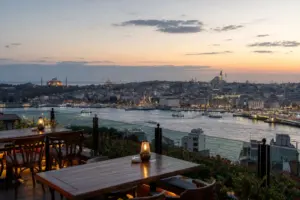 Best Rooftop Bars in Istanbul: Views and Reservations
Main image: AI-generated illustration. It may not show the place exactly as it looks.
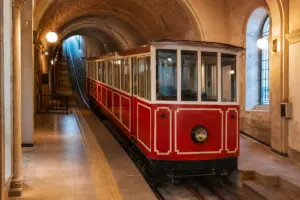 Tünel and Historic Funicular Guide: Karaköy to Beyoğlu
Main image: AI-generated illustration. It may not show the place exactly as it looks.
Browse more: More in Beyoğlu · All Churches · All Sightseeing
FAQ: Yeralti Camii
Is Yeralti Camii included in a Blue Mosque or Hagia Sophia ticket?
No. Yeralti Camii is independent, free, and located in a different neighborhood (Karaköy, Beyoğlu). It is not part of any major ticket or pass. Entry is free and requires no advance booking.
How long does a visit take?
Plan 30–45 minutes. 10 minutes to descend and explore the pillars and side chapel, 10–15 minutes to sit quietly and absorb the atmosphere, and the remainder to read plaques and reflect.
Can I visit during prayer times?
You may enter the mosque outside the five daily prayer times (dawn, mid-morning, noon, late afternoon, evening). If you arrive during prayer, wait outside or return later. Exact prayer times change seasonally; check locally or call ahead.
Is this suitable for visitors with mobility issues?
No. Entry requires descending a steep narrow staircase and navigating a low-ceilinged underground chamber. Wheelchair users cannot access the space. Visitors with difficulty on stairs or in tight spaces should avoid.
What are the tombs inside?
The tombs contain the remains of Amr ibn al-As and Wahb ibn Husayra, Companions of Muhammad, placed here after a Naqshbandi dervish claimed their presence was revealed in a dream in 1640, resulting in two wooden cenotaphs.
Do I need a guide?
No guide is required. The interior is small and self-explanatory. Plaques inside provide basic history. A guide is helpful only if you want deeper historical or spiritual context; local tour operators in Karaköy offer them.
Is photography allowed?
Yes, outside prayer times. No flash, tripods, or photographing worshippers. Interior light is low; bring a phone or camera with high ISO sensitivity for best results.
What is the dress code?
Remove shoes before entering. Wear modest clothing (shoulders and legs covered). Women should be especially mindful of coverage. Respectful silence is expected. A headscarf is not required but is appreciated.
Istanbul Vibes is a one-person project. A coffee keeps it going
Hotels near Yeralti Camii
- The Wings Hotel (50 m) Check prices (affiliate link, opens in a new tab)
- The Hezar (50 m) Check prices (affiliate link, opens in a new tab)
- ADA (50 m) Check prices (affiliate link, opens in a new tab)
- Ferman Port Hotel (50 m) Check prices (affiliate link, opens in a new tab)
Affiliate link (opens the booking site): we may earn a commission at no extra cost to you.
Restaurants near Yeralti Camii
- Dersaadet (200 m) Google Maps
- Sarıhan (200 m) Google Maps
- Galatea altin (250 m) Google Maps
- Galata Olympus (250 m) Google Maps
Distances are straight-line, from OpenStreetMap data.

Take this guide with you
Get a free PDF of this guide to print or read offline: key facts, tips and a map link on a few clean pages.
Report an issue on this page
How we research and update our guides
About this guide: AI assistance and accuracy
This guide is created with the help of AI and is based on official sources where available. Mistakes can still happen. Opening hours, prices, rules and other details are given to the best of our knowledge as of the date shown and can change without notice. It offers general recommendations only, not professional, legal or travel advice. Please confirm important details with the official source before you travel; you are responsible for your own plans and decisions.
* Affiliate link: as an Amazon Associate we earn from qualifying purchases at no extra cost to you.
