
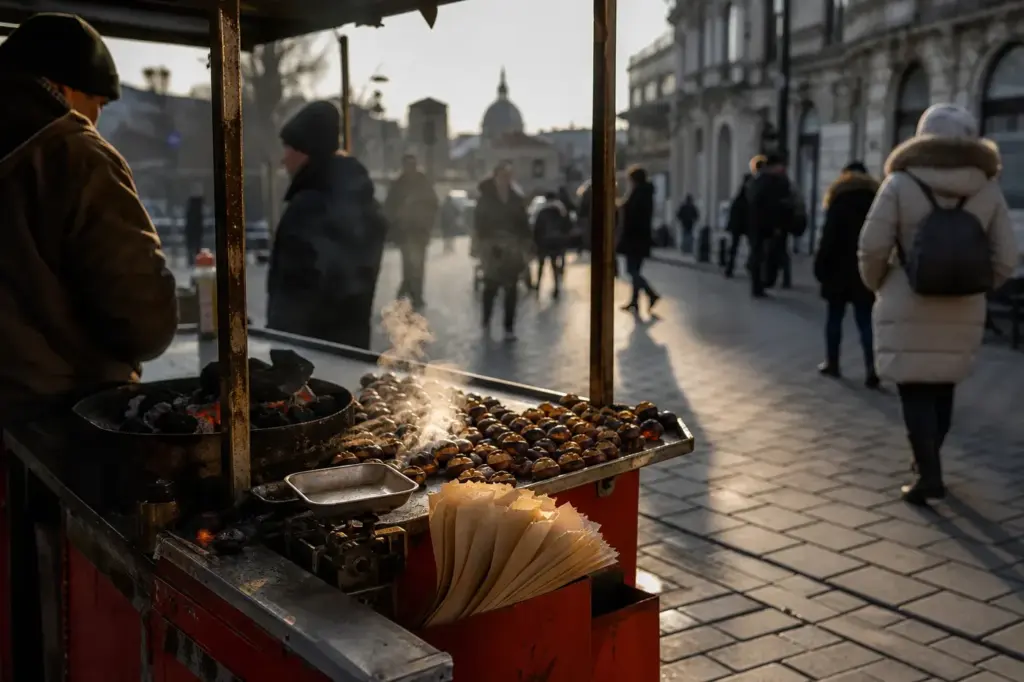
Kestane—roasted chestnuts—are one of Istanbul’s defining winter street foods. As soon as temperatures drop in autumn, vendors appear on busy pedestrian streets with small braziers, roasting fresh chestnuts over charcoal embers. The smoky aroma fills the air around Sultanahmet, İstiklal Avenue, Eminönü, and ferry terminals, drawing both locals and visitors.
This guide explains where to find them, how to eat them, and how to roast them at home. The recommended way to experience kestane is to buy from a cart on the street, eat them warm while walking, and pair them with Turkish tea or winter drinks like boza.
Quick answer: Buy roasted chestnuts from a street vendor cart by pointing to the weight you want (typically sold in 100 g portions). Vendors pack them in paper cones and you can eat them warm on the spot, peeling as you go. Takes about 5–10 minutes to buy and eat a handful. Very affordable.
At a Glance
| Type | Street food & snacks |
|---|---|
| Origin | Chestnuts have been cultivated in Turkey and southern Europe for a long time, and before potatoes were introduced, they were an important food for the poor. The tradition of making candied chestnuts in Bursa dates back centuries, to the Ottoman period. Chestnut is perhaps the most symbolic Istanbul street food associated with the winter season, and it is inevitable to come across a street vendor roasting chestnuts while visiting Istanbul. |
| Servings | 2–4 |
| Total time | 25–35 minutes (roasting time 15–25 minutes) |
| Difficulty | Easy |
History and Story of Kestane
The tradition of making candied chestnuts in Bursa dates back centuries, to the Ottoman period. Chestnuts are mainly cultivated in the mountainous areas of the Aegean, Marmara and Black Sea regions—but more particularly in the province of Bursa where a week-long Chestnut Festival is celebrated every year. As a traditional autumn and winter treat, the first roasted kestane are a sign of colder weather coming. Roasted chestnuts are one of the most popular street foods in Istanbul.
Ingredients
- Fresh whole chestnuts, 400–500 g for 2–4 servings
- Pan with vent holes or perforated metal roasting pan
- Salt (optional)
- Paper cones or paper bags for serving
How Kestane Is Made
Step 1: Select and prepare fresh chestnuts
Vendors score fresh chestnuts before roasting them over hot coals. Buy whole, unpeeled chestnuts from a market. Rinse and pat dry. Using a sharp knife, score the flat side of each chestnut with an X-shaped cut, about 0.5 cm deep. This prevents the shell from exploding during roasting and makes peeling easier.
Tip: Score all chestnuts before you begin roasting so they cook evenly.
Step 2: Heat the roasting pan
Place a metal roasting pan (or a cast-iron pan with vent holes) over medium-high heat for 2–3 minutes until it is hot. Traditional roasting uses either special chestnut roasting machines or a traditional roasting pan called a sahan. If using a home oven, preheat to 200°C (400°F).
Tip: A dry pan with holes lets heat circulate and prevents moisture buildup that can steam rather than roast the nuts.
Step 3: Roast the chestnuts
Chestnuts are roasted over hot coals in drums, then sold in paper cones. Add scored chestnuts to the hot pan in a single layer. Shake and stir frequently (every 2–3 minutes) for 15–25 minutes until the shells split open and darken, and the nutmeat inside begins to brown slightly. Alternatively, spread on a baking sheet and roast at 200°C for 20–25 minutes, shaking halfway through.
Tip: Listen for a slight popping sound as the shells split—this signals they are nearly done. Do not let them burn.
Step 4: Cool slightly and peel
Peel them while they are still warm, but be careful because the freshly roasted shells can be hot. Spread the roasted chestnuts on a kitchen towel and let them cool for 2–3 minutes. Hold each nut with a clean towel and peel away the outer shell and bitter inner skin while warm. The skin comes off more easily when warm.
Tip: If they cool too much, warm them gently in the pan again for 1–2 minutes to soften the skin.
Step 5: Season and serve
All you have to do is roast them and put them in a pan, seasoning them with a little salt. Place peeled chestnuts in a paper cone or bag. Sprinkle lightly with salt if desired. Serve while still warm.
Tip: Eat them warm for the best texture and flavor. Cold roasted chestnuts are harder and less pleasant.
Variants
- Sade kestane şekeri (plain candied chestnut)
- Şuruplu kestane şekeri (candied chestnuts in syrup)
- Roasted chestnuts with salt
- Roasted chestnuts without seasoning
Common Mistakes to Avoid
- Not scoring the chestnuts before roasting. Unscored chestnuts can explode from steam pressure.
- Roasting too quickly at very high heat. This burns the outside before the inside cooks through. Use medium-high heat and shake the pan regularly.
- Leaving roasted chestnuts to cool completely before peeling. The skin sticks tightly once cold. Peel while still warm, about 2–3 minutes after roasting stops.
- Confusing street vendor portions with recipe quantities. Vendors typically sell in 100 g bags (about 5–7 nuts). For home cooking, prepare 400–500 g (about 20–25 nuts) for 2–4 people.
- Assuming all chestnuts are the same. European sweet chestnuts (Castanea sativa) are the correct type for roasting. Horse chestnuts are poisonous and should never be eaten.
How to Order and Eat It
They are particularly enjoyable while sightseeing because they require no utensils and can be eaten gradually as you walk. Peel them while they are still warm, but be careful because the freshly roasted shells can be hot. Hold each warm chestnut in a napkin or cloth, squeeze gently to crack the shell, and pull away both the outer shell and the papery inner skin. Pop the pale, starchy kernel into your mouth. The flavor is naturally sweet, nutty, earthy, and gently smoky. The texture is soft and starchy rather than crunchy, making roasted chestnuts a warming snack on cold days.
To order: Kestane lütfen [Kestane lütfen]
Diet and Allergens
- Vegetarian
- Vegan
- Gluten-free
Where to Try Kestane
 Kebapçı İskender İskender kebab (döner on pide with tomato sauce, butter and yoghurt)
Main image: AI-generated illustration. It may not show the place exactly as it looks.
 Baylan Pastanesi French Patisserie, Desserts, Café
Main image: AI-generated illustration. It may not show the place exactly as it looks.
 Kanaat Lokantası Turkish
Main image: AI-generated illustration. It may not show the place exactly as it looks.
 Asitane Ottoman palace cuisine
Main image: AI-generated illustration. It may not show the place exactly as it looks.
Istanbul Vibes Tips
- A smoky kestaneci cart against the low winter sun is one of the most photogenic sights of Istanbul. Look for the red metal carts with visible charcoal braziers, usually positioned on high-traffic streets. Vendors call out their availability, and the aroma is unmistakable.
- Purveyors of roasted chestnuts are found in many of the city's most prominent pedestrian streets, including İstiklal, Bağdat and Bahariye. You'll also find them near Eminönü waterfront, Taksim Square, ferry terminals, and major tourist areas during the cooler months.
- You can warm yourself up at the brazier while awaiting your order. Street vendor carts are social gathering spots. Point to the weight you want (vendors have scales and weights displayed), pay, and they pack the chestnuts warm in a paper cone.
- In fall and winter, street vendors of Türkiye start to sell roasted chestnuts that will warm up your hands and satisfy your food cravings. Buy them immediately after roasting—the moment you see a vendor actively roasting. Quality declines as they cool.
- Roasting chestnuts is a centuries-old street food tradition, with vendors selling 'kestane' on street corners, especially in winter, as a warm, sweet, and nutty snack. Expect vendors only from October through March; they disappear during warm months.
Explore Nearby Kestane
Related guides
 Sultanahmet: Istanbul’s Historic Heart and Essential First Stop
Main image: AI-generated illustration. It may not show the place exactly as it looks.
 Eminönü: Istanbul’s Waterfront Heart and Ottoman Harbor
Main image: AI-generated illustration. It may not show the place exactly as it looks.
 Taksim: Modern Heart of Istanbul and Gateway to Beyoğlu
Main image: AI-generated illustration. It may not show the place exactly as it looks.
Browse more: All Food & Drink · All Other
FAQ
When is the best time to buy kestane from street vendors?
In fall and winter, street vendors of Türkiye start to sell roasted chestnuts that will warm up your hands and satisfy your food cravings. The season runs from October through March. Vendors appear as soon as the weather turns cool and disappear by late spring.
Are roasted chestnuts safe to eat from street carts?
Istanbul street food is generally safe if you follow the usual common-sense rules. In many of Istanbul's neighborhoods, eat where you see locals going, pick a place with high turnover, and preferably see the food being freshly cooked. Roasted chestnuts are very safe—they are roasted at high heat over visible flames, and there are no raw ingredients.
What does kestane taste like?
The flavor is naturally sweet, nutty, earthy, and gently smoky. The texture is soft and starchy rather than crunchy, making roasted chestnuts a warming snack on cold days.
Do I need to pay by card at chestnut carts?
Most street carts accept cash only. Bring Turkish lira coins or small bills if you plan to buy from vendors. Few mobile food carts have card readers.
How much does kestane cost at a street cart?
Roasted chestnuts are a very affordable street snack. Vendors typically sell by weight (100 g portions) or fixed small bags. Expect it to be among the cheapest street food in Istanbul.
What is the difference between roasted kestane and kestane şekeri?
Kestane şekeri is candied chestnut that's usually prepared by cooking chestnuts in sweet sugar syrup. Roasted kestane are whole, unsweetened chestnuts roasted over fire and sold from street carts. They are different foods: one is a street snack, the other is a dessert or gift.
Can I eat roasted chestnuts if I have allergies?
Roasted chestnuts are naturally free from common allergens like gluten and dairy. However, they may be processed in facilities that handle tree nuts and other allergens. If you have a severe nut allergy, check with the vendor about processing. Cross-contamination can occur on shared cooking equipment.
Is there a specific way to peel and eat roasted chestnuts?
Peel them while they are still warm, but be careful because the freshly roasted shells can be hot. Hold the warm nut in a napkin, gently squeeze to crack the shell, and peel away both the hard outer shell and the thin papery inner skin. Eat the soft pale kernel inside.
Istanbul Vibes is a one-person project. A coffee keeps it going

Take this guide with you
Get a free PDF of this guide to print or read offline: key facts, tips and a map link on a few clean pages.
Report an issue on this page
How we research and update our guides
About this guide: AI assistance and accuracy
This guide is created with the help of AI and is based on official sources where available. Mistakes can still happen. Opening hours, prices, rules and other details are given to the best of our knowledge as of the date shown and can change without notice. It offers general recommendations only, not professional, legal or travel advice. Please confirm important details with the official source before you travel; you are responsible for your own plans and decisions.
* Affiliate link: as an Amazon Associate we earn from qualifying purchases at no extra cost to you.
