
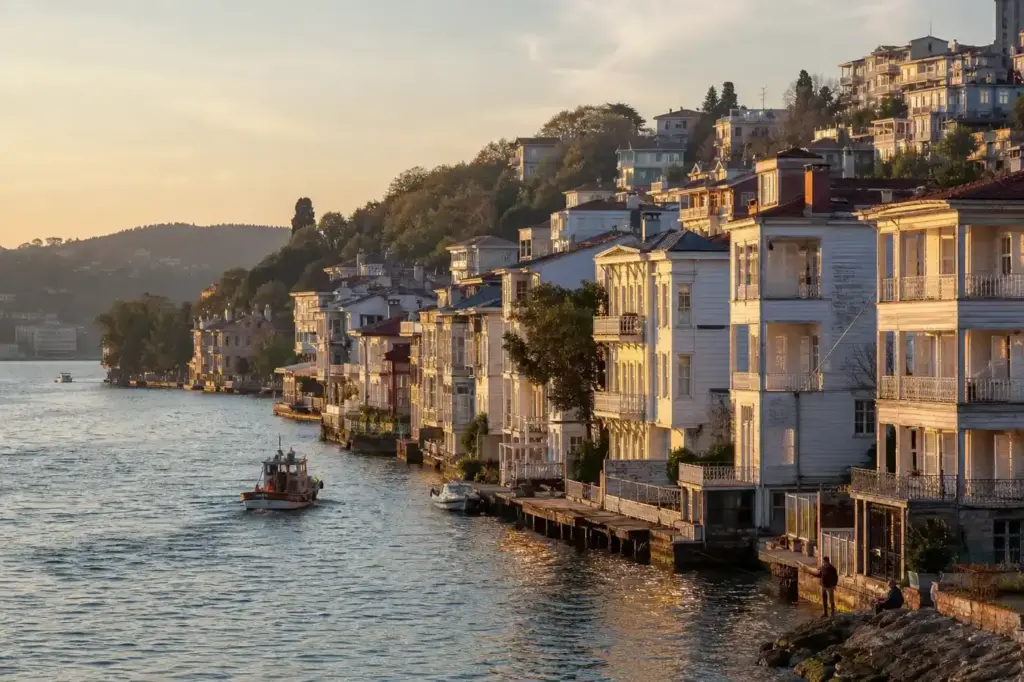
Arnavutköy, a historic neighborhood in the Beşiktaş district along the Bosphorus’ European shore, is one of Istanbul’s most photogenic and least crowded waterfront areas. The neighborhood’s name derives from the Albanian settlers brought here in the 19th century. What makes Arnavutköy distinctive is not size but atmosphere: narrow streets rise steeply from the water, lined with colorful wooden houses decorated in late Ottoman and Art Nouveau styles.
Today it remains residential and intimate, with local fishermen still casting lines from the promenade, small family-run seafood restaurants, and cafés tucked into hillside streets. Unlike the busier Bosphorus neighborhoods of Ortaköy or Bebek, Arnavutköy is quieter and retains authentic everyday life. It lies between Kuruçeşme to the south and Bebek to the north, making it an easy addition to a waterfront walk or a destination in itself for an afternoon or evening.
Quick Facts
| Address | Arnavutköy Mahallesi, Beşiktaş, Istanbul Google MapsApple MapsYandex Maps |
|---|---|
| District | Beşiktaş |
| Metro | Arnavutköy Hastane (M11, Main exit towards waterfront) |
| Best time to visit | Visit Arnavutköy on a weekday morning or early afternoon (before 3 pm) for a peaceful experience; this is when locals walk, fishermen work and the neighborhood feels most authentic. Weekends and evenings are lively but crowded, especially around restaurants. Spring (April–May) and autumn (September–October) offer mild weather and clear light on the water. Summer is warm but increasingly crowded as tourists arrive. Winter is quiet and atmospheric, though occasional rain and overcast skies reduce the view quality. For photography, late afternoon light (4–6 pm) is most striking on the wooden houses and water. For dining, reserve dinner ahead if visiting on a Friday or Saturday; weeknight dinners are less formal and quieter. |
| Recommended duration | 2–3 hours |
What Is (and Isn't) Part of a Visit to Arnavutköy?
| Part | Status | Notes |
|---|---|---|
| Waterfront promenade and walking paths | Included in the standard ticket | The public waterfront road and connecting streets are freely accessible for walking, photography and sitting in cafés. |
| Wooden mansion exteriors (yalıs) | Included in the standard ticket | The houses are private residences; you can photograph and admire them from the street and promenade, but interiors are not open to visitors. |
| Robert College campus | Not open to visitors | The historic campus is visible from the waterfront and upper streets but is a private institution; general visitors cannot enter without prior arrangement. |
| Arnavutköy Mosque | Included in the standard ticket | The neighborhood mosque is a working place of worship. Visitors may enter outside prayer times if dressed respectfully; remove shoes and observe local customs. |
| Restaurants and cafés | Included in the standard ticket | Numerous seafood restaurants and cafés line the waterfront road; these require patronage but are open to all visitors. Reservations are recommended for dinner. |
| Bebek neighborhood | Outside / not part of it | Bebek is a separate neighborhood to the north, accessible via a short walk along the waterfront or coast road. |
| Rumeli Fortress (Rumelihisarı) | Outside / not part of it | The Ottoman fortress lies just north of Arnavutköy and is a separate ticketed attraction; it is reachable on foot but requires a separate admission. |
Why Visit Arnavutköy?
Visit Arnavutköy to experience a quieter, more authentic side of Istanbul’s Bosphorus. The neighborhood’s wooden waterfront mansions—many with intricate tilework, carved shutters and stacked balconies in muted pastels—are among the finest examples of late Ottoman domestic architecture surviving in the city. The waterfront promenade offers unobstructed views of the strait and the Asian shore, with numerous cafés where you can sit by the water.
The neighborhood is also a photography destination, especially for those seeking texture and character rather than obvious landmarks. Evening light is particularly striking on the wooden façades and water. For diners, the concentration of seafood restaurants along the main waterfront road makes it ideal for fresh fish dinners with Bosphorus views—though local advice suggests weekday meals are far less crowded than weekends.
Highlights of Arnavutköy
Waterfront Mansions (Yalıs)
The signature element of Arnavutköy is its intact collection of late 19th and early 20th-century wooden houses—called yalıs in Turkish—built directly on or just above the waterline. These tall, slender structures feature elaborate timber frames with decorative shutters, bay windows and balconies, many painted in cream, pale lilac or peach. Most are late Ottoman in style with Art Nouveau flourishes, though many decorative elements were actually mass-produced. They line the main waterfront road and are best viewed from the promenade or from the water.
Tip: Walk the waterfront road (Bebek-Arnavutköy Caddesi) at golden hour—late afternoon light brings out the colors and details of the wooden facades.
Bosphorus Promenade
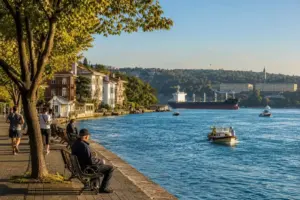
The waterfront walkway is the heart of Arnavutköy, stretching along the European shore with unobstructed views across the strait to the Asian side. Fishermen work from the rocks; small fishing boats pass regularly. The promenade is lined with cafés where you can sit directly by the water, and it connects easily to neighboring Bebek to the north and Kuruçeşme to the south, making it part of a longer Bosphorus walk.
Tip: Come on a weekday morning or early afternoon for a peaceful stroll; weekends and evenings are far more crowded.
Narrow Hillside Streets
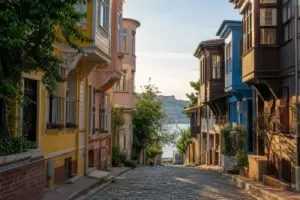
Behind the waterfront road, steep streets climb into the neighborhood—Beyazgül, Francalacı, Eğlence, Dolaplı Kuyu and Kamacı are particularly photogenic. These narrow lanes between old houses offer texture, unexpected corners, glimpses of water between buildings, and a sense of village life. Many connect back to the water or open onto hidden courtyards.
Tip: Wander without a fixed route; the neighborhood is small enough that you cannot get truly lost, and side streets reveal the residential character locals experience.
Robert College Campus
The prestigious Robert College, one of the oldest American boarding schools outside the US, sits on the hillside in Arnavutköy and has occupied this location since the 19th century. While the campus is not open to general visitors, its historic stone buildings and landscaped grounds are visible from the waterfront road and from streets above.
Tip: View the campus from the upper streets of the neighborhood; do not attempt to enter without prior arrangement.
Akıntıburnu (Cape of the Current)
At the eastern edge of Arnavutköy, the coast juts out to form this promontory, notable for the powerful current that once ran through the strait here. Small boats traditionally had to be towed around it. The rocky point offers views in both directions along the Bosphorus and is a natural gathering spot for fishermen.
Tip: Reach it by continuing along the waterfront road east; it marks the unofficial boundary between Arnavutköy and Bebek.
Seafood Restaurants and Fish Culture
Arnavutköy has the highest concentration of seafood restaurants on this stretch of the Bosphorus, nearly all along the waterfront road with tables overlooking the water. Fresh fish is delivered daily from the strait itself—the coast road is lined with small fishing boats. Most restaurants are family-run and serve grilled fish, meze platters and Turkish seafood classics. Reservations are essential on weekends.
Tip: Ask locals or your guesthouse for current recommendations; restaurant quality and popularity shift over time. Lunch is often less formal and crowded than dinner service.
Atmosphere
Arnavutköy feels like a working waterfront village caught in time rather than a tourist destination. Fishermen cast long rods from the promenade, their lines silhouetted against blue water. The narrow streets are quiet on weekday mornings—you hear the water, birds, the clink of boat rigging. The air carries the smell of salt water and grilled fish from restaurant kitchens. In the late afternoon, the neighborhood comes alive: locals take evening walks, café tables fill with people watching the sunset paint the Asian shore pink and gold. The architecture—colorful wooden houses with weathered shutters, carved details, stacked balconies—creates visual depth at every turn.
The residential atmosphere is genuine. You see neighbors chatting in doorways, laundry hanging from balconies, cats stretched on doorsteps. On weekend evenings and nights, the waterfront road becomes more animated with young crowds moving between bars and restaurants, but the hillside streets above remain quiet. The neighborhood feels prosperous but not manicured, elegant but lived-in—neither pristine nor run-down. This balance is fragile and what distinguishes it from more polished Bosphorus areas like Bebek.
History of Arnavutköy
Arnavutköy’s name translates as “Albanian village” in Turkish, deriving from Albanian settlers brought to Istanbul in the 19th century. According to local tradition, these Albanians—skilled builders and laborers—arrived during the reign of Sultan Abdülmescid and settled on this stretch of Bosphorus coastline between what is now Ortaköy and Bebek, joining an existing Greek fishing community. The area became known colloquially as the Albanian Quarter.
By the 18th and early 19th centuries, the Bosphorus was transformed from a rural fishing coast into a fashionable summer retreat for Ottoman officials, wealthy merchants and foreign diplomats. Arnavutköy followed this pattern. Wealthy families—Turkish, Greek, Jewish and Armenian—built elegant wooden mansions on the waterfront, seeking the cool air and views of the strait. Most of the surviving houses date to the late 19th and early 20th centuries, reflecting late Ottoman residential style with Art Nouveau decorative elements that had become fashionable.
The neighborhood was deeply multicultural. A mosque, a synagogue and a church stood near one another, attesting to the area’s religious diversity. Beyond the waterfront mansions, the hillsides were cultivated with vineyards, orchards and strawberry fields—Ottoman strawberries from Arnavutköy were famous throughout the city and the wider region, with 40 hectares under cultivation just decades ago.
In 1914, the American Academy for Girls relocated to Arnavutköy, taking advantage of the waterfront location and establishing what would become a lasting institutional presence in the neighborhood. The school remained until 1923, when it moved to Üsküdar on the Asian side.
Arnavutköy’s character shifted significantly after the 1950s. With the construction of the coastal road and urbanization of the Bosphorus, the neighborhood became less isolated and more residential-commercial. Many of the historic Greek and Jewish families departed during the 20th century. The strawberry fields disappeared. Yet unlike many Bosphorus neighborhoods, Arnavutköy maintained its fundamental scale and appearance. The wooden houses survived restoration rather than demolition, the waterfront remained accessible, and the fishing tradition persisted. By the late 20th century, it became valued by locals and travelers seeking authenticity on the Bosphorus—a place where old Istanbul still visibly breathes.
Legends and Myths about Arnavutköy
The Current of Akıntıburnu
Legend – historically unreliable. At the cape marking the eastern edge of Arnavutköy, local fishermen say the current once ran so powerfully that small boats had to be towed around the point by stronger vessels. The Greek name for the area translates as "Great Current." The phenomenon is real—the geography of the strait and tidal flows do create a dangerous eddy here—but the legend has transformed it into a marker of the strait's untamed power and a test of seamanship.
Ottoman Strawberries
Legend – historically unreliable. Arnavutköy strawberries were celebrated throughout the Ottoman city as exceptionally small, sweet and fragrant—superior to any other variety. The neighborhood's hillsides were draped with strawberry fields. Local stories claim they were cultivated with secret methods now lost, and that the unique taste came from the proximity to the Bosphorus and the soil itself. A few private growers still cultivate small quantities today, keeping the tradition alive.
Tickets and Booking for Arnavutköy
Arnavutköy is a public neighborhood with no entrance fee. The waterfront is freely accessible for walking, sitting and photography at any time. Cafés and restaurants require payment only if you purchase food or drink. If you visit a mosque during prayer times, enter respectfully and follow local customs (remove shoes, dress modestly).
To reach Arnavutköy, use the new M11 metro line to Arnavutköy Hastane station (opened March 2024), or travel by ferry from central Istanbul to nearby Bebek, then walk south along the waterfront. Alternatively, take a taxi or Uber to the waterfront road (Bebek-Arnavutköy Caddesi). Parking in the neighborhood is limited and difficult; public transport or taxi is recommended.
Suggested itineraries Arnavutköy
2 hours
Start at the metro station or taxi drop-off on the main waterfront road. Walk east along the promenade toward Akıntıburnu, observing the wooden mansions and watching fishermen. Visit a café for coffee or tea. Return west along the same route and climb one of the steep side streets (Beyazgül, Francalacı) to explore the hillside houses and texture. End with early dinner at a seafood restaurant.
Half day (3–4 hours)
Arrive mid-afternoon. Start with a slow walk of the entire waterfront from Kuruçeşme area (south) to Akıntıburnu and beyond (east), stopping to sit and observe. Photograph the wooden houses and street scenes on the climb back. Visit the Arnavutköy Mosque if interested in Ottoman interior decoration. Have an early seafood dinner (around 5–6 pm before crowds) at a waterfront restaurant, ordering grilled fish and meze. Finish with an evening walk to watch the sunset from the promenade.
Integrated into a longer Bosphorus walk
Walk south from Bebek along the waterfront, spending 1–1.5 hours in Arnavutköy (stop at a café, walk side streets), then continue to Kuruçeşme or back toward Bebek. Or walk north from Ortaköy area, making Arnavutköy a midpoint stop before reaching Bebek. This approach suits visitors exploring multiple waterfront neighborhoods in a single afternoon.
How to Get to Arnavutköy
By Metro: Take the M11 line to Arnavutköy Hastane station (opened March 2024). From the main exit, head toward the waterfront area; the station is located inland, about a 10–15 minute walk from the water.
By Ferry: Take a ferry from Eminönü or Karaköy to Bebek (fastest and most scenic option). From Bebek, walk south along the waterfront promenade toward Arnavutköy; the walk takes about 15–20 minutes. This approach provides Bosphorus views and avoids traffic.
By Taxi or Ride-Share: Request the driver to take you to Bebek-Arnavutköy Caddesi (the main waterfront road) or to a specific café or restaurant. Avoid asking for “Arnavutköy” alone, as the neighborhood is not clearly signposted. Ride-share apps (Uber, Bolt) work reliably here.
By Bus: Multiple buses serve the area (36Y, 36C, 336 and others connect to the metro and central Istanbul), but the metro and ferry are faster and more direct for most visitors.
Parking: Street parking is very limited and often requires a paid permit. Metered spaces fill quickly, especially on weekends. Use a nearby paid lot or rely on taxi/public transport instead.
Accessibility
The waterfront promenade is flat and paved, suitable for visitors with mobility issues and pushchairs. However, the hillside streets are steep with uneven surfaces, occasional steps and narrow passages—not accessible for wheelchairs. The metro station (Arnavutköy Hastane) has accessible facilities according to the M11 line's standards. Most restaurants and cafés are accessible from the waterfront road. The neighborhood's charm lies partly in its steep terrain; visitors with mobility limitations should plan to stay at waterfront level.
Food Nearby
Arnavutköy itself is the destination for seafood dining. The waterfront road (Bebek-Arnavutköy Caddesi) is lined with restaurants specializing in fresh grilled fish, shrimp, mussels and Turkish meze (appetizers). Family-run establishments dominate; many display the day's catch. Prices are moderate to upscale depending on seating location and the restaurant. Simpler options—small fish stands, kebab vendors and neighborhood bakeries—line the side streets. Walking distance to nearby Bebek (15 minutes north along the waterfront) adds more dining variety and cafés.
What to Bring
Bring comfortable walking shoes with good grip for the steep, sometimes slippery hillside streets. A light sweater or jacket is useful for sitting by the water in the evening, even in warm months (the Bosphorus can create wind and cool breezes). Hat and sunscreen for daytime walking; the promenade offers little shade. A camera or good smartphone for photography. Portable water bottle; while cafés are plentiful, carrying water reduces reliance on cafés. Note: the neighborhood is pedestrian-friendly and safe; standard safety precautions apply as in any Istanbul neighborhood.
Best Views and Photo Spots of Arnavutköy
Waterfront promenade at sunset (main coast road)
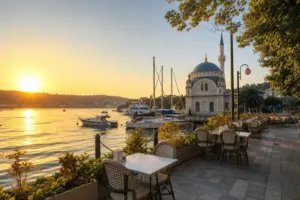
Golden light catches the painted wooden houses and reflects off the Bosphorus. The Asian shore and distant hills become silhouetted. Fishermen silhouetted on the rocks create human interest. The width of the strait and opposing shoreline stretch across the frame.
Best time: One hour before sunset (golden hour); clear weather is essential for color and contrast.
Beyazgül Street looking down to the water
A steep street with houses on both sides creates a tunnel of color and texture, framing the Bosphorus and distant Asian shore in the middle distance. The combination of foreground detail and water view is distinctive to Arnavutköy's layout.
Best time: Mid-morning or mid-afternoon for side lighting on the houses; avoid harsh midday sun.
Fishermen on the rocks (anywhere along the promenade)
Local fishermen with long rods cast into the water. The humble scale of the fishing culture contrasts with the grand mansions behind. Early morning light is soft on the water, and boats often pass in the background.
Best time: Very early morning (7–9 am) before crowds arrive; the light is gentle and the water is calm.
Corner of a side street with a view between buildings
Many of the steep streets have framed views of the water between buildings—a narrow vertical composition with the blue strait visible between weathered wooden houses. These create layered, intimate compositions.
Best time: Late afternoon when side streets are in shadow but the water beyond remains bright, creating contrast.
Akıntıburnu (the promontory at the eastern edge)
The rocky point juts out; views extend in both directions along the Bosphorus. The Second Bridge is visible to the north. The perspective shifts from the intimate neighborhood scale to the larger strait geography.
Best time: Late afternoon, when the bridge lights begin to glow and the Asian hills are catching last light.
Photography Rules
Photography is unrestricted throughout the neighborhood. The wooden houses, street scenes and waterfront are highly photogenic. Use a tripod on the waterfront promenade for sunset shots or long exposures of the water. Flash photography in mosques and other religious spaces should be avoided out of respect. Drones are not permitted in this urban residential area. The best light is late afternoon (4–6 pm) on the wooden façades and early morning (7–9 am) on the water.
Family Suitability
Arnavutköy is suitable for families with school-age children and older teens, particularly for a 2–3 hour visit. The waterfront promenade is safe, car-free and interesting for walking and sitting. Cafés are family-friendly. However, the neighborhood is less ideal for small children and strollers: the hillside streets are very steep with irregular surfaces, narrow passages and occasional steps. Stroller access is limited to the main waterfront road. The neighborhood lacks formal play areas or attractions specifically for children. Best approached as part of a longer Bosphorus walk or as a late-afternoon/early-evening destination for families seeking a calm, photogenic waterfront experience rather than activity-focused tourism.
Istanbul Vibes Tips
- Visit on a weekday, not a weekend. The neighborhood transforms on Friday and Saturday evenings—the waterfront road fills with traffic and young crowds moving between bars and restaurants, and finding a quiet moment for photography or reflection becomes difficult. Weekday afternoons have the atmosphere the neighborhood is known for.
- Eat dinner early (5–6 pm) if you want a table with a view and a quieter experience. Most restaurants serve until 10–11 pm, but the best light and smallest crowds coincide with early eating times. Restaurants fill with locals and groups as evening deepens.
- Get a specific restaurant recommendation before arriving. The waterfront has many options, but quality and atmosphere vary. Ask your guesthouse, tour guide or locals for current favorites; avoid eating at the most visible restaurants, which often cater to tour groups.
- Climb into the side streets without a planned route. The neighborhood is small enough that you cannot get truly lost, and the charm is in unexpected corners, narrow passages and framed views rather than famous sights. A map on your phone is sufficient.
- Use the metro or ferry rather than a taxi if possible. The neighborhood is accessed more easily and enjoyably by water (ferry from Eminönü or Karaköy to Bebek) or the new M11 metro line. Taxi drivers are often unfamiliar with specific Arnavutköy landmarks and may drop you at the wrong end of a long waterfront road.
- Arrive by late afternoon rather than mid-morning. The late-afternoon light (4–6 pm) is when the wooden houses, water and sky are most striking. The neighborhood also quiets down as the day ends but the restaurant atmosphere is building—a sweet spot between daytime peace and evening energy.
Explore Nearby Arnavutköy
Sights near Arnavutköy
 Ortaköy Waterfront – about 2.8 km away · typical visit: 2–3 hoursOpen 24 hours
Main image: AI-generated illustration. It may not show the place exactly as it looks.
 Rumeli Fortress – about 2.2 km away · typical visit: 1–2 hours7 min on foot from Aşiyan metro, Open 09:00–17:00, closed Mon
Main image: AI-generated illustration. It may not show the place exactly as it looks.
 Pierre Loti Hill – about 9.3 km away · typical visit: 1–2 hours2 min on foot from Piyer Loti metro, Open daily 08:00–23:00
Main image: AI-generated illustration. It may not show the place exactly as it looks.
 Galata Bridge – about 7.9 km away · typical visit: 30 minutes to 1 hour10 min on foot from Haliç metro, Open 24 hours
Main image: AI-generated illustration. It may not show the place exactly as it looks.
 Ziraat Bank Tower – about 1.2 km away (~20 min walk) · typical visit: 30 minutes to 1 hour8 min on foot from Aşiyan metro
Main image: AI-generated illustration. It may not show the place exactly as it looks.
 Akmerkez Shopping Mall – about 1.7 km away (~27 min walk) · typical visit: 2–4 hours4 min on foot from Nispetiye metro
Main image: AI-generated illustration. It may not show the place exactly as it looks.
Restaurants and cafes near Arnavutköy
 Sankai by Nagaya – about 1.1 km away (~18 min walk)12 min on foot from Etiler metro
Main image: AI-generated illustration. It may not show the place exactly as it looks.
Nightlife near Arnavutköy
 Oligark Istanbul – about 1.5 km away (~24 min walk)Open daily 10:00–04:00
Main image: AI-generated illustration. It may not show the place exactly as it looks.
Related guides
 Bebek: Waterfront Cafés, Walks and the Apple of the Bosphorus
Main image: AI-generated illustration. It may not show the place exactly as it looks.
 Ortaköy and Beşiktaş Walk: Waterfront Mosques, Street Food and Local Life
Main image: AI-generated illustration. It may not show the place exactly as it looks.
 Kuruçeşme to Bebek Bosphorus Walk: A Waterfront Route Through Wooden Mansions
Main image: AI-generated illustration. It may not show the place exactly as it looks.
 Bosphorus Waterfront Walk: 3-Day Route from Dolmabahçe to Bebek
Main image: AI-generated illustration. It may not show the place exactly as it looks.
 Best Walking Neighborhoods: Where to Explore Istanbul on Foot
Main image: AI-generated illustration. It may not show the place exactly as it looks.
Browse more: More in Beşiktaş · All Hidden Istanbul · All Neighborhoods
FAQ: Arnavutköy
Is Arnavutköy in Beşiktaş or Sarıyer?
Arnavutköy waterfront neighborhood is in the Beşiktaş district. Do not confuse it with Arnavutköy district (a separate, much larger administrative division in northwest Istanbul where Istanbul Airport is located). The waterfront neighborhood is small, historical and on the Bosphorus; the district is suburban and inland.
Can I visit the wooden houses?
No. The yalıs (wooden mansions) are private residences and not open to visitors. You can photograph and admire them from the street and waterfront promenade. Some are undergoing restoration; do not enter construction sites.
How do I get to Arnavutköy?
Use the M11 metro line to Arnavutköy Hastane station (opened March 2024), or take a ferry from central Istanbul to Bebek and walk south 15–20 minutes along the waterfront. Taxi or Uber are convenient but slower due to traffic. Do not drive a rental car here; parking is difficult and the neighborhood is best explored on foot.
What are the best restaurants?
The waterfront road is lined with seafood restaurants serving fresh fish from the Bosphorus. Specific recommendations change over time; ask locals or your guesthouse for current favorites rather than relying on older guidebooks or online reviews. Most restaurants are family-run and require reservations on weekends.
Is Arnavutköy safe?
Yes, Arnavutköy is a quiet, residential neighborhood with no specific safety concerns. Standard Istanbul precautions apply (avoid displaying valuables, be aware of surroundings). The neighborhood is gentrifying and upscale; most visitors feel comfortable here at any time of day or evening.
How long should I spend in Arnavutköy?
Plan 2–3 hours for a visit: one hour for a waterfront walk, one hour exploring hillside streets and sitting in a café, and one hour for dinner or refreshment. You can spend longer if photography or leisurely dining is your focus.
Are there nightlife and bars in Arnavutköy?
Yes. On weekend evenings, Arnavutköy becomes a nightlife destination with bars and cocktail venues. Venues like Alexandra and Any offer Bosphorus views and attract younger crowds. This is very different from the daytime village atmosphere; visit on a weekday if you prefer quiet.
Can I swim or fish here?
Swimming is not recommended in the strait itself due to strong currents and boat traffic. Local fishermen cast from the rocks using rods; do not interfere with them. The waterfront is designed for walking, sitting and observing.
Istanbul Vibes is a one-person project. A coffee keeps it going

Take this guide with you
Get a free PDF of this guide to print or read offline: key facts, tips and a map link on a few clean pages.
Report an issue on this page
How we research and update our guides
About this guide: AI assistance and accuracy
This guide is created with the help of AI and is based on official sources where available. Mistakes can still happen. Opening hours, prices, rules and other details are given to the best of our knowledge as of the date shown and can change without notice. It offers general recommendations only, not professional, legal or travel advice. Please confirm important details with the official source before you travel; you are responsible for your own plans and decisions.
* Affiliate link: as an Amazon Associate we earn from qualifying purchases at no extra cost to you.
