
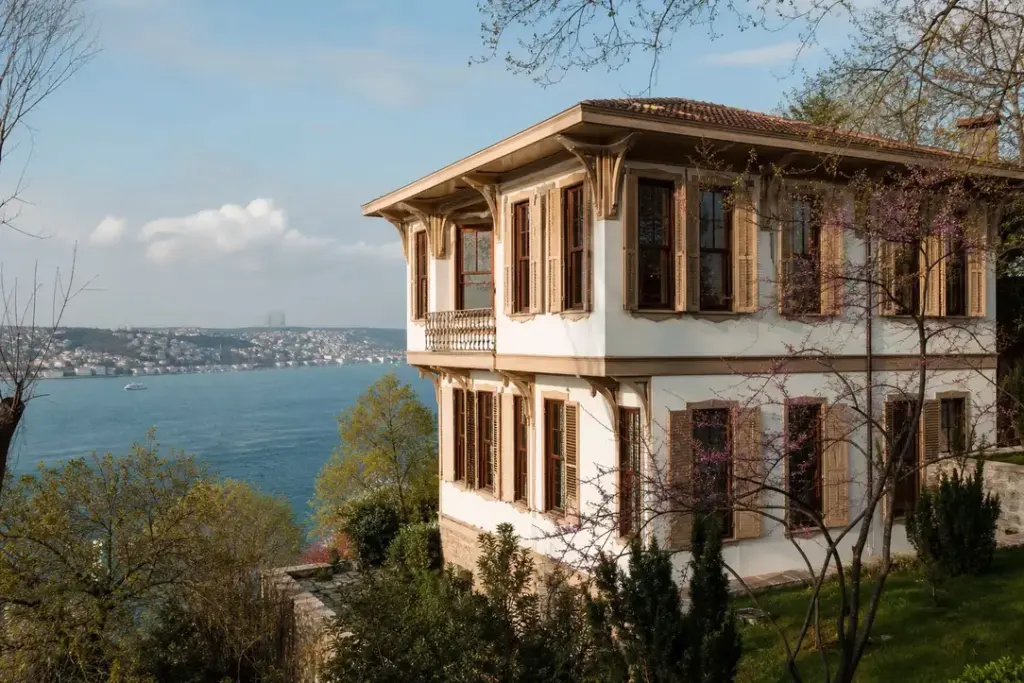
The Aşiyan Museum was designed and built in 1906 by Tevfik Fikret, one of the pioneers of Turkish literature. Fikret, a leading figure of the Edebiyat-ı Cedide (New Literature) movement, named this elegant house “Aşiyan,” which means “bird’s nest” in Persian.
Tevfik Fikret lived in the house from 1906 to 1915. It was sold by his wife Nazime Hanım to the Istanbul Municipality in 1940, and five years later, in 1945, it opened to visitors under the name Edebiyat-ı Cedide Museum, becoming Turkey’s first literary museum. The museum not only houses Fikret’s personal belongings but also features the collections of prominent literary contemporaries like Abdülhak Hâmid Tarhan and Şair Nigâr Hanım.
Quick Facts
| Built / opened | 1945 |
|---|---|
| Address | Aşiyan Yokuşu, Bebek, Beşiktaş Google MapsApple MapsYandex Maps |
| District | Beşiktaş |
| Metro | Aşiyan (M2, Follow Aşiyan Yokuşu uphill, approximately 10 minutes walk) |
| Admission | free |
| Best time to visit | Visit on a weekday (Tuesday to Thursday) in late morning or early afternoon to minimize crowds and ensure good light through the museum windows. The garden has a magnificent view of the Bosphorus, so autumn offers the clearest air and most dramatic light across the water. Spring tulip season (March–April) brings mild weather suitable for the uphill walk. Summer is warm but can be crowded with tourists; winter is quiet but afternoons can be grey. |
| Website | ataturkkitapligi.ibb.gov.tr/en/Kitaplik/Muzelerimiz/Asiyan-Museum/1 |
What Is (and Isn't) Part of a Visit to Aşiyan Museum?
| Part | Status | Notes |
|---|---|---|
| Ground floor with salon, Fikret's possessions, wax figure, and artworks | Included in the standard ticket | Central display of the poet's personal belongings and paintings. |
| Upper floors: study, bedroom, dining room with family furnishings | Included in the standard ticket | Private rooms showing how Fikret lived and worked. |
| Abdülhak Hâmid Tarhan memorial section | Included in the standard ticket | Collections of another major poet; honors the literary circle around Fikret. |
| Nigar Hanım collections | Included in the standard ticket | Belongings and materials of a contemporary female poet. |
| Tevfik Fikret's tomb in the garden | Included in the standard ticket | His remains were moved here in 1961; accessible during visiting hours. |
| Aşiyan Cemetery (adjacent) | Outside / not part of it | Separate historic cemetery; not part of the museum but nearby and sometimes visited together. |
| Audio guide or guided tour | Not open to visitors | Standard museum has no audio guide; Turkish-language tours may be arranged; inquire at the entrance. |
Why Visit Aşiyan Museum?
The museum overlooks the unique view of the Bosphorus, offering a quiet cultural experience away from Istanbul’s busier museums. The ground floor displays Tevfik Fikret’s original possessions, including a wax replica of the poet, a sizable painting titled “Sis” (Fog) inspired by his poem and painted by Ottoman Caliph Abdulmecid, and original artwork by Fikret such as “Chrysanthemum Vase.” The upper level contains Tevfik Fikret’s study, where you can see the poet’s collection of books, self-portraits, desk, and calligraphy plates. For literature enthusiasts and anyone interested in late Ottoman intellectual life, the intimate scale and genuine literary atmosphere make this a meaningful stop.
How Aşiyan Museum Is Laid Out
The building has three stories. On the ground floor is where Fikret would welcome his guests. The main hall has a domed ceiling and stenciled decorations, while other rooms contain administrative offices. The study area for Tevfik Fikret is on the museum’s upper level, with the poet’s collection of books, self-portraits, desk, and calligraphy plates. In the bedroom where he died, visitors can view Tevfik Fikret’s facial reconstruction mask, photographed by Mihri Müşfik Hanım immediately after his death. In the dining room, there are several still life paintings by Tevfik Fikret as well as dinner sets that belonged to the poet’s family. In 1961, Tevfik Fikret’s remains were moved from the family cemetery in Eyüp to the museum’s garden, in accordance with his will.
Highlights of Aşiyan Museum
Tevfik Fikret's Study and Private Rooms
The upper level contains Tevfik Fikret's study with the poet's collection of books, self-portraits, desk, and calligraphy plates. In the bedroom where he died, visitors can view his facial reconstruction mask, photographed immediately after his death in 1915. This intimate space shows the daily life of one of Turkey's most influential modern poets.
Tip: Spend time looking at the original desk and personal writing materials to understand how Fikret worked; the space feels almost untouched by time.
The Wax Replica and Ground-Floor Salon
The ground floor includes the lounge area where Fikret's original possessions are displayed, with a wax replica of the poet on display. A sizable painting titled "Sis" (Fog) stands next to it, inspired by Tevfik Fikret's poem of the same name and painted by Ottoman Caliph Abdulmecid.
Tip: The painting is a striking visual connection between Fikret's poetry and Ottoman artistic response; look for the signature and date.
Fikret's Artwork and Still-Life Collections
Original artwork by Fikret includes "Chrysanthemum Vase" and "Nazime Hanım on Baby's Back." The dining room displays several still-life paintings by Fikret as well as dinner sets that belonged to the poet's family. These works reveal an unexpected visual dimension to a celebrated literary figure.
Tip: Many visitors focus only on the literary connection; the paintings show Fikret was also a serious visual artist with careful compositional sense.
Abdülhak Hâmid Tarhan Memorial Section
The museum represents another outstanding Turkish poet, Abdülhak Hamit Tarhan. After his death, his wife bequeathed his possessions to the Istanbul Municipality. These items are shown in the Abdülhak Hamit Tarhan area together with photographs and a painting that Caliph Abdulmecid painted for him.
Tip: This section provides context for the Servet-i Fünun literary movement and the circle of poets Fikret influenced.
Poet Nigar Hanım Collections
The museum features the collections of prominent literary contemporaries like Şair Nigâr Hanım. The presence of a female poet's work in this male-dominated era reflects the intellectual diversity of Ottoman literary circles.
Tip: Look for biographical details about Nigar Hanım to understand women's roles in late Ottoman literature.
Bosphorus Garden and Poet's Tomb
In 1961, Tevfik Fikret's remains were moved from the family cemetery in Eyüp to the museum's garden, in accordance with his will. The garden offers views across the waterway and contains his grave, completing the connection between his life, work, and final resting place.
Tip: Visit the garden last; it provides reflective quiet after the museum interior and contextualizes Fikret's famous Bosphorus imagery in his poetry.
Atmosphere
The museum overlooks the unique view of the Bosphorus, and the setting reflects the intimate scale of a historic house rather than a grand institutional museum. The rooms are modestly sized and filled with original furnishings, family photographs, and personal artifacts, creating an atmosphere of stepping into the poet’s private world rather than viewing curated exhibition halls. The garden has a magnificent view of the Bosphorus that inspired Fikret’s poems. Few visitors crowd the space, especially outside midday hours, and the quiet corridors and book-lined study convey the solitude in which Fikret worked. The wax figure adds an unusual, slightly haunting human presence. Afternoon light through the tall windows of the salon gives the interior a contemplative, almost melancholic feeling—fitting for a poet known for introspection and social commentary.
History of Aşiyan Museum
Tevfik Fikret lived in the house from 1906 until his death in 1915. He designed and built the house in 1906, naming it “Aşiyan,” which means “bird’s nest” in Persian. Fikret was a leading figure of the Edebiyat-ı Cedide (New Literature) movement, a crucial phase in Turkish literary modernism that marked the transition from Ottoman classical forms to contemporary styles.
After Fikret’s death in 1915, the house was sold by his wife Nazime Hanım to the Istanbul Municipality in 1940. Thanks to the efforts of then Minister of National Education Hasan Ali Yücel, it was opened to visitors in 1945 under the name Edebiyat-ı Cedide Museum, becoming Turkey’s first literary museum. This early recognition of literature as a subject worthy of museum preservation was pioneering for the region.
In 1961, Tevfik Fikret’s remains were moved from the family cemetery in Eyüp to the museum’s garden, in accordance with his will; after this meaningful relocation, the institution’s name was changed to Aşiyan Museum. The shift from “Museum of New Literature” to “Aşiyan Museum” marked a personal focus on Fikret himself as the central figure. The museum was restored over a period of 18 months and reopened in December 2012. The restoration included the addition of custom-made furniture based on original photos as well as a wax sculpture of Tevfik Fikret. Since then, the museum is owned by the Istanbul Metropolitan Municipality.
Legends and Myths about Aşiyan Museum
The Bosphorus as Muse
Legend – historically unreliable. The museum's Bosphorus-facing balcony is where Tevfik Fikret wrote some of his most famous poems, capturing the changing tides of Ottoman modernism and social thought. Local tradition holds that Fikret drew spiritual energy from the waterway's moods, and that certain poems were composed specifically while looking out at particular views from the garden during different seasons.
The Poet's Return Home
Disputed by historians. In 1961, Tevfik Fikret's remains were moved from the family cemetery in Eyüp to the museum's garden, in accordance with his will. Some accounts describe this as Fikret's expressed wish to rest at the house where he created most of his important work, transforming the building into a sacred literary site as well as a museum.
Tickets and Booking for Aşiyan Museum
The Aşiyan Museum is open every day except Monday from 09:00 to 17:00. Admission is free of charge. No advance booking or tickets are required; simply arrive during opening hours. The museum is owned by the Istanbul Metropolitan Municipality. For any inquiries or group visits, contact the museum directly at 0212 263 69 86 or kutuphanemuzeler@ibb.gov.tr. The museum’s official website is maintained by the Atatürk Library branch of the Istanbul Metropolitan Municipality for current information.
Suggested itineraries Aşiyan Museum
1 hour
Enter the ground floor salon, see the wax figure, the "Sis" painting, and Fikret's artwork. Climb to the second floor to view the study and bedroom with original furnishings. Return downstairs to the dining room. This fast route captures the essential rooms and biography.
1.5 hours
Follow the 1-hour route above but spend additional time reading biographical plaques and studying the Abdülhak Hâmid Tarhan and Nigar Hanım sections. Visit the garden and tomb at the end. Read selected poems or passages about Fikret's life to deepen context.
Half day (2–3 hours with nearby sites)
Spend 1.5 hours at Aşiyan Museum. Walk down to the adjacent Aşiyan Cemetery (10 minutes) to view historic graves. Return to the waterfront and walk through the Bebek neighborhood, or take the metro one stop to Fındıklı-Mimar Sinan Üniversitesi and visit the nearby Mimar Sinan Fine Arts University campus for additional Ottoman cultural context.
How to Get to Aşiyan Museum
By Metro: Take Line M2 (the Bosphorus-side metro line) to Aşiyan station. Exit and follow Aşiyan Yokuşu (a steep street) uphill for approximately 10 minutes. The museum entrance is on your right as you climb.
By Taxi or Ride-Share: Request the address “Aşiyan Yokuşu, Bebek, Beşiktaş.” Parking is limited; a car may drop you partway up the street, and you will walk the remainder.
From Taksim or Beyoğlu: Take the M2 metro south toward Aşiyan; the journey is about 15 minutes. Bebek is in the northern Bosphorus neighborhoods; allow time for the uphill walk from the station.
Accessibility
The museum is a historic house museum with stairs on each level. The building has three stories. There is no elevator. Visitors with limited mobility should be prepared for a steep street walk uphill from the metro station (approximately 10 minutes with incline). The interior has narrow corridors and multiple staircases between floors. Wheelchairs and strollers are impractical. Official accessibility information is not published; contact the museum at 0212 263 69 86 before visiting if you have mobility concerns.
Food Nearby
The Bebek neighborhood has cafés and casual restaurants within a 10-minute walk downhill from the museum, including waterfront options along the Bosphorus. Aşiyan Street itself is quiet and lacks direct food options; plan to eat before the uphill climb or descend after your visit. Coffee and tea are not sold inside the museum, so bring water.
What to Bring
Wear comfortable walking shoes with good grip for the uphill street from the metro station; the pavement can be slippery in wet weather. Bring a water bottle—there is no shop on the approach. A small bag is fine; no coat check is available. Security and bag checks are minimal; bags larger than a regular backpack may be questioned at entry.
Best Views and Photo Spots of Aşiyan Museum
Ground-floor salon with domed ceiling
The main hall has a domed ceiling and stenciled decorations. The architectural detail and period furnishings create a historically rich frame.
Best time: Mid-morning when light fills the dome; avoid harsh afternoon shadows that obscure the ceiling ornament.
Fikret's study with desk and books
Windows frame the Bosphorus in the background; the desk and personal objects convey the intimacy of the poet's working space without modern intrusion.
Best time: Early afternoon when side light reveals the depth of the shelves and personal items.
Garden with Tevfik Fikret's tomb and Bosphorus view
The grave marker set against the Bosphorus waterway and opposite coastline creates a poignant, contemplative composition reflecting his connection to the landscape.
Best time: Late afternoon in autumn when the light is warm and the water reflects gold; spring also offers clear views.
Balcony overlooking the Bosphorus
An authentic vantage point where Fikret watched the water and composed poetry; the view frames the European and Asian shores.
Best time: Golden hour (late afternoon) for dramatic light; clear days reveal the distance across to the Asian shore.
Photography Rules
Photography is generally permitted inside the museum for personal use, though tripods and professional equipment are not allowed. Flash photography inside is discouraged to protect the furnishings and artwork. Outdoor photography of the building and garden is unrestricted. Confirm current policy with staff upon entry, as rules may change seasonally.
Family Suitability
The museum is suitable for older children and teens with literary interests or curiosity about Ottoman history, but not ideal for very young children. The building has three stories with multiple stairs and narrow passages; toddlers and strollers are impractical. Children under 8 will struggle with the steep uphill street walk from the metro and may find the interior unfamiliar and quiet. No interactive exhibits or child-oriented displays exist. Teenagers studying Turkish literature or Ottoman culture will find the genuine house setting and personal artifacts more engaging than a conventional museum.
Istanbul Vibes Tips
- Arrive early (09:00–10:30) on a Tuesday, Wednesday, or Thursday to experience the museum in near-solitude. Afternoon visitors are fewer, but morning light is often superior for photographs and the experience feels less rushed.
- Bring a Turkish phrase guide or use a translation app to read the Turkish plaques in each room. English labels are minimal; understanding Fikret's biography and the Edebiyat-ı Cedide context greatly enriches the visit.
- Do not rush through the study and bedroom. Spend at least 15 minutes here; the original desk, letter collections, and personal items tell the story of Fikret's daily intellectual life in a way the salon cannot.
- Plan your descent carefully. After visiting, the downhill walk to the metro is easy but steep; wear shoes with brakes or use a walking pole if you have knee issues. The street offers no rest areas partway.
- Visit the tomb and garden last. It provides a reflective end to the experience and offers the best Bosphorus views for quiet reflection or photographs as light changes.
- Check the museum's Turkish website or call ahead before visiting in winter or during local holidays, as group closures or special hours are sometimes announced only in Turkish media.
Explore Nearby Aşiyan Museum
Sights near Aşiyan Museum
 Mimar Sinan Fine Arts University – about 7.9 km away · typical visit: 1–2 hours2 min on foot from Fındıklı-Mimar Sinan Üniversitesi metro
Main image: AI-generated illustration. It may not show the place exactly as it looks.
 Rumeli Fortress – about 300 m away (~5 min walk) · typical visit: 1–2 hours7 min on foot from Aşiyan metro, Open 09:00–17:00, closed Mon
Main image: AI-generated illustration. It may not show the place exactly as it looks.
 Ziraat Bank Tower – about 700 m away (~11 min walk) · typical visit: 30 minutes to 1 hour8 min on foot from Aşiyan metro
Main image: AI-generated illustration. It may not show the place exactly as it looks.
 Küçüksu Pavilion – about 900 m away (~14 min walk) · typical visit: 1–2 hours13 min on foot from Aşiyan metro
Main image: AI-generated illustration. It may not show the place exactly as it looks.
 Anatolian Fortress – about 1.1 km away (~18 min walk) · typical visit: 1–2 hoursOpen 10:00–17:30, closed Mon
Main image: AI-generated illustration. It may not show the place exactly as it looks.
 Fatih Sultan Mehmet Bridge – about 1.2 km away (~19 min walk) · typical visit: 30 minutes to 1 hourOpen 24 hours
Main image: AI-generated illustration. It may not show the place exactly as it looks.
Metro stations near Aşiyan Museum
 Aşiyan – about 150 m away (~3 min walk)Open daily 06:00–00:00
Main image: AI-generated illustration. It may not show the place exactly as it looks.
 Boğaziçi Üniversitesi – about 700 m away (~12 min walk)Open daily 06:00–00:00
Main image: AI-generated illustration. It may not show the place exactly as it looks.
Restaurants and cafes near Aşiyan Museum
 Sankai by Nagaya – about 950 m away (~15 min walk)12 min on foot from Etiler metro
Main image: AI-generated illustration. It may not show the place exactly as it looks.
Nightlife near Aşiyan Museum
 Taps Bebek – about 350 m away (~6 min walk)4 min on foot from Aşiyan metro
Main image: AI-generated illustration. It may not show the place exactly as it looks.
Related guides
 Bosphorus Waterfront Walk: 3-Day Route from Dolmabahçe to Bebek
Main image: AI-generated illustration. It may not show the place exactly as it looks.
 Mangerie: Bebek Brunch, Terrace Views and Opening Hours
Main image: AI-generated illustration. It may not show the place exactly as it looks.
 The Stay Bosphorus: A Mansion Hotel in Ortaköy
Main image: AI-generated illustration. It may not show the place exactly as it looks.
 Sunset Grill & Bar: Dinner Above the Bosphorus
Main image: AI-generated illustration. It may not show the place exactly as it looks.
 Tuğra: Ottoman Palace Dining on the Bosphorus
Main image: AI-generated illustration. It may not show the place exactly as it looks.
Browse more: More in Beşiktaş · All Museums · All Sightseeing
FAQ: Aşiyan Museum
Is Aşiyan Museum really free?
The museum is open every day except Monday from 09:00 to 17:00, and admission is free of charge. No tickets, vouchers, or reservations are needed. Simply arrive during opening hours and enter.
Who was Tevfik Fikret and why is his house a museum?
Tevfik Fikret (1867–1915) is considered the father of modern Turkish poetry. His home was opened to visitors in 1945 as Turkey's first literary museum. He pioneered the Edebiyat-ı Cedide (New Literature) movement, which modernized Turkish literary forms and expression.
How long does a typical visit take?
Most visitors spend 1 to 1.5 hours. The house is intimate and compact. A quick tour (focusing on the salon, study, and bedroom) takes about 1 hour. A thorough visit reading plaques and exploring all sections takes 1.5 to 2 hours.
Is Aşiyan Museum suitable for children?
It is best suited to older children and teens interested in literature or history. The steep uphill walk from the metro, multiple stairs indoors, and lack of interactive exhibits make it less appealing for young children under 8. Strollers are impractical.
Can I take photographs inside the museum?
Yes, personal photography is generally permitted. Tripods and professional equipment are not allowed. Flash should be avoided to protect artworks and furnishings. Confirm the current policy with staff at the entrance.
What is in the garden and tomb area?
In 1961, Tevfik Fikret's remains were moved to the museum's garden, in accordance with his will. The tomb overlooks the Bosphorus and offers the best views and a reflective atmosphere. The garden is open during museum hours.
Is parking available near the museum?
Parking is limited on Aşiyan Yokuşu (the steep street leading to the museum). Most visitors use the metro to Aşiyan station and walk uphill. If driving, arrive early or use a taxi/ride-share and ask to be dropped as close as possible to the entrance.
Can I visit Aşiyan Museum and nearby Aşiyan Cemetery together?
Yes. The cemetery is adjacent and downhill; allow 30 minutes to walk through it after the museum. Both are free and offer views of the Bosphorus. The cemetery honors Ottoman and Turkish notable figures and complements the literary focus of the museum.
Istanbul Vibes is a one-person project. A coffee keeps it going
Hotels near Aşiyan Museum
- Boğaziçi Üniversitesi Misafirhanesi (400 m) Check prices (affiliate link, opens in a new tab)
Affiliate link (opens the booking site): we may earn a commission at no extra cost to you.
Restaurants near Aşiyan Museum
- Tahin (550 m) Google Maps
- Yenice (550 m) Google Maps
- Iskele (700 m) Google Maps
Distances are straight-line, from OpenStreetMap data.

Take this guide with you
Get a free PDF of this guide to print or read offline: key facts, tips and a map link on a few clean pages.
Report an issue on this page
How we research and update our guides
About this guide: AI assistance and accuracy
This guide is created with the help of AI and is based on official sources where available. Mistakes can still happen. Opening hours, prices, rules and other details are given to the best of our knowledge as of the date shown and can change without notice. It offers general recommendations only, not professional, legal or travel advice. Please confirm important details with the official source before you travel; you are responsible for your own plans and decisions.
* Affiliate link: as an Amazon Associate we earn from qualifying purchases at no extra cost to you.
