

Rumelihisarı is one of Istanbul’s most dramatic historical landmarks—a sprawling Ottoman castle perched on the European shore of the Bosphorus Strait, in the Sarıyer district. Over 3,000 people laboured tirelessly for 4 months to construct the magnificent Rumeli Fortress which Ottoman Sultan Mehmed II, also known as Mehmed the Conqueror, commissioned.
The complex was commissioned in preparation for a planned Ottoman siege on the then-Byzantine city of Constantinople, with the goal of cutting off maritime military and logistical relief that could potentially come to the Byzantines by way of the Bosphorus Strait. Since 1960 the Rumeli Castle has functioned as a museum and is open to the public as an open-air museum.
Current access notice: The fortress has had ongoing restoration work on parts of the upper towers and some walkways, which is normal for a structure this old, but the grounds and the main walls stay open to visitors throughout. Some of the higher tower stairs may be roped off depending on the current phase of work, so check at the ticket booth on the day.
Quick Facts
| Address | Yahya Kemal Caddesi No. 42, 34470 Rumelihisarı, Sarıyer, İstanbul Google MapsApple MapsYandex Maps |
|---|---|
| District | Sarıyer |
| Metro | Aşiyan (M6, Then F4 funicular to Aşiyan pier for water access; or bus from Beşiktaş) |
| Opening hours | Tue–Sun 09:00–18:00 (April–October); Tue–Sun 09:00–17:00 (November–March) Closed Mondays |
| Admission | ₺₺ |
| Best time to visit | April–June and September–October; early mornings are ideal to avoid crowds. Winter months (November–March) are quieter and offer clear skies but shorter daylight and potential rain on the steep paths. Summer (July–August) is popular but hot and crowded. Late afternoon (approaching sunset) brings golden light on the stone and reduces afternoon heat, though this is also when many tour groups arrive. Weekdays outside summer are most peaceful. |
| Website | muze.gov.tr |
What Is (and Isn't) Part of a Visit to Rumelihisarı?
| Part | Status | Notes |
|---|---|---|
| Fortress grounds and courtyards | Included in the standard ticket | All courtyard areas, walls, ramparts, and connecting passages are open to visitors. |
| Three main towers | Included in the standard ticket | Internal access varies; some sections may be closed for restoration. Check at entry. |
| Hisar Mosque (Hisar Camii, 1452) | Included in the standard ticket | The small Ottoman mosque in the central courtyard. Access may be limited during prayer times. |
| Basement beneath the mosque | Included in the standard ticket | A small chamber below the mosque courtyard with modest historical display. |
| Small exhibition on fortress construction | Included in the standard ticket | Brief displays on military history and the siege of Constantinople. |
| Anadolu Hisarı (Anatolian Fortress) | Separate ticket or institution | Located directly across the strait on the Asian shore. Separate site, separate ticket, separate neighborhood. |
| Access to water or boat tours | Outside / not part of it | The fortress site itself does not include boat tour departures. Water-based viewing must be arranged separately. |
| Internal dining or shops | Not open to visitors | No cafes or shops operate within the fortress. Food and water must be brought or purchased in the neighborhood below. |
Why Visit Rumelihisarı?
With three monumental towers, powerful defensive walls, a green museum courtyard and commanding Bosphorus views, the fortress is one of Istanbul’s most impressive examples of Ottoman military architecture. Rumelihisarı offers spectacular panoramic views of the Bosphorus, the Fatih Sultan Mehmet Bridge, and both the European and Asian shores. History readers get the most from the site, especially if they have already read the Ottoman Istanbul guide or the Byzantine Istanbul guide; Rumeli Fortress is the missing link between the two stories, the place where the Ottoman plan to take Constantinople became physical stone.
How Rumelihisarı Is Laid Out
All towers, watchtowers and walls are topped with crenellations; the fortress had wooden houses for the soldiers and a small mosque, endowed by Mehmed II at the time of construction. The fortress spreads across steep hillside terrain, with three main towers connected by massive curtain walls. Visitors enter through the lower gate and ascend through courtyards and ramparts. The layout follows the natural contours of the slope, so paths wind upward through different levels. The small mosque sits in the central courtyard. The main towers offer the highest vantage points for views across the strait.
Highlights of Rumelihisarı
Three Great Towers
The fortress features three main towers: Sadreddin, Halil, and Zağanos Pasha. Each tower stands several stories tall, with crenellated parapets for cannon and archer positions. The towers command views across the Bosphorus to the Asian shore, where Anadolu Hisarı stands directly opposite. Visitors can climb partway up the towers via internal staircases to see the stone structure and the vast width of the strait. Look for the thick walls built from stone salvaged from Roman foundations on the site.
Tip: Bring sturdy shoes—internal tower stairs are steep and worn. Check at the ticket booth which towers are open on your visit day, as restoration work sometimes closes upper sections.
The Strategic Strait View
The fortress was aimed at establishing control of the waterway at the narrowest point of the strait (660 meters) where ships would need to approach the shore to avoid the strong currents. Standing on the ramparts, you can see how completely the fortress dominates the waterway. Container ships and tankers still pass daily, following the same narrow channel that Mehmed's cannons once guarded. The width between Rumelihisarı and Anadolu Hisarı opposite is visually apparent—the two fortresses created an unbreakable barrier.
Tip: Visit in late afternoon when light is low and the water reflects the hills. Sunrise is also excellent but fewer facilities are available early.
The Small Ottoman Mosque
A converted mosque (Hisar Mosque, 1452) survives in a simple form. The mosque was endowed by Mehmed II at the time of construction. The original structure is modest, built for the soldiers stationed here. Today it remains largely unchanged, a rare surviving example of early Ottoman military architecture.
Tip: Ask at the ticket booth if access to the mosque is open on your visit. Look for the basement entrance below the mosque courtyard—most visitors miss it entirely.
Open-Air Museum Layout
The structure is an important example of Ottoman military architecture, consisting of three large towers, walls, and cannonballs used in the conquest. In the nineteenth century, a neighborhood was formed inside the castle with houses, mosques, shops, and so on; however, this neighborhood was destroyed in the 1950s. The grounds are now kept clear as a museum courtyard, allowing visitors to see the full extent of the fortification system—walls, bastions, and the spatial relationships between defensive positions.
Tip: The entire exhibition is open-air with no indoor halls. Bring water, a hat, and sunscreen in warm months. Rain in winter means wet stone and slippery paths.
Anadolu Hisarı Across the Water
The fortress was built by Mehmed II in four months beginning in the spring of 1452 across the waters from the Anatolian Fortress (Anadoluhisari or Güzelce Hisar) built by his grandfather Bayezid I (1389-1402). From the ramparts, Anadolu Hisarı is plainly visible on the Asian shore. Though smaller and less developed for tourism, it is a separate site belonging to a different neighborhood and requires crossing the strait by water or going around via the coast.
Tip: Do not assume you can walk to Anadolu Hisarı—the strait is 660 meters wide. It is reachable by boat tours or a long road journey around.
Conquest of Constantinople Context
A battalion of four hundred soldiers were stationed at the fortress beginning in 1452, and prevented the passage of ships with cannon fire during the siege of Constantinople. The fortress was operational for only a brief moment as a military tool, but its role was decisive. After 1453, the castle lost its military importance and served as a customs checkpoint until the seventeenth century and then as a prison until the nineteenth century.
Tip: Understanding the historical context deepens the visit. Read about the Fall of Constantinople before you arrive to grasp why a fortress on a Bosphorus hillside mattered so much to world history.
Atmosphere
The fortress is a working museum spread across steep hillside terrain, open to the sky and wind from the water. Stone walls warm in sunlight and cool rapidly in shade. The sound of passing ships carries across the strait. On weekdays, particularly in off-season months, the grounds are peaceful with few visitors; weekends and summer bring more foot traffic, especially in late afternoon. Early morning light turns the cut stone golden and the water is quietest then. Late afternoon crowds thin as sunset approaches, but this is when tour groups often arrive. Winter months bring fewer visitors but also rain and muddy paths on the slopes. The atmosphere shifts with the light—dramatic and exposed in bright sun, shadowed and atmospheric in overcast weather.
History of Rumelihisarı
The fortress was conceived and built between 1451 and 1452 CE on the orders of Sultan Mehmed II, commissioned in preparation for a planned Ottoman siege on the then-Byzantine city of Constantinople. The fortress was built swiftly within just over four months in 1452 under the orders of Sultan Mehmed II, aiming to control naval passage along the Bosphorus Strait at its narrowest point, approximately 660 meters wide.
Building began in 1452 as Mehmed signed his own initials and those of the Prophet Muhammed on the first brick with goat blood. By commanding the waterway opposite the long-established fortress on the Asian side, Rumelihisarı was intended to block any military or supply assistance reaching Constantinople by sea, thereby tightening the Ottoman siege. A battalion of four hundred soldiers were stationed at the fortress beginning in 1452, and prevented the passage of ships with cannon fire during the siege of Constantinople.
Following the Ottoman conquest of Constantinople in 1453, Rumelihisarı’s role evolved and it became a customs checkpoint overseeing maritime traffic along the Bosphorus. The castle lost its military importance and served as a customs checkpoint until the seventeenth century and then as a prison until the nineteenth century. The fortress lost its strategic importance after the fall of Constantinople in 1453 when a second pair of fortresses was built further up the Bosphorus where the strait meets the Black Sea; the Rumeli Fortress became a storage facility and a prison for local and foreign diplomats.
Rumelihisarı developed as a quiet residential district in the 17th and 18th centuries, well after Rumeli Fortress lost its strategic importance; it continued as such through the early years of the Turkish Republic, but like the rest of Istanbul has since experienced a period of growth. In the nineteenth century, a neighborhood was formed inside the castle with its houses, mosques, shops, and so on; however, this neighborhood was destroyed in the 1950s. Since 1960 the Rumeli Castle has functioned as a museum and is open to the public as an open-air museum.
Legends and Myths about Rumelihisarı
The Shape of Mehmed's Name
Disputed by historians. From above the Rumeli Castle is in the shape of the name of Prophet Muhammad, which shares the same spelling with Mehmed (the Ottoman sultan who commissioned the castle) in Arabic. This aerial coincidence has become popular lore among visitors and in tour guides, though it is disputed whether this was intentional or simply a convenient post-hoc reading of the fortress layout.
First Brick Sealed with Blood
Legend – historically unreliable. Building began in 1452 as Mehmed signed his own initials and those of the Prophet Muhammed on the first brick with goat blood. The ritual is told as evidence of Mehmed's spiritual commitment to the conquest and his identification with divine purpose. Whether this ceremony was historical or later added to the legend is not confirmed by primary sources.
Tickets and Booking for Rumelihisarı
| Ticket | Price | Includes |
|---|---|---|
| Adult foreign visitor | ₺₺ | Access to all fortress grounds, towers, courtyards, mosque, and basement chamber. |
| Child (under 12) | Free | Free admission to all areas. |
| Student or Turkish citizen with Müzekart | Free | Free admission with valid documentation. |
| Museum Pass Istanbul | Rumelihisarı is included. Check current pass validity before visiting. |
₺ budget · ₺₺ moderate · ₺₺₺ upscale · ₺₺₺₺ splurge. Price levels are estimates compared with typical prices for visitors.
Tickets are purchased at the gate or online through the Directorate of Fortresses Museum (muze.gov.tr). Same-day tickets are available unless the site is at capacity. The fortress follows the national museum calendar: open Tuesday–Sunday, closed Mondays (verify current hours before visiting). Summer hours (April–October) typically extend until 18:00; winter hours close at 17:00. The ticket office closes 30 minutes before the site closes. No advance reservation is required for most visitors. Turkish citizens pay a different rate and must show documentation; check the official site for current concession categories and prices. All categories and current rates are published on muze.gov.tr.
Suggested itineraries Rumelihisarı
1 hour
Enter at the main gate, climb the nearest tower for views, walk the ramparts connecting the towers, visit the mosque courtyard, and exit. This covers the main visual elements without exploring every level or dead-end corner.
1.5–2 hours
Follow a full circuit: enter, climb each of the three towers as far as access permits, explore the connecting walls and bastions, visit the mosque and basement chamber, and spend time on the main rampart with water views. Allows for photographs and reading of any interpretive signs.
2–3 hours with neighborhood
Visit the fortress in the morning, then descend to Rumelihisarı village for Turkish breakfast or lunch at one of the cafes on the waterfront (Yahya Kemal Caddesi below the fortress). Return for late afternoon light on the walls before sunset. Combines history with local atmosphere.
How to Get to Rumelihisarı
By bus: From Beşiktaş, take bus 22, 22RE, or 25E toward Sarıyer. Journey time is 25–30 minutes. Exit at the Rumelihisarı stop on the main coast road (Yahya Kemal Caddesi). Walk uphill through the neighborhood streets to the fortress gate. Signs are posted.
By metro and bus: Take Metro Line M6 to Boğaziçi Üniversitesi or Aşiyan, then transfer to a bus heading toward the Bosphorus. The F4 funicular from Aşiyan metro station descends to the Aşiyan waterfront area, from which local ferries and water taxis operate to nearby attractions.
By taxi: Direct taxi from central Istanbul (Sultanahmet, Galata, Besiktaş) costs moderate fare. Journey time 30–45 minutes depending on traffic. Specify “Rumelihisarı müze” (Rumelihisarı museum) or the address Yahya Kemal Caddesi No. 42.
Accessibility
Due to historic structures, access is limited for visitors with mobility challenges—expect steep stairs, uneven paths, and narrow passageways. Wheelchairs cannot be used on the fortress grounds. The entrance has a gentle slope, but all internal movement involves climbing or steep descents across uneven stonework. There are no elevators. No accessible restrooms are available within the fortress. Companions are not charged separately. Visitors with limited mobility should confine their visit to the lower courtyard and nearby rampart sections, avoiding the towers and upper levels.
Food Nearby
The neighborhood is a popular spot for Turkish breakfast, especially on weekends. Several cafes and restaurants line Yahya Kemal Caddesi (the main waterfront road below and around the fortress), offering breakfast spreads, grilled fish, meze, and tea with Bosphorus views. No food or water is available inside the fortress grounds—purchase or bring supplies before entering. The village character of Rumelihisarı means family-run, locally oriented establishments rather than tourist chains.
What to Bring
Sturdy shoes with grip for stone stairs and steep terrain. Sun protection (hat, sunscreen, sunglasses)—the fortress is fully exposed to direct sun and wind. A water bottle (refill in the village below). Light layers, as the Bosphorus creates unpredictable wind and temperature change. Camera or phone for photography from the ramparts. Small bag or rucksack only—large bags may be checked at entry per museum security rules.
Best Views and Photo Spots of Rumelihisarı
Top of the Halil Pasha Tower (western tower)
The broadest panorama of the Bosphorus from north to south, including the Fatih Sultan Mehmet Bridge to the north and Bebek to the south. The water channel directly below shows the narrowest point of the strait.
Best time: Late afternoon (15:00–17:00) when the water is lit from the west and the Asia shore is shadowed, creating contrast.
Main rampart facing the Asian shore
Direct view across to Anadolu Hisarı and the hills beyond. Passing ships and small boats in the waterway create movement and scale.
Best time: Midday for clarity and bright water; sunset for warm golden stone and long shadows.
Courtyard at the center, framing the mosque
The small Ottoman mosque framed by fortress walls, showing the historic human-scale architecture within the military structure.
Best time: Soft morning light from the north; avoid harsh noon sun directly overhead.
Lower rampart section on the eastern slope
Steep angle of the fortress walls descending toward the water, emphasizing the dramatic terrain and engineering.
Best time: Late afternoon when shadows define the stone geometry.
Gateway and entrance courtyard
The fortress entry and the surrounding neighborhood streets, showing how the structure sits within the village.
Best time: Morning light; fewer people at opening time.
Photography Rules
Photography is permitted throughout the fortress grounds. Tripods and professional equipment may require permission at the gate. Drone photography is prohibited. Flash photography is not restricted. The most photogenic times are sunrise and late afternoon when light is low and warm.
Family Suitability
Suitable for ages 10 and up with interest in history. The fortress involves significant climbing on uneven ancient stonework; younger children will find it tiring. Strollers cannot access the grounds. Parents must supervise closely—there are no railings on ramparts and the terrain is uneven. The lack of shade, indoor facilities, or food makes long visits challenging for small children. Families with teenagers or older children interested in Ottoman history, military architecture, or views will enjoy it most. Plan a 1–2 hour visit and combine with neighborhood exploration.
Istanbul Vibes Tips
- Arrive in the first hour after opening (09:00–10:00) to avoid tour groups and enjoy quieter views. The morning light is also excellent for photography.
- Check at the ticket booth which towers and rampart sections are open before you climb—ongoing restoration sometimes closes upper levels without warning.
- Do not assume the entire site is wheelchair or mobility-friendly. The grounds are steep, uneven, and involve many stairs. Evaluate accessibility at the entrance before committing time.
- Bring water and snacks. The site is fully exposed, and the only food and drink are in the village below the fortress. No shops or cafes operate within the museum grounds.
- Late afternoon light (after 15:00) is superior for photography and atmosphere, but tour groups often arrive then. Balance timing preferences—early morning for solitude, late afternoon for light.
- The basement chamber beneath the mosque is easily missed. Most visitors never find it. Ask staff at entry if it is accessible that day and request directions.
Explore Nearby Rumelihisarı
Sights near Rumelihisarı
 Rumeli Fortress – about 50 m away (~1 min walk) · typical visit: 1–2 hours7 min on foot from Aşiyan metro, Open 09:00–17:00, closed Mon
Main image: AI-generated illustration. It may not show the place exactly as it looks.
 Aşiyan Museum – about 300 m away (~5 min walk) · typical visit: 1–1.5 hours3 min on foot from Aşiyan metro, Open 09:00–17:00, closed Mon
Main image: AI-generated illustration. It may not show the place exactly as it looks.
 Küçüksu Pavilion – about 850 m away (~14 min walk) · typical visit: 1–2 hours13 min on foot from Aşiyan metro
Main image: AI-generated illustration. It may not show the place exactly as it looks.
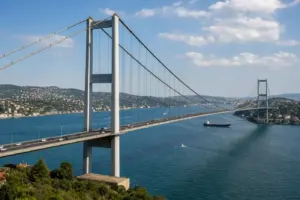 Fatih Sultan Mehmet Bridge – about 900 m away (~14 min walk) · typical visit: 30 minutes to 1 hourOpen 24 hours
Main image: AI-generated illustration. It may not show the place exactly as it looks.
 Ziraat Bank Tower – about 950 m away (~15 min walk) · typical visit: 30 minutes to 1 hour8 min on foot from Aşiyan metro
Main image: AI-generated illustration. It may not show the place exactly as it looks.
 Anatolian Fortress – about 950 m away (~16 min walk) · typical visit: 1–2 hoursOpen 10:00–17:30, closed Mon
Main image: AI-generated illustration. It may not show the place exactly as it looks.
Metro stations near Rumelihisarı
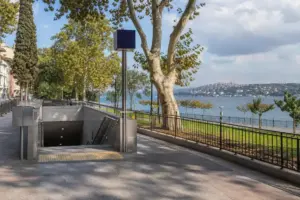 Aşiyan – about 450 m away (~7 min walk)Open daily 06:00–00:00
Main image: AI-generated illustration. It may not show the place exactly as it looks.
 Boğaziçi Üniversitesi – about 900 m away (~14 min walk)Open daily 06:00–00:00
Main image: AI-generated illustration. It may not show the place exactly as it looks.
Restaurants and cafes near Rumelihisarı
 Sankai by Nagaya – about 1.3 km away (~20 min walk)12 min on foot from Etiler metro
Main image: AI-generated illustration. It may not show the place exactly as it looks.
Nightlife near Rumelihisarı
 Taps Bebek – about 650 m away (~11 min walk)4 min on foot from Aşiyan metro
Main image: AI-generated illustration. It may not show the place exactly as it looks.
Related guides
 Anadolu Kavağı and Yoros Castle: Ferry, Fortress and Bosphorus Views
Main image: AI-generated illustration. It may not show the place exactly as it looks.
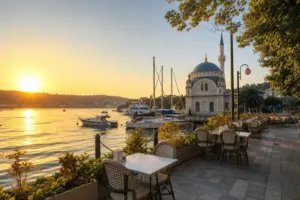 Bebek: Waterfront Cafés, Walks and the Apple of the Bosphorus
Main image: AI-generated illustration. It may not show the place exactly as it looks.
 Emirgan: A Quiet Bosphorus Neighborhood with Park and History
Main image: AI-generated illustration. It may not show the place exactly as it looks.
 Nisantasi and Sisli Walk: Istanbul’s Urban Elite Quarter
Main image: AI-generated illustration. It may not show the place exactly as it looks.
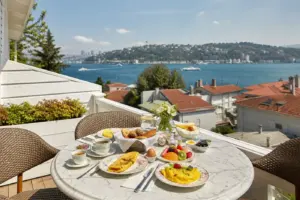 Mangerie: Bebek Brunch, Terrace Views and Opening Hours
Main image: AI-generated illustration. It may not show the place exactly as it looks.
Browse more: More in Sarıyer · All Landmarks · All Neighborhoods
FAQ: Rumelihisarı
Is Rumelihisarı open in 2026?
Yes, you can visit in 2026; the fortress has had ongoing restoration work on parts of the upper towers and some walkways, which is normal for a structure this old, but the grounds and the main walls stay open to visitors throughout. Verify the current status before your visit by checking muze.gov.tr.
What is the difference between Rumelihisarı and Anadolu Hisarı?
Rumelihisarı was built by Mehmed II in four months beginning in the spring of 1452 across the waters from the Anatolian Fortress (Anadoluhisari), built by his grandfather Bayezid I (1389-1402). Rumelihisarı is the larger, more developed museum site on the European shore. Anadolu Hisarı is smaller and less formal, located on the Asian side. Both are separate sites with separate tickets.
Can I climb to the top of the towers?
Partial access to tower interiors is permitted, but heights vary. Upper sections are sometimes closed for restoration. Check at the ticket booth on the day of your visit. Spiral stone staircases are narrow and worn; bring sturdy shoes.
How long should I spend here?
1.5–2.5 hours is typical for a full circuit of the main areas. Rushed visits (45 minutes) cover the main towers and ramparts only. Leisurely visits with photography and lunch in the village can stretch to 3–4 hours.
Is Museum Pass Istanbul valid here?
Yes. Museum Pass Istanbul covers entry to Rumelihisarı. Verify that your pass is current and check the official site for any recent changes to included museums.
What day is the fortress closed?
The fortress is closed on Mondays. Tuesday–Sunday hours vary by season (09:00–18:00 April–October; 09:00–17:00 November–March). Always verify current hours at muze.gov.tr before planning your visit.
Can I visit Rumelihisarı by boat?
The fortress site itself has no boat dock or ferry pier. Water-based viewing is possible from commercial Bosphorus tours, but landing to explore the site requires the land entrance. Aşiyan waterfront pier (north) is the nearest water access point.
Is the fortress suitable for children?
Older children (10+) with interest in history will enjoy it. Younger children find the climbing tiring and the exposure hazardous without close supervision. Strollers cannot be used. Plan a shorter visit and combine with neighborhood exploration for families.
Istanbul Vibes is a one-person project. A coffee keeps it going

Take this guide with you
Get a free PDF of this guide to print or read offline: key facts, tips and a map link on a few clean pages.
Report an issue on this page
How we research and update our guides
About this guide: AI assistance and accuracy
This guide is created with the help of AI and is based on official sources where available. Mistakes can still happen. Opening hours, prices, rules and other details are given to the best of our knowledge as of the date shown and can change without notice. It offers general recommendations only, not professional, legal or travel advice. Please confirm important details with the official source before you travel; you are responsible for your own plans and decisions.
* Affiliate link: as an Amazon Associate we earn from qualifying purchases at no extra cost to you.
