

Burgazada, or Burgaz Adası, is the third largest of Istanbul’s Princes’ Islands, a 1.5-square-kilometre retreat in the Sea of Marmara that feels deliberately off the tourist circuit. With a permanent population of only 1,655, it has none of the bustle of its larger neighbours.
The island is entirely car-free—visitors move on foot, bicycle, or by traditional horse-drawn carriage. This preservation of quiet has made Burgazada a refuge for artists, writers and Istanbul residents seeking genuine escape. The wooden architecture, narrow lanes lined with pines, and rocky shoreline give the island a distinctly lived-in, grounded character that sets it apart from typical island getaways.
Quick Facts
| Address | Google MapsApple MapsYandex Maps |
|---|---|
| District | Adalar |
| Admission | free |
| Best time to visit | Late May through September offers warmest weather and most ferry services, but also brings day-trippers from other islands. October through April is quieter and reveals the island's genuine residential character, though weather is cooler and some summer facilities close. Early morning (before 10:00 AM) and late afternoon (after 16:00) on any day minimize crowds. Mid-week visits (Tuesday–Thursday) are considerably quieter than weekends. July–August peak season brings seasonal residents and most foreign visitors. |
| Recommended duration | 3–4 hours |
What Is (and Isn't) Part of a Visit to Burgazada?
| Part | Status | Notes |
|---|---|---|
| The Princes' Islands ferry system | Separate ticket or institution | Ferries are operated by Şehir Hatları and private operators; require separate ferry tickets and timetables from mainland terminals. |
| Sait Faik Abasıyanık Museum | Separate ticket or institution | Requires separate admission; operates on seasonal summer hours; check opening times before visiting. |
| Church of St. John the Baptist (Aya Yani Church) | Included in the standard ticket | Entry is free; open for summer worship services; the Byzantine crypt is accessible to visitors. |
| Hristos Monastery ruins and Bayraktepe Hill | Included in the standard ticket | Free access to the hilltop and visible ruins; no formal structures or tickets required. |
| Beaches and coastal areas | Included in the standard ticket | Free public access to the old beach, Kalpazankaya, and coastal walking paths. |
| Büyükada and Heybeliada (other Princes' Islands) | Outside / not part of it | These are separate islands accessible by ferry; often mistakenly thought to be part of Burgazada or reached by walking. |
Why Visit Burgazada?
Burgazada rewards unhurried exploration. The island’s central appeal is its intact atmosphere: winding streets with traditional Ottoman wooden mansions still occupied year-round, a handful of Byzantine churches and monasteries that speak to centuries of monastic life, and coastal paths offering genuine solitude.
The island holds particular significance for literature and memory. The house and museum of Turkish author Sait Faik Abasıyanık anchors its cultural identity. Views from Hristos Hill stretch across the Marmara to the mainland and neighbouring islands. There are no major museum queues, no carriage crowding—only the particular peace of a place where daily life has priority over tourism.
How Burgazada Is Laid Out
Burgazada arranges itself simply around İskele Square at the ferry terminal, where most arrivals and departures happen. From the pier, the island’s main village spreads gently uphill and to the north, with streets radiating outward to residential areas, beaches and coastal walks.
The geography centres on one prominent hill, Bayraktepe (Flag Hill), reaching 170 metres. Paths lead uphill from town toward the Hristos Monastery ruins at the summit. To the east lies the old beach and lighthouse point; to the west and south are the more rugged coastal areas—Kalpazankaya (Counterfeiter’s Rock) being the most scenic—and the ruins of Aya Yorgi Monastery to the northwest. The layout is intimate enough that most of the island remains reachable within 30 minutes’ walk from the ferry terminal.
Highlights of Burgazada
Aya Yani Church (St. John the Baptist)
Built in 842 AD by Byzantine Empress Theodora, this church stands over a subterranean stone chamber where Patriarch Methodius was held for years in the 9th century. The tripartite basilica with dome and bell tower was reconstructed in 1899 by architect Nikolaos Dimadis after earthquake damage. Visitors descend into the austere crypt beneath the nave—a tangible connection to Byzantine monastic history. The church remains active seasonally during summer months.
Tip: The crypt is the most evocative part of the visit. Bring a torch or phone light to fully see the Byzantine stonework and sparse chamber.
Hristos Monastery and Bayraktepe Hill
Established in the 9th century atop the 170-metre summit by Byzantine Emperor Basil I, this monastery commanded panoramic views across the Marmara Sea and monitored all approaches to Constantinople. Today only ruins remain—a 19th-century church, Byzantine columns, and scattered stones. The climb from town is gentle and the views reward the walk. The site's isolation and minimal preservation make it feel genuinely historic rather than restored.
Tip: Go late afternoon for softer light and fewer day-trippers from other islands. The vistas toward Heybeliada and the mainland are most atmospheric in golden hour.
Sait Faik Abasıyanık Museum
The former home of Turkey's celebrated short-story writer Sait Faik Abasıyanık, now preserved as a museum on Burgaz Çayırı Street. Abasıyanık (1906–1954) wrote most of his finest work on this island, capturing Istanbul street life and human observation with precision and warmth. His modest house offers insight into the literary world that made Burgazada culturally significant within Turkey, beyond typical tourist categories.
Tip: The museum operates on seasonal hours (typically summer). Check opening times before visiting; guided tours by arrangement offer deeper context on Abasıyanık's work and the island's cultural life.
İskele Square and Waterfront
The arrival point where ferries dock and island life revolves. Cafés spill onto the waterfront; locals and seasonal residents mix in unhurried rhythm. The square itself is the island's social pulse—a genuinely lived-in public space rather than a staged tourist square. Grab coffee or ice cream and simply sit facing the sea; this is how visitors commonly spend their first moments.
Tip: Arrive early morning on a weekday for the quietest atmosphere. By afternoon, day-trippers from Büyükada add brief bustle before the evening ferries carry them away.
Gönüllü and Mehtap Streets
These quiet residential lanes showcase Burgazada's architectural heritage: late Ottoman wooden mansions with leaning balconies, low stone walls, and gardens thick with flowers. Many houses remain privately occupied year-round, giving streets an authentically lived-in character. Walking is the sole activity—no shopping or services, just architectural observation and the smell of pines.
Tip: Early morning or early evening light transforms these streets photographically. Wander without destination; the architecture appears gradually rather than being presented in a formal sequence.
Kalpazankaya (Counterfeiter's Rock)
A dramatic seaside outcrop on the island's southern flank, known colloquially as Counterfeiter's Rock. The location offers some of the finest views back toward the mainland and neighbouring islands, with steep rocky shores ideal for direct swimming. Small restaurants cluster here for lingering meals with panoramic backdrops. The walk along the coast from town is scenic in itself.
Tip: Best visited after 16:00 when afternoon light begins to soften. The rock receives less foot traffic than the main beach areas and remains peaceful even when the island is busy.
The Old Beach and Lighthouse Point
Reached by turning left from the ferry terminal and following the coastline, the island's primary bathing beach extends toward a small lighthouse-marked peninsula. The beach is pebbly and intimate rather than sprawling. Rocky sections provide direct water access for swimmers. The eastern shoreline remains quieter than the main square and offers unobstructed views toward Heybeliada.
Tip: Water temperature varies by season; July–August offer comfortable swimming. Bring water shoes for rocky entry points. The area is least crowded mid-week in early morning.
Atmosphere
Burgazada feels deliberately slow. Ferries arrive, disgorge visitors, and depart; between arrivals, the rhythm returns to local pace. Streets are quiet. Cafés are small and conversational. The air smells of salt, pine trees, and occasionally woodsmoke from residential chimneys. Horse-drawn carriages clip-clop occasionally but never dominate.
The architecture is lived-in, not curated: balconies sag slightly, paint peels, windows stay open. Gardens are overgrown rather than manicured. Late afternoon is best—the worst of day-tripper crowds have departed on afternoon ferries, and permanent residents settle into evening routines. Early morning feels similarly private. The summer season (June–September) brings seasonal residents and creates more activity; October–April reveals the island’s true, quieter self.
History of Burgazada
Burgazada’s ancient name was Antigoni, derived from Antigonus I Monophthalmus, a general of Alexander the Great. According to legend, his son Demetrius I built a fortress on the island—the name Burgazada itself is thought to derive from the Greek word ‘Pyrgos’, meaning tower or fort, though no archaeological trace of this classical structure remains.
During the Byzantine period (circa 330–1453), the island became a monastic sanctuary. In the 9th century, Emperor Michael I exiled Patriarch Methodius to Burgazada, imprisoning him in a stone chamber beneath what would become the Church of St. John the Baptist. According to accounts, Methodius endured torture and confinement for roughly a decade before Emperor Theophilus and Empress Theodora released him. Theodora subsequently built the church in 842 AD directly over the crypt. Higher up the island, Byzantine Emperor Basil I established the Hristos Monastery atop Bayraktepe in the 9th century, strategically positioned to monitor all approaches to Constantinople across the Marmara.
The Ottoman traveller Evliya Çelebi described Burgazada in his 17th-century ‘Seyahatname’ as “a small, square fortress built in the style of the Shaddadids upon steep seaside rocks; an island fertile and prosperous, with 300 gardened homes, wells of fresh water, vineyards without number, and a wealthy Greek population of skilled seafarers.” The island’s population remained predominantly Greek well into the 20th century, supplemented by fishermen and shipowners.
Regular ferry service began in 1846, and during the 19th century the island transformed into a fashionable summer retreat for Ottoman and foreign elites. Wealthy residents built wooden mansions that form the architectural character of modern Burgazada. The first mosque was not constructed until 1953—dedicated as a commemoration of the 500th anniversary of the 1453 conquest of Istanbul.
In the early 20th century, significant Jewish settlement began on the island alongside the established Greek community. The Burgazada Synagogue was built in 1968 to serve growing Jewish summer residents. However, the 1964 forced expulsion of Greeks from Turkey decimated the island’s historic Greek population. Following nationalist tensions after Turkey’s 1923 foundation, most remaining Greeks left. Only a handful of Greek residents remain today.
In 1928, Burgazada hosted one of Turkey’s first sanatoriums, reflecting the island’s established reputation for health and refuge. The 2003 forest fire devastated much of the island’s woodland, permanently altering its landscape. Today the island remains a destination for Turkish artists, writers, and middle-class Istanbul residents seeking seasonal escape and cultural continuity rather than mass tourism.
Legends and Myths about Burgazada
Patriarch Methodius's Imprisonment and Iconoclasm
Legend – historically unreliable. During Byzantine iconoclastic persecutions in the 9th century, the Orthodox Patriarch Methodius was exiled to Burgazada and imprisoned in a stone dungeon beneath what is now the Church of St. John the Baptist. According to tradition, he endured torture and confinement for approximately seven to ten years before being released and eventually elevated back to the Patriarchal throne. Empress Theodora built the church directly over his prison cell in 842 AD as an act of veneration. The subterranean crypt remains accessible to visitors today.
Demetrius's Tower and the Name 'Burgazada'
Disputed by historians. Ancient accounts claim that Demetrius I of Macedon, son of Antigonus I Monophthalmus, built a fortress or watchtower on the island, from which the Turkish name 'Burgazada' derives—possibly from the Greek 'Pyrgos' (tower). No archaeological evidence of this classical structure has been discovered, and the claim remains unverified. The linguistic connection is plausible but cannot be confirmed through excavation.
Byzantine Exile and the Princes' Islands Prison System
Legend – historically unreliable. In Byzantine times, the Princes' Islands collectively served as remote places of imperial exile and punishment. High-ranking officials, including emperors who had been deposed or imprisoned, were sent to these islands. Burgazada's monastic compounds provided both isolation and theological purpose. Blinding was reportedly a punishment inflicted here, and island monasteries served as high-security detention and theological retreat simultaneously.
Tickets and Booking for Burgazada
Burgazada requires ferry access; there is no road bridge or causeway from Istanbul. Purchase ferry tickets at mainland terminals. Ferries depart from Eminönü, Kabataş (European side), and Bostancı, Kadıköy (Asian side). Journey time is approximately 50 minutes to 1 hour depending on the route and number of stops. Şehir Hatları (City Lines) and private sea bus operators run regular schedules; check current timetables on their official websites or mobile apps, as schedules vary seasonally.
Ferry schedules are published in advance; off-season (November–March) runs fewer trips than summer (June–September). Same-day tickets are available at piers unless severely crowded. No advance booking is typically necessary for foot passengers, but verify during peak season. The ferry terminal in Burgazada is located in the centre of town at İskele Square, where ferries dock directly and ticket booths operate.
The church, monasteries, and public areas of the island require no tickets. The Sait Faik Museum requires separate admission; contact the museum for current hours and entry policy as these are seasonal.
Suggested itineraries Burgazada
2–3 hours
Ferry to İskele Square. Spend 20 minutes at the waterfront café, then walk north to the Church of St. John the Baptist (Aya Yani) and descend into the Byzantine crypt. Return to town and walk uphill via Gönüllü Street to explore the wooden mansions. Return via the old beach. This covers the island's core without climbing to Hristos Hill.
Half day (4–5 hours)
Begin at İskele Square, then walk to Aya Yani Church and crypt. Climb to Bayraktepe and Hristos Monastery ruins for panoramic views (allow 45 minutes total). Return to town and stroll Gönüllü and Mehtap Streets. Late afternoon walk to Kalpazankaya for views and a meal. Return to ferry in early evening.
Full day (6–8 hours)
Morning ferry, full breakfast at the waterfront. Visit Aya Yani Church. Hike to Hristos Monastery on Bayraktepe. Extended coastal walk to Kalpazankaya and beyond. Afternoon visit to Sait Faik Museum (if open and time permits). Explore Aya Yorgi Monastery to the northwest if energy remains. Evening meal at a waterfront café before the return ferry.
How to Get to Burgazada
Burgazada is accessible by passenger ferry only. From the European side: Ferries depart from Eminönü (near the Galata Bridge) and Kabataş (near Dolmabahçe Palace) terminals. From the Asian side: Ferries depart from Bostancı and Kadıköy piers. Journey time is 50 minutes to 1 hour depending on the ferry operator and route.
Purchase tickets at the pier ticket booth before boarding. Ferries are operated by Şehir Hatları (City Lines) and private sea bus companies. Check their websites or mobile apps for current schedules; these vary by season and are updated regularly. Ferries typically run several times daily in summer and fewer times in winter.
On arrival at Burgazada’s ferry terminal, you are at İskele Square in the town centre. The island is entirely car-free; orient yourself from the square and walk to your destination. Most points of interest are reachable within 20–30 minutes on foot. Bicycles are available for rent locally. Traditional horse-drawn carriages operate but are primarily for tourism.
Accessibility
The island is entirely car-free and navigable on foot. Stone and cobbled streets are uneven in places and may present difficulty for mobility-restricted visitors or wheeled luggage. Many local businesses and residences lack formal accessibility infrastructure; the island's rustic, lived-in character predates modern accessibility standards. The ferry terminal is a standard pier with variable accessibility depending on the operator. No formal wheelchair rental or accessible facilities are documented. Contact ferry operators in advance regarding any specific accessibility needs.
Food Nearby
Cafés and small restaurants cluster around İskele Square and the waterfront, offering light meals and drinks. Kalpazankaya has several seafood restaurants with sea views; meals are substantial and unhurried. Smaller kiosks sell ice cream, coffee, and pastries. Options are genuinely local rather than geared to tourism; many close seasonally during off-months. Supermarkets and basic provisioning shops are limited; visitors planning extended stays should bring supplies from the mainland.
What to Bring
Bring water, as shops are limited and scattered. Comfortable walking shoes are essential for cobbled streets and uneven terrain. Sun protection (hat, cream) for the exposed hilltop. A phone torch or small flashlight improves the crypt visit at Aya Yani Church. Bring a cardigan or light jacket even in summer, as sea breezes cool evening hours. Photography is unrestricted in public areas and on church exteriors; bag checks at the ferry terminal are routine.
Best Views and Photo Spots of Burgazada
Bayraktepe (Flag Hill) summit with Hristos Monastery
360-degree panorama across the Marmara Sea toward the Istanbul skyline, Heybeliada, and the Asian shore. The ruins of the monastery provide architectural foreground. Best in clear morning light or golden hour when haze clears.
Best time: Early morning (06:30–08:30 AM) or late afternoon (17:00–19:00 PM) for soft directional light and minimal haze. Avoid midday glare.
İskele Square waterfront from the ferry pier
Classic composition of café tables, waterfront buildings, and the Sea of Marmara beyond. Captures the island's pace and waterfront character; shows the connection to mainland ferries.
Best time: Late afternoon when light rakes across buildings and café crowds settle. Early morning before the busiest hour.
Gönüllü Street between garden walls
Narrow residential lane with traditional wooden architecture, leaning balconies, and overgrown gardens. Captures the authenticity of lived-in island life rather than curated tourism.
Best time: Morning light (08:00–10:00 AM) before shadows deepen. Dappled pine shade adds texture.
Kalpazankaya (Counterfeiter's Rock) coastal vantage
Dramatic rocky shore in foreground with archipelago views beyond. The outcrop's weathered geology and sea access create visual depth. Mainland skyline visible in far distance.
Best time: Late afternoon (16:00–18:00) when western sun illuminates rocks and creates shadow definition. Less crowded than midday.
Church of St. John the Baptist (Aya Yani) exterior
Byzantine-influenced tripartite basilica with prominent dome and bell tower. Stone construction and green surroundings provide visual context of monastic island history.
Best time: Morning light to capture the dome detail. Late morning when the church is less crowded but still well-lit.
Photography Rules
Photography is unrestricted in most public areas, streets, and on church exteriors. Interior photography within churches is generally permitted but respectfully ask before photographing worshippers or active services. Tripods are not restricted in public spaces. Drones are not permitted; the Princes' Islands fall within restricted airspace. Flash photography is not prohibited in outdoor areas but respect local customs.
Family Suitability
Burgazada suits families with older children comfortable with walking and exploration. The car-free, peaceful environment and lack of traffic hazards appeal to parents. However, stone and cobbled streets are uneven; families with toddlers or strollers should plan carefully. The beach is safe for swimming but pebbly. No dedicated children's attractions or formal facilities exist; appeal is to families who value quiet exploration over structured activities. Kids aged 8+ typically enjoy island walking, simple ferries, and beach time. Very young children may find limited activities. Horse-drawn carriage rides are available but costly.
Istanbul Vibes Tips
- Visit on a weekday (Tuesday–Thursday) in shoulder season (May or September) to experience genuine island quiet. Day-trippers from other islands concentrate on weekends and July–August; these times carry boat bustle even to quiet Burgazada.
- Don't miss the Byzantine crypt beneath Aya Yani Church—it's the most historically vivid space on the island and most visitors skip it. Bring a small torch; the stone chamber is austere and moving in dim light.
- Climb Bayraktepe (Flag Hill) in late afternoon rather than midday; the morning is crowded with day-trippers and the heat is strongest at noon. Evening light reveals the mainland skyline more clearly.
- Plan ferry timing carefully—return ferries fill quickly on weekends and summer evenings. Arrive at the terminal 20–30 minutes before departure to secure a seat.
- Check ferry schedules the day before your visit; these change seasonally and may vary by operator. Websites and apps of Şehir Hatları and private operators publish current times.
- Eat dinner at Kalpazankaya rather than rushing back to town—the waterfront restaurants remain peaceful into evening and serve fresh fish. Walking the coastal path after sunset is genuinely memorable.
Explore Nearby Burgazada
Sights near Burgazada
 Büyükada · typical visit: A full day, or one night
Main image: AI-generated illustration. It may not show the place exactly as it looks.
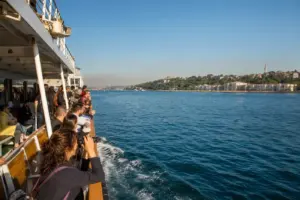 Bosphorus Cruise · typical visit: 2–6 hours depending on cruise type
Main image: AI-generated illustration. It may not show the place exactly as it looks.
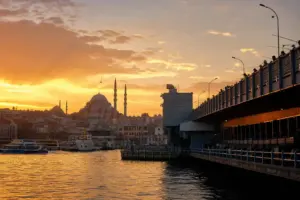 Golden Horn · typical visit: 1–3 hours (waterfront walk or boat tour)
Main image: AI-generated illustration. It may not show the place exactly as it looks.
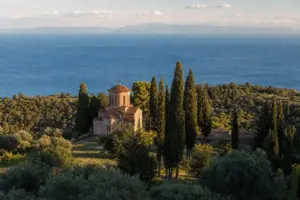 Hagia Triada Monasteryabout 2.8 km away · typical visit: 2–3 hours
Main image: AI-generated illustration. It may not show the place exactly as it looks.
Related guides
 Heybeliada: Car-Free Island, Monasteries and Pine Forests
Main image: AI-generated illustration. It may not show the place exactly as it looks.
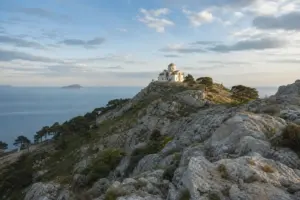 Kınalıada: Istanbul’s Quietest Island
Main image: AI-generated illustration. It may not show the place exactly as it looks.
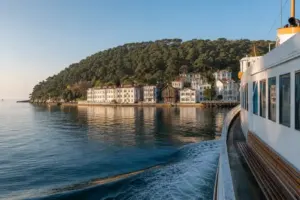 Beaches and Island Day Trips: Escape Istanbul by Ferry and Bus
Main image: AI-generated illustration. It may not show the place exactly as it looks.
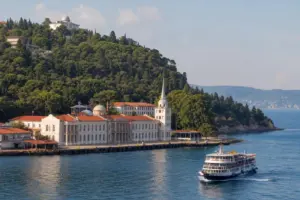 Heybeliada: The Calm Princes‘ Island
Main image: AI-generated illustration. It may not show the place exactly as it looks.
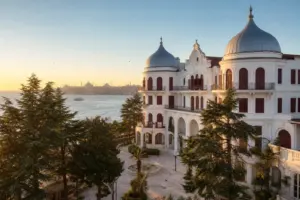 Splendid Palace Hotel: A 1908 Landmark on Büyükada
Main image: AI-generated illustration. It may not show the place exactly as it looks.
Browse more: More in Adalar · All Hidden Istanbul · All Neighborhoods
FAQ: Burgazada
How do I reach Burgazada from Istanbul?
By passenger ferry only; there is no road access. Ferries depart from Eminönü or Kabataş (European side) and Bostancı or Kadıköy (Asian side). Journey time is 50 minutes to 1 hour. Buy tickets at the pier and check schedules on ferry operator websites, as times vary seasonally.
Is Burgazada part of the Princes' Islands?
Yes, Burgazada is the third largest of the Princes' Islands in the Sea of Marmara. It is a distinct island separate from Büyükada and Heybeliada, though ferries stop at multiple islands on the same route. Do not confuse it with neighbouring islands.
What is the main thing to do on Burgazada?
Walk. The island's appeal is unhurried exploration of quiet streets, Byzantine churches, wooden mansions, and coastal paths. There are no major museums or attractions in the tourism sense; instead, visitors experience the island's lived-in character and historical layers. Most visits involve 3–4 hours of walking and sitting.
Is there swimming on Burgazada?
Yes. The old beach on the eastern shore offers pebbly swimming. Kalpazankaya provides rocky direct access to water. Water temperature is comfortable June–September. Bring water shoes for rocky entry. No formal beaches or lifeguards exist.
Can I visit the Byzantine churches and monasteries?
Yes, all are free to visit. The Church of St. John the Baptist (Aya Yani) is open seasonally and you can descend into the crypt. Hristos Monastery on Bayraktepe is a ruin but freely accessible. Hours vary; contact local information before a specific visit.
Is Burgazada crowded?
Far less crowded than Büyükada or Heybeliada. Day-trippers from other islands may visit briefly but most don't stay long. Weekends and July–August are busiest; weekdays and shoulder seasons (May, September, October) are genuinely quiet. Early morning and late afternoon are peaceful any time.
How long should I spend on Burgazada?
2–3 hours covers the core sites. A half-day (4–5 hours) allows a full island exploration with time to sit and absorb the atmosphere. Full-day visits suit those willing to walk extensively, visit the Sait Faik Museum, and linger over meals. Most visitors spend 3–4 hours.
What is the Sait Faik Museum and should I visit?
The former home of Turkish writer Sait Faik Abasıyanık, preserved as a museum. He wrote most of his significant work on this island. The museum is small and operates seasonally (check hours). It appeals to literature enthusiasts and those interested in Turkish cultural history but is not essential for typical visitors.
Istanbul Vibes is a one-person project. A coffee keeps it going

Take this guide with you
Get a free PDF of this guide to print or read offline: key facts, tips and a map link on a few clean pages.
Report an issue on this page
How we research and update our guides
About this guide: AI assistance and accuracy
This guide is created with the help of AI and is based on official sources where available. Mistakes can still happen. Opening hours, prices, rules and other details are given to the best of our knowledge as of the date shown and can change without notice. It offers general recommendations only, not professional, legal or travel advice. Please confirm important details with the official source before you travel; you are responsible for your own plans and decisions.
* Affiliate link: as an Amazon Associate we earn from qualifying purchases at no extra cost to you.
