
Information only. This article explains what a treatment is and how it is usually carried out. It is not medical advice, not an offer and not a recommendation to have any procedure. Whether it suits you can only be decided by a licensed doctor after an examination.
Hair removal treatments in Istanbul range from temporary methods like waxing to longer-lasting options such as laser epilation and electrolysis. Many international visitors consider these treatments while abroad, as regulations, technology, and pricing vary by country and provider.
This guide explains how common hair removal methods work, what to expect during and after treatment, typical recovery and limitations, risks that differ from person to person, and what questions to ask a licensed doctor before deciding. Talk to a doctor in your home country first, and check the licence of any clinic and practitioner in the official Turkish health register before booking.
Quick answer: Hair removal aims to reduce unwanted hair through various techniques: laser systems target hair follicles beneath the skin, electrolysis uses electrical current to destroy individual follicles, and waxing removes hair from the surface. Results, healing and side effects differ significantly from person to person, and depend on skin type, hair colour and thickness, the technology used, and the practitioner's skill.
At a Glance
| Total time | Small areas (upper lip, chin): 5–15 minutes per session. Medium areas (underarms): 15–30 minutes. Large areas (legs, back): 30–60 minutes. Full treatment courses typically require 6–8 sessions spaced 4–8 weeks apart. |
|---|---|
| Typical cost | ₺₺ |
What You Need Before You Start
- Consultation with a licensed dermatologist or aesthetician to assess suitability based on skin type, health conditions and medications
- Disclosure of any skin conditions, allergies, recent sun exposure, and medications including blood-thinners
- Avoidance of waxing, plucking or electrolysis for at least one month before laser treatment (shaving is acceptable)
- Avoidance of intense sun exposure and tanning in the weeks around each treatment
- Written treatment plan from the clinic explaining the procedure, expected results and follow-up care
- Arrangement for follow-up care in your home country if needed
Compare Your Options
| Option | Duration | Price | Notes |
|---|---|---|---|
| Laser hair removal (diode, alexandrite or Nd:YAG laser) | 5–60 minutes per session depending on treatment area; 6–8 sessions over 4–8 months | ₺₺ | Targets hair follicles beneath the skin using concentrated light. Suits most skin types depending on laser wavelength used. Faster than electrolysis for large areas. Results vary from substantial permanent reduction to partial regrowth. Does not work on very fine or very light hair. Temporary redness and swelling are normal; rare complications include burns, scarring and changes in skin colour. |
| Electrolysis (needle epilation) | Longer sessions for individual hairs; may require 10–30 sessions depending on treatment area | ₺₺ | Uses electrical current to destroy hair follicles one at a time through a fine needle. Slower than laser but works on all hair colours and skin types. Causes temporary discomfort during treatment. Redness and swelling are common; infection and scarring are rare but possible. Results are permanent for treated hairs but slower to see. |
| Waxing | 15–45 minutes per session; results last 2–6 weeks | ₺ | Removes hair from the surface; does not affect the follicle. Fast results but hair regrows. Suitable for all skin types and hair colours. Causes temporary redness and sensitivity. Ingrown hairs, allergic reactions and irritation are possible. Not suitable for very sensitive skin or immediately after sunburn. Painful for some people; less so for others. |
₺ budget · ₺₺ moderate · ₺₺₺ upscale · ₺₺₺₺ splurge. Price levels are estimates compared with typical prices for visitors.
Step-by-Step Instructions
Step 1: Consultation and Assessment
Schedule a consultation with a licensed dermatologist or aesthetician. Discuss the areas you want treated, your skin type, hair colour and thickness, any medical conditions, medications (especially blood-thinning drugs), and your expectations. The practitioner will examine your skin, assess suitability, and explain risks and realistic outcomes. Ask for a written treatment plan.
Tip: Bring photos of the area you want treated if you have them. Be honest about sun exposure, skin sensitivity and any previous reactions to beauty treatments.
Step 2: Pre-Treatment Preparation
Avoid sun exposure and tanning for at least two weeks before treatment. Do not wax, pluck or use electrolysis for one month before your first session, as these methods remove the hair root that laser targets. Shaving the treatment area is acceptable and encouraged. Arrive with clean, dry skin. Avoid makeup, perfume and lotions on the treatment area.
Tip: If you are taking blood-thinning medication, inform the clinic and follow their specific pre-treatment advice.
Step 3: Skin Preparation During Treatment
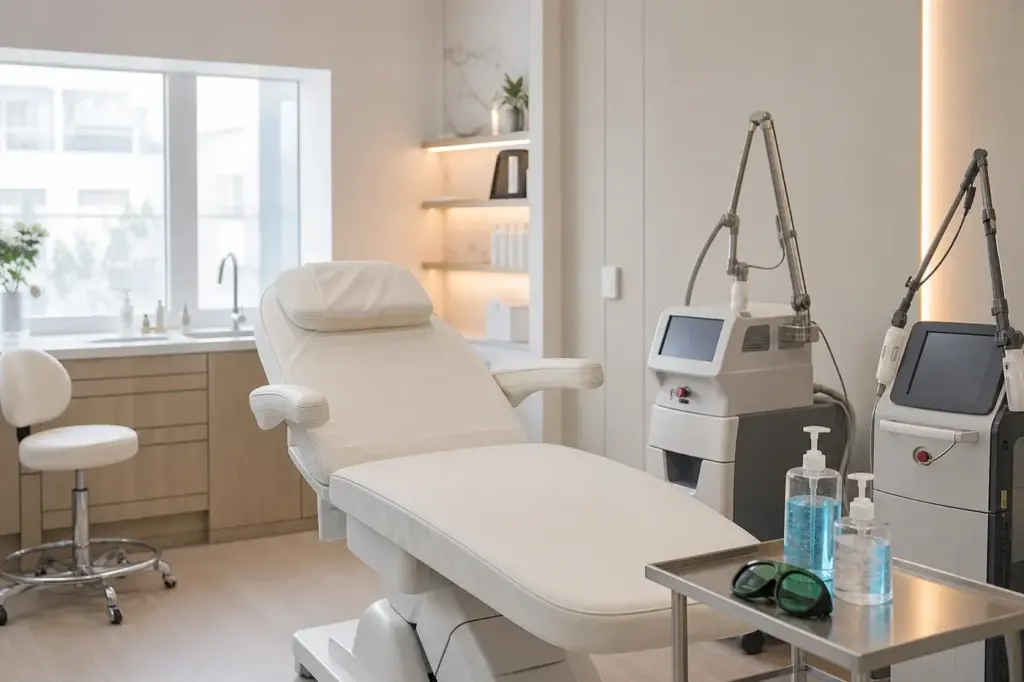
The treatment area is cleaned and shaved if necessary. A cooling gel is applied to protect the skin and minimize discomfort. For laser treatments, protective goggles are worn by both patient and practitioner. The laser handpiece is passed continuously over the treatment area.
Tip: Cooling systems are standard in modern clinics; ask which technology is being used.
Step 4: Procedure Execution
Laser treatment targets the pigment (melanin) in hair follicles beneath the skin. The light energy converts to heat, damaging the follicle without harming the skin surface. Most patients describe the sensation as warm with minimal to no discomfort due to integrated cooling. Electrolysis uses a fine needle and electrical current to destroy individual follicles; it is slower and more uncomfortable than laser. No general anesthesia is required for either method.
Tip: Speak up immediately if you feel pain or burning rather than warmth. Competent practitioners adjust settings for comfort.
Step 5: Immediate Aftercare
Redness, mild swelling and slight discomfort are normal for 24–48 hours after laser treatment and usually resolve without treatment. Avoid sun exposure for at least two weeks after treatment. Do not use makeup, perfume, deodorant or lotions on the treated area for 24 hours. Avoid heat (hot baths, saunas, exercise that causes sweating) for 24–48 hours. Electrolysis causes similar temporary reactions.
Tip: Apply a broad-spectrum sunscreen of high protection if sun exposure cannot be avoided during the two-week window.
Step 6: Recovery and Results
Hair does not disappear immediately. Treated hairs shed gradually over 2–4 weeks. You may see new growth in 4–8 weeks, at which point the next session is scheduled. Most people need 6–8 sessions spaced 4–8 weeks apart to achieve significant hair reduction. Results vary widely: some people achieve substantial permanent reduction, others see partial regrowth over time. Results depend on skin type, hair colour, thickness, the technology used and individual healing.
Tip: International visitors often plan 2–3 trips to Istanbul, completing 3–4 sessions per stay. Some clinics offer intensive protocols spacing sessions 3–4 days apart for different body areas during a single stay.
Step 7: Follow-Up and Maintenance
Schedule any necessary follow-up sessions with the clinic before you leave Istanbul. Ask the clinic for written aftercare instructions. Arrange follow-up care in your home country if complications arise. Any new redness, swelling, blistering or infection that develops after leaving Istanbul should be reported to a doctor at home immediately.
Tip: Keep contact details for the Istanbul clinic in case you need to reach them with questions.
Common Mistakes to Avoid
- Assuming results will be permanent after one session. Most people need 6–8 laser sessions to achieve significant reduction, and even then results vary from substantial reduction to partial regrowth over time.
- Waxing or plucking one month before laser treatment. These methods remove the hair root that laser targets. Shaving only is acceptable.
- Ignoring pre-treatment sun exposure. Tanned or sun-exposed skin is more prone to burns and side effects from laser treatment.
- Not disclosing blood-thinning medications. Aspirin, anticoagulants and certain herbal supplements increase bleeding risk during and after electrolysis.
- Booking with an unlicenced or uncertified practitioner. Check the clinic and practitioner licences in the official Turkish health register. Ask for credentials and evidence of training.
- Overlooking possible side effects. Redness, swelling, temporary discomfort and mild changes in skin colour are common and usually fade within days to weeks. More serious complications like burns or scarring are rare but possible.
Tickets, Payment and Booking
Hair removal clinics in Istanbul range from specialized aesthetic centers to dermatology hospitals. Book a consultation in advance through the clinic’s website or phone line. Many clinics offer video consultations for international patients to assess suitability before booking treatment.
Payment methods vary. Established clinics accept credit cards, bank transfers and, sometimes, cryptocurrency. Check payment options with your chosen clinic and ask whether they accept payment from your home country. Be aware that payment systems, card acceptance and exchange rates are subject to your home country’s sanctions rules and banking regulations. Check these restrictions yourself; Istanbul Vibes cannot advise on individual cases.
Avoid resellers and touts. Book directly with the clinic rather than through third-party booking platforms. Ask for a written agreement stating the exact procedure, number of sessions, pricing and cancellation policy.
Good to know
- Check the clinic and practitioner licences in the Turkish Ministry of Health official register before booking. A licensed dermatologist is better qualified than an aesthetician for assessing skin suitability and managing complications, though both may perform treatments. Established clinics with JCI (Joint Commission International) accreditation or similar certification have usually met international standards for facilities and staff training.
- Plan for multiple sessions. If you are visiting Istanbul for 1–2 weeks, you can typically complete 2–3 sessions during your stay. Some clinics offer intensive protocols spacing sessions 3–4 days apart for different body areas, which is clinically acceptable if each area has sufficient recovery time between treatments.
- Avoid booking multiple treatments on the same large area during a single visit. Recovery time between sessions matters; ask the clinic how long to wait between treatments on the same area, and do not be persuaded to shorten this for commercial reasons.
- Request details about the specific laser or device being used. FDA-approved and CE-certified technologies are generally reliable. Modern diode, alexandrite and Nd:YAG lasers are well-established; integrated cooling systems improve comfort and safety. Ask whether the clinic uses devices suited to your skin type and hair colour.
- Do not assume one method works for everyone. Laser works best on dark hair and light to medium skin; electrolysis and waxing work on all skin and hair types but are slower or temporary. Ask the practitioner which method is most realistic for your specific hair and skin characteristics.
- Ask what follow-up will be available if you have complications after returning home. A good clinic will provide written aftercare instructions and be reachable by email or video consultation if problems arise. This matters because treatment may take weeks to fully resolve.
Explore Nearby Hair Removal
Sights near Hair Removal
 Mimar Sinan Fine Arts University · typical visit: 1–2 hours2 min on foot from Fındıklı-Mimar Sinan Üniversitesi metro
Main image: AI-generated illustration. It may not show the place exactly as it looks.
Related guides
 How to Visit a Hammam: Process, Etiquette and Where to Go in Istanbul
Main image: AI-generated illustration. It may not show the place exactly as it looks.
 Istanbul Art and Culture: A 3-Day Itinerary Through Modern and Contemporary Museums
Main image: AI-generated illustration. It may not show the place exactly as it looks.
Browse more: All Other · All Treatments
FAQ
Is laser hair removal permanent?
Laser treatment aims for long-lasting hair reduction rather than complete removal. Results vary from person to person depending on skin type, hair colour, thickness, the laser technology used, and individual healing. Some people see substantial reduction; others experience regrowth over time. Electrolysis aims to disable treated follicles one by one, but individual hairs may be missed, requiring touch-up sessions.
How many sessions do I need?
Most people require 6–8 laser sessions spaced 4–8 weeks apart to achieve significant hair reduction. Electrolysis typically requires more sessions because it treats one hair at a time. The exact number depends on the size of the treatment area, your hair thickness and skin type, and how your body responds. During your consultation, ask for a realistic estimate based on your specific case.
Does laser hair removal hurt?
Most patients describe laser treatment as warm with minimal to no discomfort due to integrated cooling systems. Some find it slightly uncomfortable but not painful. Electrolysis may be more uncomfortable because a needle passes through each hair follicle. Pain tolerance varies from person to person. Ask the clinic how they manage discomfort and whether numbing cream can be applied before treatment.
Can I have treatment if I have dark skin?
Yes, but the laser type matters. Diode and Nd:YAG lasers are generally safer for darker skin tones. Alexandrite lasers work best on lighter skin. During consultation, inform the practitioner of your skin tone and ask whether the clinic's equipment is appropriate for you. Electrolysis and waxing work on all skin types regardless of darkness.
Can I have laser treatment on my face?
Yes. Facial areas including the upper lip, chin, cheeks and jawline can be treated with laser. Face treatment is usually faster than body areas (5–15 minutes). Facial skin is more sensitive; ask the practitioner whether they use lower energy settings for facial treatment and what risks apply to your face specifically.
What if I have side effects after I return home?
Temporary redness, swelling and mild discomfort resolve within 24–48 hours without treatment. If you experience severe pain, fever, blistering, infection signs or unusual changes in skin colour that worsen after a few days, seek medical care from a doctor in your home country. Provide them with the clinic's name, the treatment used, and any aftercare instructions you received.
Can I have laser treatment while pregnant?
Most clinics and practitioners recommend avoiding laser and electrolysis during pregnancy. The effects on a developing baby are not well established, and pregnancy hormones can affect hair growth and healing. Talk to your doctor in your home country before deciding. If you are planning pregnancy, it is safer to complete treatment before becoming pregnant.
How much does hair removal cost?
Cost varies depending on the treatment area size, the technology used, and the clinic. Laser treatment for a small area like the upper lip costs significantly less than treatment for legs or a large body area. Prices are usually quoted per session or as a package for multiple sessions. Ask for a detailed written estimate before booking. Payment methods and whether foreign credit cards are accepted vary by clinic.
Before you decide anything
Risks and possible complications
- Redness, swelling and mild discomfort for 24–48 hours after laser or electrolysis (normal and usually resolve without treatment)
- Temporary mild pain during treatment (reduced by cooling systems in laser; electrolysis may be more uncomfortable)
- Temporary changes in skin colour (lightening or darkening of the treated area, usually fades over weeks to months)
- Blistering and minor burns (rare but possible if practitioner error occurs or settings are inappropriate for skin type)
- Scarring (very rare; higher risk with infection, picking at the treated area, or previous keloid formation)
- Infection (possible if the skin is broken and not kept clean after treatment)
- Hair follicle damage causing hair to grow inward (ingrown hairs, common with waxing)
- Allergic reaction to cooling gels, numbing creams or products applied during treatment
- Ineffective results (some people see little change; hair may regrow over time even after multiple sessions)
Alternatives to talk about with a doctor
- Temporary methods such as shaving, depilatory creams (chemical hair removal) or threading
- Hair bleaching to make fine light hair less visible
- Longer-lasting temporary methods such as waxing or sugaring
- Hormonal treatments if hair growth is linked to a medical condition (to be discussed with a doctor)
Questions to ask a licensed doctor
- Is laser or electrolysis safe for my skin type and hair colour?
- Do any of my medications (especially blood-thinners) increase bleeding or healing risks?
- Are there any skin conditions or allergies I should disclose that affect suitability?
- Is the procedure suitable during or after pregnancy?
- How many sessions will I realistically need, and what is the expected outcome for my case?
- What is the clinic's experience with complications like burns, scarring or infection, and how are they managed?
- What written aftercare instructions will I receive, and what should I do if problems arise after I return home?
- If I experience severe pain, fever, bleeding or blistering after treatment, when should I seek emergency care?
- This page is information. It is not medical advice and not a recommendation to have any treatment or to choose any clinic, doctor or country.
- Every medical procedure has risks, and results and healing differ from person to person. A licensed doctor who has examined you decides whether a treatment is suitable.
- Talk to a doctor in your home country before you decide, and plan follow-up care at home: problems can appear after you return.
- Check that the clinic and the doctor are licensed in the official register of the Türkiye Cumhuriyeti Sağlık Bakanlığı, and ask for a written treatment plan and a consent form you understand.
- After a procedure, get urgent medical help for severe pain, fever, heavy bleeding or breathing problems. In an emergency call the local emergency number.
Kontrendikasyonlar olabilir. Bir uzmana danışmak gerekir.

Take this guide with you
Get a free PDF of this guide to print or read offline: key facts, tips and a map link on a few clean pages.
Report an issue on this page
How we research and update our guides
About this page: AI assistance and accuracy
This page was prepared with the help of AI and checked by automatic rules. It is general information only, not medical advice and not a recommendation to have any treatment or to choose any clinic. Mistakes can still happen and details can change without notice. Please check important details with the official source and talk to a licensed doctor before you decide anything.
