

Non-Muslim visitors are genuinely welcome in Istanbul’s mosques—as long as you follow a few straightforward rules. This guide explains exactly what to wear, when to go, what to do inside, and the common mistakes that turn a peaceful visit into an awkward one.
The recommended approach is to plan your visit between prayer times, dress modestly with a light scarf in your bag, wear easy-to-remove shoes, and move quietly through the space as you would in any active place of worship. If you follow these steps, your visit will be respectful, welcome, and genuinely memorable.
Current access notice: As of October 2026, all active mosques in Istanbul follow the same prayer-time schedule published daily by Turkey's Directorate of Religious Affairs. Prayer times shift throughout the year with the sun. Check the official prayer schedule before your visit.
Quick answer: Visit between the five daily prayer times (each closure lasts 30–90 minutes), dress modestly with shoulders and knees covered, women bring a headscarf, remove your shoes before entering the prayer hall, and move quietly. Plan about 30–45 minutes per mosque. No entry fee.
At a Glance
| Total time | 30–45 minutes inside the prayer hall, plus time to get there and plan around prayer closures |
|---|---|
| Typical cost | Free |
What You Need Before You Start
- Check prayer times for that day (posted at entrance or on prayer-time apps)
- Wear light, modest clothing that covers shoulders and knees
- Women bring a headscarf (or borrow one at major mosques)
- Wear easy-to-slip-off shoes and clean socks
- Leave a small window after prayer ends to allow the space to settle before entering
- Silence your phone
Compare Your Options
| Option | Duration | Price | Notes |
|---|---|---|---|
| Visit major tourist mosques (Blue Mosque, Süleymaniye Mosque) | 45 minutes to 1.5 hours including prayer-time waits | Free | These have staff, clear schedules posted, free scarves and shoe bags. Busier but well-organized. Blue Mosque opens 8:30 am daily; Süleymaniye opens around 9:00 am. Both close Fridays until early afternoon. Most crowded mid-morning and afternoon; quietest 9:30–11 am on weekdays. |
| Visit a neighbourhood mosque (Rüstem Pasha, Fethiye Mosque, local area mosques) | 30–40 minutes | Free | Smaller, more intimate, fewer tourists, less policed. No shoe bags or borrowed scarves provided; bring your own. Staff may speak less English but are usually helpful. Fewer posted schedules; ask locals or check your phone for prayer times. Genuinely quiet and peaceful. |
| Join a guided mosque tour (with licensed guide or tour operator) | 1.5 to 2.5 hours | ₺₺ | Guide handles timing and dress-code checks, explains architecture and history, avoids prayer-time conflicts by design. Best for first-timers or those anxious about etiquette. More expensive but removes all logistics worry. |
| Visit Hagia Sophia (now an active mosque) | 45 minutes to 1 hour | Free | Most stringent dress code enforcement of all mosques. Separate tourist entrance. No borrowed scarves if your dress is deemed insufficient—you may be denied entry. Opens 9:00 am, closes around 5 pm (times shift seasonally). Closed Fridays until afternoon. Dress scrupulously. |
| Visit during Ramadan | 30–45 minutes (daylight only) | Free | Opening hours and prayer times shift dramatically. Mosques are busier and more solemn. Visitors should be especially respectful of fasting worshippers. Many tourists prefer to visit outside Ramadan to avoid the spiritual intensity and prayer-time disruptions. |
₺ budget · ₺₺ moderate · ₺₺₺ upscale · ₺₺₺₺ splurge. Price levels are estimates compared with typical prices for visitors.
Step-by-Step Instructions
Step 1: Check prayer times before you go
Mosques close to tourists about one hour before each of the five daily prayers, and reopen 30 minutes after. The exact times shift daily with the sun. Look for posted prayer schedules at the entrance of major mosques, or download a prayer-time app like Islamic Finder. Avoid Friday midday: the mosque typically closes from around noon until early afternoon for congregational prayer. Major mosques are calmest between 9:30 and 11:00 am on weekdays.
Tip: Prayer times change throughout the year. In summer, dawn prayers are very early and evening prayers are very late, which leaves more daytime visiting windows. Winter is the opposite.
Step 2: Wear modest clothing with coverage
Both men and women must cover their shoulders and knees. Women should wear a long skirt, long dress, or trousers; men should wear long trousers (not shorts). Women also need to cover their hair with a scarf—it does not need to be tight or elaborate, just draped over your head. Major tourist mosques provide scarves and wraps for free at the entrance if you forget, but smaller neighbourhood mosques may not, so bring your own.
Tip: Plan your Old City sightseeing days in light long trousers or a long skirt rather than shorts; queuing for wraps at multiple mosques in one morning wastes time and tests patience.
Step 3: Arrive with plenty of time between prayers
Do not arrive shortly before the adhan (call to prayer); staff will turn you away or rush you through. Plan to arrive at least 30 minutes after a prayer ends. Check the posted schedule near the entrance—most major mosques display the day's prayer times and remaining open windows on a board at the south or main entrance so you know whether the mosque is currently open or closing soon.
Tip: The single most common mistake is arriving mid-closure. If you see a queue at the entrance but people are not moving, the mosque is between prayers; come back in 30–45 minutes.
Step 4: Remove your shoes before the prayer carpet
Leave your shoes at the designated area before stepping onto the carpet. At major tourist mosques like the Blue Mosque and Süleymaniye Mosque, staff provide free plastic bags so you can carry your shoes with you. At smaller mosques, a shoe rack may be available, or you may be expected to leave shoes in a cubby or simply outside the entrance. Wear clean socks; you will be walking on the carpet.
Tip: Wear shoes that slip off and on easily while standing, especially at crowded entrances. Lace-up shoes slow you down and are uncomfortable when the foyer is packed.
Step 5: Move quietly and avoid walking in front of worshippers
Speak softly, silence your phone completely, and move slowly through the space. If people are praying (lying in rows on the carpet facing Mecca), walk around them or behind them, never between them. Worshippers may arrive outside prayer times to complete their own prayers, so stay alert. Do not lean against walls or touch monuments.
Tip: If you see someone in prayer posture, simply pause and walk a different route. They will finish in a few minutes.
Step 6: Photograph respectfully or ask permission
Photography is usually permitted, but turn off your flash and never photograph people at prayer. Ask permission before photographing any person present. Some smaller or very active mosques may restrict photography entirely—look for signs or ask staff at the entrance.
Tip: The best light for photography is early morning or late afternoon when the sun streams through the stained-glass windows and crowds are thinner.
Step 7: Spend time observing the architecture and space
Mosques are active places of worship, not museums. Look up at domes and tilework, read the calligraphy, notice the mihrab (prayer niche) and minbar (pulpit), and simply sit on the carpet for a few minutes. This shows respect for the space. If a guide or staff member speaks to you, they may be happy to answer questions about the building's history and religious significance.
Tip: Many visitors skip the surrounding complex—the courtyard, tombs, fountains, and gardens. These are equally important parts of the mosque and often much less crowded than the main prayer hall.
Step 8: On Fridays, adjust your timing or skip it entirely
Friday (Jumu'ah) is the holiest day in Islam, and most major mosques close to all tourists from around noon until 2:30 pm for the congregational prayer. Minor mosques may close for longer. If you visit a mosque on a Friday, aim for early morning (before 11 am) or late afternoon (after 3 pm). First-time visitors often find it easier to visit on any other day.
Tip: Friday closures mean the Blue Mosque, Süleymaniye Mosque, and Hagia Sophia are busiest on Friday afternoons as crowds return all at once. Tuesday through Thursday mornings are far more peaceful.
Common Mistakes to Avoid
- Arriving shortly before or during prayer time. The single most common error: showing up at the mosque, finding the door locked during a prayer closure, and assuming the mosque is closed permanently. Check the posted schedule or ask a staff member. Prayer closures last only 30–90 minutes; come back after.
- Wearing shorts or sleeveless clothing and not planning for it. Many first-time visitors in summer wear shorts, then queue at the entrance waiting for a wrap. Bring a light scarf in your bag and wear long trousers or a long skirt on days when you plan mosque visits.
- Photographing people at prayer without permission or photographing faces of worshippers. This is disrespectful and can cause real conflict. Never photograph someone in prayer posture. Ask before photographing anyone.
- Walking between rows of praying people. If someone is in prayer, they are facing Mecca and need clear space. Walk around them or wait. It is not rude; they expect it.
- Treating the mosque like a museum and not noticing working worshippers. Speak quietly, do not call out, do not sit in the middle of the main prayer carpet if people are likely to pray there soon. Move slowly and observe, rather than rushing through to tick it off.
- Assuming all mosques have posted information and shoe bags. Major tourist mosques do; many neighbourhood mosques do not. Bring plastic bags for your shoes, check prayer times on your phone, and ask staff or locals if you are unsure of the schedule.
- Visiting on a Friday without adjusting your timing. Friday midday closures at major mosques can run 2–3 hours. Plan an early morning visit (before 11 am) or skip Friday and visit on any other day.
Tickets, Payment and Booking
Mosque visits do not require advance booking or tickets. Entry to all active mosques is free; donations towards maintenance are voluntary. No passes or discount cards apply.
Prayer times: Posted daily at mosque entrances and published by Turkey’s Directorate of Religious Affairs. Download a prayer-time app (Islamic Finder, Muslim Pro) or check locally.
Scarves and wraps: Major tourist mosques (Blue Mosque, Süleymaniye, Hagia Sophia) provide headscarves and wraps for women free of charge at the entrance. Smaller neighbourhood mosques may not; bring your own.
Shoe bags: Tourist mosques provide free plastic bags. Neighbourhood mosques may have shoe racks or cubbies.
Guided tours: Licensed tour operators offer small-group or private mosque tours that include timing, dress-code guidance, and historical explanation. Available through hotels, travel agencies, or online booking platforms. Prices vary from budget to upscale depending on group size and depth.
Istanbul Vibes Tips
- Bring a scarf in your bag even at major mosques. It saves time queuing and gives you control over how you cover your hair. A lightweight cotton or silk scarf works best—it does not take space and doubles as sun protection or a shawl outside the mosque.
- Wear slip-on shoes (leather slides, loafers, or sneakers without laces). You will remove and replace them multiple times if visiting several mosques in one day. Lace-up shoes are awkward in crowded foyers where you cannot sit to tie them.
- Visit on a weekday morning between 9:30 and 11 am. This window avoids prayer times, catches good natural light, and offers peaceful, uncrowded exploration. Tuesday through Thursday are quietest.
- If you are visiting the Blue Mosque and Hagia Sophia on the same morning, go to the Blue Mosque first (it opens earlier at 8:30 am, Hagia Sophia at 9:00 am). Plan your prayer-time buffer carefully; a wasted hour stuck outside waiting for reopening is common.
- Many tourists miss the surrounding complex. At Süleymaniye, explore the courtyards, tombs, fountain pavilions, and gardens—they are free, less crowded, architecturally stunning, and tell the full story of how the mosque functioned as a social institution.
- If a worshipper arrives while you are inside and begins to pray, pause and simply watch quietly from a respectful distance. You are witnessing something central to this person's faith; stillness and silence are the appropriate response. Do not leave or rush; stay as long as you like.
Explore Nearby How to Visit Mosques Respectfully
Sights near How to Visit Mosques Respectfully
 Blue Mosque · typical visit: 45–75 minutes3 min on foot from Gülhane metro
Main image: AI-generated illustration. It may not show the place exactly as it looks.
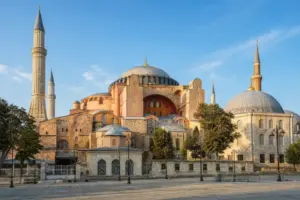 Hagia Sophia · typical visit: 1–1.5 hours8 min on foot from Gülhane metro, Open daily 09:00–19:30
Main image: AI-generated illustration. It may not show the place exactly as it looks.
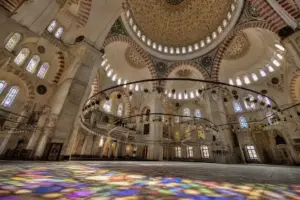 Süleymaniye Mosque · typical visit: 1–2 hours9 min on foot from Vezneciler metro
Main image: AI-generated illustration. It may not show the place exactly as it looks.
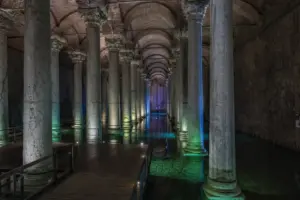 Basilica Cistern · typical visit: 1 hour4 min on foot from Gülhane metro, Open daily 09:00–18:30
Main image: AI-generated illustration. It may not show the place exactly as it looks.
 Topkapi Palace · typical visit: 3–4 hours without Harem; 4–5 hours with Harem15 min on foot from Gülhane metro, Open 09:00–18:30, closed Tue
Main image: AI-generated illustration. It may not show the place exactly as it looks.
 Camlica Mosque · typical visit: 2–3 hours
Main image: AI-generated illustration. It may not show the place exactly as it looks.
Browse more: All Etiquette and Safety · All How-To
FAQ
Can non-Muslims enter mosques in Istanbul?
Yes. Non-Muslim visitors are welcome in all active mosques when they are open to tourists. You do not need to be Muslim, take part in prayer, or follow Islamic religious practices. You are simply expected to respect the building as a functioning place of worship and follow basic etiquette rules.
What should women wear inside a mosque?
Women must cover their hair with a headscarf (draped loosely is fine), cover their shoulders and upper arms, and cover their knees with a long skirt, dress, or trousers. Avoid low-cut, sleeveless, or transparent clothing. Major tourist mosques provide free headscarves and wraps at the entrance if you forget; smaller mosques may not.
What should men wear inside a mosque?
Men must wear long trousers (not shorts above the knee) and cover their shoulders with a shirt or t-shirt. Sleeveless shirts and tank tops are not permitted. At major tourist mosques, staff will provide wrapping coverings if your clothing is insufficient. At stricter sites like Hagia Sophia, you may be denied entry if you do not meet the dress code.
Why do mosques close to tourists during prayer times?
Prayer times are when Muslims come to worship. Tourists are not permitted in the main prayer hall during prayers so as not to disrupt worshippers. Each prayer lasts about 20 minutes, but the mosque typically closes about one hour before to prepare the space and reopen about 30 minutes after.
How long does a typical mosque visit last?
Most visitors spend 30–45 minutes inside the main prayer hall. If you explore the surrounding complex (courtyard, gardens, tombs), add 15–30 minutes. Guided tours typically run 1.5–2 hours. Plan buffer time if you visit multiple mosques in one day to avoid wasting time waiting for prayer closures to end.
What is the best time of day to visit a mosque?
Early morning (9:30–11:00 am) on weekdays (Tuesday–Thursday) offers the best combination of light, peace, and short prayer-time waits. Avoid midday (12:00–2:00 pm) when tour groups arrive and prayer closures often coincide. Late afternoon also works but the interior is darker.
Can I take photos inside a mosque?
Photography is usually permitted, but turn off your flash and never photograph people at prayer. Ask permission before photographing any person. Some smaller or very active mosques may prohibit photography entirely; look for signs or ask staff at the entrance.
Should I avoid visiting mosques on Fridays?
Friday (Jumu'ah) is the holiest day in Islam. Most major mosques close to all tourists from around noon until 2:30 pm for congregational prayer. Some close even longer. If you visit on Friday, go early in the morning (before 11 am) or skip it entirely and visit any other day. Fridays are also the busiest days overall.
Istanbul Vibes is a one-person project. A coffee keeps it going

Take this guide with you
Get a free PDF of this guide to print or read offline: key facts, tips and a map link on a few clean pages.
Report an issue on this page
How we research and update our guides
About this guide: AI assistance and accuracy
This guide is created with the help of AI and is based on official sources where available. Mistakes can still happen. Opening hours, prices, rules and other details are given to the best of our knowledge as of the date shown and can change without notice. It offers general recommendations only, not professional, legal or travel advice. Please confirm important details with the official source before you travel; you are responsible for your own plans and decisions.
* Affiliate link: as an Amazon Associate we earn from qualifying purchases at no extra cost to you.
