

Visitors often worry about dress codes in Istanbul before arriving, but the reality is simpler than expected. The city spans modern neighborhoods, historic mosques, beaches, and conservative residential areas—clothing appropriate in one setting may not suit another. The key is understanding which doorways require specific coverage and which areas allow everyday Western dress.
This guide explains exactly what to wear for mosques (where rules are firm), everyday city sightseeing (where visitors have broad freedom), and neighborhoods that prefer more modest dress. You’ll learn what loaner garments are available, which items are worth packing, and how to balance respect with comfort in Istanbul’s diverse settings.
Quick answer: Wear everyday clothes freely in most of Istanbul. For mosques, cover shoulders, knees, and wear socks—women must also cover hair with a scarf. Most mosques provide loaner robes if you arrive unprepared. Total time to dress appropriately: 5–10 minutes of packing before your trip.
At a Glance
| Total time | 5–10 minutes to prepare packing before your trip; no additional time at sites (mosques provide loaner garments if needed) |
|---|---|
| Typical cost | Free (loaner robes available at mosques; no dress code enforcement) |
What You Need Before You Start
- Lightweight scarf (essential for mosque visits; can double as a layer against wind and air-conditioning)
- Socks or slip-on shoes (required for easy removal at mosque entrances)
- One long skirt or loose trousers (backup for conservative neighborhoods)
- Modest everyday clothing if visiting very conservative areas like Çarşamba or parts of Eyüp
- Light layers for changing weather and over-air-conditioned spaces
Compare Your Options
| Option | Duration | Price | Notes |
|---|---|---|---|
| Prepare properly at home (recommended) | 5–10 minutes packing time | Free | Pack a scarf, wear slip-on shoes, and ensure modest coverage for mosques. You arrive ready for any setting and avoid the awkwardness of being turned away. Most practical for visitors wanting smooth, uninterrupted sightseeing. |
| Use mosque loaner garments | 5–10 minutes extra at each mosque | Free | Arrive without proper coverage and borrow robes and scarves at the mosque entrance. Works if you prefer not to pack extra items, but loaner quality and fit vary. Expect occasional queues and basic garments. |
| Buy a scarf locally | 15–30 minutes for shopping | ₺ | Scout the Grand Bazaar, Egyptian Bazaar, or street stalls for scarves. Useful if you forgot yours or want a souvenir. Local scarves are often beautiful but shopping takes time during your visit. |
| Dress very conservatively throughout your stay | No extra time | Free | Wear long skirts, full-coverage tops, and scarves as your default. Unnecessary anxiety; Istanbul is secular and no dress code applies outside mosques. You'll look like an outlier and feel uncomfortable in heat. |
₺ budget · ₺₺ moderate · ₺₺₺ upscale · ₺₺₺₺ splurge. Price levels are estimates compared with typical prices for visitors.
Step-by-Step Instructions
Step 1: Pack a lightweight scarf
Bring one multipurpose scarf that you can wear year-round. It serves three purposes: covering your head inside mosques, providing an extra layer against wind and strong air-conditioning, and covering shoulders if you wear a sleeveless top outside. Cotton or linen scarves pack small and dry quickly. You do not need multiple scarves—one is sufficient for your entire trip.
Tip: Choose a neutral color like cream, navy, or grey that works with different outfits.
Step 2: Wear slip-on shoes with socks
Choose shoes you can remove easily, since all mosques require visitors to leave shoes at the entrance. Wearing clean socks is essential; bare feet inside mosques are not permitted. Leather sandals with socks, loafers, or slip-on canvas shoes work well. Avoid complicated lacing systems or thick boots when you know you'll be visiting mosques.
Tip: Lace-up hiking boots and tied sneakers are uncomfortable to remove and put back on during a busy mosque visit.
Step 3: For mosque visits, ensure shoulders and knees are covered
Both men and women must cover from shoulder to knee inside any working mosque. Wear long trousers or a long skirt (knee-length or longer), and a top with sleeves. Tight or flowing clothing both work—the rule is coverage, not fit. If you arrive without proper coverage, most mosques provide lightweight robes or wraps to borrow at no charge.
Tip: In summer, lightweight linen or cotton pants look cooler than denim and feel more comfortable in heat.
Step 4: Women: bring or prepare to wear a headscarf in mosques
Women must cover their hair inside mosques with a scarf. The scarf does not need to be elaborate; simply draping it over your head and tucking it loosely is fine. Most mosques provide loaner scarves if you arrive without one, though they are sometimes worn or poorly fitted. Bringing your own ensures comfort and cleanliness. The scarf comes off as soon as you exit the mosque.
Tip: If you prefer not to carry a scarf, inquire at the mosque entrance about loaner availability before paying entry fees.
Step 5: Choose loose or modest everyday wear for daily sightseeing
Outside of mosques and very conservative neighborhoods, wear whatever comfortable clothing you would wear at home. Shorts, sleeveless tops, dresses, and fitted clothing are all visible throughout Istanbul's modern and tourist areas. No dress code is enforced outside religious sites. Choose what feels practical for walking on uneven streets, climbing hills, and exploring bazaars.
Tip: Very revealing outfits (very short shorts, very low necklines) may attract attention on crowded transport or in busy markets, but they are not prohibited.
Step 6: For conservative neighborhoods, dress more modestly as a courtesy
A small number of Istanbul neighborhoods (Çarşamba behind Fatih Mosque and parts of Eyüp) are genuinely conservative. If your plans include these areas, wear long trousers or a long skirt, sleeves, and avoid very revealing clothing. Most visitors never venture to these neighborhoods; popular tourist areas like Balat and Fener are relaxed and mixed in dress.
Tip: You can check your route on a map in advance to see whether you'll pass through a conservative neighborhood.
Step 7: Men: avoid sleeveless shirts at mosque entrances
Men have fewer restrictions than women outside of mosques. For everyday sightseeing, ordinary t-shirts, casual shorts, and comfortable dress are fine. Inside mosques, wear long trousers (not shorts) and a sleeved shirt—even a plain t-shirt is acceptable. A sleeveless tank top or vest is the only item that will be stopped at mosque doors; staff will ask you to change or borrow a cover.
Tip: If you plan several mosque visits in summer, pack a loose short-sleeved shirt you can wear under a sleeveless top rather than changing.
Common Mistakes to Avoid
- Assuming Istanbul requires conservative dress everywhere. Istanbul is a liberal, secular city with modern neighborhoods, bars, and beaches. You do not need to cover yourself outside of mosques. Packing only conservative clothing limits your comfort and your ability to dress for hot weather.
- Wearing sleeveless or low-coverage tops but no scarf to mosques. Sleeveless shirts (especially for men) and bare shoulders are the most common reasons visitors are turned away at mosque doors. Always carry a scarf and layer a loose long-sleeve shirt over sleeveless tops if visiting mosques.
- Wearing complicated footwear to mosques. Laced boots, tight shoes, or sandals that are difficult to slip off waste time at crowded mosque entrances. Loafers, slip-on canvas shoes, and simple sandals are much faster to remove and replace.
- Not wearing socks inside mosques. Bare feet are not permitted inside working mosques for cleanliness reasons. Some visitors arrive in sandals without socks and are unable to enter. Wear socks every time you visit a mosque.
- Assuming all borrowed robes fit well. Mosque loaner garments are functional but often worn, poorly fitting, or basic. If you prefer to enter in your own clothing, pack a scarf and layering pieces at home rather than relying on loaners.
- Dressing too formally for everyday sightseeing. Istanbul is a walking city with steep hills and uneven cobblestones. Wearing stiff formal wear, tight skirts, or delicate fabrics makes exploration uncomfortable. Choose practical, breathable clothing instead.
Tickets, Payment and Booking
There is no dress code enforcement outside of active mosques. No tickets or permits are needed to respect dress codes.
For mosque visits, dress rules are published on individual mosque websites and posted at entrances. Major tourist mosques (Blue Mosque, Süleymaniye Mosque, Fatih Mosque) clearly state shoulder and knee coverage requirements. Loaner robes and scarves are provided free at larger mosques; smaller neighborhood mosques may not have loaners available.
There is no dress code app, registration, or booking system. Simply arrive dressed appropriately or arrive with layers and a scarf, and borrow covering if needed.
Istanbul Vibes Tips
- Bring a scarf even if you do not plan to enter mosques. Wind along the Bosphorus, aggressive air-conditioning in shops and restaurants, and sun exposure make a lightweight scarf one of the most useful items you can pack. It solves multiple problems without bulk.
- Do not confuse 'modest' with 'covered.' Modest means knee-length or longer, sleeves if you are showing shoulders, and no very low necklines. You do not need to wear shapeless clothing, buy special travel clothes, or dress like a local—just avoid extremes of very short or very revealing.
- Check which mosques you plan to visit before your trip. Some working mosques limit visitor hours or require longer garments than others. Tourist mosques like the Blue Mosque are strict about rules but used to handling visitors; neighborhood mosques may be stricter about coverage but quieter to visit.
- In summer, lightweight linen or cotton clothing that covers shoulders and knees is cooler than trying to dress conservatively in tight, dark fabrics. Loose, breathable modest wear is often more comfortable than showing more skin in hot weather.
- Women carrying headscarves often use them as sunshades, wind breaks, or privacy covers on ferries and public transport—they are practical tools, not just mosque gear. This mindset makes carrying one feel natural rather than like a special 'travel costume.'
Explore Nearby How to Dress Respectfully in Istanbul
Sights near How to Dress Respectfully in Istanbul
 Blue Mosque · typical visit: 45–75 minutes3 min on foot from Gülhane metro
Main image: AI-generated illustration. It may not show the place exactly as it looks.
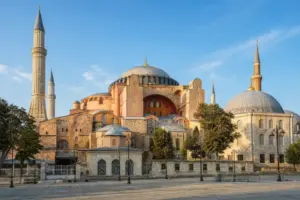 Hagia Sophia · typical visit: 1–1.5 hours8 min on foot from Gülhane metro, Open daily 09:00–19:30
Main image: AI-generated illustration. It may not show the place exactly as it looks.
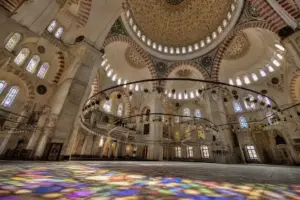 Süleymaniye Mosque · typical visit: 1–2 hours9 min on foot from Vezneciler metro
Main image: AI-generated illustration. It may not show the place exactly as it looks.
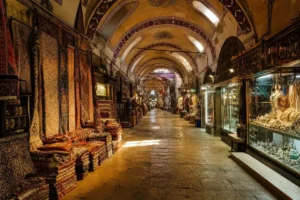 Grand Bazaar · typical visit: 2–4 hours4 min on foot from Beyazıt-Kapalıçarşı metro, Open 08:30–19:00, closed Sun
Main image: AI-generated illustration. It may not show the place exactly as it looks.
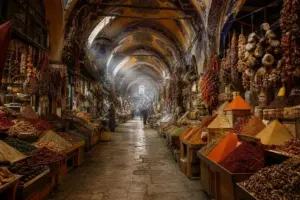 Egyptian Bazaar · typical visit: 30 minutes to 1 hour13 min on foot from Haliç metro, Open daily 08:00–19:30
Main image: AI-generated illustration. It may not show the place exactly as it looks.
 Topkapi Palace · typical visit: 3–4 hours without Harem; 4–5 hours with Harem15 min on foot from Gülhane metro, Open 09:00–18:30, closed Tue
Main image: AI-generated illustration. It may not show the place exactly as it looks.
Browse more: All Etiquette and Safety · All How-To
FAQ
Is there a dress code for walking around Istanbul's streets and tourist areas?
No. Outside of mosques and a few very conservative neighborhoods, Istanbul has no dress code. Wear whatever you would wear in your home city. Shorts, sleeveless tops, and casual dress are completely normal in tourist zones, shopping districts, and modern neighborhoods. The only exception is that very revealing outfits may attract attention on crowded public transport or markets, but they are not prohibited.
Do I have to cover my hair in Istanbul?
No. Hair covering is required only inside active mosques (and only for women). Outside of mosques, no women wear headscarves unless they choose to. Istanbul is secular, and women dress as they do anywhere in the world. A scarf is a practical travel item to have with you for mosque visits, not everyday wear.
What happens if I show up to a mosque in shorts or sleeveless?
Mosque staff will likely ask you to borrow a covering or wrap before entering. Most major mosques provide free robes and scarves at the entrance. You may wait a few minutes in a queue. Some smaller neighborhood mosques may not have loaners available and may ask you to leave and return with appropriate clothing. It is easier and faster to arrive prepared.
Do men need to cover as much as women in mosques?
Men need to cover shoulders, knees, and wear long trousers inside mosques. A regular t-shirt is acceptable. The one item that will be stopped at the door is a sleeveless tank top or vest. Men do not cover their heads. Outside of mosques, men have complete freedom of dress.
Can I wear a bikini or swim gear around Istanbul?
Swimwear is appropriate at beaches and beach clubs only. Wearing a bikini or swim shorts while sightseeing in the city, in markets, or on public transport is not standard and may attract attention. Change at your hotel or at a beach facility. A beach cover-up or regular shorts and a shirt are normal for walking to and from beaches.
Are loaner robes clean and comfortable?
Loaner robes at major tourist mosques are functional but basic. They are washed regularly but may be worn or poorly fitting. If you prefer comfort and cleanliness, pack your own layering pieces and scarf rather than relying on loaners. Smaller mosques may not have loaners available at all.
What about the Blue Mosque, Hagia Sophia, and Süleymaniye Mosque—are dress codes different?
All three follow the same rules: cover shoulders, knees, and wear socks. Women must also cover hair inside. Blue Mosque and Hagia Sophia (which reopened as a working mosque in 2020) are strict about enforcement because of high visitor volume. Loaner garments are available at all three. Dress codes are posted at entrances.
Is modest dress expected at historical sites that are not mosques, like bazaars and museums?
No formal dress code applies. Modest clothing (avoiding very short or very revealing items) is courteous at all historical and religious sites, but not enforced. Many museums and bazaars have visitors in casual, warm-weather dress. Use judgment based on the site: more conservative at historic mosques and shrines, relaxed at secular museums and markets.
Istanbul Vibes is a one-person project. A coffee keeps it going

Take this guide with you
Get a free PDF of this guide to print or read offline: key facts, tips and a map link on a few clean pages.
Report an issue on this page
How we research and update our guides
About this guide: AI assistance and accuracy
This guide is created with the help of AI and is based on official sources where available. Mistakes can still happen. Opening hours, prices, rules and other details are given to the best of our knowledge as of the date shown and can change without notice. It offers general recommendations only, not professional, legal or travel advice. Please confirm important details with the official source before you travel; you are responsible for your own plans and decisions.
* Affiliate link: as an Amazon Associate we earn from qualifying purchases at no extra cost to you.
