
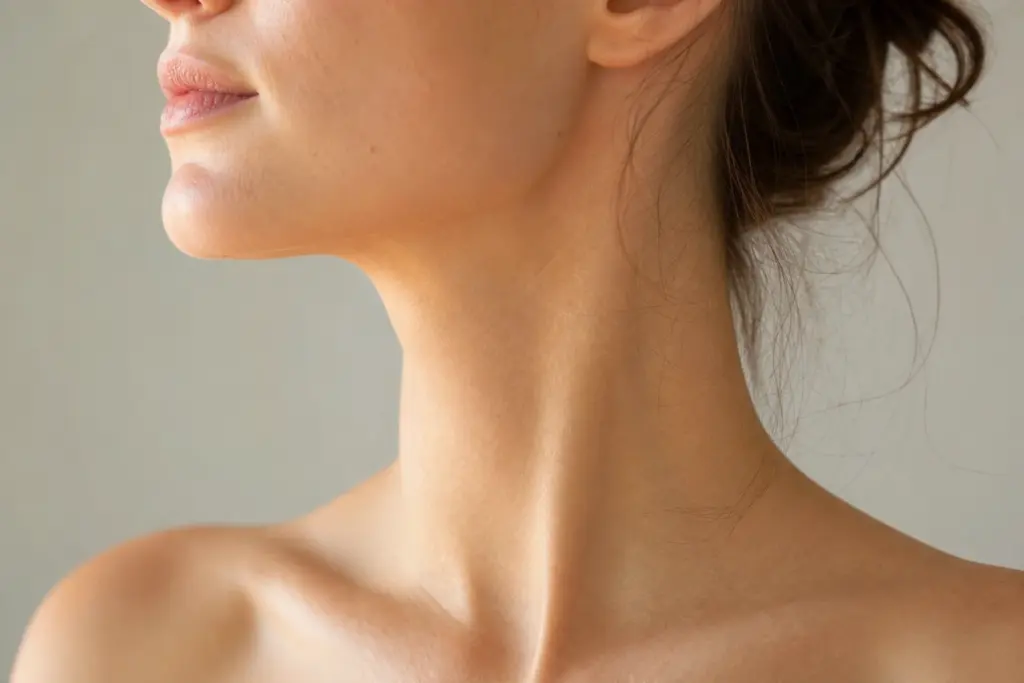
Information only. This article explains what a treatment is and how it is usually carried out. It is not medical advice, not an offer and not a recommendation to have any procedure. Whether it suits you can only be decided by a licensed doctor after an examination.
If you are considering a neck lift while in Istanbul, this guide explains what the procedure involves, how it works, what to expect during recovery, and the risks you should discuss with a doctor.
A neck lift (medically called platysmaplasty or cervicoplasty) is a cosmetic surgical procedure. It targets loose skin, excess fat, and weakened muscles in the neck area. The procedure typically combines skin removal and muscle tightening, sometimes with liposuction. Results, healing times and complications differ from person to person. Before deciding on any surgical procedure, talk with a licensed doctor in your home country and, if you proceed, verify the qualifications and license of the clinic and surgeon in Turkey.
Quick answer: The procedure surgically removes excess skin and fat from the neck to address age-related wrinkling and creasing, and aims to tighten and define the jawline and neck. A neck lift typically takes one to three hours. Results, recovery time and risks differ among individuals.
At a Glance
| Total time | 2–4 hours for the procedure; full recovery typically 4–6 weeks |
|---|---|
| Typical cost | ₺₺₺ |
What You Need Before You Start
- Consultation with a licensed doctor to assess health, medications and surgical suitability
- Blood tests and medical clearance for anaesthesia and surgery
- A list of current medications, including blood thinners, herbal supplements and aspirin products
- A responsible adult to take the patient home and stay for at least the first night
- Time off work: usually 1–2 weeks before light duties; around 4–6 weeks before strenuous activity
- Written informed consent covering risks and recovery, noting that results differ from person to person
- A follow-up care plan with a doctor in the home country after returning
Compare Your Options
| Option | Duration | Price | Notes |
|---|---|---|---|
| Full surgical neck lift (Platysmaplasty + Cervicoplasty) | 2–4 hours | ₺₺₺ | The gold standard for patients with moderate-to-severe skin sagging, prominent vertical muscle banding, and heavy submental fullness. It involves small incisions placed discreetly under the chin and around the ears to provide complete 360-degree access to the underlying musculature and skin. Full neck lift procedures are performed under general anesthesia. Recovery typically 4–6 weeks. |
| Mini neck lift (surgical, less invasive) | 1–2 hours | ₺₺ | A targeted, less invasive surgical variation tailored for younger patients (typically aged 35 to 50) who have mild skin laxity and localized fat beneath the chin, but no severe platysmal muscle banding. It is performed using a single small incision beneath the chin, often combined with micro-cannula liposuction, resulting in shorter operative times and faster recovery. The in-office mini neck lift is carried out under local anesthesia. Return to work typically within 7–10 days. |
| Neck liposuction alone (fat removal only) | 1 hour or less | ₺ | Following the procedure, patients typically wear a special supportive chin strap for about 3 or 4 days, return to work within 1 week, and be ready to return to full activity after about 2 weeks. Can be performed under local anesthesia. Simple liposuction only removes fat and frequently leaves loose skin or bands behind, so is suitable only for patients with good skin elasticity and fat without sagging skin. |
| Non-surgical alternatives (radiofrequency, ultrasound, thread lifts) | 30 minutes to 1 hour | ₺ | Radiofrequency (Morpheus8), ultrasound (Ultherapy), and other energy-based treatments aim to tighten skin without incisions. Results are modest, usually visible within weeks, but last only months to a few years. Procedures like MyEllevate do not require incisions or removal of skin, can be performed under local anesthesia in about one hour in the office, and require little anesthesia and almost zero downtime. These are suitable for mild sagging only and do not address loose skin or muscle banding. |
₺ budget · ₺₺ moderate · ₺₺₺ upscale · ₺₺₺₺ splurge. Price levels are estimates compared with typical prices for visitors.
Step-by-Step Instructions
Step 1: Initial consultation and medical evaluation
A neck lift candidate should be in good physical and emotional health, and have realistic expectations about the outcome of surgery. Your doctor will examine your neck, discuss what you hope to achieve, review your medical history, and explain the procedure, risks, and recovery. Ask about the surgeon's qualifications, experience, and whether they are registered with the Turkish health authority.
Tip: Bring a list of all medications and supplements you take, and mention any previous surgeries or allergies.
Step 2: Pre-operative preparation and restrictions
Avoid aspirin and other aspirin-containing products for two weeks prior to surgery, and stop smoking to aid in healing. Your doctor may ask you to avoid certain other medications. Do not eat or drink after midnight on the day of surgery if general anesthesia will be used. Arrange transportation home and for someone to stay with you overnight.
Tip: Wear comfortable, loose clothing to your appointment; tight garments around the neck can be uncomfortable after surgery.
Step 3: Anesthesia administration
Neck lifts are performed under general anesthesia or local anesthesia with sedation, with general anesthesia being more common. Your surgeon will discuss which option is suitable based on the extent of your surgery and your health profile. You will be monitored throughout the procedure by an anesthetist.
Tip: Ask your surgeon in advance which type of anesthesia will be used and whether you need to arrange overnight hospital monitoring.
Step 4: Incision placement and tissue access
A traditional neck lift uses two incision sites: the primary incision starts in the hairline near the sideburn, continues down and around the ear, and ends in the hair behind the ear, giving access to the skin and muscle along the side of the neck and jawline while hiding the scar in natural creases and hair. A second, smaller incision is often made under the chin, serving as the access point for liposuction and for repairing the platysma muscle.
Tip: These incisions are placed in hidden locations to minimise visible scarring, but scars take months to fade.
Step 5: Muscle tightening and fat removal
The surgeon separates the skin from the underlying neck muscles so they can remove excessive skin and tighten the platysma muscle. They may also perform liposuction to remove fat and contour the neck. The procedure addresses sagging skin, fat deposits, and loose muscle bands separately, depending on your anatomy.
Tip: The platysma is a thin sheet of muscle running from your collarbone to your lower face; its condition determines how much sagging occurs.
Step 6: Incision closure and dressing
Incisions are glued and/or sutured closed. After tightening the muscles in the neck and removing extra skin and fat, the surgeon applies a pressure dressing around the person's head and underneath the chin. This dressing supports healing and reduces swelling.
Tip: Keep the dressing dry and in place as instructed; your surgeon will tell you when to remove it.
Step 7: Recovery in the first 24–48 hours
After the procedure, a person may receive antibiotics to help keep the wound clean. A surgeon may also place drainage tubes in the neck to help drain away any fluid or blood. These tubes are typically removed before you go home but may also be removed 1–3 days after the procedure. You will be monitored and released when stable.
Tip: If drainage tubes are left in place, keep them clear of the incision site and watch for signs of blockage or excess bleeding.
Step 8: Early wound care and pain management
A person may experience some pain and soreness after surgery and may alleviate these symptoms with over-the-counter pain relief. Keep incisions clean and dry. Avoid pulling at sutures or the dressing. Take prescribed antibiotics as directed to prevent infection. Contact your surgeon immediately if you notice increasing redness, warmth, pus, or fever.
Tip: Sleep with your head elevated on 2–3 pillows to reduce swelling in the first week.
Step 9: Suture removal and swelling management
Bandages covering incisions are removed after a few days; sutures are typically removed after 7 to 10 days. Bruising and swelling around the neck are typical. This initial bruising and swelling will often resolve on their own, which may take several weeks. A person will experience a feeling of tightness around the neck that can last from a few weeks to a few months after surgery.
Tip: Avoid heat, massage, and strenuous movement of the neck during the first 2–3 weeks to allow tissues to heal properly.
Step 10: Return to work and light activity
Generally, people return to daily activities and work within 2 weeks of the surgery. However, avoid bending, lifting, or heavy exertion. Wear a loose scarf or turtle neck if you feel self-conscious about bruising. Avoid swimming, saunas, and hot showers until your surgeon says it is safe.
Tip: Stagger your return to activity gradually; jumping too quickly into exercise can cause bleeding and swelling.
Step 11: Long-term healing and follow-up care
Scars will often fade to become paler over 12–18 months. Continue to protect your incisions from sun exposure, as sunburn can darken scars permanently. Attend all follow-up appointments with your surgeon in Turkey if possible; if you have returned home, arrange follow-up with a doctor locally who can assess your healing and address any concerns.
Tip: Use sunscreen with SPF 30 or higher on incisions and neck area for at least one year.
Common Mistakes to Avoid
- Confusing a neck lift with liposuction alone: a neck lift is usually a layered procedure that tightens the platysma muscle, contours fat and removes or re-drapes excess skin when needed. Liposuction alone removes fat and may leave loose skin or bands.
- Not discussing expectations: results vary significantly. A neck lift does not stop ageing, and symmetry and the degree of change differ from person to person.
- Choosing a clinic based on price alone: surgical training, facility standards and post-operative care vary widely. The surgeon's credentials and the clinic's licence can be checked in official registers.
- Underestimating recovery time: even if a patient feels well after 2 weeks, full healing usually takes around 4–6 weeks. Returning early to exercise or heavy lifting can cause bleeding, swelling and poor scarring.
- Not following pre-operative instructions: continuing to smoke, taking blood thinners or aspirin-containing products, or not arranging transport and care at home increases surgical and recovery risks.
- Not arranging follow-up at home: for visitors to Istanbul, a doctor in the home country can usually assess healing and address complications after return.
Tickets, Payment and Booking
A neck lift is a surgical procedure typically booked through a cosmetic surgery clinic in Istanbul. Most clinics require an initial consultation (in person or by video) to assess your suitability. Payment is usually required before surgery. Verify with your clinic whether they accept international cards, bank transfers, or cash, and whether your home country’s travel or health insurance covers cosmetic procedures abroad (most do not).
Before booking, check that the clinic and surgeon are registered with the Turkish Ministry of Health. Ask for written details of the procedure, anesthesia type, facility accreditation, and what is included in the cost (surgery, anesthesia, facility, sutures, post-operative dressing, follow-up appointments). Beware of clinics offering unusually low prices or high-pressure sales tactics. Reputable surgeons will never urge you to decide immediately or promise outcomes.
Good to know
- Trip timing: visitors usually stay in the city for around a week after surgery for initial monitoring and suture removal. Travel insurance that covers medical evacuation is something to check.
- Clothing: high-necked or open-collar clothing that does not press on the incisions is usually more comfortable. Turtlenecks and tight scarves are usually avoided for a couple of weeks.
- Scars: incisions are placed in less visible locations, but scars usually take a year or more to fade. Sun exposure can darken scars, so surgeons often advise sun protection.
- Swelling timeline: swelling usually peaks around days 2–3 and improves over several weeks, while mild tightness can last a few months. Final results are usually judged only after several months.
- Follow-up: contact details and written post-operative instructions in English can be requested from the surgeon. A doctor in the home country can usually monitor healing and manage delayed complications.
- Online photos of other people's results are a poor guide, because results vary with starting anatomy, technique and healing. They do not predict an individual outcome.
Explore Nearby Neck Lift
Sights near Neck Lift
 Dolmabahce Palace · typical visit: 2–3 hours15 min on foot from Kabataş metro, Open 09:00–18:00, closed Mon
Main image: AI-generated illustration. It may not show the place exactly as it looks.
 Galata Tower · typical visit: 1–2 hours4 min on foot from Şişhane metro, Open daily 08:30–23:00
Main image: AI-generated illustration. It may not show the place exactly as it looks.
 Galata Bridge · typical visit: 30 minutes to 1 hour10 min on foot from Haliç metro, Open 24 hours
Main image: AI-generated illustration. It may not show the place exactly as it looks.
 Golden Horn · typical visit: 1–3 hours (waterfront walk or boat tour)
Main image: AI-generated illustration. It may not show the place exactly as it looks.
 Ortaköy Waterfront · typical visit: 2–3 hoursOpen 24 hours
Main image: AI-generated illustration. It may not show the place exactly as it looks.
Browse more: All Other · All Treatments
FAQ
Is a neck lift right for me?
A neck lift candidate should be in good physical and emotional health and have realistic expectations about the outcome. The procedure suits people with loose or sagging neck skin, excess fat, or muscle banding who are unhappy with their appearance. Age alone does not determine suitability; fitness for anesthesia and surgery matters more. A doctor must examine you to assess whether alternatives or combinations of procedures would work better for your specific concerns.
How long do neck lift results last?
Results of a neck lift can last up to 10 years. However, neck lift surgery can't stop the aging process, so aging will continue after surgery. Longevity depends on your genetics, skin quality, sun exposure, smoking, weight changes, and lifestyle. Some people see changes within 2–3 years; others enjoy results for a decade or longer.
Will I have visible scars?
The primary incision starts in the hairline near the sideburn, continues down and around the ear, and ends in the hair behind the ear, hiding the scar in natural creases and hair. Scars will often fade to become paler over 12–18 months. Scars placed behind the ear and under the chin are usually well-hidden, but individual healing varies. In rare cases, scars may remain darker or thicker.
Can I combine a neck lift with other procedures?
A cosmetic neck lift may be performed on its own, or in conjunction with another procedure such as a facelift, soft tissue augmentation with dermal fillers or eye lift. Combining procedures can improve overall facial harmony but extends surgery time and recovery. Discuss options with your surgeon based on your goals.
When will I see final results?
Initial results are visible immediately after the procedure, but it can take several weeks to a few months for the final outcome to be fully apparent. Swelling and bruising will gradually subside, revealing a more youthful and defined neck contour. Most visible improvement appears by 4–6 weeks, with final refinement taking up to 3–4 months.
What if I'm not happy with the results?
Another possible risk of neck lift surgery is that you might not be happy with the results. In that situation, another surgery might be an option. However, revision surgery carries additional risks and is best discussed only after full healing (at least 6 months). Many perceived problems during the first few months resolve as swelling diminishes.
What medical conditions make a neck lift risky?
Conditions affecting wound healing, blood clotting, or anesthesia safety require careful evaluation. Smoking slows healing and increases scar visibility. Diabetes, heart disease, high blood pressure, and blood-thinning disorders may increase risks. Pregnancy is typically considered a reason to delay surgery. Discuss all medical conditions, medications, and allergies with your surgeon before booking.
Can I travel immediately after surgery?
No. Flying too soon after surgery increases the risk of blood clots and fluid accumulation. Most surgeons recommend waiting at least 1–2 weeks before flying. If you are a visitor to Istanbul, plan to stay 7–10 days post-surgery for monitoring and suture removal before traveling. Long flights within the first month should be avoided. Arrange travel insurance that covers medical complications during your journey home.
Before you decide anything
Risks and possible complications
- Bleeding during or after surgery; in rare cases blood may collect under the skin (hematoma) requiring drainage
- Infection of the incision site
- Poor wound healing or delayed healing
- Scarring; scars usually fade but may remain visible or become thick (hypertrophic scarring or keloids)
- Numbness, tingling, or altered sensation in the neck and jawline due to nerve irritation or injury
- Temporary or permanent nerve damage affecting facial movement or sensation
- Blood clots (deep vein thrombosis)
- Reaction to anesthesia, including nausea, vomiting, or respiratory problems
- Skin loss or tissue death (necrosis), particularly in smokers or those with certain health conditions
- Asymmetry or uneven results
- Dissatisfaction with appearance after healing
Alternatives to talk about with a doctor
- Non-surgical skin tightening (radiofrequency, ultrasound) for mild sagging
- Neck liposuction alone for localized fat without excess skin
- Dermal fillers to add volume under the chin
- Botulinum toxin injections to reduce muscle bands in the neck
- Laser skin resurfacing to improve texture and fine lines
- Combining neck lift with facelift for comprehensive lower-face rejuvenation
- Conservative approaches: weight management, neck exercises, posture, skincare and sun protection
Questions to ask a licensed doctor
- Am I a suitable candidate for this procedure given my age, skin quality, and health conditions?
- What is the main cause of my neck aging—loose skin, fat, muscle banding, or a combination? Which technique will address it?
- Will the procedure be performed under general anesthesia or local anesthesia with sedation, and why?
- How long are your incisions and where exactly will they be placed? Can you show me photos of typical scar appearance?
- What are the typical risks for my specific situation, and how do you manage complications?
- What is included in the cost, and are there additional fees for anesthesia, facility, or post-operative care?
- What should I avoid before surgery, and for how long (medications, smoking, eating, exercise)?
- What drainage or dressing will I have after surgery, and when will it be removed?
- How much bruising and swelling should I expect, and when do they usually resolve?
- When can I return to work, exercise, and normal activities?
- How will you follow up with me after I return home? Can my local doctor contact you if needed?
- What happens if I am not happy with the results? Can revision surgery be performed, and at what cost?
- How long do results typically last, and what lifestyle factors affect longevity?
- Are you registered with the Turkish Ministry of Health, and what accreditations does your facility hold?
- This page is information. It is not medical advice and not a recommendation to have any treatment or to choose any clinic, doctor or country.
- Every medical procedure has risks, and results and healing differ from person to person. A licensed doctor who has examined you decides whether a treatment is suitable.
- Talk to a doctor in your home country before you decide, and plan follow-up care at home: problems can appear after you return.
- Check that the clinic and the doctor are licensed in the official register of the Türkiye Cumhuriyeti Sağlık Bakanlığı, and ask for a written treatment plan and a consent form you understand.
- After a procedure, get urgent medical help for severe pain, fever, heavy bleeding or breathing problems. In an emergency call the local emergency number.
Kontrendikasyonlar olabilir. Bir uzmana danışmak gerekir.

Take this guide with you
Get a free PDF of this guide to print or read offline: key facts, tips and a map link on a few clean pages.
Report an issue on this page
How we research and update our guides
About this page: AI assistance and accuracy
This page was prepared with the help of AI and checked by automatic rules. It is general information only, not medical advice and not a recommendation to have any treatment or to choose any clinic. Mistakes can still happen and details can change without notice. Please check important details with the official source and talk to a licensed doctor before you decide anything.
