
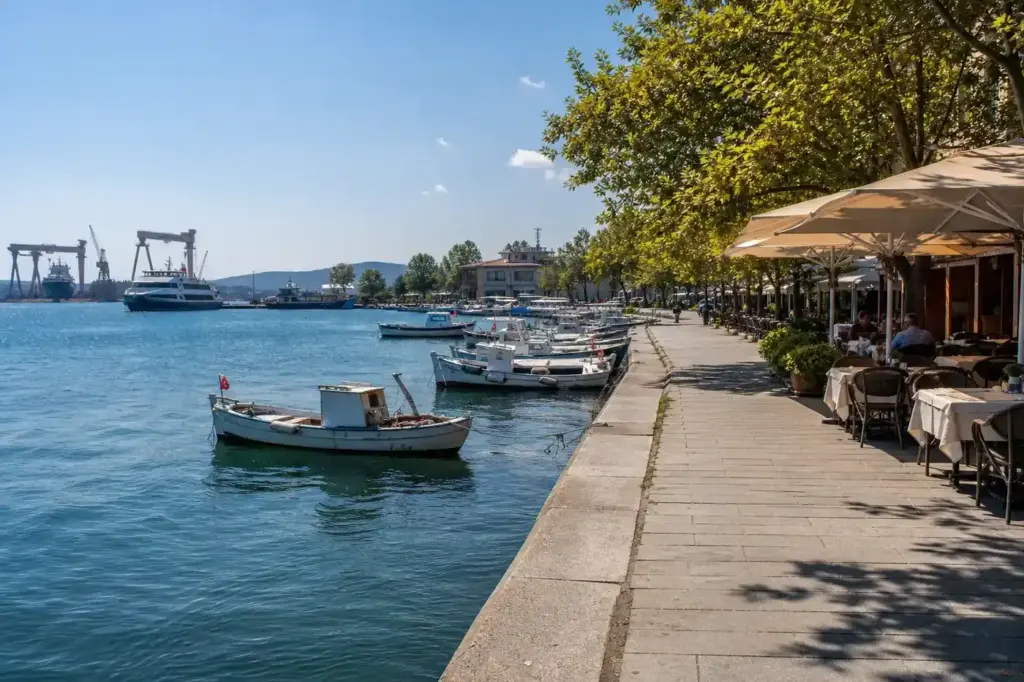
Tuzla spreads across the southeastern edge of Istanbul on the Asian shore of the Sea of Marmara. Once a small fishing town with a Greek name (Akritas), it has evolved into a district of nearly 290,000 residents and growing appeal for visitors seeking an alternative to the crowded historic center. The name itself—meaning “salt pan” in Turkish—echoes the area’s centuries-old economy of salt extraction.
Most visitors reach Tuzla via the Marmaray commuter line, which has three stations in the district and connects the area directly to central Istanbul in just over an hour. The district remains quieter and less touristed than the European side, giving it a distinctly local character worth exploring for those interested in contemporary Turkish urban life and seafood.
Quick Facts
| Address | Tuzla, Istanbul Google MapsApple MapsYandex Maps |
|---|---|
| District | Tuzla |
| Metro | Aydıntepe (Marmaray) İçmeler (Marmaray) Tuzla (Marmaray) |
| Best time to visit | Spring (April–May) and autumn (September–October) offer the most pleasant weather for waterfront walks and meals. Summers are warm and busy with Istanbul residents on weekends, especially mid-June through August. Winters are mild but rainy. Weekday mornings are quietest; weekends and summer evenings draw crowds to waterfront restaurants. |
| Recommended duration | Half day to full day |
| Website | tuzla.bel.tr |
Why Visit Tuzla?
Tuzla offers a different face of Istanbul. Walk the waterfront to see active shipyards and industrial wharves—a working maritime landscape few visitors encounter. The coastal promenade has developed into a dining destination, with seafood restaurants and casual cafés overlooking the Marmara. The district attracts Istanbul residents seeking weekend escapes, particularly families drawn to parks and marinas.
Tuzla also sits near Sabiha Gökçen Airport, making it a practical base for travelers. Beyond the waterfront, the district contains residential neighborhoods, educational institutions including military academies, and transport infrastructure that reveal how modern Istanbul functions away from museum queues and packed bazaars.
Atmosphere
Tuzla feels lived-in and purposeful rather than polished. The waterfront fills on summer weekends with families, couples, and groups of friends eating fish and drinking tea. Shipyard cranes and working vessels dominate the seascape, creating an industrial-maritime character unlike the tourist-focused waterfronts elsewhere in the city. Away from the coast, quiet residential streets and green spaces prevail. Evenings bring crowds to the promenade restaurants; midweek the district is relaxed and unhurried. Morning brings dockworkers and commuters to the Marmaray stations.
History of Tuzla
In antiquity, a Greek settlement called Akritas stood on this headland overlooking the Sea of Marmara, centered on fishing and maritime trade. The Ottoman Empire incorporated these lands around 1400 under Sultan Bayezid I, maintaining the area’s focus on the sea. Ottoman chronicles record that imperial fleet ships were maintained and repaired in Tuzla’s natural harbor, and the region supplied timber and provisions for naval operations.
The name Tuzla emerged from the Turkish word for salt; salt extraction from the shallow waters of the Marmara became a defining economic activity for centuries. Olives, tobacco, and fish also featured in the local economy. During the Ottoman period, the population remained predominantly Greek—farmers, fishermen, and tradespeople tied to the coast.
The population exchange between Greece and Turkey in the early 1920s changed the character of Tuzla. Greek residents were exchanged for Turkish families from Salonica, Kavala, and Drama in Greece, erasing a centuries-old Greek presence and establishing a Turkish demographic foundation. In the decades that followed, Tuzla remained a modest, scattered settlement.
The district was officially established as an administrative unit in 1992, separated from the neighboring Pendik district. By the late 20th century, shipbuilding emerged as Tuzla’s defining industry. Industrial yards grew along the waterfront, eventually making Tuzla home to one of Turkey’s largest concentrations of shipyards. This industrial boom reshaped the district’s economy and landscape. Residential growth accelerated as Istanbul expanded eastward, and the Marmaray commuter line, completed through Tuzla in the 2010s, integrated the district into the broader metropolitan transport network, making it accessible to the city center in roughly an hour.
How to Get to Tuzla
By train (Marmaray): From central Istanbul, take the commuter rail from Yenikapi station (on the European side, near the Blue Mosque) or from Kadıköy (Asian side). The journey to Tuzla station takes approximately 1 hour. Trains depart every 15 minutes daily, stopping at Aydıntepe, İçmeler, and Tuzla stations. From Tuzla station, the waterfront restaurants and main district areas are a short walk away.
By bus: IETT buses serve Tuzla from various parts of Istanbul, though journey times vary by origin (1–2 hours from central hubs). Direct ferry services also operate from the European side and other Asian districts.
By car or taxi: From central Istanbul, the drive to Tuzla takes 35–50 minutes depending on traffic. Parking is available near the waterfront and in the residential neighborhoods.
Accessibility
The Marmaray stations (Aydıntepe, İçmeler, Tuzla) are modern and wheelchair accessible. The waterfront promenade near restaurants is paved and mostly level. Side streets and residential areas vary in accessibility. Buses are accessible, though some older routes may lack lifts. No specific information is available on free companion tickets for Marmaray; check the operator's accessibility policy on arrival.
Food Nearby
Tuzla's waterfront is lined with seafood restaurants and casual cafés, ranging from simple grilled fish spots to upscale establishments. Turkish and Mediterranean cuisine dominate. Expect meze platters, fresh catch of the day, grilled squid, and sea bass. Inland neighborhoods contain bakeries, neighborhood kebab shops, and casual Turkish restaurants serving the local community. Most are budget to moderate in price. Exact establishment names change frequently; use local guidance or walk the waterfront to explore current options.
What to Bring
Comfortable walking shoes for exploring the waterfront and neighborhoods. Sunscreen and a hat for sunny days along the Marmara coast. Light layers for variable spring and autumn weather. A light rain jacket in winter and autumn. Standard security items: expect standard bag checks if visiting any official or institutional buildings. No special restrictions apply to casual visits to the waterfront or restaurants.
Photography Rules
Photography is allowed freely on the waterfront and public spaces. Shipyard areas and military facilities near the district should not be photographed. No special restrictions apply to casual visitors taking photos of the landscape, restaurants, or street scenes. Respect privacy when photographing individuals.
Family Suitability
Tuzla appeals to families interested in a relaxed coastal day away from central Istanbul crowds. The waterfront promenade is safe and suitable for children; parks dot the district. The journey by Marmaray train is straightforward and family-friendly. Restaurants welcome families, many with views and outdoor seating. Strollers manage the main waterfront areas well. The district lacks major theme attractions or formal museums that cater to children's activities, making it better suited to families seeking quiet beaches, casual meals, and urban exploration rather than structured entertainment.
Istanbul Vibes Tips
- Avoid arriving at the waterfront during Friday or Saturday evenings in summer if you seek quiet—crowds and traffic peak then. Weekday mornings or early afternoons offer a more relaxed atmosphere.
- The three Marmaray stations (Aydıntepe, İçmeler, Tuzla) serve different areas of the district. Tuzla station is closest to the main waterfront restaurants and activity; check which station suits your destination before boarding.
- Waterfront restaurants vary widely in price and style. Walk the promenade before sitting down to compare menus and crowds, especially on weekends when some fill quickly.
- The district is spread out; public transport or a taxi is more practical than walking between neighborhoods. Don't underestimate distances if exploring inland areas.
- If interested in shipyards and maritime heritage, the waterfront offers views from public areas, but active yards are not open to casual tourists. Photography from a distance is acceptable; do not attempt to enter gated facilities.
Explore Nearby Tuzla
Sights near Tuzla
 Belgrad Forestabout 51.3 km away · typical visit: 2–4 hours
Main image: AI-generated illustration. It may not show the place exactly as it looks.
 Camlica Hill – about 35.1 km away · typical visit: 1–2 hoursOpen daily 10:00–21:30
Main image: AI-generated illustration. It may not show the place exactly as it looks.
Metro stations near Tuzla
 Pendikabout 6.5 km away
Main image: AI-generated illustration. It may not show the place exactly as it looks.
Train stations and river piers near Tuzla
 Sabiha Gökçen Airportabout 9.2 km away
Main image: AI-generated illustration. It may not show the place exactly as it looks.
Browse more: More in Tuzla · All Hidden Istanbul · All Neighborhoods
FAQ: Tuzla
Is Tuzla a tourist destination or mainly residential?
Tuzla is primarily a working district and residential area for Istanbul residents, not a classical tourist destination. Its appeal lies in offering visitors a break from crowded tourist sites—a chance to experience contemporary Turkish urban and waterfront life, eat fresh seafood with locals, and see the city's industrial heritage. Most visitors are Istanbul residents or international travelers basing themselves near Sabiha Gökçen Airport.
What is Tuzla known for?
Tuzla is known for its shipbuilding industry (one of Turkey's largest concentrations of shipyards), its waterfront and fish restaurants, and its role as a commuter residential district on Istanbul's eastern edge. Historically, it was named for salt extraction and served as an Ottoman naval anchorage.
How long does it take to reach Tuzla from central Istanbul?
By Marmaray train from Yenikapi (European side), the journey takes approximately 1 hour 2 minutes. By car or taxi, 35–50 minutes depending on traffic. By bus, 1–2 hours depending on the route and origin point.
What can I do in Tuzla?
Walk the Marmara waterfront, eat at seafood restaurants, visit local parks and marinas, observe working shipyards from public viewpoints, and experience a quieter, less touristy side of Istanbul. The district does not have major museums, palaces, or archaeological sites like the historic peninsula.
Are there museums or historical sites to visit?
Tuzla lacks the archaeological museums, mosques, and palace attractions of central Istanbul. Its appeal is primarily the contemporary waterfront scene, industrial heritage, and local neighborhood character rather than formal heritage sites.
Is Tuzla safe for visitors?
Yes, the main waterfront areas and residential neighborhoods are safe for visitors during the day and evening. Standard urban caution applies—avoid isolated areas late at night and keep valuables secure. Shipyard areas should not be approached as they are active industrial zones.
What restaurants are in Tuzla?
The waterfront is lined with seafood restaurants and casual cafés. Many serve fresh fish, grilled squid, meze, and Turkish specialties. Prices range from budget to upscale. Inland areas have traditional Turkish and neighborhood restaurants. Specific venue names change, so walk the waterfront or seek local recommendations on arrival.
Is Tuzla a good base for staying near the airport?
Yes. Tuzla is near Sabiha Gökçen Airport (served by Istanbul's M4 metro line). The district offers hotels, restaurants, and a quieter atmosphere than staying in central Istanbul. The Marmaray connection allows easy day trips to the historic center if desired.
Istanbul Vibes is a one-person project. A coffee keeps it going

Take this guide with you
Get a free PDF of this guide to print or read offline: key facts, tips and a map link on a few clean pages.
Report an issue on this page
How we research and update our guides
About this guide: AI assistance and accuracy
This guide is created with the help of AI and is based on official sources where available. Mistakes can still happen. Opening hours, prices, rules and other details are given to the best of our knowledge as of the date shown and can change without notice. It offers general recommendations only, not professional, legal or travel advice. Please confirm important details with the official source before you travel; you are responsible for your own plans and decisions.
* Affiliate link: as an Amazon Associate we earn from qualifying purchases at no extra cost to you.
