
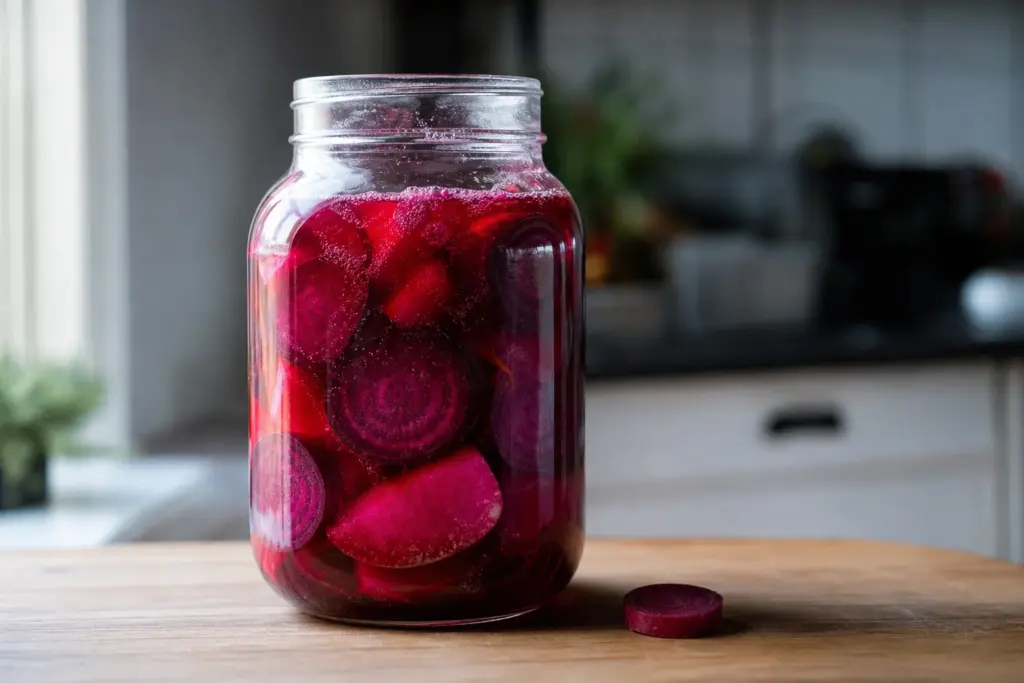
Şalgam is a fermented drink rooted in Turkish culinary tradition, particularly from the southern regions of Adana and Mersin. If you want to understand Turkish food culture beyond restaurants, learning how to make Şalgam at home reveals both technique and history: fermentation traditions that date back centuries. The recommended approach is a simple two-stage fermentation using purple carrots, turnip, bulgur starter, and salt in a sealed jar.
Making Şalgam at home takes patience but requires minimal active work. Most of the effort is fermentation time. You will end up with a bold, sour, naturally probiotic drink that pairs perfectly with grilled meat, cuts through heavy flavours, and settles the stomach after a rich meal.
Quick answer: Layer sliced purple carrots and turnip with bulgur and salt in a sealed jar. Ferment the bulgur starter separately for one week, combine with vegetables in barrels or jars, then ferment for another 1–2 weeks before straining and chilling. Total time: 15–21 days.
At a Glance
| Type | Drinks |
|---|---|
| Origin | Şalgam originates from the southeastern region of Turkey, around the cities of Mersin and Adana. It is a traditional Turkish beverage that has been enjoyed for centuries. The Anatolian climate is known for its extremely hot summers and harsh winters; to preserve vegetables for winter, people used to make turnip preserves, and the juice that came as a byproduct turned out to be quite nutritious. |
| Servings | 6–8 servings |
| Total time | 15–21 days (including fermentation periods) |
| Difficulty | Medium |
History and Story of Şalgam
Şalgam, often referred to as fermented turnip juice, is a centuries-old Anatolian beverage, most popular in the southeastern regions of Turkey, especially in Adana and Mersin. French traveller, naturalist, and writer Pierre Belon described its production method in the 16th century. In Turkish cuisine, it is very common to make pickles from different vegetables such as carrots, garlic, cucumber, and cabbage; the process of making Şalgam shows similarities with making pickles. Adana şalgam has officially received geographical indication registration from the European Union, becoming the 45th Turkish product to secure the designation.
Ingredients
- 500 g purple (black) carrots, scrubbed
- 300 g turnip, peeled
- 100 g fine bulgur (cracked wheat)
- 30 g non-iodized rock salt
- 2 litres drinking water (chlorine-free if possible)
- 5 ml lemon juice (optional, for adjustment)
- 1 tsp active dry yeast or sourdough starter (optional, to ensure fermentation)
How Şalgam Is Made
Step 1: Prepare the fermentation starter
Ferment the pounded wheat (bulgur) for a week until it acidifies. Mix 100 g fine bulgur with 500 ml of the drinking water and a pinch of salt in a clean glass jar. Cover loosely to allow gases to escape. Leave at room temperature, stirring occasionally. After seven days, the mixture should smell noticeably sour and show signs of fermentation (small bubbles). This sour starter is the foundation for the drink's tang.
Tip: Keep the jar in a cool, dark place away from direct sunlight. A pantry or cupboard works well.
Step 2: Prepare the vegetables
Wash the purple carrots and turnip thoroughly under running water to remove soil. Peel the turnip to avoid bitterness. Cut both vegetables into thin slices or small batons roughly 5 mm thick. The thinner the cuts, the faster the fermentation. You can include the purple carrot peels for extra colour and flavour.
Tip: Do not use vinegar or acid to clean the vegetables, as this can interfere with natural fermentation.
Step 3: Layer vegetables and bulgur in fermentation vessel
Put the fermented bulgur in special wooden barrels or glass jars and add the vegetables, then wait another week to ripen. Distribute the carrot and turnip slices evenly into a clean 3–4 litre jar. Sprinkle the remaining 30 g of bulgur (not yet fermented) between the layers. Add the seven-day fermented bulgur starter with its liquid. The vegetables should be mostly submerged.
Tip: Traditionally fermented in wooden barrels made from mulberry; glass jars work perfectly for home fermentation.
Step 4: Make the brine
Dissolve the 30 g non-iodized rock salt in 1.5 litres of drinking water. Pour this brine over the vegetables and bulgur until everything is fully covered. The salt is essential for both fermentation and flavour balance. If using yeast, dissolve 1 tsp active dry yeast in a small amount of the brine and add it now to ensure reliable fermentation, though natural fermentation will occur without it.
Tip: Use rock salt or pickling salt, not table salt, which contains iodine and anti-caking agents that interfere with fermentation.
Step 5: Ferment the mixture
Cover the jar loosely with a clean cloth or a loose-fitting lid to allow carbon dioxide to escape while keeping dust and insects out. Leave at room temperature (18–22°C ideally) for 7–14 days. You will notice the liquid gradually turning deep purple-red, and bubbles forming. The smell should become distinctly sour and fermented. Stir the mixture once or twice during this period.
Tip: Fermentation progresses faster in warm conditions and slower in cool ones. Taste a small spoon of the liquid after day 7 to check tanginess; continue fermenting until you reach your preferred sourness.
Step 6: Strain and bottle
Once fermented, cool the mixture, then filter and pour into bottles. Line a sieve with fine cheesecloth and pour the contents of the jar through it, collecting the deep purple-red liquid. Press gently on the vegetables to extract all liquid. Discard the spent solids or reserve small carrot slices as garnish (these are called tane in Turkish). Pour the strained juice into clean glass bottles and refrigerate immediately.
Tip: The juice will continue to develop flavour slowly in the refrigerator. It keeps for several weeks when properly sealed and chilled.
Step 7: Adjust and serve
Before serving, taste the chilled şalgam. If it is too salty, dilute slightly with cold water. If you prefer spice, add hot sauce obtained from red paprika or red pepper flakes to individual glasses. Serve in tall glasses over ice, traditionally with a thin slice of pickled carrot or a carrot stick inside. Traditionally served in a tall glass with pickled carrots, Şalgam is best enjoyed cold and pairs excellently with grilled meats and spicy dishes.
Tip: Do not boil or heat the finished drink, as this kills the beneficial fermentation cultures.
Variants
- Acılı Şalgam (hot/spicy version): made with the addition of red pepper flakes or dried chilli during or after fermentation, popular in Adana.
- Mild Şalgam (non-spicy): fermented without chilli, allowing the pure sour and salty flavours to dominate.
- Şalgam with beet: some regional versions add beetroot slices for deeper colour and additional earthiness.
- Mixed Şalgam and Ayran: in parts of Turkey, cold şalgam is mixed with ayran (yoghurt drink) for a creamier, slightly less salty beverage.
Common Mistakes to Avoid
- Using table salt instead of rock or pickling salt: table salt contains iodine and anti-caking agents that interfere with fermentation and cloud the final drink. Always use non-iodized rock salt.
- Not leaving enough time for fermentation: rushing the process or fermenting at cold temperatures results in a bland drink lacking the signature sour tang. Aim for 7–14 days at room temperature; cooler kitchens may need longer.
- Over-filling the jar or leaving no headspace: fermentation produces gas; a jar too full may burst or overflow. Leave 5–8 cm of space at the top.
- Sealing the jar too tightly: a fully sealed lid traps carbon dioxide and can cause pressure buildup or incomplete fermentation. Use a loose cloth or a lid that allows gases to escape.
- Using chlorinated water: chlorine kills beneficial bacteria needed for fermentation. Let tap water sit overnight before use, or use filtered or bottled drinking water.
- Storing in the wrong temperature range: fermentation works best at 18–22°C. Temperatures above 25°C speed it up (risking over-fermentation), while temperatures below 15°C slow it dramatically. Avoid direct sunlight.
How to Order and Eat It
Traditionally served in a tall glass with pickled carrots, Şalgam is best enjoyed cold. Serve it chilled in a tall glass, often with a thin slice of pickled purple carrot or carrot stick resting inside (called tane). Sip it slowly; the bold, sour, salty flavour is intense and designed to be a palate cleanser. It pairs excellently with grilled meats and spicy dishes, acting as a palate cleanser, and is also commonly served as a chaser for rakı, Turkey’s famous anise-flavoured spirit. Şalgam is not only a popular accompaniment to meals but also a favourite choice during celebrations and gatherings.
To order: Bir şalgam suyu, lütfen [Beer shal-gum soo-yoo, loo-fen] (One şalgam juice, please)
Diet and Allergens
- vegan
- vegetarian
- gluten-free (if using certified gluten-free bulgur)
- dairy-free
Istanbul Vibes Tips
- Fermentation speed depends on room temperature. If your kitchen is cold (below 18°C), fermentation may take 3 weeks. Warmer kitchens (22–24°C) typically complete in 10 days. Taste after day 7 to judge progress.
- The purple liquid should smell distinctly sour and fermented, similar to sauerkraut or kimchi. If it smells unpleasant (like rotting flesh or mould), discard it; this indicates unwanted bacterial growth, though this is rare if equipment is clean.
- Many sources recommend adding dried or fresh chilli during fermentation for acılı (hot) şalgam, but you can add pepper flakes to individual servings instead. This gives you both a mild and spicy version from one batch.
- Carrot slices reserved from straining (tane) are edible and traditionally served as a garnish inside the glass. They become soft, pickled, and add crunch. Some people chew them as they drink.
- If the finished drink is too salty, do not add more water (this dilutes flavour). Instead, prepare a second batch with less salt, then mix the two for balance.
- After opening a bottle, the drink continues to ferment slowly in the refrigerator. Taste it again after 1–2 weeks; it will become noticeably more sour as fermentation continues. This is normal and desirable.
Explore Nearby Şalgam
Browse more: All Food & Drink · All Other
FAQ
What does Şalgam really taste like?
Earthy, sour, salty, and slightly spicy, this ruby-red fermented beverage made from purple carrots, bulgur, and turnips is bold and not sweet. It is comparable to the brine in a jar of fermented vegetables or a very sour, salted carrot juice. First-time drinkers often find it bracing; it is an acquired taste meant to be sipped, not gulped.
Why is it called Şalgam if the main ingredient is carrot, not turnip?
In Turkish, the word şalgam means turnip, but this traditional drink is actually made from purple carrots, bulgur wheat, salt and yeast. Despite the name, the main ingredient is actually purple carrot, with turnip playing a subtle supporting role. Turnip adds a sharp, earthy background note.
Can I make Şalgam without a fermentation starter (no bulgur or yeast)?
Yes. Natural fermentation will occur through ambient bacteria and lactobacillus present on the vegetables themselves, though fermentation may be slower and less reliable. Using a bulgur starter or a pinch of active dry yeast significantly improves success and speeds fermentation from 3–4 weeks to 10–14 days. Beginners should use a starter.
How long does homemade Şalgam keep?
Properly fermented and refrigerated şalgam keeps for several weeks in sealed glass bottles. The drink continues to slowly ferment in cold storage, becoming gradually more sour over time. If you notice mould, off-odours, or slimy texture, discard it immediately. Most homemade batches are best consumed within 4–6 weeks.
Is Şalgam alcoholic?
Şalgam suyu is a traditional non-alcoholic fermented beverage in Turkey. Fermentation produces organic acids, not significant alcohol. Alcohol content is negligible, typically less than 0.1%.
Where can I buy Şalgam instead of making it?
Şalgam suyu is a popular plant-based drink originating from the southeastern region of Turkey, around the cities of Mersin and Adana. Bottled şalgam is widely available in Turkish supermarkets and kebab restaurants throughout Turkey. In Istanbul, look in the refrigerated beverage section of any supermarket or ask at kebab stands. International Turkish or Middle Eastern grocers in other countries often stock it as well.
Does Şalgam contain gluten?
Traditional Şalgam is made with bulgur (cracked wheat), which contains gluten. However, if you use certified gluten-free bulgur or substitute it with another grain starter (such as millet or a gluten-free oat starter), you can make a gluten-free version. Always verify the label if using packaged bulgur.
Is Şalgam served with any food in particular?
Widely served alongside grilled meats, especially the famed kebabs of Adana, the beverage has long been an integral part of the region's food culture. Şalgam is often served alongside the alcoholic drink rakı in a separate glass as they complement one another. It also pairs well with any rich, fatty, or spicy dish, as the sourness and salt cut through the heaviness and refresh the palate.
Istanbul Vibes is a one-person project. A coffee keeps it going

Take this guide with you
Get a free PDF of this guide to print or read offline: key facts, tips and a map link on a few clean pages.
Report an issue on this page
How we research and update our guides
About this guide: AI assistance and accuracy
This guide is created with the help of AI and is based on official sources where available. Mistakes can still happen. Opening hours, prices, rules and other details are given to the best of our knowledge as of the date shown and can change without notice. It offers general recommendations only, not professional, legal or travel advice. Please confirm important details with the official source before you travel; you are responsible for your own plans and decisions.
* Affiliate link: as an Amazon Associate we earn from qualifying purchases at no extra cost to you.
