
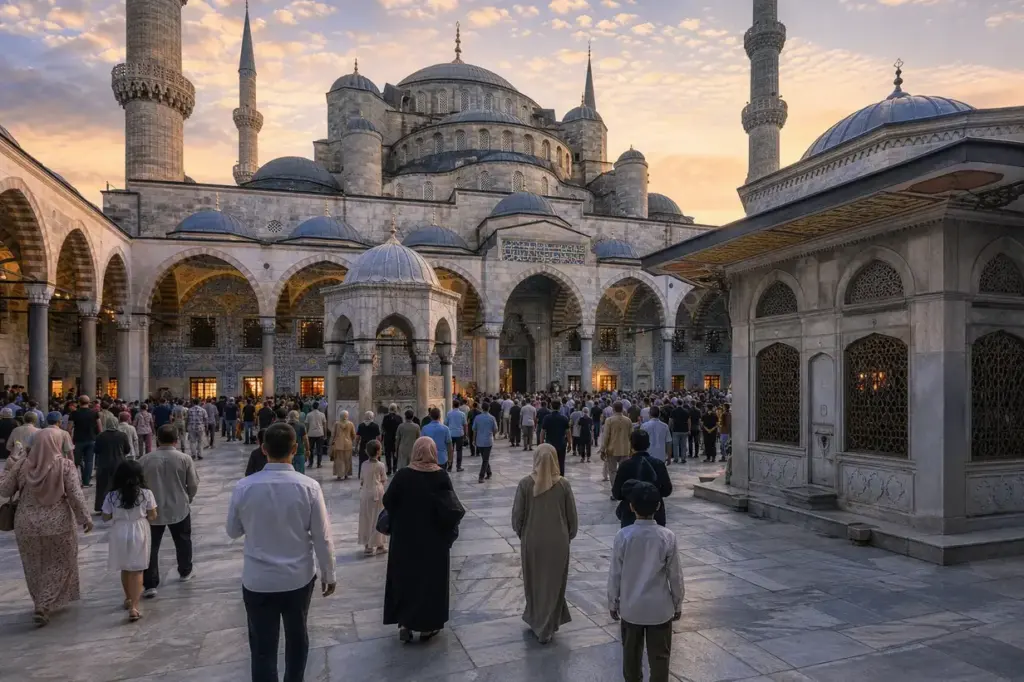
Eid al-Fitr marks the end of the month of Ramadan and the start of Shawwal in the Islamic calendar. In Istanbul, this three-day celebration transforms the city into a gathering place for family, prayer, and tradition. Because the Islamic calendar operates on the lunar cycle, all significant days in the Islamic calendar appear to shift forward approximately 11 days each year.
Known as Ramazan Bayramı or Şeker Bayramı—Candy Festival—in Turkey, Eid al-Fitr is one of the most important religious holidays for Muslims. It is a public holiday in Turkey that spans three days, during which people join their loved ones to observe the joyous occasion with festive meals, desserts, and gifts. For visitors in Istanbul during this time, the holiday offers a window into centuries-old traditions blending spirituality with celebration.
Quick Facts
| Type | Holiday / observance |
|---|---|
| When | Every year, on the first day of Shawwal in the Islamic calendar, typically in spring |
| Typical duration | 3–3.5 days |
| Public holiday | Yes, a non-working day in Turkey |
| Best time to visit | Eid al-Fitr falls in early to mid-spring (typically March), though the exact date shifts each year due to the Islamic lunar calendar. The holiday spans three consecutive days plus a half-day eve. The first day morning (before and after prayers, roughly 5:00–10:00 AM) offers the most intense spiritual experience; midday and afternoon are busier with crowds. The second and third days see more leisure activities, park gatherings, and family visits. Avoid the holiday period if you prefer fewer crowds; visit the day before the eve for normal conditions. |
Dates, programs and prices change from year to year. Always check the official website for the current edition.
Tickets and Booking for Eid al-Fitr
Eid al-Fitr is a free, public holiday—no tickets are required for prayers, public celebrations, or street festivities. Eid al-Fitr is a public holiday in Turkey that is a movable holiday, so the exact date changes from year to year. The holiday falls on the first day of Shawwal in the Islamic calendar, which shifts by approximately 10–11 days earlier each year relative to the Gregorian calendar.
For the most current dates and official holiday schedules, check the official Turkish government (Cumhuriyet) website or local announcements from the Istanbul municipality. International visitors may attend mosque prayers if appropriately dressed; check with individual mosques for visitor hours. Special events and programs vary by neighborhood and year—consult local tourism offices or community centers closer to the holiday for specific activities, food festivals, or cultural programs being organized.
Why Visit Eid al-Fitr?
Istanbul celebrates Eid al-Fitr on the grandest scale, with the great mosques of the old city holding the festival prayers and the streets filling with holiday crowds through the three days. The public spaces of the city carry the festival’s leisure—parks fill with families and picnics, ferries and excursion boats fill with holiday excursions, and the promenades of the Bosphorus and Marmara shore carry the festival’s strolling. Eid celebrations usually begin with a morning prayer at the mosque, followed by a breakfast feast with family and friends, and people dress up and visit their relatives to exchange greetings and gifts.
How Eid al-Fitr Is Celebrated
Eid celebrations usually begin with a morning prayer at the mosque, followed by a breakfast feast with family and friends. People dress up and visit their relatives to exchange greetings and gifts after days of hustle and bustle, cleaning their homes and preparing traditional desserts like baklava. It is customary to visit one’s relatives, especially older ones, and kiss their hand as a sign of respect, and children may go door-to-door, kissing hands of grown-ups and receiving sweets and small amounts of money in return.
One of the most distinctive Ottoman Eid traditions is mahya lights—lamps strung between mosque minarets to form illuminated words or images celebrating the holiday, displaying messages such as prayers or greetings and visible across the skyline of Istanbul. Mahya displays remain a beloved tradition in Turkey today. Turkish shadow plays, such as Karagöz and Hacivat, are popular during the Ramadan Feast, and children can watch these plays at fairs free of charge.
Highlights of Eid al-Fitr
Morning Prayers at Historic Mosques
People visit the Sultan Ahmed mosque in Istanbul as they celebrate Eid al-Fitr. The great mosques of the old city—Sultanahmet, Süleymaniye, and others—hold the festival prayers. Arriving early is essential; crowds begin gathering before dawn, and the mosques reach capacity quickly. The spiritual atmosphere is intense during the opening prayers, and after the ceremony, the ritual greeting of bayramlaşma—handshakes and embraces—spills from the prayer grounds into the surrounding streets.
Tip: Go before sunrise to secure a spot inside the mosque; exterior courtyards also offer prayer space with loudspeaker coverage.
Sweet Exchanges and Candy Tradition
Because sweets were so widely exchanged during the festival, Eid al-Fitr became popularly known in Turkish as Şeker Bayramı, meaning Sugar Feast. Another heartwarming feature of the festival is the tradition of gift-giving, especially to children—adults give sweets, chocolates, and small presents to kids, while elders in the family also give money as a token of love and affection. Supermarkets set up special stalls selling candies and desserts in the days before the holiday, and the custom of children collecting sweets door-to-door is still practiced in many neighborhoods.
Tip: Visit confectionery shops in the Grand Bazaar or Spice Bazaar for traditional baklava and Turkish delight prepared fresh for the holiday.
Family Gatherings and Festive Meals
People dress up and visit their relatives to exchange greetings and gifts after days of cleaning their homes and preparing traditional desserts like baklava. The special meal prepared for the first day of Eid often features lamb, followed by an array of sweet treats such as baklava and Turkish delight. Homes throughout Istanbul open their doors, and the three days are spent moving between family members' residences, sharing meals that reflect both Ottoman and contemporary Turkish culinary traditions.
Tip: If invited to a home, bring gifts of sweets or flowers—small gestures are always appreciated and expected.
Mahya Light Displays on Minarets
One of the most distinctive Ottoman Eid tradition is mahya lights—lamps strung between mosque minarets to form illuminated words or images celebrating the holiday, displaying messages such as prayers or greetings and visible across the skyline of Istanbul. Visitors to the city described them as if 'the stars had been brought down from the sky.' These displays light up the skyline each evening during the holiday, particularly around the major mosques in Sultanahmet and across the European side.
Tip: View from the Galata Tower or from the waterfront near Eminönü for the best perspective of the illuminated minarets across the old city.
Street Crowds and Holiday Atmosphere
The old city's streets fill with the holiday crowds through the three days. The public spaces of the city carry the festival's leisure—parks fill with families and picnics, ferries and excursion boats fill with holiday excursions, and the promenades of the Bosphorus and Marmara shore carry the festival's strolling. The holiday transforms everyday spaces into open-air celebrations, with families picnicking in parks, walking along waterfronts, and riding ferries to various neighborhoods and islands.
Tip: Expect very crowded public transport, ferries, and parks on the first day; travel early morning or later afternoon to avoid peak times.
New Clothes and Holiday Fashion
Many people wake up early on the first day of the Ramadan Feast and put on their best clothes, called bayramlık, which they often buy specifically for the occasion, and have a large breakfast, symbolizing the end of the fasting period. Children in particular wear new outfits purchased for the occasion, and the streets reflect a collective commitment to festive presentation as families visit and greet one another.
Tip: Dress respectfully if visiting mosques—women should bring headscarves and wear knee-length skirts or trousers.
What It Means for Your Visit
Eid al-Fitr is a public holiday for a total of 3.5 days, starting at 13.00 on Thursday March 19, 2026 (half day) and continuing until Sunday, March 22 (inclusive). Note that as of October 2026, check the official Turkish government sources for the current year’s exact dates, which change annually due to the lunar Islamic calendar.
Schools and most businesses are closed during this period, and administration buildings, schools and most businesses are closed during this period. Public transport may run less frequently, and fares are usually lower compared to regular days, though highways may be overcrowded, especially in the morning of the first day and in the afternoon of the last day of the Ramadan Feast, as many people travel. Museums and shops have reduced hours or may close on the first day; cultural sites typically resume regular operations by midday or the second day.
Expect significant crowds in public spaces, parks, and on all forms of transport. Long-distance buses and ferries serving the islands fill quickly. Many restaurants remain open but may have longer waits for seating. Plan purchases of groceries, water, and essentials before the holiday begins.
History of Eid al-Fitr
The festival of Eid al-Fitr—called Ramazan Bayramı—was one of the most anticipated events of the year in the Ottoman empire. More than a religious holiday marking the end of Ramadan, it became a grand social celebration that brought together imperial authority, urban culture, and neighborhood traditions, combining spirituality and communal joy.
At the heart of Ottoman Eid celebrations was a highly structured court ritual centered around the sultan, organized according to court protocol dating back to the reign of Sultan Mehmed II, whose legal codes defined how imperial ceremonies were conducted. During these centuries, Eid evolved from a purely religious observance into an event that shaped urban life in Istanbul, with the imperial court setting the tone for celebrations throughout the city.
According to Ottoman era expert Murat Bardakçı, the words ‘şükür’ (gratitude) and ‘şeker’ (sugar) were spelled using the same characters in the Ottoman alphabet and thus in time, the meaning of the holiday was misconstrued. The term şükür was used in reference to the gratitude felt by those who had fulfilled their religious duties by way of fasting. Meanwhile, the late academic Güngör Uras claimed that the reason Eid al-Fitr is referred to as the ‘Sugar Feast’ in Turkey is due to the Ottoman tradition of the palace offering trays of baklava to their soldiers on the 15th day of the fast, which they would then parade around town to the delight of onlookers.
One of the most distinctive Ottoman Eid traditions was mahya lights—lamps strung between mosque minarets to form illuminated words or images celebrating the holiday, displaying messages such as prayers or greetings and visible across the skyline of Istanbul. Mahya displays remain a beloved tradition in Turkey today. This practice has persisted for centuries, making the holiday visually distinctive and marking the skyline of Istanbul during the celebration.
How to Get to Eid al-Fitr
Eid al-Fitr is celebrated citywide across Istanbul—there is no single gathering place. The main prayer services occur at the major historical mosques in the old city:
- Sultan Ahmed Mosque (Blue Mosque)—Sultanahmet district; Metro: Zeytinburnu (M1A), then 5 min walk, or Kabataş (T1), then 10 min walk
- Süleymaniye Mosque—Fatih district; Metro: Veznecilers (M1A), then 8 min walk or tram to Beyazıt-Kapalıçarşı (T1)
- Fatih Mosque—Fatih district; central old city location
- Camlica Mosque—Asian side; Metro: Aşiyan (M4), then 10 min walk or cable car to Camlica
For family celebrations, parks such as Göztepe Park, Tophane Park, and Maçka Park fill with visitors. Ferries depart from Eminönü and Besiktaş piers to the Bosphorus waterfront and islands.
Accessibility
Major mosques in Istanbul have wheelchair access to prayer areas and public entrances. Sultanahmet Mosque, Süleymaniye, and Fatih Mosque have designated spaces; check with each mosque directly regarding companion access and facilities. Public parks used for picnics are generally wheelchair-friendly with paved paths. Ferries for Bosphorus excursions have wheelchair access and elevators. During peak holiday hours, expect difficulty navigating crowded streets and mosques; early morning visits are more accessible.
Food Nearby
During Eid, most restaurants remain open though with extended waits, especially on the first day morning and afternoon. Pastry shops and sweet sellers set up additional stalls in the Grand Bazaar, Spice Bazaar, and neighborhood squares selling baklava, Turkish delight, and traditional holiday desserts. Street food vendors offer grilled items, pastries, and drinks along main thoroughfares. Coffee houses remain open for tea and traditional Turkish coffee. Plan to book restaurant seating in advance if dining out on the first day is important.
What to Bring
Wear respectful, modest clothing if attending mosque prayers—women require headscarves and ankle-length skirts or trousers; men wear long trousers and covered shirts. Remove shoes when entering prayer areas. Bring a small gift of sweets or flowers if invited to a home. Sunscreen and a hat are useful for park and waterfront visits. Comfortable walking shoes are essential. Carry cash for small purchases at stalls; many informal vendors do not accept cards.
Best Views and Photo Spots of Eid al-Fitr
Sultanahmet Mosque courtyard at dawn
The Blue Mosque's illuminated domes and minarets frame the prayer grounds as worshippers arrive; the first light of dawn catches the tilework and creates a serene opening to the holiday.
Best time: One hour before sunrise; the parking lot and surrounding squares are already filling with families.
Galata Tower viewing platform, evening
The old city skyline lights up with mahya displays on mosque minarets across Sultanahmet, Fatih, and the Golden Horn; the illuminated text is most visible and photographable after dark.
Best time: 30 minutes after sunset through midnight; clear evenings provide the best display visibility.
Göztepe Park central lawn
Families spread across the grass with picnics, new clothes, and festive gatherings; the Bosphorus frames the background, and the afternoon light is warm and celebratory.
Best time: Late morning through midday on days 2 and 3; the park fills with fewer crowds than the old city but captures the relaxed holiday mood.
Bosphorus waterfront promenade (Ortaköy or Beşiktaş area)
Holiday excursion boats depart and arrive with passengers; families stroll in new clothes along the water; the Asian shore and bridge are visible as a backdrop to the festive crowds.
Best time: Afternoon on the second or third day when leisure travel dominates over morning prayers.
Spice Bazaar (Mısır Çarşısı) interior corridor
Sweet and pastry stalls set up temporary displays with baklava, Turkish delight, and holiday treats; the colorful, crowded bazaar captures the commercial bustle of the holiday preparation and exchange.
Best time: Mid-morning, days before the holiday or the second day when the rush has settled.
Photography Rules
Photography inside mosques during prayers is not permitted; check signage at each mosque. Exterior and courtyard photography is generally allowed; ask local guides before photographing people. Mahya light displays on minarets are best photographed in the evening. Drones are not permitted in Istanbul. Tripods require permission from venue management.
Family Suitability
Eid al-Fitr is highly family-oriented and welcoming to visitors of all ages. Children receive special attention through gift-giving traditions and candies. Morning prayers require standing for 15–20 minutes and may not suit very young children; however, exterior courtyards and outdoor prayer grounds often accommodate families with children comfortably. Parks and public spaces are ideal for families during the second and third days. Stroller access is good in parks but challenging in old-city streets and mosques. Restaurants remain open late and serve child-friendly meals. The holiday's focus on family visits and leisure activities makes it an excellent time for families traveling with children to observe local customs.
Istanbul Vibes Tips
- Book accommodations and transport well in advance if traveling to or within Istanbul during Eid. Hotels fill quickly, and ferries to islands operate at or near capacity, particularly on the first day morning and the final day afternoon.
- Purchase groceries and water before the eve day; many shops have reduced hours or close during the first two days of the holiday. Pharmacies remain open but with shorter hours.
- Arrive at major mosques no later than 4:00–4:30 AM on the first day if you wish to attend prayers inside; outdoor courtyard overflow areas fill quickly, and viewing loudspeaker broadcasts from side streets is an alternative.
- Avoid driving or taking taxis during the first day morning (4:00–11:00 AM) when crowds heading to prayers create severe traffic. Use metro or walk in old-city areas.
- If invited into a home, expect to remove your shoes indoors, and prepare for multiple offerings of tea, coffee, and sweets. It is customary to accept at least small servings.
- Dress modestly throughout the three days, particularly in neighborhoods and public spaces; the holiday emphasizes religious observance and traditional values.
Explore Nearby Eid al-Fitr
Sights near Eid al-Fitr
 Fener and Balat Districts · typical visit: 3–5 hours
Main image: AI-generated illustration. It may not show the place exactly as it looks.
 Göztepe Park · typical visit: 1–2 hoursOpen 24 hours
Main image: AI-generated illustration. It may not show the place exactly as it looks.
Related guides
 Sultanahmet Walking Route: Byzantine and Ottoman Monuments on Foot
Main image: AI-generated illustration. It may not show the place exactly as it looks.
 Spice Bazaar and Grand Bazaar Route: Two Markets, Six Centuries
Main image: AI-generated illustration. It may not show the place exactly as it looks.
 Bosphorus Waterfront Walk: 3-Day Route from Dolmabahçe to Bebek
Main image: AI-generated illustration. It may not show the place exactly as it looks.
Browse more: All Event / Holiday · All Events & Holidays
FAQ: Eid al-Fitr
What is Eid al-Fitr?
Eid al-Fitr marks the end of the month of Ramadan and the start of Shawwal, the tenth month in the Islamic calendar. It is one of the largest and most important celebrations in the Islamic calendar.
When is Eid al-Fitr in 2026?
Eid al-Fitr fell on March 20, 2026. It is a public holiday for a total of 3.5 days, starting at 13.00 on Thursday March 19, 2026 (half day) and continuing until Sunday, March 22 (inclusive). Future dates shift earlier by approximately 10–11 days each year.
Is it a public holiday in Turkey?
Eid al-Fitr is a public holiday, and it is a day off for the general population, with schools and most businesses closed. However, not all shops and restaurants close; tourism services often remain open with reduced hours.
Can I visit mosques during Eid prayers as a tourist?
Yes, visitors are welcome in most Istanbul mosques during Eid prayers if dressed respectfully. Women must wear headscarves and cover legs and arms; men should wear long trousers and covered shirts. Arrive very early (before dawn) to find space, as mosques fill quickly. Exterior courtyards and loudspeaker areas provide alternatives if interior space is not available.
What should I avoid during Eid al-Fitr?
Avoid driving in the old city on the morning of the first day due to severe traffic heading to prayers. Do not photograph people during prayers without permission. Avoid revealing clothing and immodest behavior throughout the three-day holiday, particularly in religious and residential areas. Supermarkets and many businesses have limited hours—shop before the holiday.
Where do people celebrate Eid in Istanbul?
Istanbul celebrates Eid al-Fitr on the grandest scale, with the great mosques of the old city holding the festival prayers and the streets filling with holiday crowds. Parks fill with families and picnics, ferries and excursion boats fill with holiday excursions, and the promenades of the Bosphorus carry the festival's strolling.
What are the main traditions during Eid?
Eid celebrations usually begin with a morning prayer at the mosque, followed by a breakfast feast with family and friends, and people dress up and visit their relatives to exchange greetings and gifts. Children may go door-to-door, kissing hands of grown-ups and receiving sweets and small amounts of money in return.
How long does the holiday last?
Eid al-Fitr is a public holiday for a total of 3.5 days. The holiday begins at midday on the eve day (a Thursday in 2026) and concludes at the end of the third full day (a Sunday). Most businesses reopen from the afternoon of the second day onward.
Istanbul Vibes is a one-person project. A coffee keeps it going

Take this guide with you
Get a free PDF of this guide to print or read offline: key facts, tips and a map link on a few clean pages.
Report an issue on this page
How we research and update our guides
About this guide: AI assistance and accuracy
This guide is created with the help of AI and is based on official sources where available. Mistakes can still happen. Opening hours, prices, rules and other details are given to the best of our knowledge as of the date shown and can change without notice. It offers general recommendations only, not professional, legal or travel advice. Please confirm important details with the official source before you travel; you are responsible for your own plans and decisions.
* Affiliate link: as an Amazon Associate we earn from qualifying purchases at no extra cost to you.
