
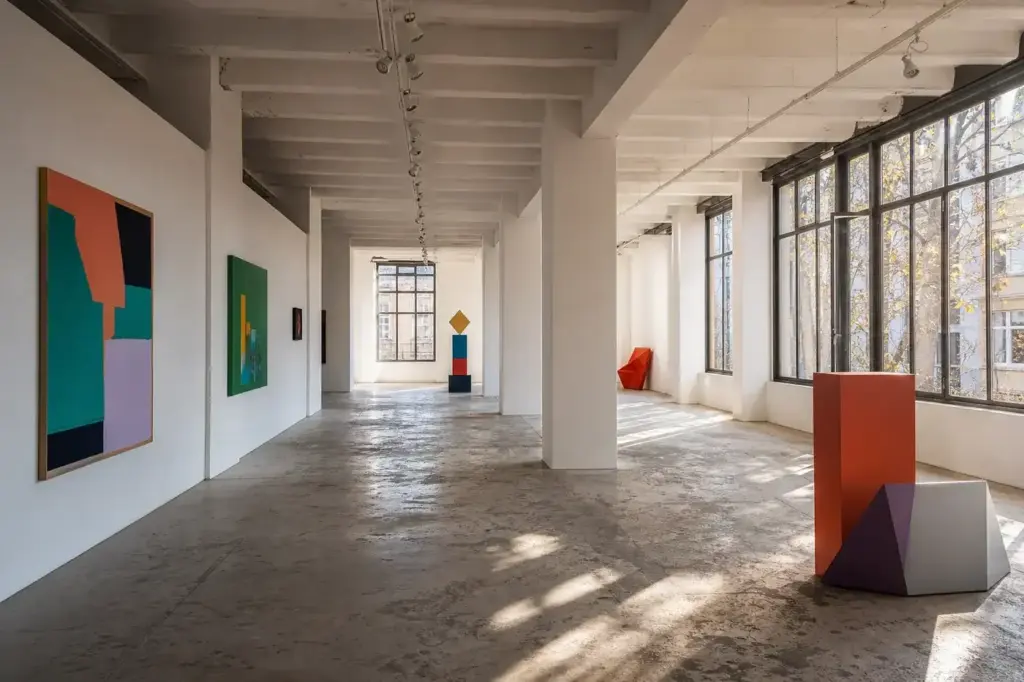
The Istanbul Biennial is a contemporary art exhibition that has been held biennially in Istanbul since 1987, organized by the Istanbul Foundation for Culture and Arts (IKSV). The biennial follows an exhibition model in which an international curator develops a conceptual framework according to which a variety of artists and projects are invited.
The current 18th edition, titled The Three-Legged Cat and curated by Christine Tohmé, marks the beginning of a three-year cycle. It unfolds across eight venues throughout the Beyoğlu district, inviting visitors to experience it entirely on foot. The first leg, running from September 20 to November 23, 2025, presents an exhibition with over 40 artists, alongside performances, screenings, and talks centered on themes of self-preservation and futurity.
Quick Facts
| Type | Recurring event |
|---|---|
| When | Every two years, typically in September to November |
| Next occurrence | September 20 (same date every year) |
| Typical duration | 9 weeks for first leg; full cycle spans three years |
| Address | Multiple venues, Beyoğlu, Istanbul |
| District | Beyoğlu |
| Admission | free |
| Best time to visit | The biennial typically runs from mid-September to mid-November. Early autumn (September and October) offers the most pleasant weather for walking between venues and spending time outdoors. Weekday mornings generally draw fewer visitors than weekends, allowing for more intimate viewing. The biennial features special evening programs, performances, and talks that extend well into the night, so visiting in the evening can combine exhibition viewing with live events. The first few weeks after opening (late September) and the period before closing offer different atmospheres—opening weekends are lively and crowded; final weeks are quieter but some works may be removed. |
| Website | bienal.iksv.org/en |
Dates, programs and prices change from year to year. Always check the official website for the current edition.
Tickets and Booking for Istanbul Biennial
The Istanbul Biennial is held free of charge. The first leg of the 18th Istanbul Biennial opens to the public between September 20 and November 23, 2025. Media previews are scheduled for September 16–19, 2025, and professional previews on September 18–19, 2025. No advance booking is required for general admission; visitors can simply walk into any of the eight participating venues during regular opening hours. Simultaneously translated panel discussions, conferences, and workshops are organized within the scope of the exhibitions. For details on current programming, venue hours, special events, and registration for talks or performances, visit the official website at bienal.iksv.org/en. Programming details, dates, and schedules change with each edition; always check the official source before planning your visit.
Why Visit Istanbul Biennial?
What to Expect at Istanbul Biennial
The exhibition features artists from around the world presenting works alongside performances, screenings, and talks centered on specific themes. Educational programs are provided for both students and viewers of art, with simultaneously translated panel discussions, conferences, and workshops organized within the scope of the exhibitions. Visitors experience the event across multiple venues throughout the Beyoğlu district, designed to be experienced entirely on foot. The second leg in 2026 is dedicated to creating an academy and collaborating with local initiatives on a series of public programs.
Highlights of Istanbul Biennial
Multi-Venue Walkable Exhibition
Tip: Wear comfortable walking shoes and allow several hours to move between all eight venues at a leisurely pace.
Contemporary Art from Diverse Cultures
The first leg presents an exhibition with over 40 artists, alongside performances, screenings, and talks centered on themes of self-preservation and futurity. The biennial follows an exhibition model in which the curator develops a conceptual framework according to which a variety of artists and projects are invited. Each edition brings together established and emerging artists from Turkey and internationally.
Tip: Check the official website for the artist list and specific themes before visiting to help prioritize which venues most interest you.
Performances and Screenings
The biennial features performances, screenings, and talks centered on specific themes. Beyond static exhibitions, the program includes live events and film presentations that occur throughout the duration of the event. These public programs are integral to the curatorial concept.
Tip: Look for evening performance schedules; many happen after typical museum hours, allowing for flexibility in planning your visit.
Three-Year Cycle Structure
The 18th Istanbul Biennial unfolds over three years from 2025 to 2027, with the first leg in September–November 2025, a second leg throughout 2026, and a third leg from September 18 to November 14, 2027. The second leg in 2026 is dedicated to creating an academy and collaborating with local initiatives on a series of public programs. This innovative structure allows for a longer engagement with contemporary art themes.
Tip: If you cannot visit during the first leg, the biennial continues into 2026 and 2027, giving multiple opportunities to experience it.
International Curatorial Vision
The 18th edition is curated by Christine Tohmé. After the first two biennials, IKSV decided to commission a different curator for each edition, starting with the 1992 Istanbul Biennial directed by Vasif Kortun. Each curator brings a distinct conceptual framework and international perspective to contemporary art.
Tip: Read interviews with the curator before visiting to understand the thematic framework and get context for the artworks on display.
Free Admission
The 18th Istanbul Biennial is held free of charge. Admission is free at all eight venues during the first leg from September 20 to November 23, 2025. This accessibility removes financial barriers for experiencing contemporary art.
Tip: Arrive early during opening weekends when crowds are lighter, or visit on weekday mornings for a more intimate viewing experience.
What It Means for Your Visit
The biennial unfolds across eight venues throughout the Beyoğlu district, inviting visitors to experience it entirely on foot. During the event period (September to November for the first leg), the Beyoğlu-Karaköy neighborhoods become major cultural hubs. The biennial often features special evening programs, performances, and talks that extend well into the night, meaning venues have extended hours during the event. The second leg in 2026 is dedicated to creating an academy and collaborating with local initiatives on a series of public programs. Expect increased foot traffic in the area, particularly near major venue clusters, and plan visits during weekday mornings if you prefer quieter browsing. The biennial is held free of charge, removing admission costs but not transportation or refreshment expenses. For the most current schedule of performances, exhibitions, and venue hours, check the official website.
Atmosphere
The biennial unfolds across eight venues throughout the Beyoğlu district, inviting visitors to walk through the area experiencing contemporary art exhibitions alongside performances, screenings, and talks. The atmosphere varies across venues—some are housed in historic buildings or converted warehouses, creating an interplay between architectural heritage and contemporary art. The event transforms ordinary city spaces into galleries, with visitors moving between venues on foot, encountering art in unexpected corners of the neighborhood. The biennial often features special evening programs, performances, and talks that extend well into the night, creating energy and activity throughout the day and evening.
History of Istanbul Biennial
The Istanbul Biennial, a contemporary art exhibition, has been held biennially in Istanbul since 1987, organized by the Istanbul Foundation for Culture and Arts (IKSV). Founded in 1973, the Istanbul Foundation for Culture and Arts regularly organizes the Istanbul Festivals and Biennials, as well as the Leyla Gencer Voice Competition and autumn film week Filmekimi. The biennial was founded as part of a broader cultural infrastructure by the same private foundation that operates the Istanbul Film Festival, the Istanbul Music Festival, and the Istanbul Theatre Festival, rather than as a free-standing institution.
After the first two biennials realized under the general coordination of Beral Madra in 1987 and 1989, IKSV decided to adapt a single curator system following the Istanbul Biennial directed by Vasif Kortun in 1992. The 4th, 5th, and 6th biennials were directed by Fulya Erdemci; Emre Baykal served as general coordinator for the 7th and directed the 8th; Çelenk Bafra managed the 9th and directed the 10th; Bige Örer held the directorship from the 11th to the 17th editions. Kevser Güler took over as biennial director starting with the preparations for the 18th Istanbul Biennial in 2024.
The 18th Istanbul Biennial, titled The Three-Legged Cat and curated by Christine Tohmé, unfolds in a three-year structure scheduled from 2025 to 2027. The biennial is organized with the support of its long-term sponsor Koç Holding (2007–2036). This recent edition marks a departure from the traditional two-year format, experimenting with a more extended temporal framework that spans multiple exhibition phases and public programming.
How to Get to Istanbul Biennial
The biennial unfolds across eight venues throughout the Beyoğlu district, designed to be experienced entirely on foot. The venues are concentrated in the Beyoğlu-Karaköy area, making the exhibition walkable from a single central location. The most convenient approach is to take the metro to one of the stations serving Beyoğlu (such as Taksim or Karaköy), then walk to the first venue and move between them on foot. Allow 5–10 minutes walking time between venues. Public transport (metro and buses) serves the area well for those wishing to rest between venues or return to accommodation elsewhere in the city. Comfortable walking shoes are essential, as the route involves navigating Beyoğlu’s hilly streets.
Accessibility
The 18th Istanbul Biennial can be visited with free entry at all venues. Specific accessibility details (wheelchair access, lifts, accessible restrooms, adapted seating) vary by individual venue. Since the biennial uses eight different spaces throughout the Beyoğlu district—some historic buildings and converted warehouses—accessibility features differ. For detailed information about specific venues and accessibility accommodations, contact the biennial organizers directly at bienal@iksv.org or check the official website before planning your visit.
Food Nearby
Beyoğlu offers abundant dining options ranging from casual to upscale. The area around the exhibition venues contains numerous cafes, street food vendors, and restaurants. Galata and Istiklal Avenue (the main pedestrian thoroughfare) have many eateries within a short walk of the venues. Options range from traditional Turkish cuisine to international fare. Many visitors explore the neighborhood's food options during breaks between venues.
What to Bring
Comfortable walking shoes are essential, as you will navigate the hilly Beyoğlu streets and move between eight venues on foot. Bring a light jacket or sweater, as autumn evenings can be cool. Water and snacks are useful for sustained gallery visits. A power bank for your phone is helpful for navigation and checking venue information. A small notebook may be useful for recording impressions or artist names of particular interest.
Photography Rules
The 18th Istanbul Biennial is held free of charge and features exhibitions, performances, and screenings. Photography policies vary by venue and by artist. Some contemporary artworks are protected by copyright, and some artists or works may prohibit photography. Check signage at each venue or ask staff before photographing. Tripods and commercial photography typically require advance permission from the venue or biennial organizers. Always respect individual artwork restrictions and fellow visitors' viewing experience.
Family Suitability
The Istanbul Biennial's suitability for families depends on the specific curatorial theme and artwork selection of each edition. The 18th edition focuses on themes of self-preservation and futurity. Contemporary art can include challenging, abstract, or conceptually demanding works that may not engage younger children. The venues are walkable for families with older children (ages 10+), though some venues may have stairs or limited seating. Educational programs and simultaneously translated panel discussions, conferences, and workshops are organized within the scope of the exhibitions, some of which may be family-friendly. Public programs include performances and screenings, which may appeal more to families than static exhibitions. Check the official website to review the current edition's program before planning a family visit, as some content may not be age-appropriate for very young children.
Istanbul Vibes Tips
- Plan at least 3–4 hours to visit multiple venues; moving between eight locations and spending meaningful time at each requires a half-day commitment. Start early in the morning to avoid crowding and fatigue.
- The biennial spans three years (2025–2027) with different programming in each leg. If you cannot visit during the September–November 2025 first leg, the 2026 academy and public programs and the 2027 final exhibitions offer alternative entry points.
- Download the biennial app or map showing all eight venue locations before you visit. The Beyoğlu district's winding streets can be confusing, and having a reference prevents unnecessary backtracking.
- Attend at least one evening performance or screening if possible. The biennial features special evening programs, performances, and talks that extend well into the night, offering a different energy and experience than daytime gallery viewing.
- Check the official website for curator talks, panel discussions, and artist presentations. Simultaneously translated panel discussions, conferences, and workshops are organized within the scope of the exhibitions. These events add context and insight to the artwork.
- Consider visiting on a weekday morning to avoid peak weekend crowds. Early September and late November typically have fewer visitors but may have reduced programming; mid-to-late October offers the best balance of weather, crowds, and full programming.
Explore Nearby Istanbul Biennial
Sights near Istanbul Biennial
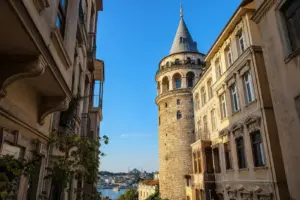 Galata Tower · typical visit: 1–2 hours4 min on foot from Şişhane metro, Open daily 08:30–23:00
Main image: AI-generated illustration. It may not show the place exactly as it looks.
 Galata Bridge · typical visit: 30 minutes to 1 hour10 min on foot from Haliç metro, Open 24 hours
Main image: AI-generated illustration. It may not show the place exactly as it looks.
 Pera Museum · typical visit: 2–3 hours6 min on foot from Tünel metro
Main image: AI-generated illustration. It may not show the place exactly as it looks.
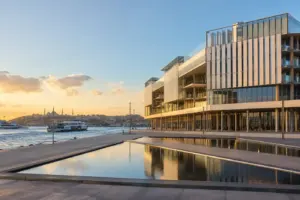 Istanbul Modern · typical visit: 2–3 hours4 min on foot from Tophane metro
Main image: AI-generated illustration. It may not show the place exactly as it looks.
 Sakip Sabanci Museum · typical visit: 2–3 hoursOpen 10:00–18:00, closed Mon
Main image: AI-generated illustration. It may not show the place exactly as it looks.
 Ortaköy Waterfront · typical visit: 2–3 hoursOpen 24 hours
Main image: AI-generated illustration. It may not show the place exactly as it looks.
Related guides
 Turkish Wine: History, Native Varieties and Where to Taste in Istanbul
Main image: AI-generated illustration. It may not show the place exactly as it looks.
 Beyoğlu Nightlife Streets: Nevizade to Asmalımescit
Main image: AI-generated illustration. It may not show the place exactly as it looks.
 Best Rooftop Bars in Istanbul: Views and Reservations
Main image: AI-generated illustration. It may not show the place exactly as it looks.
 Tünel and Historic Funicular Guide: Karaköy to Beyoğlu
Main image: AI-generated illustration. It may not show the place exactly as it looks.
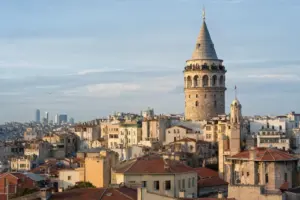 Galata Tower Visiting Guide: Skyline and Museum Route
Main image: AI-generated illustration. It may not show the place exactly as it looks.
Browse more: More in Beyoğlu · All Entertainment · All Events & Holidays
FAQ: Istanbul Biennial
Is there an admission fee for the Istanbul Biennial?
The Istanbul Biennial is held free of charge. All eight venues are free to enter during the first leg (September 20–November 23, 2025). No tickets are required for general admission, though special events or workshops may have separate registration.
How long does it take to see the entire biennial?
Plan at least 3–4 hours to visit all eight venues at a comfortable pace. Most visitors spend 20–30 minutes at each venue, plus walking time between locations. Spending a full day allows for deeper engagement with the works and attendance at evening programs.
Do I need to book tickets or register in advance?
General admission requires no advance booking or registration. Simply arrive during venue hours and walk in. Educational programs, panel discussions, conferences, and workshops are organized within the scope of the exhibitions; some of these may require separate registration, which should be checked on the official website.
Are the eight venues within walking distance of each other?
The biennial unfolds across eight venues throughout the Beyoğlu district, inviting visitors to experience it entirely on foot. Yes, all venues are designed to be reached on foot, with 5–10 minutes walking time between most locations, though the hilly terrain requires comfortable shoes.
What is the '18th Istanbul Biennial' and why is it three years long?
The 18th edition is titled The Three-Legged Cat and marks the beginning of a three-year cycle. The biennial unfolds from 2025 to 2027, with the first leg in September–November 2025, a second leg throughout 2026, and a third leg from September 18 to November 14, 2027. This innovative structure allows for deeper engagement with themes and continuous programming.
Will the biennial happen every year, or only in odd/even years?
The Istanbul Biennial has been held biennially (every two years) in Istanbul since 1987. The 18th edition (2025–2027) departs from the traditional model by extending over three years. After 2027, future biennials will likely return to a biennial schedule; check the official website for the next edition's dates.
What kinds of art are exhibited at the Istanbul Biennial?
The Istanbul Biennial is a contemporary art exhibition. The 18th edition presents over 40 artists alongside performances, screenings, and talks centered on themes of self-preservation and futurity. Works include painting, sculpture, video, installation, performance, and conceptual pieces selected by the curator.
Can I visit just one or two venues, or do I need to see all eight?
There is no requirement to visit all eight venues. You can choose to see a few that interest you most based on the artwork descriptions and artist list on the official website. However, visiting multiple venues gives a fuller sense of the biennial's scope and curatorial vision.
Istanbul Vibes is a one-person project. A coffee keeps it going

Take this guide with you
Get a free PDF of this guide to print or read offline: key facts, tips and a map link on a few clean pages.
Report an issue on this page
How we research and update our guides
About this guide: AI assistance and accuracy
This guide is created with the help of AI and is based on official sources where available. Mistakes can still happen. Opening hours, prices, rules and other details are given to the best of our knowledge as of the date shown and can change without notice. It offers general recommendations only, not professional, legal or travel advice. Please confirm important details with the official source before you travel; you are responsible for your own plans and decisions.
* Affiliate link: as an Amazon Associate we earn from qualifying purchases at no extra cost to you.
