

Not everyone visiting Istanbul speaks Turkish, and you don’t need to. How to use English in Istanbul without speaking Turkish covers practical strategies for English speakers navigating the city. Istanbul has the highest concentration of English speakers in Turkey, especially in hotels, restaurants, museums and tourist zones.
The key is combining three approaches: using English where it’s strong, deploying translation apps strategically, and knowing a few Turkish phrases that unlock help. This guide covers each in detail, so you can move around confidently without studying Turkish.
Quick answer: English works in most tourist areas, with Metro signage in English, restaurant menus available, and staff trained to assist visitors. Download Google Translate offline before arrival, learn to ask "Ingilizce biliyor musunuz?" (Do you speak English?), and rely on translation apps off the beaten path. Most visitors navigate Istanbul successfully using only English combined with these tools.
At a Glance
| Total time | Varies by situation; preparation takes 10–15 minutes before travel |
|---|---|
| Typical cost | Free (using Google Translate) |
What You Need Before You Start
- Smartphone with Google Translate app installed
- Internet connection (at hotel or café) to download Turkish language pack
- Simple English phrases written down or saved in phone notes
- Copy of hotel address in Turkish (keep it with you)
- Cash and contactless card for backup payment methods
- Patience and willingness to use gestures and visual aids
Compare Your Options
| Option | Duration | Price | Notes |
|---|---|---|---|
| Google Translate app (recommended) | Setup 10 minutes; translation time 10–30 seconds per phrase | Free | Download Turkish pack at home. Works offline for photos, text and voice. Camera translation instant. Best all-round tool for visitors. |
| English-speaking guided tour or private guide | Full day (8 hours typical) | ₺₺₺ | Removes language stress entirely. Guides speak fluent English and handle all communication. Book in advance. Ideal if you want narrative context or have elderly family members. |
| Phrasebook and gestures only | Variable; 2–3 times slower than translation app | Free | No phone needed. Carry small notebook with Turkish phrases. Works in tourist areas; difficult in emergencies or complex situations. Good backup if phone dies. |
| Offline translation app (paid, e.g. Offline Translator Turkish Pro) | Setup 5 minutes; translation similar to Google Translate | ₺ | Lightweight alternative to Google Translate. Voice and photo translation. Works without internet. Download before leaving home. Good for low-storage phones. |
| Hire a translator for a day | Flexible; typically 4–8 hours | ₺₺ | Professional for serious negotiations, medical needs or business. Overkill for tourists. Book online in advance. |
| Hotel concierge assistance | Immediate to next day | Free | Ask hotel staff for help with directions, reservations or questions before leaving the building. Many hotels have English-speaking staff and can call ahead to restaurants or attractions. |
₺ budget · ₺₺ moderate · ₺₺₺ upscale · ₺₺₺₺ splurge. Price levels are estimates compared with typical prices for visitors.
Step-by-Step Instructions
Step 1: Download Google Translate offline before you leave home
Open the Google Translate app on your phone and download the Turkish language pack. This step requires a Wi-Fi connection before you travel. In the app, tap the language you want to download, select Turkish, and hit Download. Once saved to your phone, you can translate text, photos and voice conversations without data or internet. This is your most powerful tool once you land.
Tip: Avoid relying on mobile data abroad. Download the language pack at home or at your hotel before venturing out.
Step 2: Learn the key question in Turkish
Memorize this phrase: "Ingilizce biliyor musunuz?" (Do you speak English?). Pronounce it roughly as "Ing-ili-je be-li-yor-mu-soo-nooz." When you need help—at a shop, restaurant or street—say this first. Many younger people and those working in tourism will answer yes. Writing it down and showing it to someone works too.
Tip: Smiling and showing willingness to try goes far. Turks often appreciate the effort, even imperfectly spoken.
Step 3: Navigate Metro and public transport using English signage
Istanbul's Metro system has bilingual signs in Turkish and English at stations and platforms. Exit signs, line names and stop names appear in English. Inside Metro stations, printed system maps are available in English at ticket booths. When boarding buses or the ferries, ask staff "Where is [destination name]?" in English, or show a screenshot from Google Maps with the name written in Turkish.
Tip: The Strambul or Moovit apps show real-time Metro schedules and stops in English, and work even on public Wi-Fi.
Step 4: Use visual translation for menus and signs
Open Google Translate, tap the camera icon, and point it at a Turkish menu, street sign or label. The app instantly translates text overlaid on the photo in real time without needing to snap a picture. This works offline if you have downloaded the Turkish pack. For restaurants in tourist areas (Sultanahmet, Taksim, Galata), English menus are often printed or available on request; just ask the staff.
Tip: Point the camera at entire sentences, not single words. Multi-line translations are clearer and faster than typing.
Step 5: Ask for English menus at restaurants or cafés
In Istanbul's main tourist zones, say "English menu, please" and staff will usually produce one. If not available, use your phone to photograph the Turkish menu and translate it. Staff in mid-range and upscale restaurants speak English. For budget eateries or neighbourhood joints, have Google Translate ready. Turkish food is visual—you can also point to dishes being eaten at other tables.
Tip: Lunch is quieter than dinner. Staff have more time to explain dishes or call over an English speaker if needed.
Step 6: Use text translation for complex conversations
Type a question or phrase into Google Translate and play the audio aloud (tap the speaker icon). The person listening can hear your question clearly. They can then reply in Turkish or English, and you translate their response using the app. This back-and-forth is slower but works for asking directions, negotiating prices or making special requests.
Tip: Keep sentences short and simple. Long, complex sentences translate poorly. Break them into three-word chunks.
Step 7: Carry your hotel address in Turkish
Take a business card or write down your hotel name and address in Turkish script before leaving your accommodation. Show this to taxi drivers, Uber drivers or police if lost. Turkish people will recognize the script and know where to send you. This backup is essential if your phone dies or translations fail.
Tip: Take photos of your hotel's business card on your first day. You will have it even if the card itself is lost.
Step 8: Build a phrasebook of essential phrases
Save these phrases in your phone notes or a notes app: "I don't speak Turkish"; "Do you speak English?"; "How much does this cost?"; "Where is [place]?"; "Can I have the bill?"; "Thank you"; "Excuse me". Keep them short and phonetic if you plan to read aloud. Showing them as text to someone also works if they can read English.
Tip: Turkish people often appreciate visible effort. Showing a written phrase gets better responses than silence.
Step 9: Know which areas have the most English speakers
English is strongest in Sultanahmet (historic core with Hagia Sophia and Blue Mosque), Taksim, Galata, Karakoy and the spice markets. Staff here usually speak English at restaurants, shops and hotels. Outside these zones—in residential neighbourhoods, local kebab shops, or public transport outside tourist hours—expect less English. Adjust your translation reliance accordingly when moving away from main areas.
Tip: Download an offline map (such as Maps.me) so you know which neighbourhood you're in. This helps you gauge how much English support to expect.
Common Mistakes to Avoid
- Relying on online-only Google Translate without downloading the Turkish pack first. You will have no data in some areas and translation will fail. Download offline packs before landing.
- Assuming everyone in Istanbul speaks English. Outside tourist zones (Sultanahmet, Taksim, Galata), English proficiency drops sharply. Always have a translation app ready; do not count on finding an English speaker.
- Speaking fast or using slang. Turkish English speakers are often learners who understand clear, simple English. Use short sentences, speak slowly, and avoid idioms ("it's raining cats and dogs" confuses). Pause between phrases.
- Not carrying your hotel address in Turkish. If lost or in an emergency, a taxi driver or police officer needs to know where you're staying. Showing a business card or written address in Turkish characters saves time and confusion.
- Trying to translate idioms or complex grammar. "I'm not feeling it" or "Can you do me a solid?" do not translate well and cause confusion. Use basic, literal English: "I don't like it" or "Can you help me?"
- Expecting restaurant staff to speak English if the menu is only in Turkish. Some smaller restaurants do not have trained English speakers. Come prepared with Google Translate ready to photograph the menu.
- Arguing about prices without understanding context. If a price seems high, ask "Is this the correct price?" politely using translation. Getting frustrated or dismissive is seen as rude and closes conversation. Turks are used to negotiating in markets; a respectful question often leads to a fair answer.
Tickets, Payment and Booking
Translation apps are free. Google Translate, the most reliable option for Istanbul, requires no booking or payment. Download the Turkish language pack before you travel using any Wi-Fi connection; this takes 2–3 minutes and works offline forever.
Alternative paid options: Offline Translator Turkish Pro and similar paid apps cost between ₺ and ₺₺; search your phone’s app store. These are smaller and faster on older phones but optional.
No registration needed. Google Translate works with or without a Google account. You do not need to give payment information or personal data. Install the app before you leave home and you are ready.
Internet for setup only. Download language packs at home, at your hotel, or at any café with free Wi-Fi before leaving. Once downloaded, translation works completely offline with no data charges.
Istanbul Vibes Tips
- Save your taxi driver's phone number or WhatsApp after your first ride. If you get lost or need a quick question answered in Turkish, texting your driver is often faster than flagging down a stranger. They appreciate the return business.
- In restaurants, if the menu has pictures, order by pointing instead of speaking. Turkish staff understand food pictures instantly, and you avoid mispronunciation. This works even when no one speaks English.
- University students often speak good English and are eager to practise. In parks, museums or casual settings, young people (aged 18–30) are more likely to help with directions or answer questions than older residents.
- Learn the numbers 1–10 in Turkish so you can understand prices: bir (1), iki (2), üç (3), dört (4), beş (5), altı (6), yedi (7), sekiz (8), dokuz (9), on (10). Prices are often spoken aloud before you see them written.
- Asking "Can you help me find a bathroom?" or "Where is the toilet?" works in English almost everywhere in tourist Istanbul. Toilets are called "tuva-let" in Turkish, and staff recognise the word immediately.
- Do not rely on translation apps for small talk or politeness. A smile, "thank you" (teşekkür ederim or just "thank you") and "please" work universally and matter more than perfect sentences. Kindness opens more doors than fluency.
Explore Nearby How to Use English in Istanbul Without Speaking Turkish
Sights near How to Use English in Istanbul Without Speaking Turkish
 Hagia Sophia · typical visit: 1–1.5 hours8 min on foot from Gülhane metro, Open daily 09:00–19:30
Main image: AI-generated illustration. It may not show the place exactly as it looks.
 Blue Mosque · typical visit: 45–75 minutes3 min on foot from Gülhane metro
Main image: AI-generated illustration. It may not show the place exactly as it looks.
 Topkapi Palace · typical visit: 3–4 hours without Harem; 4–5 hours with Harem15 min on foot from Gülhane metro, Open 09:00–18:30, closed Tue
Main image: AI-generated illustration. It may not show the place exactly as it looks.
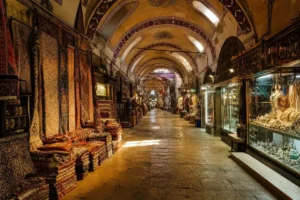 Grand Bazaar · typical visit: 2–4 hours4 min on foot from Beyazıt-Kapalıçarşı metro, Open 08:30–19:00, closed Sun
Main image: AI-generated illustration. It may not show the place exactly as it looks.
 Galata Tower · typical visit: 1–2 hours4 min on foot from Şişhane metro, Open daily 08:30–23:00
Main image: AI-generated illustration. It may not show the place exactly as it looks.
Related guides
 How to Get from Istanbul Airport to the City Centre
Main image: AI-generated illustration. It may not show the place exactly as it looks.
Browse more: All How-To · All Other
FAQ
Do I really need to speak Turkish at all in Istanbul?
No. English is strong enough in hotels, restaurants and major attractions that you can navigate the city using English plus translation apps. You will have no trouble in Sultanahmet, Taksim and other tourist zones. Outside these areas, a translation app solves most problems. Knowing one phrase ("Do you speak English?") helps unlock help, but it is not required.
Can I get by on a smartphone with Google Translate alone?
Yes, if you prepare. Download the Turkish language pack before leaving home so translation works offline. The camera feature is especially powerful—point it at a menu or sign and see an instant translation. Without the offline pack, you will struggle when there is no Wi-Fi or mobile data.
What should I do if I get lost and cannot find an English speaker?
Carry your hotel address written in Turkish (ask for a business card on arrival). Show this to a taxi driver, police officer or anyone nearby. Turkish people will recognise the script and know where you need to go. If the address is the only help you need, you do not need to speak at all. Pointing and showing go far.
Are restaurant menus available in English?
In major tourist areas, yes. Most mid-range and upscale restaurants in Sultanahmet, Taksim and Galata have English menus or staff who speak English. Ask "English menu, please?" and one will appear. In smaller or local restaurants, use Google Translate to photograph the menu. Staff are patient with translation apps and used to helping visitors.
What is the most important Turkish phrase I should learn?
"Ingilizce biliyor musunuz?" (Do you speak English?). This single phrase often produces an English speaker or leads to written communication. If someone nearby does speak English, you will find out. Write it down and show it if pronouncing it is difficult.
Do taxi drivers and Uber drivers speak English?
Some do, but not all. In tourist areas, many do. Away from the centre, English is less common. Use Google Maps to show your destination on screen; this works without speaking. If you book Uber through the app, the driver sees the destination before pickup, so no conversation is needed. For traditional taxis, have your address in Turkish written down.
What if my phone battery dies and I lose access to my translation app?
This is why carrying your hotel address in Turkish on paper is essential. Show this to anyone, and they will get you back. In emergencies, police (Polis) are trained to help tourists; show them your passport or hotel info. Always carry your hotel business card. Having one backup—paper address—solves this.
Are there areas of Istanbul where I should not count on English at all?
Outside tourist zones, especially in residential neighbourhoods and very small shops, English is rare. Prepare your translation app before entering these areas. Markets outside the Spice Bazaar and Grand Bazaar are less touristy. This does not mean you cannot visit—just ensure your phone is charged and translation is ready.
Istanbul Vibes is a one-person project. A coffee keeps it going

Take this guide with you
Get a free PDF of this guide to print or read offline: key facts, tips and a map link on a few clean pages.
Report an issue on this page
How we research and update our guides
About this guide: AI assistance and accuracy
This guide is created with the help of AI and is based on official sources where available. Mistakes can still happen. Opening hours, prices, rules and other details are given to the best of our knowledge as of the date shown and can change without notice. It offers general recommendations only, not professional, legal or travel advice. Please confirm important details with the official source before you travel; you are responsible for your own plans and decisions.
* Affiliate link: as an Amazon Associate we earn from qualifying purchases at no extra cost to you.
