
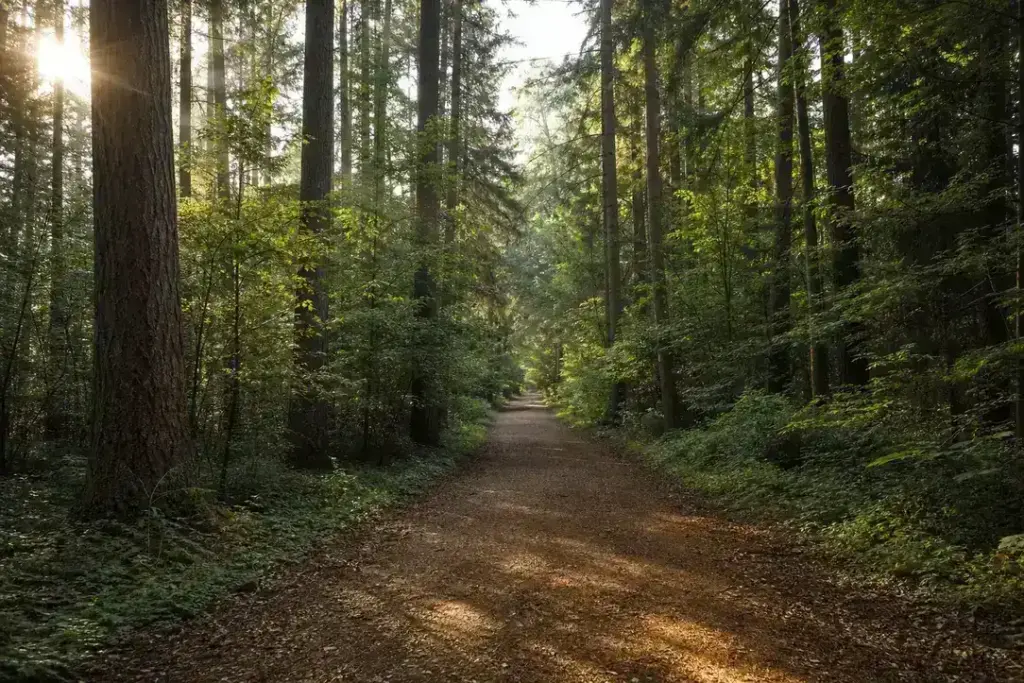
Kemerburgaz City Forest is a sprawling green retreat in the Eyüpsultan district, covering 5.6 million square metres of forest and managed parkland on Istanbul’s European side. Unlike the crowded central monuments, this forest offers space to breathe—birdsong, walking paths that wind through woods, and open meadows where locals and visitors escape the urban noise.
Inaugurated in its current form in 2017, after years of development, the forest contains over 8,000 trees, extensive shrubbery and a 6.3-kilometre running track. You’ll find picnic spots, playgrounds for children, sports fields, restaurants and cafés scattered throughout. It’s the kind of place where you can wander for hours without running into crowds.
Quick Facts
| Turkish name | Kemerburgaz Kent Ormanı |
|---|---|
| Built / opened | 2017 |
| Address | Pirinççi Köyü, Kemerburgaz Yolu, 34077 Eyüpsultan, Istanbul, Turkey Google MapsApple MapsYandex Maps |
| District | Eyüpsultan |
| Metro | Kemerburgaz (M11, About 10 minutes' walk to forest entrances) |
| Admission | Free for pedestrians; vehicle entry fees apply (₺ for cars) |
| Best time to visit | Seasons: Spring (April–May) and autumn (September–October) are ideal—temperatures are moderate, flowers bloom in spring, and colours change in autumn. Summer (June–August) is hot and can be crowded on weekends; mornings are best. Winter (November–March) is cool and wet but quiet and peaceful, with bare trees revealing the forest structure.Days and times: Weekdays are substantially quieter and more atmospheric than weekends. Mid-morning (09:00–12:00) on a weekday is the most peaceful time to visit. Weekends are busy but never overwhelming. Late afternoon (after 16:00) brings fewer people than mid-afternoon. Avoid weekend midday in July–August unless you tolerate crowds.Best overall: A Tuesday or Wednesday morning in April, May, September or October. |
| Website | kemerburgazkentormani.ist |
What Is (and Isn't) Part of a Visit to Kemerburgaz City Forest?
| Part | Status | Notes |
|---|---|---|
| Walking and cycling on forest paths | Included in the standard ticket | Free for all visitors. Paths are marked and maintained. |
| Picnic areas | Included in the standard ticket | Free use of designated picnic zones with tables and shade. |
| Sports fields (basketball, volleyball, football) | Included in the standard ticket | Free or minimal charge; check at entrance for booking if planning to use. |
| Playgrounds | Included in the standard ticket | Free access to children's play structures. |
| Vehicle entry | Separate ticket or institution | Small fee for cars and motorcycles (separate from pedestrian entry). |
| Forest Kemerburgaz adventure park | Separate ticket or institution | A separate commercial activity park with ziplines, rope courses and climbing. Requires separate paid admission; located on forest grounds but distinct from the free forest areas. |
| Restaurants and cafés | Separate ticket or institution | Various food vendors and cafés throughout; payment required for food and drinks. |
| Overnight camping | Not open to visitors | The forest is classified as a Class D recreation area; overnight stays are not permitted. |
Why Visit Kemerburgaz City Forest?
The forest addresses a real gap in Istanbul life: green space. The city’s per-capita greenspace is limited, and Kemerburgaz offers genuine relief—not a manicured park but a working forest where nature feels primary and the paths are truly long enough for a proper walk or run. Families come for the playgrounds and picnic facilities; serious hikers appreciate the network of trails; cyclists have dedicated routes. The air is noticeably fresher than in central Istanbul, and in any season there’s something to see—spring flowers, summer shade, autumn colours, winter clarity.
How Kemerburgaz City Forest Is Laid Out
The forest is large enough to feel like wilderness but organized enough not to feel lost. Main entrances are from Kemerburgaz Yolu (the main road). Inside, a network of walking and cycling paths connects different zones: picnic areas cluster around parking zones and facilities, sports fields (basketball, volleyball, football) occupy dedicated clearings, and hiking trails push deeper into the forest. A 6.3-kilometre running track is marked for those wanting structure. The Maǧlova Aqueduct, a historic Ottoman bridge, runs through the western part and is a popular walking destination. Best approach: park at a main entrance near your chosen activity—picnicking, sports, or forest walking—and orient yourself from there. The forest is large enough that you won’t see everything in one visit unless you plan specifically.
Highlights of Kemerburgaz City Forest
Maǧlova Aqueduct (Kemer)
This Ottoman-era aqueduct is one of the most impressive structures crossing the forest. Built by architect Mimar Sinan in the 16th century and reinforced over subsequent centuries, it's a functioning piece of Istanbul's water system that you can walk under and photograph. The arch is particularly striking in afternoon light, and the structure tells the story of how Ottoman engineers moved water across vast distances. Most visitors find it by following the marked paths heading west from the main parking areas.
Tip: Visit in afternoon when the sun illuminates the arch side-on. The stone shows its age and colour best then.
Walking and cycling trails
Over 5.6 million square metres means real trails, not short loops. Routes range from casual 30-minute walks to full-day hikes through forest. The paths are well-maintained and marked, and you'll encounter far fewer people than at tourist attractions. The forest has 8,167 trees and dense undergrowth that makes it feel genuinely wild even though you're within the city limits.
Tip: Early morning (right after 08:00 opening) is quietest. Bring water; cafés are scattered but not everywhere along the trails.
Picnic areas with lake views
Designated picnic zones dot the forest with tables, shade and access to water from vendors. Several overlook or sit near water—the forest is situated north of Alibeyköy Dam Lake. This is where locals spend afternoons and weekends, and the atmosphere is relaxed and family-oriented. Many bring food from home; some arrive just to rest on benches.
Tip: Weekday midday is less crowded. Pack your own food; restaurant prices are typical for Istanbul attractions.
Sports fields and playgrounds
Basketball, volleyball and football fields are maintained and free or low-cost to use (check at entry). Children's playgrounds are distributed throughout, from simple climbing structures to more elaborate equipment. This is where you see the forest in everyday use—families on weekends, school groups on weekdays.
Tip: Sports fields require registration or casual booking at the entrance. Best times: early morning or late afternoon to avoid midday heat.
6.3-kilometre running track
A marked circular route for runners and fast walkers, roughly following the forest perimeter. Well-maintained and popular with Istanbul's running community. Even if you don't run the whole distance, sections of it make good fast walking routes.
Tip: Early morning (before 09:00) is when most runners come. The track is shaded in many sections, which helps in summer.
Restaurants and cafés
Scattered throughout the forest are places to eat and drink—from small cafés serving tea and simple food to more substantial restaurants. None are fancy, but they serve basic Turkish food and drinks. Exact locations change, but they're marked on entry maps or sign boards.
Tip: Prices are moderate and aimed at local visitors. Bring water bottles to refill at cafés rather than buying drinks at every stop.
Open-air spaces and fresh air
The main draw here isn't a single sight but the experience: real quiet, real trees, real sky. On weekdays especially, the forest feels genuinely peaceful—birdsong, rustling leaves, minimal mechanical noise. For people used to Istanbul's density, it's a tangible relief.
Tip: Weekdays are fundamentally different from weekends. If you value quiet, visit mid-week in mid-morning.
Atmosphere
The forest has two personalities depending on when you visit. On weekdays, especially mid-morning, it’s genuinely quiet—paths mostly empty, birdsong audible, the sound of wind in leaves. You’ll encounter runners, early retirees on walks, occasional cyclists, but the overall mood is peaceful and contemplative. Air quality is noticeably fresher than central Istanbul—woodsmoke in winter, damp earth smell after rain.
On weekends, especially in good weather, it fills up: families with children at playgrounds, groups picnicking, sports games happening, but never chaotic. People speak in normal voices, not shouting. There’s a local, everyday atmosphere—this is where Istanbul residents come to relax, not a curated tourist destination. Sunlight filters through the trees; shadows are deep. In spring you’ll see flowers; in summer, dense green shade; in autumn, yellows and browns; in winter, the bare bone structure of the forest becomes visible.
History of Kemerburgaz City Forest
Kemerburgaz as a place has much older roots. The settlement’s name comes from the Ottoman aqueducts (kemer means arch or aqueduct in Turkish) that cross the area. Byzantine-era ruins and Ottoman water infrastructure predate the modern forest by centuries. The name combines Kemer (‘aqueduct’) and Burgaz (Turkish for bastion, a corruption of the Byzantine ‘Pyrgos’ meaning tower).
The urban forest project itself is modern. Planning began around 2011–2012 as Istanbul struggled with overcrowding and lack of green space. The municipality designated 5.6 million square metres of existing forest land for public use. Development was uneven: work started but stalled around 2015. In 2017, the forest was formally opened to the public in its current form after completion of paths, facilities, parking and basic infrastructure. The opening acknowledged Istanbul’s critical shortage of accessible green space—the city’s per-capita greenspace at the time was only about two square metres, far below international standards.
Today it functions as a working urban forest and recreation area, not a museum or historical site. The Ottoman aqueducts that cross it (built in the 16th–18th centuries) are still used and are the main historical features visitors encounter.
Tickets and Booking for Kemerburgaz City Forest
| Ticket | Price | Includes |
|---|---|---|
| Pedestrian entry | Free | Access to all forest walking and cycling trails, picnic areas, playgrounds and sports fields |
| Vehicle entry (car) | ₺ | Parking and vehicle access to forest roads; includes same access as pedestrian entry |
| Vehicle entry (motorcycle/ATV) | ₺ | Parking and vehicle access; same trail and facility access |
₺ budget · ₺₺ moderate · ₺₺₺ upscale · ₺₺₺₺ splurge. Price levels are estimates compared with typical prices for visitors.
No advance booking is needed for pedestrian entry or general forest use—entry is free and you can arrive any time during opening hours (08:00–22:00 daily). If you plan to use sports fields, particularly for organized games, register or check availability at the entrance on arrival. Vehicle entry fees are paid at the gate (cash); no online booking required. For commercial activities like the adventure park (rope courses, ziplines, etc.), which is a separate business within or near the forest grounds, book through their own ticket system online or at their entrance. For restaurants and cafés scattered throughout, no reservation is typically needed except for large groups. On weekends in good weather, the forest fills up, but this doesn’t restrict entry—parking can be the constraint. Most facilities are cash or basic card payment; bring cash as backup.
Suggested itineraries Kemerburgaz City Forest
1–2 hours
Quick walk or run: Enter at main parking near Kemerburgaz Metro. Choose one trail (most marked loops are 30–60 minutes) and follow it into the forest, passing through different terrain. Return the same way. Good for a lunch-break escape. Bring water.
3–4 hours
Afternoon visit: Park at main entrance. Spend an hour or so on a forest walk or cycling route. Stop for lunch or tea at a café area. Visit or walk near the Maǧlova Aqueduct (allows time to photograph and explore the structure). Walk another route on your way out. Classic half-day itinerary.
Half day (4–5 hours)
Arrive mid-morning. Choose a longer hiking route that reaches deeper forest or connects multiple zones. Visit the aqueduct if time allows. Picnic or eat at a café in mid-afternoon. Explore a different zone before leaving. Brings you closer to experiencing the forest's full scale.
Full day with cycling
Bring or rent bikes. Start early (08:00 opening). Cycle the running track or longer trails. Stop for breakfast or coffee. Explore on foot to areas bike paths don't reach. Lunch at a café. Afternoon dedicated to walking different trails or visiting the aqueduct. This uses the full opening hours and both transport modes available.
How to Get to Kemerburgaz City Forest
By metro: Take line M11 to Kemerburgaz station (opened January 2023). Exit the station and walk about 8–10 minutes northwest following Selanik Boulevard, heading toward Kemerburgaz Yolu. Follow signs or ask locals for the forest entrance. The walk is straightforward but on a standard urban street, not especially scenic.
By car: Kemerburgaz Yolu (the main access road) runs east–west through the forest area. Main parking areas are signposted. From central Istanbul, allow 30–50 minutes depending on traffic. GPS coordinates for main entrances help; the official website lists parking locations.
By bus/minibus: Routes 48, 48A, 48L, 50G serve the area; get off at Kemerburgaz stops and walk to the forest. Buses are frequent but journeys take longer than metro.
By taxi: Possible but not necessary unless you have mobility constraints. Meter taxis or ride-sharing apps work; journey time similar to transit.
Accessibility
Forest paths vary: main walking routes are generally flat and well-maintained, suitable for standard wheelchairs or mobility aids. Some trails venture into rougher terrain. The official website or entrance staff can advise on which specific paths are accessible. Picnic areas have some wheelchair access, though not all are equally equipped. Most sports fields and playgrounds are accessible by paved paths. Parking has accessible spaces near main entrances. There are no specific accessible rest rooms marked in the research; check at the entrance. Benches are distributed throughout for rest breaks.
Food Nearby
Multiple restaurants and cafés are located within the forest itself—no need to leave. These serve basic Turkish food, drinks, tea and coffee at moderate prices (₺₺). Specific venues change, but they're marked on forest maps and sign boards at entrances. For more variety, return to the surrounding areas: small restaurants and shops are clustered along Kemerburgaz Yolu and in the Göktürk neighbourhood just outside the forest. No need to plan eating elsewhere unless you want a specific cuisine or restaurant experience.
What to Bring
Water bottle (refillable at cafés). Comfortable walking shoes (trails are dirt and grass, muddy in rain). Sun protection (hat, sunscreen) for open areas in spring and summer. Light rain jacket or umbrella (forest offers some shelter, but paths can be muddy). Picnic food if you plan to eat in designated picnic areas (bring waste bags to take out). Camera for the aqueduct and forest scenes. Insect repellent in summer (mosquitoes near water areas). Mobile phone with offline map or written directions to ensure you don't get lost on longer trails.
Best Views and Photo Spots of Kemerburgaz City Forest
Maǧlova Aqueduct (Kemer), west section
The arch spans the view from multiple angles. Side-on shots show the stone texture and strength of the structure. Walking through below creates dramatic framing. The arch contrasts beautifully with forest canopy around it.
Best time: Afternoon (15:00–17:00) when sunlight hits the arch side-on, illuminating stone and casting strong shadows that add depth
Forest trail canopy shots, deeper trails
Tall trees create a tunnel effect; dappled sunlight filters through leaves. Early morning shows mist; midday shows strong contrasts. Paths disappearing into distance create depth and sense of wilderness.
Best time: Early morning (08:00–09:30) for mist and soft light; cloudy days also work well
Picnic area overlooks near Alibeyköy Dam Lake
Open water visible through trees; reflections and wider vistas break up the forest density. Good for showing the scale and breathing room of the place.
Best time: Early morning or late afternoon light; calm water creates better reflections
Running track straightaways
The marked path disappearing into forest creates strong linear perspective and shows the maintained trails clearly. Less architectural, more 'escape' feeling.
Best time: Weekday morning when path is empty; shadows of trees across path add interest
Dense shrubbery and wildflower areas, spring season
Close-up botanical shots; multiple layers of vegetation; spring flowers scattered through undergrowth. Shows the botanical richness rather than just trees.
Best time: Late April–May for maximum flower bloom; morning light shows droplets if there's been rain or heavy dew
Photography Rules
Photography is permitted throughout the forest. The Maǧlova Aqueduct is the main photo subject (looks best in afternoon light). No professional tripods or drones allowed without permission; ask at the entrance if you're bringing equipment. Flash photography isn't restricted outdoors. Bring a small tripod or use natural light for the best results. Interior shots (if visiting cafés or facilities) may require asking permission.
Family Suitability
Good for families with children of various ages. Playgrounds are distributed throughout and well-maintained. Walking paths are generally safe and manageable for school-age children and older. Younger children need adult supervision on less-developed trails. Stroller access depends on the path: main routes are paved or well-packed; longer trails become rougher. Picnic areas are ideal for family lunches. The pacing is relaxed—no rushing, lots of space, and if children tire, cafés offer rest and refreshment. The peaceful atmosphere is actually a strength for families (no aggressive crowds). Bring adequate water and snacks; facilities are scattered. Good for a half-day family outing, especially mid-week when less crowded.
Istanbul Vibes Tips
- Arrive by 09:00 if you value quiet. By 11:00 on weekdays, the forest is still peaceful but noticeably busier. Weekends after 12:00 fill up quickly, especially in good weather.
- Bring an offline map or screenshot the forest map from the entrance signboard. Trails are marked, but paths can seem similar, and phone signal is unreliable deep in the forest.
- The 6.3-kilometre running track is easier to navigate than random trail exploration if you're new and want to see a defined route without getting lost. It's open to all walkers and cyclists, not just runners.
- The Maǧlova Aqueduct is worth finding. Ask at the entrance for the best path to reach it, or check if marked routes are signposted. Most visitors miss it or spend time searching.
- Don't assume restaurants or facilities are everywhere. They're concentrated near parking areas and main entry points. Longer trails have nothing; bring snacks and water.
- Winter visits are surprisingly good—quieter, cooler, and the bare trees reveal forest structure. Don't dismiss the forest outside spring/summer.
Explore Nearby Kemerburgaz City Forest
Sights near Kemerburgaz City Forest
 Belgrad Forestabout 4.0 km away · typical visit: 2–4 hours
Main image: AI-generated illustration. It may not show the place exactly as it looks.
 Theodosian Walls · typical visit: 2–3 hours
Main image: AI-generated illustration. It may not show the place exactly as it looks.
 Eyüp Cemetery – about 12.5 km away · typical visit: 1–2 hours2 min on foot from Piyer Loti metro, Open 24 hours
Main image: AI-generated illustration. It may not show the place exactly as it looks.
Related guides
 ArtIstanbul Feshane: Art Inside an Ottoman Factory2 min on foot from Feshane metro, Open 10:00–20:00, closed Mon
Main image: AI-generated illustration. It may not show the place exactly as it looks.
 Alibeyköy Metro Station: M7 Line Transfer HubOpen daily 06:00–00:00
Main image: AI-generated illustration. It may not show the place exactly as it looks.
 Piyer Loti Cable Car: Upper Station, Views and AccessOpen daily 08:00–23:00
Main image: AI-generated illustration. It may not show the place exactly as it looks.
 Feshane Tram Station: Access, Hours and What to See NearbyOpen daily 06:00–23:00
Main image: AI-generated illustration. It may not show the place exactly as it looks.
 Bayrampaşa-Maltepe: Historic Metro Station and Transit HubOpen 24 hours
Main image: AI-generated illustration. It may not show the place exactly as it looks.
Browse more: More in Eyüpsultan · All Parks · All Sightseeing
FAQ: Kemerburgaz City Forest
Is Kemerburgaz City Forest the same as Forest Kemerburgaz adventure park?
No. Kemerburgaz City Forest is the large free urban forest (5.6 million sq. m) with trails, picnics and walks. Forest Kemerburgaz is a separate commercial adventure park (rope courses, ziplines, climbing) located on or adjacent to the forest grounds. Both exist, but only the forest is the main destination.
How long does a visit typically take?
3–4 hours is typical. A quick walk or run: 1–2 hours. A full afternoon or half-day: 4–5 hours. A full day: 6+ hours. You can't 'do' the whole forest in one visit unless you hike intensively.
Is entry really free?
Yes. Walking and cycling on forest trails, using picnic areas, playgrounds and sports fields are all free. Vehicle entry (cars) has a small fee. Commercial activities like restaurants or the adventure park have separate charges.
Do I need a car to visit?
No. Metro line M11 reaches Kemerburgaz station, an 8–10 minute walk from forest entrances. You can also arrive by bus. A car is convenient for parking near your chosen activity but not necessary.
Can I cycle?
Yes. Dedicated cycling paths exist, and you can bring your own bike or rent in central Istanbul. The 6.3-km running track is also open to cyclists.
What's the Maǧlova Aqueduct?
An Ottoman-era structure built in the 16th century (parts rebuilt later) that carries water across the forest. It's a functioning historical monument you can walk under. It's the main architectural feature most visitors photograph.
Can I camp or stay overnight?
No. The forest is classified as a Class D recreation area. Overnight stays and camping are not permitted.
What's the best time to visit for peace and quiet?
Weekday mid-morning (Tuesday–Friday, 09:00–12:00) is quietest. Weekends and afternoons are busier. Spring and autumn are best seasons overall.
Istanbul Vibes is a one-person project. A coffee keeps it going
Hotels near Kemerburgaz City Forest
Restaurants near Kemerburgaz City Forest
Distances are straight-line, from OpenStreetMap data.

Take this guide with you
Get a free PDF of this guide to print or read offline: key facts, tips and a map link on a few clean pages.
Report an issue on this page
How we research and update our guides
About this guide: AI assistance and accuracy
This guide is created with the help of AI and is based on official sources where available. Mistakes can still happen. Opening hours, prices, rules and other details are given to the best of our knowledge as of the date shown and can change without notice. It offers general recommendations only, not professional, legal or travel advice. Please confirm important details with the official source before you travel; you are responsible for your own plans and decisions.
* Affiliate link: as an Amazon Associate we earn from qualifying purchases at no extra cost to you.
