
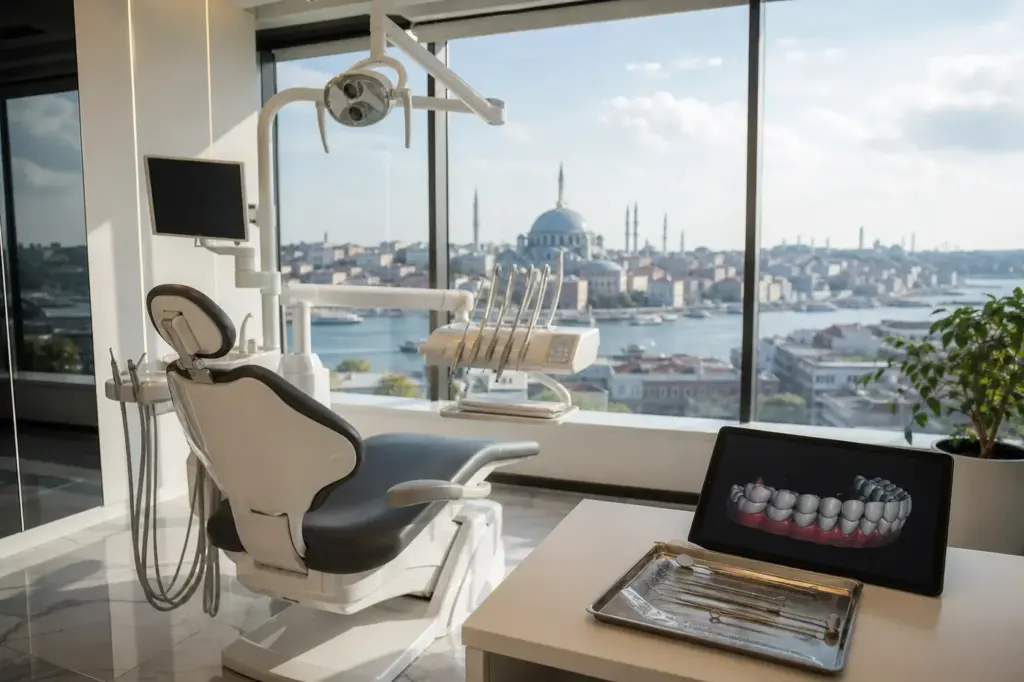
Information only. This article explains what a treatment is and how it is usually carried out. It is not medical advice, not an offer and not a recommendation to have any procedure. Whether it suits you can only be decided by a licensed doctor after an examination.
Teeth straightening, known as orthodontic treatment, is available in Istanbul through established dental clinics. For visitors who consider this treatment, it helps to understand what the process involves, what methods exist, how long treatment usually takes, and what to plan around the visit.
This guide explains how orthodontic treatment works in practice, the main methods, usual timelines and phases, what risks and recovery look like, and the questions to ask a licensed doctor in the home country before deciding. Many travellers consider treatment abroad; quality, regulation and advertising rules differ by country and by provider.
Quick answer: Teeth straightening moves misaligned or crooked teeth into correct position using either fixed braces (metal or ceramic brackets with wires) or removable clear aligners (custom plastic trays). Treatment typically takes 12–24 months from start to finish, with regular check-ups every 4–6 weeks, and requires commitment to wear and follow care instructions. Results, healing time and individual comfort vary from person to person.
At a Glance
| Total time | Consultation and planning: 1–2 hours. Total active treatment: typically 12–24 months. Each appointment: 30 minutes to 1 hour. |
|---|---|
| Typical cost | ₺₺ |
What You Need Before You Start
- Initial consultation with a licensed orthodontist to assess your bite, take X-rays and 3D scans, and create a treatment plan
- Healthy oral condition; active decay, severe gum disease or other issues may need treatment first
- Realistic timeline: orthodontic treatment is measured in months to years, not days
- Compliance plan: for clear aligners, you must wear them 20–22 hours daily; for braces, you must attend adjustment appointments every 4–6 weeks
- Written treatment plan from the clinic in your language and a contact method for follow-up after you leave
- Follow-up care arranged in your home country with a licensed dentist or orthodontist to monitor and maintain results
- Insurance or payment plan: treatment is typically not covered by travel insurance; clarify costs and payment methods in advance
Compare Your Options
| Option | Duration | Price | Notes |
|---|---|---|---|
| Fixed metal braces | 12–24 months active treatment | Metal brackets and wires bonded to teeth; orthodontist adjusts every 4–6 weeks. Visible but highly effective for complex bite problems and severe crowding. Not removable. Requires careful brushing and dietary restrictions (avoid hard, sticky foods). Discomfort common after adjustments; usually settles within days. | |
| Ceramic braces | 12–24 months active treatment | Tooth-coloured brackets with wires; less noticeable than metal. Same process and timeline as metal braces. Slightly higher risk of bracket breakage and staining. Slightly more expensive. Equally effective for complex cases. | |
| Clear aligners (removable plastic trays) | 12–24 months active treatment; may be shorter for mild cases | Treatment period usually between 12 and 18 months for moderate cases. Require 20–22 hours of daily wear. Removable for eating and cleaning; nearly invisible. Work best for mild-to-moderate crowding and spacing. Less effective for severe bite problems or complex corrections. Require disciplined daily wear and careful handling. New tray every 1–2 weeks. Fewer adjustment appointments than braces. | |
| Lingual braces (behind-the-teeth braces) | 12–24 months active treatment | Dental appliances fitted behind the teeth, making them invisible from the front. Fully hidden. Same effectiveness as traditional braces for all cases. Slightly more difficult to adjust and clean. May cause initial tongue discomfort. Typically more expensive and require a specialist. | |
| Veneers or cosmetic bonding (fast alternative for visible teeth only) | 1–2 visits; instant appearance change | Not true orthodontics; reshapes the front surface of teeth to look straighter without moving them. Only addresses cosmetic appearance of front visible teeth. Does not fix bite or underlying crowding. Does not last as long as natural teeth modification. Requires replacement every 5–10 years. Not suitable if you want actual tooth movement or bite correction. |
₺ budget · ₺₺ moderate · ₺₺₺ upscale · ₺₺₺₺ splurge. Price levels are estimates compared with typical prices for visitors.
Step-by-Step Instructions
Step 1: Schedule a consultation with an orthodontist
Contact a dental clinic in Istanbul that offers orthodontic treatment. Many welcome international patients. The clinic will confirm your appointment in writing. Bring a copy of any previous dental records or X-rays if available. Avoid eating or drinking (except water) immediately before the appointment if intraoral scans are planned.
Tip: Ask the clinic whether they have experience with international patients who need to leave after the initial visit and plan follow-up remotely.
Step 2: Attend the initial examination and diagnostic imaging
The orthodontist will examine your bite, jaw alignment and teeth. You will have X-rays taken and usually a 3D digital scan of your mouth. This takes 30–60 minutes. The scan allows the doctor to plan exactly how your teeth will move. You will see the projected movement on screen.
Tip: Ask for a digital copy of your scans and images so you can share them with a dentist at home if needed.
Step 3: Review the treatment plan and ask questions
The orthodontist will show you the planned outcome and explain which method is suitable for your case (braces or clear aligners). Discuss the timeline, number of appointments needed, what happens if you leave Istanbul during treatment, and how adjustments will be monitored. Ask for a written plan in your language.
Tip: If you are a visitor, clarify whether the clinic can provide a supply of aligners or a schedule of appointments that suits your travel plans, and whether they partner with orthodontists in your home country.
Step 4: Prepare your teeth if needed
If you have cavities, gum disease or other dental issues, these usually need treatment before braces or aligners are fitted. Your orthodontist will advise. This can add 1–4 weeks to your timeline. If your teeth are ready, preparation is minimal.
Tip: Ask whether any tooth cleaning or preparation can be done at your first visit or if a second appointment is needed.
Step 5: Have braces fitted or receive your first set of aligners
If you are having fixed braces, the orthodontist will clean and dry your teeth, apply adhesive, attach brackets (small metal or ceramic squares) to each tooth, then thread a wire through them. This takes 1–2 hours and causes no pain but may feel uncomfortable. If you are having clear aligners, the orthodontist will take a final digital impression, place small tooth-coloured attachments on certain teeth if needed (these help the aligners grip), and give you your first set of trays. You wear each set for 1–2 weeks.
Tip: For aligners: wear your first set for 1–2 hours, then remove to make sure they fit. If they cause severe pain or don't fit, return to the clinic.
Step 6: Understand wear and care instructions
For fixed braces: avoid hard, sticky and chewy foods; brush after every meal using a soft toothbrush and a special interdental brush to clean around brackets. For clear aligners: wear them at least 20–22 hours daily; remove them to eat, drink (except water) and clean your teeth; soak them daily in the provided cleaning solution or lukewarm water; brush your teeth before putting them back in. Both methods require excellent oral hygiene.
Tip: Ask for written care instructions and a cleaning kit. For aligners, ask how to store them and what to do if one is damaged or lost.
Step 7: Attend regular follow-up appointments
For fixed braces: return every 4–6 weeks for the orthodontist to tighten wires and adjust brackets. For clear aligners: return every 4–6 weeks for the orthodontist to check progress and provide your next batch of trays. Each appointment is 30–60 minutes. Your dentist will photograph your teeth and scan your progress to compare against the original plan.
Tip: If you are leaving Istanbul soon, ask whether the clinic can provide several months of aligners or a detailed adjustment schedule so a local dentist can oversee progress.
Step 8: Plan for remote monitoring if you travel home
Many Istanbul clinics offer WhatsApp or email check-ins between appointments. Send photographs or videos as requested. Some clinics partner with orthodontists in other countries so you can continue check-ups at home. Clarify this before leaving. Your home dentist can also monitor progress and alert you to any problems.
Tip: Save the clinic's contact details and ask for the name of your assigned doctor so you know who to contact with questions.
Step 9: Expect some discomfort and manage it
When braces are first fitted or when you move to a new set of aligners, teeth usually ache or feel tender for a few days. This is normal. Over-the-counter pain relief can help. Soreness usually fades within 3–7 days. If pain is severe or does not improve, contact your orthodontist. Some people experience minor mouth sores from braces rubbing on cheeks or lips; the clinic will provide wax to cover brackets.
Tip: Do not assume severe pain is normal. Contact the clinic if you have bleeding gums, persistent sores or difficulty eating after 1 week.
Step 10: Monitor your progress through phases
Active tooth movement usually lasts 12–24 months depending on your case. During this time, teeth gradually shift. You may notice changes within weeks but the full effect takes months. Your orthodontist will show you progress at each visit. Once teeth reach their planned position, you enter the refinement phase (usually 2–4 weeks), where minor adjustments are made.
Tip: Ask your orthodontist to take monthly photos so you can see progress, especially if you're not at appointments regularly.
Step 11: Plan for the retention phase and follow-up at home
Once your braces are removed or your final aligners are complete, your teeth must be held in place using a retainer (a custom mould or bonded wire). Without a retainer, teeth naturally drift back. Your orthodontist will make your retainer and explain how often to wear it (usually every night initially, then several times a week). Ask your home dentist to monitor retainer fit and tooth position during regular check-ups.
Tip: Ask for at least two retainers in case one is lost or damaged. Retainers are not typically covered by travel insurance.
Common Mistakes to Avoid
- Assuming aligners work well for all cases: clear aligners are less predictable for rotating canines, closing large gaps, or correcting severe bite problems. Only a doctor can determine whether your specific case is suitable.
- Not understanding the commitment for aligners: many patients assume clear aligners are a quick fix because they are removable. If you do not wear them 20–22 hours daily, treatment will take much longer or fail. This is not the fault of the trays but of wear time.
- Expecting results from a single visit: orthodontic treatment requires regular follow-up for months. If you plan to have one consultation in Istanbul and no further local appointments, progress monitoring becomes difficult and complications may not be caught early.
- Not arranging follow-up care at home before leaving Istanbul: if your local dentist has never seen your treatment plan or scans, they cannot monitor your progress reliably. Many problems (broken brackets, poorly fitting aligners, unexpected pain) require in-person correction by an experienced orthodontist.
- Underestimating the importance of retainers: once braces are removed or aligners finish, you must wear a retainer to prevent teeth from shifting back. This is not optional and is often overlooked. Ask your orthodontist exactly how often and for how long.
- Choosing a clinic based only on price: quality of diagnosis, experience of the orthodontist, use of up-to-date 3D imaging, and availability for follow-up care matter far more than the lowest quote. Mistakes early in treatment can add months to your timeline.
Tickets, Payment and Booking
Teeth straightening is offered by many private dental clinics in Istanbul. Most clinics that treat international patients require an online inquiry or phone call to schedule a consultation. Payment methods typically include cash (Turkish Lira), debit and credit cards, and bank transfer. Confirm payment options and whether your card issuer or your home country’s banking rules restrict international dental payments. Many clinics have English-speaking staff. Some offer video consultations before your first visit. Do not book through unlicensed providers or tourist brokers; contact the clinic directly or ask your hotel concierge for a recommendation. The Turkish Ministry of Health regulates dental clinics and orthodontists in Turkey; check that your clinic is registered.
Good to know
- If you are a short-term visitor and considering orthodontic treatment, ask the clinic upfront how many appointments you can complete in Istanbul and what remote monitoring looks like. Some clinics are experienced with international patients who need to coordinate care with home dentists; others are not.
- Clear aligners require discipline: if you often forget to wear them or find it hard to commit to 20–22 hours daily, braces may be more realistic because they are not removable.
- Take photographs of your teeth before treatment starts (front view, side view, smile). This helps you see progress later and gives your home dentist a baseline.
- Gum health matters: if you have gum disease or periodontitis, discuss this with the orthodontist before starting. Teeth may not move reliably if your gums are unhealthy, and orthodontic treatment can stress weak gums.
- Pain is usually temporary but not always minor: many people underestimate the soreness after the first appointment. Plan your schedule so you don't have major commitments for the first 3–5 days after braces are fitted or aligners are started.
- Aligners can stain if you drink coffee, tea or red wine while wearing them. Remove them before consuming these drinks. Neglecting this leads to visible staining inside the trays.
Explore Nearby Teeth Straightening
Sights near Teeth Straightening
 Turkish & Islamic Arts Museum · typical visit: 2–3 hours6 min on foot from Çemberlitaş metro, Open daily 09:00–18:30
Main image: AI-generated illustration. It may not show the place exactly as it looks.
 Spice Bazaar · typical visit: 1–2 hours13 min on foot from Haliç metro, Open daily 08:00–19:30
Main image: AI-generated illustration. It may not show the place exactly as it looks.
 Galata Bridge · typical visit: 30 minutes to 1 hour10 min on foot from Haliç metro, Open 24 hours
Main image: AI-generated illustration. It may not show the place exactly as it looks.
 Topkapi Palace · typical visit: 3–4 hours without Harem; 4–5 hours with Harem15 min on foot from Gülhane metro, Open 09:00–18:30, closed Tue
Main image: AI-generated illustration. It may not show the place exactly as it looks.
Browse more: All Other · All Treatments
FAQ
How long does teeth straightening take?
Most orthodontic treatments take between 12 and 30 months. Simple cases with mild crowding might wrap up in under a year. More complex bite issues can take two years or longer. The exact timeline depends on how much your teeth need to move and your compliance with wearing braces or aligners as directed.
Can I have braces or aligners fitted in Istanbul and continue treatment at home?
Yes, many Istanbul clinics welcome international patients and can provide a detailed treatment plan for your home dentist to follow. Some offer remote monitoring via photos and video. Before booking, ask whether the clinic has experience coordinating care with dentists abroad and whether they can provide scans and records in a format your home dentist can use.
Is teeth straightening painful?
Some discomfort is normal, especially following the initial fitting of braces or after switching to a new set of aligners. This discomfort typically subsides within a few days. Over-the-counter pain relief usually helps. If pain is severe or does not improve after a week, contact your orthodontist.
Which method is faster, braces or clear aligners?
Both typically take 12–24 months for moderate cases. For mild crowding, aligners may be slightly faster. For complex bite problems, braces are usually necessary and may take longer. Speed depends more on case complexity than the method chosen. Compliance matters: if you do not wear aligners 20–22 hours daily, treatment will be delayed.
Can clear aligners fix all types of misalignment?
Clear aligners work well for mild-to-moderate crowding and spacing of front teeth. They are less predictable for severe bite problems, large rotations, or complex jaw corrections. Your orthodontist will advise whether your case requires braces or aligners.
What happens after the braces or aligners are removed?
Once your teeth are correctly aligned, you'll enter the retention phase to ensure they stay in place. This typically involves the use of retainers. Without a retainer, teeth naturally shift back over time. Ask your orthodontist how often and for how long you need to wear yours.
Do I need to avoid certain foods with braces?
Yes. Avoid hard (nuts, hard candy), sticky (chewing gum, caramel) and chewy foods (bread, meat) as they can break brackets or bend wires. With clear aligners, you can eat anything because you remove them before eating, but you must clean your teeth before putting the trays back in.
What should I ask a doctor before deciding on treatment?
Ask about the timeline for your specific case, whether you are a candidate for aligners or need braces, the total cost and payment options, what happens if you miss appointments, how your progress will be monitored if you leave Istanbul, what risks apply to your situation, and what to do if problems arise after you go home. Request a written treatment plan.
Before you decide anything
Risks and possible complications
- Tooth sensitivity and aching, usually settling within days of braces adjustment or aligner change
- Mouth sores or irritation from brackets or wire friction (managed with wax or protective coating)
- Gum inflammation or bleeding if oral hygiene is poor during treatment
- Tooth decay if brushing is inadequate around brackets or under aligners
- Root resorption (shortening of tooth roots) if excessive force is applied; rare but serious; prevented by careful orthodontic technique
- Bite problems if treatment is not completed or retainers are not worn after treatment
- Allergic reaction to bracket materials or aligner plastic (very rare; discuss material sensitivities with your orthodontist)
- Jaw pain or temporomandibular joint discomfort during or after treatment in some individuals
Alternatives to talk about with a doctor
- Accepting natural tooth alignment and improving appearance through cosmetic dentistry (veneers, whitening, bonding) instead of moving teeth
- Periodontal and implant treatments if teeth are missing and causing adjacent teeth to shift
- Acceptance and watchful observation if misalignment is mild and does not affect function or oral health
Questions to ask a licensed doctor
- Is my case suitable for clear aligners or will I need braces?
- What is the realistic timeline for my specific case, and what factors might extend or shorten it?
- What are the specific risks and complications for my dental situation?
- How often will I need appointments, and what happens if I miss appointments?
- Can you provide a written treatment plan and scans that my home dentist can understand?
- If I experience problems after leaving Istanbul, how can I contact you, and do you have a partner or network in my home country?
- What is included in the treatment cost and what are additional costs (retainers, emergency repairs, etc.)?
- How long will I need to wear retainers, and how do I replace them if damaged?
- What should I do if I experience severe pain, bleeding, or other complications?
- This page is information. It is not medical advice and not a recommendation to have any treatment or to choose any clinic, doctor or country.
- Every medical procedure has risks, and results and healing differ from person to person. A licensed doctor who has examined you decides whether a treatment is suitable.
- Talk to a doctor in your home country before you decide, and plan follow-up care at home: problems can appear after you return.
- Check that the clinic and the doctor are licensed in the official register of the Türkiye Cumhuriyeti Sağlık Bakanlığı, and ask for a written treatment plan and a consent form you understand.
- After a procedure, get urgent medical help for severe pain, fever, heavy bleeding or breathing problems. In an emergency call the local emergency number.
Kontrendikasyonlar olabilir. Bir uzmana danışmak gerekir.

Take this guide with you
Get a free PDF of this guide to print or read offline: key facts, tips and a map link on a few clean pages.
Report an issue on this page
How we research and update our guides
About this page: AI assistance and accuracy
This page was prepared with the help of AI and checked by automatic rules. It is general information only, not medical advice and not a recommendation to have any treatment or to choose any clinic. Mistakes can still happen and details can change without notice. Please check important details with the official source and talk to a licensed doctor before you decide anything.
