
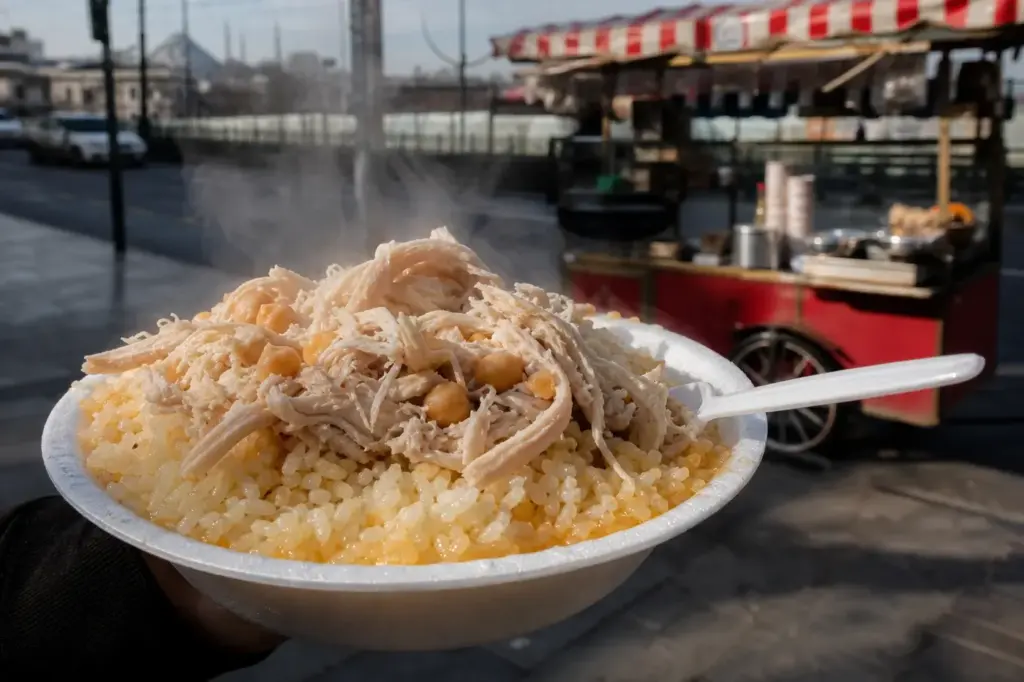
Tavuklu Pilav, or chicken and rice, appears on every Istanbul street corner and in home kitchens across the city. This guide shows you how to make it yourself. The dish is simple enough for a weeknight dinner but elegant enough for guests, and it teaches you the fundamental Turkish technique of cooking rice in homemade broth instead of water.
The recommended method poaches chicken gently, builds a stock from that liquid, then cooks short-grain rice in the fragrant broth until each grain absorbs the flavour. Chickpeas are a popular street-vendor addition, especially in Istanbul. You will achieve authentic Tavuklu Pilav by following a few concrete rules about timing, ingredient quality and the order of steps.
Quick answer: Poach chicken in water with aromatics for 30–45 minutes, strain the broth, then toast rinsed rice in butter and oil before simmering it in the chicken stock. Shred the cooled chicken, rest the rice, and layer the two together. Total time is about 1 hour; total cost is budget-level.
At a Glance
| Type | Dishes |
|---|---|
| Origin | Tavuklu Pilav belongs to Anatolian home and restaurant cooking, shaped by regional agriculture and the long exchange of techniques across the Ottoman world. Pilav with chickpeas has been popular since the Ottoman period, with meat or chicken often included in the pilaf. It is a standard weeknight dinner in Turkish homes and the signature dish of Istanbul's white street carts, where chickpeas join the rice. |
| Servings | 2–4 people |
| Total time | Approximately 1 hour, including 30–45 minutes for poaching chicken and 20–25 minutes for cooking rice |
| Difficulty | Easy |
History and Story of Chicken and Rice (Tavuklu Pilav)
Tavuklu pilav is short-grain Baldo or Osmancık rice sautéed in butter, then simmered in the stock left from poaching the chicken and folded with meat shredded by hand. It is a standard weeknight dinner in Turkish homes and the signature dish of Istanbul’s white street carts, where chickpeas join the rice. A white cart near a ferry terminal features a wide tray of pale rice going gold where the butter pooled. The seller works fast: rice, chickpeas, chicken on top, a shake of black pepper.
Ingredients
- 400–600 g chicken thighs or drumsticks
- 250 ml long-grain rice (such as Baldo or Osmancık)
- 750 ml water
- 40 g butter
- 30 ml olive oil
- 1 onion
- Salt and black pepper to taste
- Optional: 200 g cooked chickpeas
How Chicken and Rice (Tavuklu Pilav) Is Made
Step 1: Prepare the chicken stock
Put the chicken, water, onion, carrot, bay leaves and peppercorns in a large pot. Bring to a bare simmer and skim the gray foam as it rises. Simmer uncovered for 35 to 45 minutes, until the meat pulls away from the bone easily. Salt the stock lightly in the last ten minutes. The chicken should be fully tender; undercooked chicken will affect the final dish.
Tip: Skim foam from the broth as it rises for a cleaner, clearer stock.
Step 2: Cool and shred the chicken
Remove the cooked chicken to a plate and let it cool slightly. Pull the meat off the bones and shred it along the grain into pieces about the width of your thumb. Discard skin and bones and season the meat lightly. Set the shredded chicken aside.
Tip: Shredding by hand rather than cutting with a knife gives a better texture and allows the meat to absorb seasoning.
Step 3: Strain and measure the stock
Strain the stock and keep 3 cups (750 ml) hot; refrigerate or freeze the rest. The stock should be clear and flavourful; this is the core of your finished dish.
Tip: Reserve extra stock in case the rice needs more liquid as it cooks.
Step 4: Rinse and soak the rice
Washing off surface starch and soaking the rice 20 to 30 minutes in warm salted water is standard Turkish technique. Rinse the rice under cold running water, stirring gently until the water runs nearly clear, then soak it in warm salted water. This step is essential for fluffy, separate grains.
Tip: Do not skip the soaking step; it removes starch and ensures the rice absorbs the broth evenly.
Step 5: Toast the rice in butter and oil
Drain the soaked rice well. In a heavy-bottomed pot, heat the butter and olive oil together over medium heat. Add the drained rice and stir constantly for 2–3 minutes until the rice becomes translucent and glossy. This toasting step seals each grain and prevents mushiness.
Tip: Watch the rice carefully during toasting; it should smell toasted but not brown.
Step 6: Add stock and simmer
Pour the hot chicken stock over the rice and stir gently. Add salt to taste. Bring to a boil, then reduce the heat to the lowest setting, cover the pot with a lid, and cook for 18–20 minutes without lifting the lid. The rice will absorb all the liquid and become tender.
Tip: Do not stir once the stock is added; this prevents the rice from breaking apart.
Step 7: Rest and finish
When all the liquid has been absorbed, remove the pot from the heat. Lay the shredded chicken over the top of the rice, cover again, and let everything rest for 10 minutes. Then gently fold the chicken through the rice and serve warm, sprinkled with black pepper. If using chickpeas, scatter them over the top before serving.
Tip: The 10-minute rest allows the rice to firm up and makes it easier to serve without breaking grains.
Variants
- Istanbul street version: Chickpeas are added generously to the rice, stretching the portion and adding texture.
- Home version without chickpeas: Many home cooks prepare the dish without chickpeas, serving the pilaf and chicken alone.
- Regional variations: Different regions of Anatolia add their own touches—some include saffron in the cooking liquid, others layer the chicken on top rather than folding it through.
- With added vegetables: Some recipes include carrots, peas or other cooked vegetables mixed into the rice.
Common Mistakes to Avoid
- Using low-quality rice or the wrong variety: Short-grain Turkish rice (Baldo or Osmancık) absorbs broth without collapsing. Long-grain varieties intended for pilaf will work, but avoid basmati or jasmine rice, which cook differently. Use rice sold specifically for Turkish cooking.
- Skipping the rinsing and soaking step: Many home cooks skip this, assuming it wastes time. Soaking removes surface starch and ensures even absorption of the broth, preventing a gluey result.
- Lifting the lid while the rice cooks: The sealed environment concentrates steam and ensures even cooking. Opening the lid releases steam and disrupts the cooking, resulting in unevenly cooked rice.
- Adding cold stock instead of hot: Cold liquid dropped into hot rice causes uneven cooking. Always bring the stock to a simmer before adding it to the toasted rice.
- Overseasoning the chicken separately: The stock already contains salt. Season the chicken lightly after shredding, then taste the finished dish and adjust if needed, to avoid oversalting.
- Mixing the chicken into the rice too early: Folding chicken in immediately after cooking can break the grains. Waiting 10 minutes allows the rice to set slightly, making it easier to combine without damage.
How to Order and Eat It
You smell it before you see it. A white cart near a ferry terminal features a wide tray of pale rice going gold where the butter pooled. The seller works fast: rice, chickpeas, chicken on top, a shake of black pepper. Then a foam bowl and a plastic fork, and you eat it standing up. At home, serve on a plate with fresh pickles, yoghurt and a crisp salad. Ayran (salted yoghurt drink) is the traditional accompaniment. Eat it warm; the flavour fades as it cools.
To order: Tavuklu Pilav lütfen [Tavuklu Pilav lutfen]
Istanbul Vibes Tips
- Street carts serve Tavuklu Pilav from foam bowls with plastic forks, typically in the late morning and lunch hours near ferry terminals and markets. The version sold on the street usually includes generous chickpeas; home versions are often simpler. Try both to understand the difference.
- Buy rice sold specifically for Turkish cooking (marked Baldo or Osmancık). These varieties are shorter and stubbier than basmati or jasmine, absorb broth without becoming mushy, and are available in Turkish grocers and online. The rice type makes a visible difference in the finished dish.
- Make a larger batch of chicken stock than you need and freeze it. This makes the dish quicker on busy nights and ensures you always have quality broth on hand. Use within two months.
- Do not use a non-stick pot for cooking the rice. A heavy-bottomed stainless steel or copper pot distributes heat evenly and prevents the bottom layer from scorching or sticking.
- Taste the finished dish before serving. If the rice tastes underseasoned, add salt a pinch at a time, stirring gently; if it tastes too salty, add a squeeze of lemon juice to balance. Black pepper should be added at the table so each diner can control the amount.
Where to Find Chicken and Rice (Tavuklu Pilav) in Istanbul
Related guides
 Kebab: What to Eat, How to Order, and How to Cook It
Main image: AI-generated illustration. It may not show the place exactly as it looks.
 Lentil Soup: How to Make Mercimek Çorbası at Home
Main image: AI-generated illustration. It may not show the place exactly as it looks.
 Ayran: How to make Turkish yogurt drink at home
Main image: AI-generated illustration. It may not show the place exactly as it looks.
 Meze: Turkish appetizers, culture and what to order
Main image: AI-generated illustration. It may not show the place exactly as it looks.
 Turkish Tea: How to Brew and Serve It Like Istanbul Locals
Main image: AI-generated illustration. It may not show the place exactly as it looks.
Browse more: All Food & Drink · All Other
FAQ
Is Tavuklu Pilav the same as the chickpea version sold on Istanbul streets?
Not always. The basic dish is rice and chicken. Street vendors, especially in Istanbul, often add generous amounts of cooked chickpeas, which stretches the portion and changes the texture. Home cooks may omit chickpeas entirely. Both versions are authentic; the street version is simply a more filling adaptation.
What is the difference between Tavuklu Pilav and Pilau?
Pilau (or plain pilav) is rice cooked in broth with butter, without meat. Tavuklu Pilav adds poached chicken. The cooking method is identical; the chicken is simply an addition.
Can I use store-bought chicken broth instead of making my own?
You can, but the flavour will be noticeably different. Homemade broth made from poached chicken is gentler and more delicate than commercial broth, which is often saltier and heavier. If you must use store-bought, dilute it slightly and taste carefully before adding extra salt.
How do I prevent the rice from becoming mushy?
Use the correct rice variety (Turkish short-grain), soak it beforehand to remove starch, do not stir once the stock is added, do not lift the lid, and measure your stock carefully—too much liquid softens the grains. The technique matters as much as the ingredients.
Can I make this in a rice cooker?
Yes, but with caution. Toast the rinsed, drained rice in butter and oil in a separate pot first, then transfer it and the hot stock to the rice cooker. This ensures the rice develops the correct flavour and texture. Do not add cold stock directly to the cooker.
Is Tavuklu Pilav typically gluten-free?
Yes. The basic ingredients—chicken, rice, butter and stock—contain no gluten. However, if using store-bought broth or chickpeas, check the label, as some brands add thickeners or cross-contamination may occur. Always verify if this matters for your needs.
How far in advance can I prepare this dish?
Make the chicken stock a day or two ahead and refrigerate or freeze it. Prepare the chicken and shred it up to a day ahead. Cook the rice only when you are ready to eat, as it does not reheat well and becomes hard and brittle. Leftover pilaf can be stored in the refrigerator for up to two days but should be warmed gently with a splash of water.
What should I serve with Tavuklu Pilav?
Traditionally, serve with pickles (turşu), fresh salad (cucumber, tomato and parsley), yoghurt, and ayran (salted yoghurt drink). Lemon wedges at the table let diners add acidity to balance the buttery rice. No bread is typically needed.
Istanbul Vibes is a one-person project. A coffee keeps it going

Take this guide with you
Get a free PDF of this guide to print or read offline: key facts, tips and a map link on a few clean pages.
Report an issue on this page
How we research and update our guides
About this guide: AI assistance and accuracy
This guide is created with the help of AI and is based on official sources where available. Mistakes can still happen. Opening hours, prices, rules and other details are given to the best of our knowledge as of the date shown and can change without notice. It offers general recommendations only, not professional, legal or travel advice. Please confirm important details with the official source before you travel; you are responsible for your own plans and decisions.
* Affiliate link: as an Amazon Associate we earn from qualifying purchases at no extra cost to you.
