
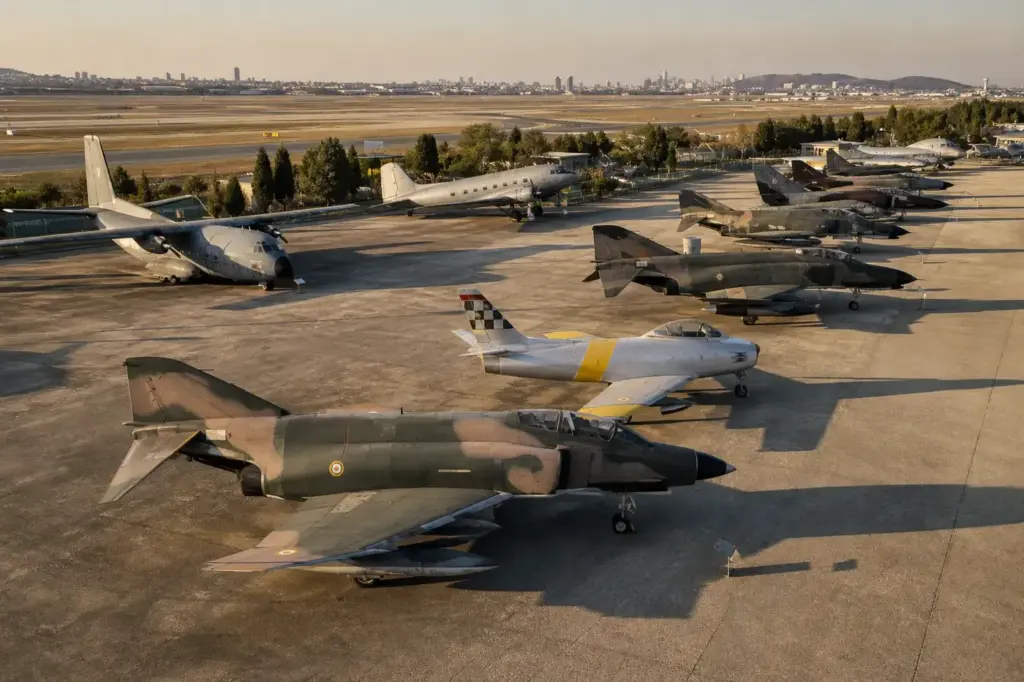
The Istanbul Aviation Museum, also known as the Turkish Air Force Museum, is a military-based museum operated by the Turkish Air Force. Located in the Yeşilköy district near the former Atatürk Airport, the museum occupies 65,000 square metres across indoor galleries and an expansive open-air exhibition ground.
The museum preserves and exhibits Turkish aviation heritage through a comprehensive collection of aircraft—from Ottoman-era biplanes to modern fighter jets—alongside uniforms, medals, weapons, photographs, and historical documents. The collection spans both military aviation and civilian air transport, offering a visual record of Turkey’s role in global aviation development.
Quick Facts
| Turkish name | Музей авиации Стамбула |
|---|---|
| Built / opened | 1985 |
| Address | Yeşilköy Mahallesi, Eski Havaalanı Caddesi, 34149 Bakırköy/İstanbul, Türkiye Google MapsApple MapsYandex Maps |
| District | Bakırköy |
| Metro | Yeşilköy (Marmaray, Station exit; 10–15 minutes' walk along Eski Havaalanı Caddesi (Old Airport Road) toward the old runway) |
| Admission | ₺₺ for adults; free for children under 18 and students |
| Best time to visit | Weekday mornings (Tuesday–Friday, 09:00–12:00) offer the quietest experience with minimal crowds and clearer skies. Weekends bring school groups and families, making the outdoor area more populated but still manageable for visitors seeking a social atmosphere.Spring (April–May) and autumn (September–October) provide mild temperatures and clear light for photography. Summer (June–August) can be hot and bright on the exposed open-air grounds; bring shade and water. Winter (December–February) is cool and may feature overcast skies, reducing photo quality but offering pleasant walking conditions. |
| Website | istanbulhavamuze.hvkk.tsk.tr |
What Is (and Isn't) Part of a Visit to Istanbul Aviation Museum?
| Part | Status | Notes |
|---|---|---|
| Indoor exhibition galleries (uniforms, medals, models, documents, photographs) | Included in the standard ticket | Covered areas with historical artefacts, approximately 2,365 m². |
| Outdoor aircraft park (40+ full-sized military and civilian aircraft) | Included in the standard ticket | Open-air exhibition on former runway and tarmac, approximately 12,000 m². |
| Accessible aircraft interiors (C-47, C-160d, and certain other planes) | Included in the standard ticket | Visitors can enter and explore cockpits and cargo areas of selected aircraft. |
| Cafeteria and gift shop | Included in the standard ticket | Basic refreshments and souvenirs available on site. |
| Photography fee | Separate ticket or institution | Professional or tripod photography may incur an additional fee; check with staff at entry. |
| Istanbul Airport Museum (at the new Istanbul Airport) | Outside / not part of it | Different institution; not part of this museum. Located at the modern Istanbul Airport, separate from the Aviation Museum. |
Why Visit Istanbul Aviation Museum?
The museum offers a rare opportunity to walk around and even enter several full-sized aircraft, including a C-47 transport plane and a C-160d cargo aircraft with accessible cockpits. The outdoor grounds display retired Turkish Air Force jets such as the F-4E Phantom II and F-86F Sabre, positioned at human scale where you can examine them closely.
History enthusiasts will find displays spanning from World War I to recent decades, with explanatory maps and exhibits contextualizing each aircraft’s role. The setting near the historic airport site adds spatial dimension to the story of Turkish military and civilian aviation.
How Istanbul Aviation Museum Is Laid Out
The museum divides into two main zones: indoor exhibition halls and an open-air aircraft park. Entry leads first to the covered gallery areas featuring uniforms, medals, smaller models, photographs, and personal artifacts of aviators. The indoor space is compact but informative, occupying about 2,365 square metres.
The outdoor area spreads across approximately 12,000 square metres, where full-sized aircraft are positioned on the former runway and tarmac. A logical route moves from the indoor section through the main exhibition gates onto the open ground, where aircraft are arrayed by type and era. The grounds offer clear sight lines and walking paths between exhibits.
Highlights of Istanbul Aviation Museum
F-4E Phantom II Fighter Jet
The museum displays a retired Turkish Air Force F-4E Phantom II, one of the most heavily used jets in the Turkish military during the Cold War and beyond. The Phantom saw operational service for decades and represents a pivotal chapter in modern Turkish air power. Visitors can view the two-seater cockpit configuration and weapons hardpoints that define this iconic fighter.
Tip: Arrive early on weekdays to avoid crowds; the aircraft are exposed to sun and weather, so the experience is best on clear days.
F-86F Sabre Fighter
Another centerpiece of the outdoor collection, the F-86F Sabre represents the jet era that followed World War II. This American-designed, single-seat fighter was a landmark in post-war aviation and played a significant role in Turkish Air Force operations. The aircraft's sleek profile and visible cockpit canopy make it instantly recognisable.
Tip: Compare this 1950s-era jet with the later Phantoms on display to see how aircraft design evolved over a single generation.
C-47 Transport Aircraft Interior
One of the museum's most accessible highlights is the C-47 (Skytrain), a military transport plane used widely during and after World War II. Unlike most outdoor exhibits, visitors can climb aboard and walk through the interior cargo cabin, seeing how troops and supplies were transported. The spartan aluminum fuselage and cargo layout offer a tactile sense of military logistics history.
Tip: The interior can be cramped and hot on sunny days; bring water and visit this exhibit in the morning or late afternoon.
Ottoman-Era and Early Turkish Aircraft Models
The indoor galleries display scale models and historical information on Turkey's earliest aviation efforts, including aircraft from the Ottoman period and the nascent Turkish Republic. These exhibits contextualize the nation's long engagement with flight, bridging centuries of aeronautical ambition from experimental designs to modern capability.
Tip: The indoor collection is less crowded than the outdoor area; spend time here to absorb the historical narrative before walking the open grounds.
C-160d Cargo Aircraft Cockpit
The German-designed C-160d is another rare exhibit where visitors can access the cockpit and flight deck. This transport aircraft operated with the Turkish Air Force for logistics and troop movements. The functional cockpit layout—instruments, controls, and crew positions—illustrates how mid-20th-century military pilots navigated complex aircraft.
Tip: Children and photographers particularly enjoy climbing into the C-160d cockpit; it offers the best interior access of any large aircraft on display.
Uniforms, Medals, and Aviator Artifacts
The indoor galleries house pilot uniforms from different eras, insignia, medals, personal flight logs, and photographs of notable Turkish aviators. These artifacts humanise the abstract story of military aviation and illustrate the lives of those who flew the aircraft. Some displays include period photographs and documentation of specific missions and achievements.
Tip: Allow 20–30 minutes for the indoor section; many English labels are present, but a guide or handbook enhances understanding of the artefacts' context.
Atmosphere
The museum feels like a hybrid between a civilian park and a military compound. The outdoor grounds are sun-baked and open, with jets and helicopters arranged on former runways and tarmac, creating an industrial yet oddly peaceful setting. The sight of 40+ full-sized aircraft arrayed across the landscape is visually striking and somewhat surreal—aircraft normally seen in the sky at a distance are suddenly at eye level and close enough to touch.
Weekdays are quiet, with few visitors, allowing unhurried exploration. Weekends bring families and school groups. The cafeteria is basic and outdoor seating sparse; bring snacks. The sound landscape is quiet except for the occasional distant aircraft noise from the nearby old airport area, a reminder of aviation’s ongoing presence in the district.
History of Istanbul Aviation Museum
The museum’s origins trace to World War I. After the armistice, the Turkish military possessed captured German aircraft and other wartime material. The Inspectorship of Air Force recognised the historical value of preserving examples of aviation development and decided to create a museum to house this collection. Aircraft ranging from 1912 onwards were gathered, but during Turkey’s War of Independence, these early aircraft were transported to Kartal–Maltepe for protection, and some suffered damage in transit—a setback that delayed the museum project.
In 1960, Air General İrfan Tansel revived the idea formally. An official order in 1963 mandated the preservation of at least one example of each aircraft type used by the Turkish Air Force and other military units. An Aviation Museum Organisation was established in 1966, and Turkey’s first aviation museum opened on 15 May 1971 at the Civil Airport in İzmir-Cumaovası. However, the remote location and limited visitor access hampered its success. Moreover, plans to repair and expand the Cumaovası runway for active flight training and civil aviation use made the site impractical for a museum.
A search began for a new location closer to a major population centre. The site adjacent to the military airfield near the Air Force War College in Yeşilköy, Istanbul, was selected. Construction of the new building began in 1977 and was completed in 1983. Interior architecture and decoration involved technical staff and experts from Istanbul Provincial Culture, Building and Monuments Directorate and Mimar Sinan University. The museum opened to the public on 16 October 1985, with General Halil Sözer, then Commander of the Turkish Air Force, presiding over the opening ceremony. The expanded Istanbul location, closer to the city and to active aviation infrastructure, transformed the museum into an accessible cultural institution.
Legends and Myths about Istanbul Aviation Museum
Evliya Çelebi's Flight Legend
Legend – historically unreliable. Turkish folklore credits 17th-century traveller and writer Evliya Çelebi with describing a legendary flight from Galata Tower in Istanbul, involving the use of artificial wings and a descent to the opposite shore of the Golden Horn. Whether literal or metaphorical, this tale is woven into narratives of Turkish aviation history as a cultural precursor to modern flight. The museum references this legend as a symbolic starting point for the nation's aviation heritage.
German Aircraft Buried During War
Disputed by historians. One widely recounted story holds that German aircraft seized after World War I were hidden or buried in various locations across Istanbul and Anatolia to preserve them from damage or confiscation. While some aircraft were indeed stored and relocated, the full extent and locations of these wartime concealments remain historically uncertain, lending the tale a sense of lost treasures awaiting rediscovery.
Tickets and Booking for Istanbul Aviation Museum
| Ticket | Price | Includes |
|---|---|---|
| Adult admission | ₺₺ | Access to all indoor galleries and outdoor aircraft park. |
| Children under 18 and students | Free | Full museum access with valid identification. |
₺ budget · ₺₺ moderate · ₺₺₺ upscale · ₺₺₺₺ splurge. Price levels are estimates compared with typical prices for visitors.
Entry tickets are purchased at the museum entrance. There is no online booking system; visits are walk-in only. Tickets are available at the gate on a first-come, first-served basis. Peak times are weekend mornings and Turkish school holidays, when queues may form; arrive early or visit on a weekday for shorter waits.
Payment is accepted in cash (Turkish lira) and by bank card. Bring identification for students or persons under 18 wishing to claim free admission.
Photography with a basic camera is included in admission. However, professional photography equipment, tripods, or videography may require an additional fee; ask staff at the entrance. Note that rates for Turkish citizens differ from foreign visitors. For complete current ticket information and any concession categories, visit the official website at istanbulhavamuze.hvkk.tsk.tr.
Suggested itineraries Istanbul Aviation Museum
2 hours
Begin in the indoor galleries, spending 30–40 minutes viewing uniforms, medals, models, and historical documents. Exit to the outdoor area and spend 80–90 minutes walking the aircraft park, focusing on accessible interiors (C-47, C-160d) and major jets (F-4E Phantom, F-86F Sabre). This pace suits visitors with general interest in military history.
3 hours
Follow the 2-hour itinerary but extend time in both sections. Spend an additional 30 minutes in the indoor galleries reading detailed descriptions and contextual plaques. In the outdoor park, climb into and explore multiple aircraft interiors, photograph specific aircraft from various angles, and read interpretive signage for historical context around each exhibit.
Half day (4+ hours)
Spend 60 minutes in the indoor galleries, examining every display and reading all available English-language materials. Dedicate 2–2.5 hours to the outdoor park, systematically visiting each aircraft and spending time inside accessible planes. Rest at the cafeteria (30 minutes), review the gift shop, and take photographs from multiple vantage points. This pace allows for a comprehensive experience and reflection.
How to Get to Istanbul Aviation Museum
By Marmaray Metro (Recommended)
Take the Marmaray line to Yeşilköy station. Exit the station and head east along Eski Havaalanı Caddesi (Old Airport Road), a straight road that runs past the old Atatürk Airport grounds. The museum entrance is approximately 10–15 minutes’ walk from the station, clearly visible near the old runway. Follow signs for ‘Havacılık Müzesi’ or ‘Aviation Museum’.
By Taxi or Private Vehicle
Taxis are readily available from central Istanbul and the journey takes 20–40 minutes depending on traffic and origin point. The museum address is Yeşilköy Mahallesi, Eski Havaalanı Caddesi, 34149 Bakırköy. Parking is available at the site.
By Bus
Several local buses serve Yeşilköy; ask at your hotel or check local transit apps for routes to the Yeşilköy area. The walk from the bus stop to the museum may be longer than from the metro station.
Accessibility
The outdoor grounds are open, level, and navigable by wheelchair or mobility aid on paved tarmac pathways. However, access to aircraft interiors (C-47, C-160d, and others) involves climbing stairs and narrow passages, which may be difficult for those with limited mobility or balance issues. The indoor gallery spaces are covered and accessible at ground level.Benches and resting areas are limited; visitors with fatigue or health concerns may wish to plan rest stops at the cafeteria. Staff can provide assistance; enquire at the entrance about specific accessibility needs.
Food Nearby
The museum has a basic cafeteria on site serving coffee, tea, soft drinks, and light snacks. Outdoor seating is available in warmer months. For a wider choice of restaurants, head to Yeşilköy village proper (a 15–20 minute walk or short taxi ride), where you will find casual Turkish eateries, kebab shops, and cafes serving traditional fare.
What to Bring
Bring sun protection: a hat, sunscreen, and sunglasses are essential on the open-air grounds. Water is strongly recommended, as the outdoor park offers little shade. Comfortable walking shoes are necessary for the extensive tarmac paths. A light jacket or jumper is useful in cooler months. A camera or smartphone for photos is worthwhile. Small children may benefit from a stroller or carrier, as distances between exhibits are considerable.Bags are permitted; a small security inspection may occur at entry. Drones and large professional equipment require permission; ask at the gate.
Best Views and Photo Spots of Istanbul Aviation Museum
F-4E Phantom II from the front
Face the Phantom head-on to capture the distinctive air intakes and cockpit canopy; the fighter's aggressive profile is most striking from this angle. Early morning or late afternoon light creates dramatic shadows.
Best time: Early morning (09:00–11:00) or late afternoon (15:00–16:30) for warm, directional light; avoid midday glare.
C-47 Transport Aircraft side profile
The C-47's high-wing configuration and cargo-door profile are most photogenic from the side and slightly elevated angle. Its corrugated fuselage and vintage aesthetic offer nostalgic appeal.
Best time: Midday provides even light for a detailed side shot; position yourself perpendicular to the fuselage for maximum width in frame.
Aircraft park overview from elevated vantage
From near the museum entrance or a raised area, capture a wide view of multiple aircraft arrayed across the tarmac, conveying the scale of the collection. The old runway backdrop adds historical atmosphere.
Best time: Early morning or late afternoon for directional light that separates aircraft by shadow; overcast days also provide even illumination.
Cockpit interior of the C-160d
The functional mid-century cockpit, with its array of switches, dials, and overhead panels, provides a detailed, documentary-style photograph of military aviation technology.
Best time: Midday when cabin light enters through windscreens; bring a tripod or use a wide-angle lens to capture the tight cockpit space.
Museum entrance gate with signage
A classic documentary shot showing the museum's official entrance, Turkish Air Force emblem, and signage framed against the outdoor grounds and distant aircraft.
Best time: Morning light highlights the gate and signage; shoot from just inside or outside the entrance for context.
Photography Rules
Basic camera and smartphone photography is included in admission. Professional equipment, tripods, or videography may incur an additional fee; inquire at the entrance. Drones are not permitted without special permission from the Turkish Air Force authorities. No flash or artificial lighting is permitted indoors. Photography inside aircraft cockpits and cabins is usually allowed but may be restricted in certain sensitive areas; follow staff guidance.
Family Suitability
The museum is well suited to families with children aged 7 and older who have an interest in aircraft and history. The outdoor grounds are open and safe, with clear pathways and minimal traffic. Young children can run freely in supervised areas, and the novelty of walking around full-sized jets appeals to most ages.Accessible aircraft interiors (C-47, C-160d) are particularly engaging for children, who enjoy climbing into cockpits and exploring tight spaces. However, younger children (under 5) may find the scale overwhelming or become fatigued by the walking distances.Strollers are usable on the tarmac, but the extensive outdoor area and uneven terrain in some sections may make a stroller impractical. Carrying a young child or bringing a lightweight backpack carrier is more practical. The cafeteria provides basic refreshments, but packing snacks and water is recommended. The museum can hold attention for 2–3 hours without fatigue, depending on the child's age and enthusiasm for aviation.
Istanbul Vibes Tips
- Visit on a weekday morning if you want solitude. The museum is nearly empty on Tuesday–Friday before 11:00, allowing unhurried access to aircraft and clearer photography.
- Climb into the C-47 or C-160d early in your visit. These popular attractions have limited interior access and can become crowded if many visitors arrive simultaneously.
- Bring more water than you think necessary. The open-air grounds offer no shade, and the walking distance is substantial. Dehydration sneaks up quickly.
- Don't skip the indoor gallery. The uniforms, medals, and historical documents provide essential context for understanding the aircraft on display. Many visitors rush outdoors and miss the interpretive breadth of the indoor collection.
- The gift shop stocks aviation-themed books and models; browse it before departure if you want time to choose. It may close slightly before the official closing time.
- Ask staff if specific aircraft are open for interior access before attempting entry. Some interiors are periodically closed for maintenance, and access can vary by day.
Explore Nearby Istanbul Aviation Museum
Sights near Istanbul Aviation Museum
 Istanbul Military Museumabout 16.3 km away · typical visit: 2–3 hours
Main image: AI-generated illustration. It may not show the place exactly as it looks.
 Atatürk Airport National Garden – about 2.7 km away · typical visit: 2–4 hoursOpen daily 06:00–23:00
Main image: AI-generated illustration. It may not show the place exactly as it looks.
 Yavuz Sultan Selim Bridge – about 35.8 km away · typical visit: 1–2 hoursOpen 24 hours
Main image: AI-generated illustration. It may not show the place exactly as it looks.
 Istanbul Aquariumabout 2.2 km away · typical visit: 2–3 hours
Main image: AI-generated illustration. It may not show the place exactly as it looks.
Restaurants and cafes near Istanbul Aviation Museum
 Mahsun Usta – about 250 m away (~4 min walk)Open daily 08:00–23:00
Main image: AI-generated illustration. It may not show the place exactly as it looks.
Related guides
 Yeşilköy: Istanbul’s Quiet Waterfront Neighborhood
Main image: AI-generated illustration. It may not show the place exactly as it looks.
 Bakırköy Dr. Sadi Konuk Training and Research Hospital: Information for International Patients
Main image: AI-generated illustration. It may not show the place exactly as it looks.
 Acıbadem International Hospital: Location, Services and Medical Care in Istanbul
Main image: AI-generated illustration. It may not show the place exactly as it looks.
 Medicana Ataköy Hospital: Services, Contact and How to Visit
Main image: AI-generated illustration. It may not show the place exactly as it looks.
 JW Marriott Hotel Istanbul Marmara Sea: Waterfront Luxury Away From City Centre
Main image: AI-generated illustration. It may not show the place exactly as it looks.
Browse more: More in Bakırköy · All Museums · All Sightseeing
FAQ: Istanbul Aviation Museum
Is the museum different from the Istanbul Airport Museum?
Yes. The Istanbul Aviation Museum is the Turkish Air Force's military history museum near the old Atatürk Airport in Yeşilköy. The Istanbul Airport Museum is a separate institution at the new Istanbul Airport (Sabiha Gökçen/Istanbul Airport on the Asian side), with its own exhibits. They are not related.
Can I go inside the aircraft?
Yes, several aircraft allow interior access, including the C-47 transport plane and C-160d cargo aircraft. Visitors can climb into cockpits and explore cargo areas. However, access depends on maintenance schedules and staff guidance; not all aircraft are always open. Check at the entrance.
How long does a visit typically take?
A quick visit of 1.5–2 hours covers the indoor galleries and main outdoor highlights. A thorough visit of 3–4 hours allows exploration of multiple aircraft interiors, photography, and leisurely reading of historical signage. Plan according to your pace.
Is it suitable for children?
Yes, for children aged 7 and older with interest in aircraft. Children under 18 enter free. The outdoor grounds are safe for supervised play and exploration. Young children may find distances tiring, and strollers are difficult on uneven tarmac. Teenagers and families with older children typically enjoy it most.
Do I need to book tickets online?
No online booking exists. Tickets are purchased at the gate on arrival. The museum is walk-in only. Weekday mornings have short waits; weekends and midday may have queues, especially during school holidays.
What is included in the ticket price?
The ticket covers access to all indoor galleries and the entire outdoor aircraft park, including walking among the exhibits. Photography with a personal camera is included. Professional photography or videography equipment may incur an additional fee.
Is the museum accessible for wheelchair users?
The outdoor grounds are level and paved, accessible by wheelchair on main pathways. The indoor gallery is ground-level and accessible. However, aircraft interiors involve climbing and narrow passages, which are not wheelchair-accessible. Those with mobility concerns can navigate the museum but will miss interior aircraft access.
When should I visit to avoid crowds?
Weekday mornings (Tuesday–Friday, 09:00–12:00) are quietest. Avoid weekends and Turkish school holidays. Spring and autumn offer pleasant weather; summer can be very hot on the open grounds.
Istanbul Vibes is a one-person project. A coffee keeps it going
Hotels near Istanbul Aviation Museum
Restaurants near Istanbul Aviation Museum
- Figaro's (700 m) Google Maps
Distances are straight-line, from OpenStreetMap data.

Take this guide with you
Get a free PDF of this guide to print or read offline: key facts, tips and a map link on a few clean pages.
Report an issue on this page
How we research and update our guides
About this guide: AI assistance and accuracy
This guide is created with the help of AI and is based on official sources where available. Mistakes can still happen. Opening hours, prices, rules and other details are given to the best of our knowledge as of the date shown and can change without notice. It offers general recommendations only, not professional, legal or travel advice. Please confirm important details with the official source before you travel; you are responsible for your own plans and decisions.
* Affiliate link: as an Amazon Associate we earn from qualifying purchases at no extra cost to you.
