
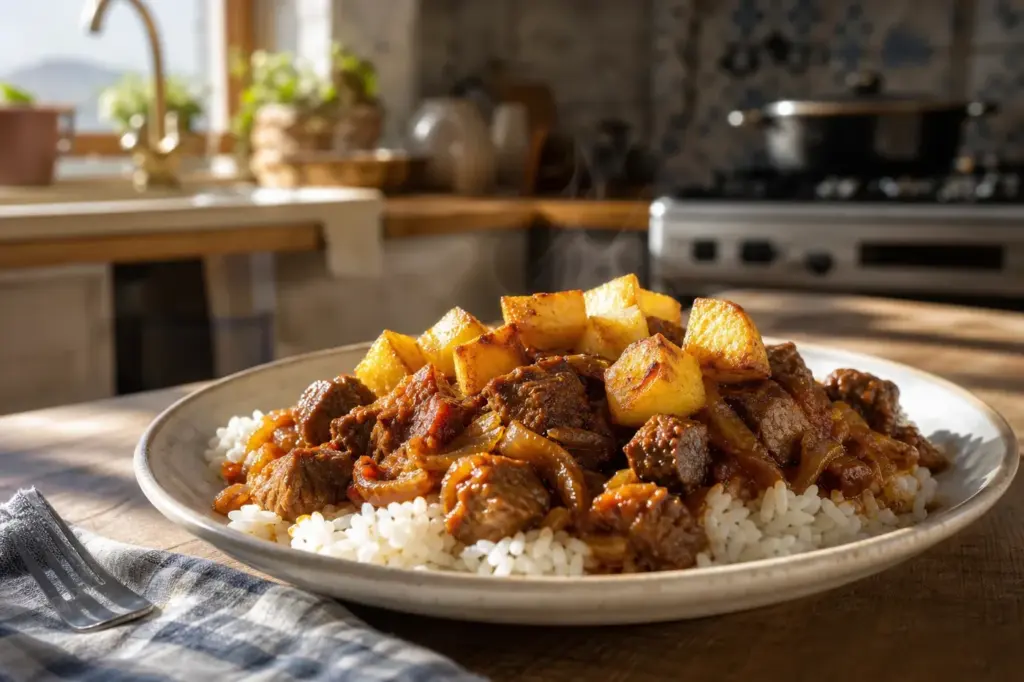
Lamb stew (Tas Kebabı) is one of the oldest ways to cook meat in Turkish and Ottoman cooking. Unlike the grilled kebabs most visitors know, this is pot-cooked: tender cubes of lamb braised slowly with onions, tomato, and potatoes until the meat falls apart. How to make lamb stew Tas Kebabı is straightforward enough for home cooking, though it requires patience. This guide shows you the technique step by step so you can make it yourself.
The dish takes 2–3 hours total, with most of that time spent simmering. You will need a heavy pot with a lid. The result is a one-pot meal that sits at the heart of Turkish family cooking and restaurant menus across Istanbul.
Quick answer: Brown cubed lamb in butter, cook with onions until soft, add tomato paste and stock, simmer covered for 1.5–2 hours until tender, then fry potato cubes separately and stir in just before serving. Total time: 2–3 hours.
At a Glance
| Type | Dishes |
|---|---|
| Origin | Ottoman cuisine; the earliest dated record appears in the Ottoman cookbook Melceü't-Tabbâhîn, usually dated 1844. The dish is rooted in Anatolian home and restaurant cooking. |
| Servings | 4 servings |
| Total time | 2–3 hours (mostly simmering) |
| Difficulty | Medium |
History and Story of Lamb Stew (Tas Kebabı)
The word tas refers to a copper bowl or pot. The earliest firmly dated Ottoman record of the dish is a recipe for tas kebabı in Melceü’t-Tabbâhîn, the first printed Ottoman cookbook, usually dated 1844. In the oldest technique, meat was placed in a heat-resistant bowl turned upside down inside a larger pot filled with water around it; steam trapped beneath the bowl cooked the meat. Today the dish is a stirred tomato stew. The word kebab originally did not mean grilled meat; it covered pot-cooked dishes as well. The stew belongs to Anatolian home and restaurant cooking, shaped by regional agriculture and the long exchange of techniques across the Ottoman world. From Turkey, it travelled into Greek, Armenian, and Balkan kitchens under similar names.
Ingredients
- 500–700 g lamb shoulder or beef chuck, cut into 3 cm cubes
- 2 medium onions, diced
- 2 tbsp tomato paste
- 1 tbsp butter
- 2 cups meat stock or hot water
- 2 medium potatoes, diced small for frying
- Oil for frying potatoes
- Salt and black pepper to taste
- 1 bay leaf (optional)
How Lamb Stew (Tas Kebabı) Is Made
Step 1: Prepare the meat and vegetables
Cut the lamb or beef shoulder into 3 cm cubes. Peel and dice the onions into medium pieces. Cube the potatoes into small pieces (about 1 cm) for frying later. You can prepare these ahead of time.
Tip: Use a piece with some fat; it keeps the meat moist during the long cooking.
Step 2: Brown the meat
Heat the butter in a heavy pot over medium-high heat. Working in batches if needed, brown the meat cubes on all sides until a dark crust forms. This takes 8–10 minutes per batch. Do not skip this step; it builds flavor. Lower the heat when finished.
Tip: Let each piece sit a moment before moving it so the crust stays intact.
Step 3: Cook the onions and tomato paste
Add the diced onions to the pot with the browned meat. Stir often over medium heat for 5–8 minutes until the onions turn translucent and begin to soften. Then stir in the tomato paste and let it sizzle in the heat for about 1 minute, stirring well to coat the meat.
Tip: This step mellows the raw tomato taste and deepens the flavor of the whole dish.
Step 4: Add liquid and seasonings
Pour in the hot stock (or hot water) until it just covers the meat. Add salt, black pepper, and the bay leaf if using. Stir well. Bring the pot to a simmer, then turn the heat low. Cover with a lid and leave it alone for 1.5–2 hours. Stir every 30 minutes or so.
Tip: The meat should be fall-apart tender by the end. If it is still chewy, add a splash more water and continue cooking.
Step 5: Fry the potatoes
When the meat is nearly tender, heat oil in a separate frying pan over medium heat. Add the diced potatoes and fry them until golden brown and crispy on the edges, about 15–20 minutes, stirring often. Use a slotted spoon to remove them to a plate lined with paper towels.
Tip: Fry the potatoes late in the stew's cooking so they stay crispy, not soggy.
Step 6: Finish and serve
Taste the stew and adjust salt and pepper. Stir the fried potatoes into the pot gently just before serving so they keep their texture. Serve hot over rice or with warm bread to soak up the sauce.
Tip: Some cooks serve the potatoes on top instead of stirring them in, so they stay crunchy.
Variants
- Diyarbakır Tas Kebabı: a regional form also called üsküre kebabı, which received a Turkish geographical indication (legal protection for place-linked products) in 2021
- Greek Politiko version: includes spices such as cumin, allspice, and cinnamon, served over rice
- Layered version: vegetables and meat laid in layers and left unstirred to cook in their own juices, less common in modern Turkish cooking
Common Mistakes to Avoid
- Skipping the browning step: this leads to pale, bland stew instead of deep, rich flavor. Take time to brown the meat properly.
- Cooking the onions too long before adding tomato paste: they can burn or turn to mush. Keep the heat medium and watch them closely.
- Adding cold liquid: cold water or stock will shock the pot and toughen the meat. Always add hot or warm liquid.
- Not stirring during cooking: the stew can stick to the bottom and burn. Check and stir every 30 minutes even though it seems to be cooking gently.
- Frying potatoes too early: they absorb moisture and become soft instead of staying golden and crisp. Add them only at the very end.
- Crowding the frying pan with potatoes: they will steam instead of fry. Do it in batches for best results.
How to Order and Eat It
Tas Kebabı is eaten with a spoon and fork. Traditionally it is served over a mound of pilaf or plain rice. The stew may also be eaten with warm flatbread used to scoop up the tender meat and sauce. Fried potato cubes sit either mixed into the stew or as a crispy garnish on top. The dish is meant to be simple and straightforward in flavor: the meat and onion should dominate, with tomato as a background note. It is a home dish, the kind cooked in quantity on a weekday and reheated.
To order: Tas kebabı lütfen [Tas kebabı lütfen]
Istanbul Vibes Tips
- Use lamb shoulder or beef chuck with some marbling. Lean cuts will dry out during the long cooking. The fat keeps the meat moist and adds flavor.
- Make this in a Dutch oven or other heavy pot with a tight-fitting lid. This traps steam and heat evenly, which is what makes the meat so tender.
- Do not rush the cooking. The long, slow simmer on low heat is what makes the meat tender enough to eat with a spoon. High heat will make it tough.
- If the stew is watery at the end, remove the lid and simmer for another 15–20 minutes to reduce the sauce. It should coat the meat lightly but not be soupy.
- This stew reheats beautifully. Make it a day ahead and store it in the fridge; the flavors deepen overnight. Warm it gently on low heat before serving.
- The potatoes should be fried separately, not cooked in the stew from the start. This keeps them from falling apart and turning to mush. They stay golden and crisp only if added at the very end.
Where to Find Lamb Stew (Tas Kebabı) in Istanbul
Related guides
 Kebab: What to Eat, How to Order, and How to Cook It
Main image: AI-generated illustration. It may not show the place exactly as it looks.
 Meze: Turkish appetizers, culture and what to order
Main image: AI-generated illustration. It may not show the place exactly as it looks.
 Turkish Tea: How to Brew and Serve It Like Istanbul Locals
Main image: AI-generated illustration. It may not show the place exactly as it looks.
Browse more: All Food & Drink · All Other
FAQ
Is Tas Kebabı the same as other kebabs?
No. Most kebabs are grilled on skewers. Tas Kebabı is pot-cooked and braised slowly. The word kebab originally meant any cooked meat dish, not just grilled meat. The Ottoman kitchen had many kinds of kebab, and the stew is one of the oldest.
Can I use chicken instead of lamb?
Lamb and beef are traditional. Chicken cooks faster and will fall apart in 45 minutes instead of 2 hours. You can make it with chicken, but it will be a different dish. Many cooks say it is no longer tas kebabı at that point.
Why do you fry the potatoes separately?
If you cook potatoes in the stew from the start, they absorb moisture and soften to mush. Frying them separately keeps them crispy and golden. Add them only at the very end of cooking.
How long does it keep?
Tas Kebabı keeps well in the fridge for 3–4 days in a covered container. Reheat gently on the stovetop over low heat. It is often better the next day when the flavors have deepened.
What should I serve it with?
Serve over rice, with warm bread, or both. Fried potato cubes go on top or stirred in. Some people add a dollop of thick yogurt on the side, though this is not traditional for this dish.
Can I make this in a pressure cooker?
Yes, but the result will be different. Brown the meat first in the pressure cooker, then add onions, tomato paste, and stock. Cook under pressure for 30–40 minutes. Fry the potatoes separately and add them at the end. The slow-braised version has deeper flavor.
What if my stew is too thin or too thick?
If it is watery, remove the lid and simmer for 15–20 minutes more until the sauce reduces and thickens. If it is too thick, stir in a splash of hot water or stock. The sauce should lightly coat the meat.
Does Tas Kebabı contain pork?
No. The traditional recipe uses lamb or beef only. This dish is common in Turkish and Ottoman cuisine, which does not use pork.
Istanbul Vibes is a one-person project. A coffee keeps it going

Take this guide with you
Get a free PDF of this guide to print or read offline: key facts, tips and a map link on a few clean pages.
Report an issue on this page
How we research and update our guides
About this guide: AI assistance and accuracy
This guide is created with the help of AI and is based on official sources where available. Mistakes can still happen. Opening hours, prices, rules and other details are given to the best of our knowledge as of the date shown and can change without notice. It offers general recommendations only, not professional, legal or travel advice. Please confirm important details with the official source before you travel; you are responsible for your own plans and decisions.
* Affiliate link: as an Amazon Associate we earn from qualifying purchases at no extra cost to you.
