

Istanbul’s palaces tell the story of four centuries of Ottoman rule and the empire’s transformation in its final decades. This list covers nine essential palaces and summer residences you can visit as museums today, ranging from the administrative heart of the Ottoman state to intimate pavilions set in landscaped gardens. Each represents a distinct era, architectural vision, and chapter of imperial life.
Whether you’re drawn to Ottoman history, European-inspired architecture, or the details of court life behind palace walls, you’ll find concrete information here about what to expect, where each building stands, and why it mattered. We’ve selected only places that are open to the public as museums.
Route: 5 stops, about 10.5–14 hours including walking (estimate)
At a Glance
| # | Place | Best for | Good to know |
|---|---|---|---|
| 1 | Topkapi Palace | Heart of Ottoman empire, largest complex | Sultanahmet, Fatih district; Sultanahmet metro or tram stop. Open Wednesday–Monday 9:00–18:00; closed Tuesdays. Harem requires separate ticket. Allow 2.5–4 hours. |
| 2 | Dolmabahçe Palace | Baroque grandeur, largest palace in Turkey | Beşiktaş, European shore of Bosphorus; Kabataş tram stop. Open Tuesday–Sunday 9:00–17:00; closed Mondays. Last entry 16:00. Allow 1.5–3 hours. |
| 3 | Beylerbeyi Palace | Summer residence, Asian side elegance | Beylerbeyi neighborhood, Asian side; Beylerbeyi ferry stop or bus. Open Tuesday–Sunday 9:00–17:00; closed Mondays. Allow 1–2 hours. |
| 4 | Yıldız Palace | Late Ottoman complex, star pavilions | Beşiktaş, near Çırağan Palace; Ortaköy tram or bus. Open daily 9:00–17:00; closed Wednesdays. Allow 2–3 hours. |
| 5 | Ihlamur Mansion | Intimate summer pavilion, garden setting | Beşiktaş, near Yıldız Palace; Ortaköy or Kabataş stop. Open Tuesday–Sunday 9:00–17:00; closed Mondays. Allow 1–1.5 hours. |
| 6 | Küçüksu Summer Palace | Rococo charm, Bosphorus waterfront | Beykoz district, Asian shore; bus from Eminönü or Üsküdar. Open Tuesday–Sunday 9:00–17:00; closed Mondays. Allow 1 hour. |
| 7 | Çırağan Palace | Reconstructed palace, luxury hotel today | Ortaköy, European shore of Bosphorus; Ortaköy tram stop. Now a hotel; inquire about public viewing areas. Exterior can be viewed from the street and waterfront. |
| 8 | Adile Sultan Palace | Neo-Renaissance mansion, cultural center | Beşiktaş, Bosphorus waterfront; Kabataş tram or Ortaköy stop. Check current opening hours and exhibitions at the cultural center. |
| 9 | Maslak Pavilion | Hunting lodge, wooded retreat | Beşiktaş, near Yıldız Palace; bus or taxi. Opening hours vary; verify on official National Palaces website before visiting. |
How We Chose
These entries were chosen based on:
- Official recognition as museums or heritage sites managed by Turkey’s National Palaces Authority
- Public access verified through official museum websites and government sources as of October 2026
- Significance to Ottoman history and architecture
- Diversity of palace types: administrative centers, residential palaces, summer pavilions, and waterside mansions (yalıs)
- Geographic distribution across Istanbul’s European and Asian shores
All are currently operating with regular visiting hours. Prices vary; information on tickets, audio guides, and combined passes is available at each palace’s official website.
1. Topkapi Palace – Heart of Ottoman empire, largest complex
Built between 1460–1478 by Fatih Sultan Mehmet, Topkapi served as the administrative center and royal residence of the Ottoman sultans for nearly 400 years. The palace is not a single building but an organic complex of courtyards, pavilions, gardens, and chambers spread across the tip of the old peninsula. Inside you'll find the Imperial Treasury (home to the Spoonmaker's Diamond and the Topkapi Dagger), the Harem with its intimate rooms and gardens, the Imperial Kitchens with displays of porcelain, and collections of Ottoman weapons, robes, and manuscripts. The terrace overlooks the Bosphorus, Golden Horn, and Sea of Marmara.
Good to know: Sultanahmet, Fatih district; Sultanahmet metro or tram stop. Open Wednesday–Monday 9:00–18:00; closed Tuesdays. Harem requires separate ticket. Allow 2.5–4 hours.
Tip: Arrive at 9:00 opening or after 15:30 to avoid tour groups. Go to the Harem first before crowds arrive; most visitors save it for last.
2. Dolmabahçe Palace – Baroque grandeur, largest palace in Turkey
Constructed between 1843–1856 in Neo-Baroque style, Dolmabahçe replaced Topkapi as the sultan's primary residence. Built by architect Karabet Balyan for Sultan Abdülmecid, it reflects the empire's turn toward European aesthetics in its final era. The palace contains 285 rooms, 44 halls, and 6 hamams across three stories. You walk through ceremonial halls with crystal chandeliers, vast marble staircases, and furniture carved for Ottoman royalty. The room where Atatürk spent his final days in 1938 is open to visitors. The waterfront terraces offer views of the Bosphorus and the palace's elaborate gardens.
Good to know: Beşiktaş, European shore of Bosphorus; Kabataş tram stop. Open Tuesday–Sunday 9:00–17:00; closed Mondays. Last entry 16:00. Allow 1.5–3 hours.
Tip: Visit on a weekday morning (Tuesday–Thursday before 11:00) to avoid crowds. Photography is not permitted inside. Guided tours are recommended to understand the palace's symbolism.
3. Beylerbeyi Palace – Summer residence, Asian side elegance
Constructed between 1861–1865 in Neo-Baroque style, Beylerbeyi served as a summer residence and a place where sultans received foreign heads of state. Smaller and more intimate than Dolmabahçe, it sits on the Asian shore under the 15 July Martyrs Bridge (formerly Bosphorus Bridge). The two-story palace blends European design with Ottoman traditions. Its terraced gardens descend to the water, and the reception rooms feature period furnishings and decorative arts. The palace offers views across the strait to the European shore.
Good to know: Beylerbeyi neighborhood, Asian side; Beylerbeyi ferry stop or bus. Open Tuesday–Sunday 9:00–17:00; closed Mondays. Allow 1–2 hours.
Tip: Cross the Bosphorus to visit this palace; it's an easy ferry or bus ride from Eminönü or Kabataş. The quieter setting means fewer crowds than the European palaces.
4. Yıldız Palace – Late Ottoman complex, star pavilions
Built from the late 18th century and expanded in the 19th, Yıldız served as the residence of Sultan Abdülhamid II from 1889–1909. The name means 'star' in Turkish. Unlike the other palaces, Yıldız is a sprawling complex of pavilions, kiosks, and villas set in a large park with flowers and trees collected from around the world. Inside the main complex you'll find the Sale Kiosk (built in Swiss chalet style), the Malta Kiosk, ceremonial pavilions, a theater, an opera house, and the Imperial Porcelain Factory where Ottoman porcelain was made. The gardens provide refuge and views across the strait.
Good to know: Beşiktaş, near Çırağan Palace; Ortaköy tram or bus. Open daily 9:00–17:00; closed Wednesdays. Allow 2–3 hours.
Tip: Wear comfortable shoes; the palace complex sprawls across gardens. Many buildings within the complex require separate exploration. Check which pavilions are open on your visit day.
5. Ihlamur Mansion – Intimate summer pavilion, garden setting
Constructed in the mid-1850s under Sultan Abdülmecid, designed by imperial architect Nikagos Balyan, Ihlamur served as a private retreat where the sultan would receive guests. The name refers to linden trees that shade the grounds. The complex consists of two main buildings: the Merasim Pavilion (used for ceremonies) and the Maiyet Pavilion (reserved for the sultan's court and harem). Set among landscaped gardens in Beşiktaş, it represents a more personal, less formal style of palace architecture than the grand residences. The interiors display Ottoman taste in furniture, calligraphy, and decoration.
Good to know: Beşiktaş, near Yıldız Palace; Ortaköy or Kabataş stop. Open Tuesday–Sunday 9:00–17:00; closed Mondays. Allow 1–1.5 hours.
Tip: Combine this with Yıldız Palace as they are close to each other. The smaller scale and garden setting make it a peaceful contrast to the grand ceremonial palaces.
6. Küçüksu Summer Palace – Rococo charm, Bosphorus waterfront
Completed in 1856, Küçüksu ('Little Water') sits on the Asian shore where a stream flows into the Bosphorus. Designed in the Rococo style with ornate decoration and pale stone, it served as a hunting lodge and summer retreat for Sultan Abdülmecid. The two-story pavilion is more intimate than the major palaces, with elegant reception rooms and a central hall opening onto terraces overlooking the strait. Visitors can see Ottoman furnishings, decorative arts, and photographs documenting palace life. The waterfront gardens allow views of European Istanbul.
Good to know: Beykoz district, Asian shore; bus from Eminönü or Üsküdar. Open Tuesday–Sunday 9:00–17:00; closed Mondays. Allow 1 hour.
Tip: Combine with nearby Çengelköy village for lunch or coffee with Bosphorus views. The palace is accessible by ferry, bus, or taxi; it feels less crowded than central palaces.
7. Çırağan Palace – Reconstructed palace, luxury hotel today
Built between 1863–1871 for Sultan Abdülaziz in Neo-Baroque style, Çırağan ('torch' or 'light') stands between Beşiktaş and Ortaköy on the European shore. The original structure was damaged by fire in 1910. The palace was restored and is now operated as a luxury hotel, but the ground floor and public spaces preserve original architectural details including carved stone work, high ceilings, and Bosphorus views. A portion of the palace remains visible and parts may be accessible for viewing depending on hotel policy. The exterior and waterfront setting remain evocative of Ottoman grandeur.
Good to know: Ortaköy, European shore of Bosphorus; Ortaköy tram stop. Now a hotel; inquire about public viewing areas. Exterior can be viewed from the street and waterfront.
Tip: You cannot tour the interior as a museum, but the exterior façade and gardens are visible from the public waterfront promenade. Consider the café or restaurant if you want to see interior spaces.
8. Adile Sultan Palace – Neo-Renaissance mansion, cultural center
Built in 1858 by architect Sarkis Balyan as a gift to Adile Sultan, the sister of Sultan Abdülmecid, this Neo-Renaissance mansion stands in Beşiktaş. The palace features European design with ornamental details and period furnishings. Today it functions as a cultural center and museum, preserving its role as a window into 19th-century Ottoman aristocratic life. Visitors can see the grand salons, private chambers, and decorative arts that reflect the refined taste of a sultan's sister. The gardens and waterfront location on the Bosphorus add to its appeal.
Good to know: Beşiktaş, Bosphorus waterfront; Kabataş tram or Ortaköy stop. Check current opening hours and exhibitions at the cultural center.
Tip: Call ahead to confirm visiting hours and current exhibitions, as this palace functions as a cultural institution with rotating programs.
9. Maslak Pavilion – Hunting lodge, wooded retreat
Constructed in the early 19th century under Mahmud II, Maslak served as a hunting lodge and place of recreation. It was later used by Sultan Abdülhamid II during his years as a prince. Set in a wooded area of Beşiktaş, the pavilion represents a more informal architectural style than the grand ceremonial palaces. The modest but elegant structure sits amid gardens and reflects the sultan's desire for private retreat from court formality. The setting among trees and water features offers a sense of the Ottoman elite's appreciation for nature and rural escape.
Good to know: Beşiktaş, near Yıldız Palace; bus or taxi. Opening hours vary; verify on official National Palaces website before visiting.
Tip: This is one of the lesser-known palaces, so expect fewer visitors. Its woodland setting and smaller scale offer a different experience from the grand waterfront residences.
Istanbul Vibes Tips
- Most major palaces open at 09:00. Arrive early to beat tour groups and the midday rush. After 15:00–15:30, crowds thin noticeably. Avoid weekends and public holidays if possible.
- The Museum Pass Istanbul (Müze Kartı) covers entry to Topkapi, Dolmabahçe, Beylerbeyi, and Yıldız palaces, saving both money and queuing time. Verify current pricing and pass validity on the official website.
- Photography restrictions vary by palace. Most forbid photos inside ceremonial halls and private chambers but allow exterior shots and garden photography. Always ask guards if unsure.
- Spring (April–May) and autumn (September–October) offer the best weather for palace visits and garden exploration. Summer heat can make walking between courtyards uncomfortable; winter brings rain and shorter daylight.
- Each major palace requires 1.5–4 hours depending on your pace and interests. Do not plan to 'see all of Istanbul' in one day; choose 1–2 palaces and explore them properly. Audio guides provide deeper historical context than casual walking.
- Wear comfortable walking shoes; palaces involve significant walking across courtyards, staircases, and gardens. Many areas lack air conditioning; dress in layers. Some rooms are dimly lit to preserve collections; bring a flashlight if you want to read display labels.
Explore Nearby Historic Palaces and Mansions
Sights near Historic Palaces and Mansions
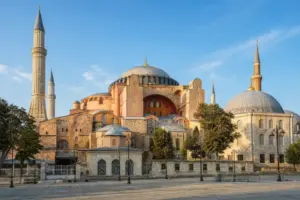 Hagia Sophia · typical visit: 1–1.5 hours8 min on foot from Gülhane metro, Open daily 09:00–19:30
Main image: AI-generated illustration. It may not show the place exactly as it looks.
 Blue Mosque · typical visit: 45–75 minutes3 min on foot from Gülhane metro
Main image: AI-generated illustration. It may not show the place exactly as it looks.
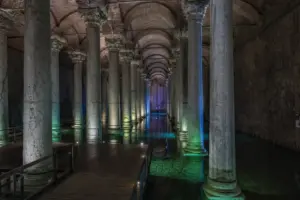 Basilica Cistern · typical visit: 1 hour4 min on foot from Gülhane metro, Open daily 09:00–18:30
Main image: AI-generated illustration. It may not show the place exactly as it looks.
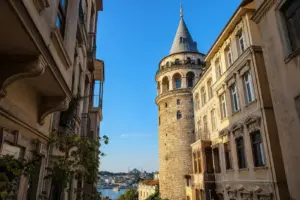 Galata Tower · typical visit: 1–2 hours4 min on foot from Şişhane metro, Open daily 08:30–23:00
Main image: AI-generated illustration. It may not show the place exactly as it looks.
Related guides
 Chora Church & Byzantine Mosaics Walk: Hours, Tickets and What to See
Main image: AI-generated illustration. It may not show the place exactly as it looks.
Browse more: All Culture Lists · All Guides
FAQ
Which palace should I visit if I have only a few hours?
Dolmabahçe Palace is the best choice for limited time. You can see the main halls and highlights in 1.5–2 hours. Topkapi Palace requires 2.5–4 hours to do it justice. If on the Asian side, Beylerbeyi takes 1–2 hours and is less crowded.
Can I visit multiple palaces in one day?
Yes, but plan carefully. You could realistically combine Topkapi (morning, 3 hours) with Dolmabahçe (afternoon, 2 hours), with a break between. Combining Yıldız and Ihlamur works as they are nearby in Beşiktaş. Allow travel time between sites; palace hopping is exhausting.
Are the Harem sections worth the extra ticket cost?
Yes. The Harem reveals intimate details of royal and court life not visible in ceremonial spaces. At Topkapi, go early before tour groups arrive. At Dolmabahçe, the Harem includes Atatürk's final room, adding historical weight.
Which palace has the best Bosphorus views?
Dolmabahçe and Küçüksu both offer stunning waterfront terraces. Topkapi's terrace overlooks all three bodies of water (Bosphorus, Golden Horn, Sea of Marmara). Beylerbeyi and Çırağan also have notable views, though Çırağan is now a hotel.
Do I need a guide to understand the palaces?
Not required, but recommended. Official audio guides (available at major palaces) provide architectural context and explain Ottoman court practices. A human guide offers richer interpretation but costs more. Reading labels as you walk is free but time-consuming.
Are these palaces accessible for visitors with limited mobility?
Accessibility varies. Dolmabahçe and Yıldız have some elevator access and ramps, but most sections involve stairs. Topkapi is very steep. Contact the specific palace beforehand if mobility is a concern. Ground floors are usually more accessible than upper levels.
Can I take photos inside the palaces?
Exterior and garden photography is generally allowed. Interior photography rules vary: ceremonial halls, treasuries, and some private chambers forbid it to protect collections and preserve the experience. Always ask guards at each section.
What's the difference between a palace, a mansion (yalı), and a pavilion?
Palaces (saray) were primary imperial residences with multiple buildings and courtyards. Summer palaces or pavilions (kasır, köşk) were smaller retreats. Waterside mansions (yalı) were private estates on the Bosphorus built by the elite. This list includes all types.
Istanbul Vibes is a one-person project. A coffee keeps it going

Take this guide with you
Get a free PDF of this guide to print or read offline: key facts, tips and a map link on a few clean pages.
Report an issue on this page
How we research and update our guides
About this guide: AI assistance and accuracy
This guide is created with the help of AI and is based on official sources where available. Mistakes can still happen. Opening hours, prices, rules and other details are given to the best of our knowledge as of the date shown and can change without notice. It offers general recommendations only, not professional, legal or travel advice. Please confirm important details with the official source before you travel; you are responsible for your own plans and decisions.
* Affiliate link: as an Amazon Associate we earn from qualifying purchases at no extra cost to you.
