
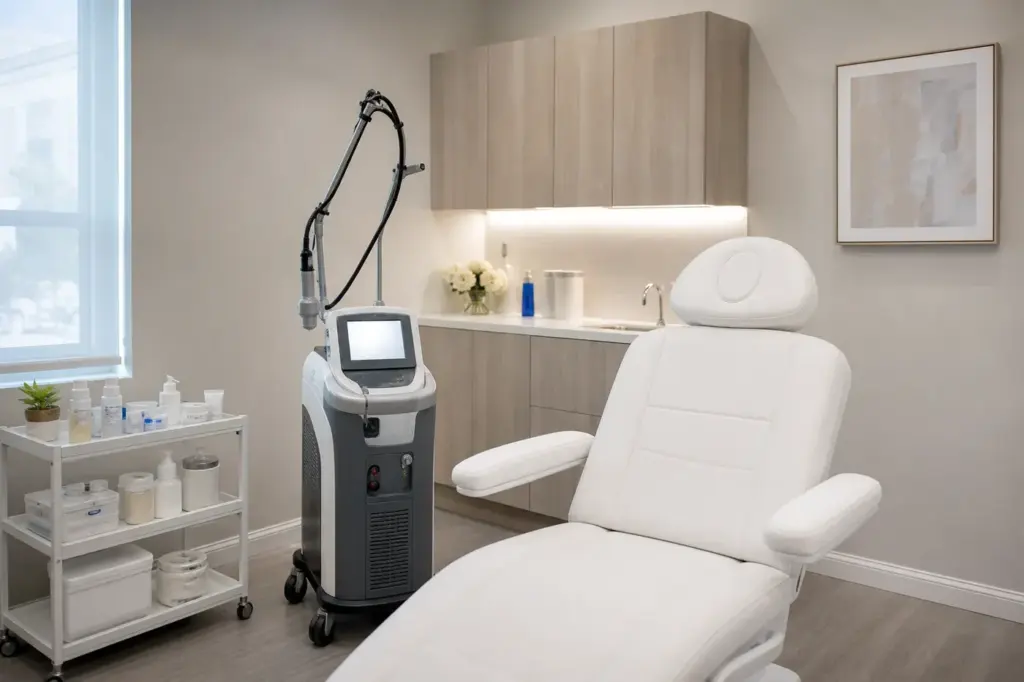
Information only. This article explains what a treatment is and how it is usually carried out. It is not medical advice, not an offer and not a recommendation to have any procedure. Whether it suits you can only be decided by a licensed doctor after an examination.
This article explains laser skin resurfacing, a non-surgical procedure available in Istanbul clinics. Laser resurfacing aims to improve skin appearance by removing damaged outer layers and stimulating new collagen production. Visitors considering this treatment will find information about how it works, what to expect during and after the procedure, common risks, recovery time, and important questions to ask a doctor before deciding.
This guide is neutral and informational. The choice to have any treatment must be made in consultation with a licensed doctor after a medical examination.
Quick answer: Laser skin resurfacing uses concentrated light energy to remove damaged skin cells layer by layer and trigger collagen growth. The procedure typically takes 30 minutes to 2 hours depending on the area treated. Recovery and results vary significantly by laser type and individual healing factors, ranging from minimal downtime (non-ablative) to several weeks (ablative).
At a Glance
| Total time | Procedure: 30 minutes to 2 hours; Initial healing: 1–3 weeks depending on laser type; Complete recovery and result appearance: 3–12 months |
|---|
What You Need Before You Start
- Consultation with a licensed doctor to assess skin type, medical history and suitability
- Pre-treatment skin assessment and possibly preparation treatments
- Disclosure of all medications, including blood thinners and acne medications
- Avoidance of sun exposure and certain skincare products before treatment
- Time to recover: at least several days off work or activities depending on laser type
- Commitment to follow-up care at home and ability to contact the clinic for complications
Compare Your Options
| Option | Duration | Price | Notes |
|---|---|---|---|
| Ablative laser (CO2 or erbium) | Procedure 30 min–2 hours; recovery 1–3 weeks; redness fades over 2–6 months | Removes the outer layer of skin, producing more noticeable results for wrinkles, scars and pigmentation. Recovery is longer and more visible. Risk of complications is higher, particularly for darker skin types. Results are typically more dramatic but come with extended downtime. | |
| Non-ablative laser (Nd:YAG, IPL) | Procedure 15–30 min; minimal downtime (hours to a few days); results develop over weeks | Heats the deeper skin layer without removing the surface. Little to no downtime, but results are more gradual and subtle. Usually requires multiple sessions spaced weeks apart. Better for fine lines and mild skin concerns. | |
| Fractional laser (ablative or non-ablative) | Procedure 30–60 min; recovery 7–10 days; results appear over weeks to months | Treats microscopic columns of skin while leaving surrounding areas untouched, promoting faster healing than traditional ablative. Middle ground between ablative and non-ablative in terms of results and recovery. May require 2–3 sessions spaced 3–4 weeks apart for best results. | |
| Hybrid fractional laser (combines ablative and non-ablative) | Procedure 45 min–1.5 hours; recovery 7–14 days | Uses both ablative and non-ablative energy simultaneously for enhanced results with somewhat faster recovery than full ablation. Used for deeper wrinkles, significant sun damage and acne scars. |
₺ budget · ₺₺ moderate · ₺₺₺ upscale · ₺₺₺₺ splurge. Price levels are estimates compared with typical prices for visitors.
Step-by-Step Instructions
Step 1: Initial consultation and skin assessment
Before any procedure, meet with a licensed dermatologist or plastic surgeon at a clinic. The doctor examines your skin type, skin condition, medical history, medications and treatment goals. Patch testing on a small, hidden area may be recommended to assess how your skin responds. During this visit, ask about the specific laser type, expected results, risks for your skin type, recovery timeline and what to expect during healing.
Tip: Bring a list of all medications and supplements you take, including blood thinners and acne medications, as these affect healing and bleeding risk.
Step 2: Pre-treatment preparation
Follow the clinic's instructions for the 1–2 weeks before treatment. This typically includes avoiding sun exposure, discontinuing certain medications or skincare ingredients (such as retinoids), and sometimes using prescribed pre-treatment skincare products. Some clinics may prescribe preventive antibiotics or antivirals to reduce infection risk. Avoid smoking before and after treatment, as it increases healing complications.
Tip: Most clinics recommend stopping blood-thinning medications such as aspirin several days before treatment; confirm timing with your doctor.
Step 3: Numbing and anesthetic
On the day of treatment, the area to be treated is numbed with a local anesthetic. For smaller areas (partial face), local numbing is sufficient. For full-face treatment, general anesthesia may be used. You may also receive sedating medication to help you relax. The numbing takes 15–20 minutes to take effect.
Tip: Arrange transport home, as sedating medications affect alertness even with local anesthesia.
Step 4: Laser treatment delivery
The doctor carefully passes the laser handpiece back and forth over the skin in controlled passes. You may feel warmth, stinging, or a snapping sensation against the skin. The laser removes skin very precisely, layer by layer. A partial-face treatment typically takes 30–45 minutes; full-face treatment takes 1.5–2 hours. The exact time depends on the area size, laser type and depth of treatment needed.
Tip: Ablative (deeper) lasers take longer and require more healing; non-ablative lasers are faster but may need multiple sessions.
Step 5: Post-procedure care and healing
After the procedure, the area is cleaned and may be covered with a protective dressing or ointment. You can usually leave the clinic the same day (it is an outpatient procedure). For the first few days, the skin feels raw, similar to a sunburn, and may ooze, blister, crust or scab. Swelling and redness are normal. Follow the clinic's specific aftercare instructions, which typically include gentle cleansing, prescribed ointments or creams, avoiding sun, and sometimes taking prescribed antibiotics or antivirals.
Tip: Keep the treated area clean and moist as directed. Do not pick at crusts or scabs, as this increases scarring risk.
Step 6: Recovery and follow-up
New skin usually covers the area in 7–10 days. However, redness, pinkness or changes in skin color may last for weeks to months depending on laser type and individual healing. Avoid makeup, strenuous exercise, saunas and swimming during initial healing (typically 1–2 weeks). After one week, you may gradually resume activities. Schedule a follow-up appointment with the clinic to assess healing and discuss any concerns. If results are gradual (as with non-ablative lasers), the clinic may recommend additional sessions spaced several weeks apart.
Tip: Use sunscreen every day during recovery and for months afterward, as treated skin is more sun-sensitive.
Common Mistakes to Avoid
- Assuming all laser skin resurfacing is the same: ablative, non-ablative and fractional lasers produce very different results, recovery times and risks. Ask your doctor which type is suitable for your specific concerns and skin type.
- Not disclosing all medications: blood thinners, aspirin, acne medications like isotretinoin, and certain supplements increase bleeding, scarring or healing complications. Tell your doctor everything you take.
- Underestimating recovery: ablative resurfacing requires visible downtime with crusting, swelling and redness for days to weeks. Plan work and social commitments accordingly; do not schedule this before important events.
- Smoking before or after treatment: smoking increases infection risk, delays healing and reduces results. Most clinics require stopping at least two weeks before and after.
- Ignoring sun protection after healing: treated skin remains sun-sensitive for months or longer. Inadequate sun protection can cause lasting darkening (hyperpigmentation) or lightening (hypopigmentation) of the treated area.
- Expecting results to last indefinitely: while results can last years, skin ages and sun damage returns over time. Maintenance treatments may be needed.
Tickets, Payment and Booking
Treatment is booked directly with private clinics in Istanbul. Most clinics require an initial in-person or video consultation to assess your skin and determine suitability. Payment is typically made to the clinic in advance or at the time of treatment. International patients should confirm which payment methods the clinic accepts (bank transfer, credit card, cash) and whether they accept foreign insurance or medical tourism packages.
Always verify the clinic and doctor’s credentials and licenses through official Turkish health authority registers before booking. Ask for a written treatment plan that includes the laser type, expected results, possible risks and follow-up care instructions.
Good to know
- Darker skin types (Fitzpatrick IV–VI) require specialized laser settings and an experienced doctor familiar with treating darker skin. Ask if the clinic has experience with your skin tone and protocols to minimize pigmentation changes.
- Timing matters: plan laser resurfacing for a season when you can avoid sun exposure during healing (typically autumn or winter in temperate climates). Avoid booking before holidays, weddings or events where you'll be photographed or in the sun.
- Many Istanbul clinics offer packages combining laser with other treatments (mesotherapy, serums) to enhance results. Understand what is included and what costs extra before booking.
- If you live outside Istanbul, plan for a follow-up visit 1–2 weeks after treatment to ensure proper healing. Some clinics offer remote follow-up consultations by video.
- Non-ablative laser may require 3–6 sessions spaced 3–4 weeks apart. Avoid committing to pre-paid multi-session packages until you see results from the first treatment and confirm you want to continue.
Explore Nearby Laser Skin Resurfacing
Related guides
 How to Find Prayer Spaces in Istanbul: Mosques, Prayer Times and Etiquette
Main image: AI-generated illustration. It may not show the place exactly as it looks.
 How to Keep Your Valuables Safe in Istanbul: Practical Protection in Crowded Areas
Main image: AI-generated illustration. It may not show the place exactly as it looks.
 Nisantasi and Sisli Walk: Istanbul’s Urban Elite Quarter
Main image: AI-generated illustration. It may not show the place exactly as it looks.
More guides
 Neck Lift
Main image: AI-generated illustration. It may not show the place exactly as it looks.
 Duodenal Switch
Main image: AI-generated illustration. It may not show the place exactly as it looks.
 Dental Veneer
Main image: AI-generated illustration. It may not show the place exactly as it looks.
 Revision Rhinoplasty
Main image: AI-generated illustration. It may not show the place exactly as it looks.
 Acne Scar Treatment
Main image: AI-generated illustration. It may not show the place exactly as it looks.
Browse more: All Other · All Treatments
FAQ
How long does laser skin resurfacing take?
A partial-face treatment takes 30–45 minutes; full-face treatment takes 1.5–2 hours. Exact time depends on the area size and laser type. The consultation before treatment may take an additional 30–60 minutes.
How long is the recovery?
Initial recovery (able to be seen in public) varies: non-ablative lasers have minimal downtime (a few hours); erbium lasers typically take 1 week; fractional lasers take 1–2 weeks; ablative CO2 lasers can take 2–3 weeks. Full healing and final results may take 3–12 months.
Is laser skin resurfacing painful?
During treatment, you feel warmth, stinging or a snapping sensation. Local anesthesia is used to numb the area. After treatment, the skin feels raw, similar to sunburn, with itching and tenderness for the first few days. Pain intensity depends on laser type and individual sensitivity.
Can laser resurfacing be done on all skin types?
All skin types can have laser resurfacing, but darker skin types (Fitzpatrick IV–VI) have higher risk of pigmentation changes. An experienced doctor familiar with treating darker skin and proper laser settings can minimize this risk. Ask the clinic about their experience with your skin tone.
How many sessions do I need?
Ablative lasers often produce results in a single session; non-ablative and fractional lasers typically require 2–6 sessions spaced 3–4 weeks apart. The exact number depends on the laser type, your skin concern and desired results. Your doctor will advise after assessment.
When will I see results?
Results develop gradually. With ablative lasers, initial improvement is visible within days as swelling fades, with continued improvement over 2–6 months. With non-ablative lasers, results appear over weeks to months as collagen remodels. Full results can take 3–12 months to appear.
Are there side effects?
Common temporary side effects include redness, swelling, itching, crusting and scabbing during healing. Possible but less common complications include infection, permanent pigmentation changes, scarring, or cold sore reactivation. Serious complications are rare if treatment is performed by a qualified doctor and aftercare is followed.
How do I check if a clinic is legitimate?
Verify the clinic and doctor are registered with official Turkish health authorities. Look for international accreditations (JCI, ISAPS). Ask for the doctor's credentials, years of experience and number of procedures performed. Ask the clinic for a written treatment plan and for information about follow-up care.
Not legal advice. This is general information for visitors. Rules on visas, entry, registration, customs and similar matters change often and can depend on your nationality. Check the official source and, if in doubt, ask your embassy or a qualified adviser.
Before you decide anything
Risks and possible complications
- Redness, swelling, itching and raw skin feeling (usually temporary)
- Burning, stinging or snapping sensations during and after treatment
- Skin crusting, blistering, oozing, or scabbing during healing
- Changes in skin pigmentation: hyperpigmentation (darker patches) or hypopigmentation (lighter patches), particularly in darker skin types
- Infection if the area is not kept clean or if pre-care/post-care instructions are not followed
- Scarring, particularly with ablative lasers or if healing instructions are not followed
- Small white bumps (milia) that may appear during healing
- Cold sore reactivation if you have a history of oral herpes
- Complications from anesthesia in rare cases
- Abnormal healing or delayed recovery in some individuals
Alternatives to talk about with a doctor
- Topical skincare products: retinoids, vitamin C serums and moisturizers reduce fine lines gradually without downtime but produce milder results
- Chemical peels: use acids to remove skin layers; gentler than laser but less powerful for deep wrinkles or scars
- Microdermabrasion: physical exfoliation with minimal downtime; used for mild surface concerns
- Radiofrequency (RF) treatments: heat deeper skin layers to stimulate collagen without removing skin; less downtime than ablative laser but gentler results
- Microneedling: creates tiny injuries to stimulate collagen; less invasive but usually requires multiple sessions
- Botulinum toxin or dermal fillers: address wrinkles or volume loss without resurfacing the skin
- Dermatological treatments: prescription retinoids, hydroquinone or other topical medications for specific skin concerns
Questions to ask a licensed doctor
- Which laser type is best for my skin type, skin condition and specific concerns?
- What are the realistic results I can expect, and how long will they take to appear?
- What are the specific risks for my skin type? (People with darker skin have higher risk of pigmentation changes.)
- How many sessions will I need, and how far apart should they be?
- Which medications or supplements should I stop before treatment?
- What exactly should I do to prepare my skin in the days before treatment?
- What can I expect during healing day by day? How red will my skin be?
- When can I return to work, exercise, swimming and normal activities?
- When can I wear makeup again?
- What specific aftercare products or medications will you prescribe?
- If I experience severe pain, fever, heavy bleeding or signs of infection after leaving, who do I contact?
- How will you follow up with me, and what should I watch for?
- How long do results last, and will I need maintenance treatments?
- What is your clinic's policy if I am unhappy with results or experience complications?
- This page is information. It is not medical advice and not a recommendation to have any treatment or to choose any clinic, doctor or country.
- Every medical procedure has risks, and results and healing differ from person to person. A licensed doctor who has examined you decides whether a treatment is suitable.
- Talk to a doctor in your home country before you decide, and plan follow-up care at home: problems can appear after you return.
- Check that the clinic and the doctor are licensed in the official register of the Türkiye Cumhuriyeti Sağlık Bakanlığı, and ask for a written treatment plan and a consent form you understand.
- After a procedure, get urgent medical help for severe pain, fever, heavy bleeding or breathing problems. In an emergency call the local emergency number.
Kontrendikasyonlar olabilir. Bir uzmana danışmak gerekir.

Take this guide with you
Get a free PDF of this guide to print or read offline: key facts, tips and a map link on a few clean pages.
Report an issue on this page
How we research and update our guides
About this page: AI assistance and accuracy
This page was prepared with the help of AI and checked by automatic rules. It is general information only, not medical advice and not a recommendation to have any treatment or to choose any clinic. Mistakes can still happen and details can change without notice. Please check important details with the official source and talk to a licensed doctor before you decide anything.
