
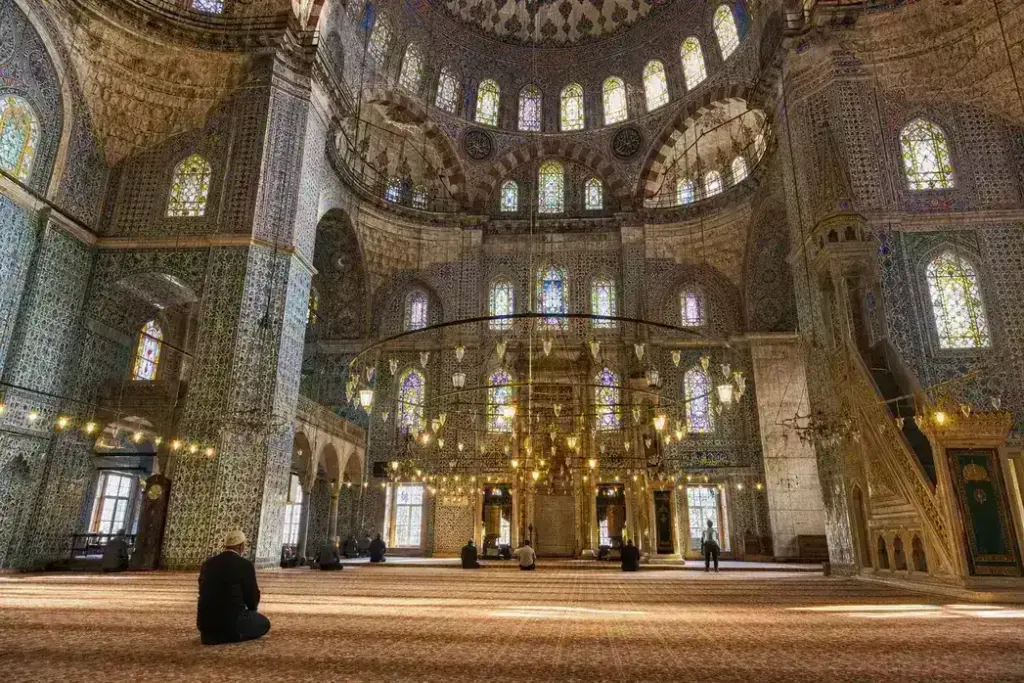
Whether you’re Muslim looking to pray, or a respectful visitor curious to explore Istanbul’s extraordinary mosque architecture, finding prayer spaces is straightforward once you know the rhythm. This guide explains which spaces are open to visitors, how prayer times work, and what to expect when you arrive. The recommended approach: visit major mosques between prayer times on weekday mornings, dress appropriately, and move quietly through the prayer hall.
Most of Istanbul’s 3,000+ mosques are free and welcome respectful visitors outside the five daily prayer periods. Planning around prayer times and understanding basic etiquette will make your visit smooth and rewarding.
Quick answer: Visit Istanbul's major mosques free of charge between the five daily prayer times. Most close for 30–90 minutes per prayer. Dress to cover shoulders and knees (women should cover hair too), remove shoes before entering the carpet, and plan visits for early mornings (after 8:30 AM) or mid-afternoons (1:30–3:30 PM). A typical visit takes 30–45 minutes.
At a Glance
| Total time | 30–45 minutes per mosque; add 20–30 minutes for security queue at major mosques |
|---|---|
| Typical cost | free |
What You Need Before You Start
- Appropriate dress: shoulders and knees covered, head covering for women
- Lightweight scarf or headscarf (many mosques provide them free at entrance)
- Easy-to-remove shoes or clean socks
- Knowledge of current prayer times for Istanbul
- Awareness that the Blue Mosque and Hagia Sophia close on Friday mornings
Compare Your Options
| Option | Duration | Price | Notes |
|---|---|---|---|
| Major mosque visit (Blue Mosque or Suleymaniye) | 1–1.5 hours including queue and visit | Free | Best for first-time visitors. Clear visitor areas, multiple daily prayer windows, predictable opening hours (typically 8:30 AM until one hour before dusk). Blue Mosque closes Fridays until 2:30 PM; Suleymaniye opens Friday afternoons only. Security queue: 20–60 minutes depending on season. |
| Hagia Sophia prayer area | 20–30 minutes | Free | The ground floor is an active prayer area, free to enter for Muslim worship. Tourists access the upper gallery (Byzantine mosaics) via paid ticket. Non-Muslim visitors are restricted during Friday prayer and cannot access ground floor during prayer times. |
| Small neighborhood mosque | 15–30 minutes | Free | Quieter and more local than major tourist mosques. May have less predictable visitor arrangements; check with staff upon arrival. Some close outside prayer times. Good for experiencing daily prayer life outside tourism circuits. |
| Prayer space at airport or hotel | 10–20 minutes | Free | Istanbul airports and major hotels have dedicated prayer rooms (sometimes labeled Dua Odası or Namaz Odası) available to all visitors. Facilities are clean, quiet, and designated for worship. Check with hotel reception or ask at the airport information desk for location. |
| Friday congregational prayer (Jumu'ah) as an observer | 1–1.5 hours | Free | Fridays at midday feature the main weekly sermon and prayer, drawing many worshippers. Major mosques close to tourists 12:00 PM–2:30 PM. Smaller mosques may remain partially open. Observe from designated areas only. Most visitors choose other days due to crowds and access restrictions. |
₺ budget · ₺₺ moderate · ₺₺₺ upscale · ₺₺₺₺ splurge. Price levels are estimates compared with typical prices for visitors.
Step-by-Step Instructions
Step 1: Check prayer times before you leave
Prayer times change daily according to sunrise and sunset. Look up the five daily prayer times for Istanbul on a prayer-time website or check the posted board at the mosque entrance. Note the approximate duration (typically 30–45 minutes) for each prayer. Plan to avoid arriving within 15 minutes of a prayer time.
Tip: Bookmark a prayer-times website on your phone so you can check times as you move between mosques during the day.
Step 2: Choose a mosque to visit
Major mosques like the Blue Mosque (Sultanahmet Camii), Suleymaniye Mosque, and Hagia Sophia are most welcoming to visitors and have clear visitor areas. Smaller neighborhood mosques are open but may have less predictable arrangements. For your first visit, start with a major mosque in Sultanahmet (the historic peninsula), where several are within walking distance.
Tip: Early mornings on weekday Tuesdays, Wednesdays, and Thursdays are the quietest times. Avoid Fridays (when major mosques close until 2:30 PM) and weekends.
Step 3: Dress appropriately before arriving
All visitors must cover shoulders and knees. Women must cover their hair inside the prayer area (free scarves are available at most major mosques, but bringing your own is safer). Men must wear trousers; shorts above the knee are not acceptable. Avoid sleeveless tops, deep necklines, and transparent fabrics. Wear shoes that are easy to remove.
Tip: Pack a lightweight scarf even if the mosque advertises free headscarves. It gives you control and speeds up entry.
Step 4: Arrive at the visitor entrance
Major mosques have a separate entrance for tourists, distinct from the main worshipper entrance. At the Blue Mosque, enter from the western side (Hippodrome side), not the south gate. At Suleymaniye, follow the signs to the visitor entrance. Security screening is mandatory at all major mosques; queues can reach 30–60 minutes at peak times in summer.
Tip: Arrive at opening time (usually 8:30 AM) to avoid midday queues. Check the posted board at the south entrance of the Blue Mosque to confirm the mosque is not about to close for prayer.
Step 5: Remove your shoes and enter the prayer hall
Before stepping onto the carpeted prayer area, remove your shoes completely. Most mosques provide plastic bags or shoe racks; keep your shoes with you in the bag. Never step onto the carpet with shoes on—it is a serious breach of respect because worshippers touch their foreheads to the carpet during prayer.
Tip: Wear socks in case the floor is cold. Bring indoor shoes or slip-ons if you prefer not to go barefoot.
Step 6: Stay in the visitor area and observe quietly
Tourists are directed to the rear and sides of the prayer hall, away from the active worship area. Stand quietly and observe the architecture. Keep your voice at a whisper or lower. Turn your phone to silent. Do not walk directly in front of people who are praying; pass behind them instead. Most major mosques mark visitor boundaries with barriers or railings.
Tip: In the Blue Mosque, stand near the rear wall for the fullest view of the central dome and stained-glass windows. In Suleymaniye, the courtyard offers calm views without crowding.
Step 7: Take photos respectfully
Photography is generally allowed without flash in the main prayer hall. Never photograph people who are actively praying or position yourself dramatically in front of worshippers. If a staff member asks you to stop, comply immediately. At Hagia Sophia, upper-gallery access (which contains the famous Byzantine mosaics) requires a paid ticket; the ground floor remains a free prayer area.
Tip: Take photos of the architecture and details during quiet periods. Avoid shooting during active prayer, especially the Friday noon service.
Step 8: Leave before the next prayer begins
Watch for signs that prayer is approaching: you may hear the call to prayer (ezan) from the minarets, or staff may gently ask visitors to leave. Exit calmly and put your shoes back on outside the prayer area. The mosque will close to tourists for the duration of the prayer (typically 30–90 minutes), then reopen for sightseeing.
Tip: If prayer starts while you are inside, small neighborhood mosques may allow you to sit quietly in a corner; major mosques will ask you to leave until the prayer ends.
Common Mistakes to Avoid
- Arriving too close to prayer time. If you arrive 15 minutes before prayer, you will be turned away and must wait outside or leave. Check prayer times and arrive with a 30-minute buffer.
- Wearing shoes into the prayer hall or standing on the carpet with shoes on. This is a serious disrespect. Always remove shoes completely before stepping onto the carpeted area, and keep them with you in a bag.
- Not understanding that mosques close completely during prayer, not just partially. When the call to prayer sounds, tourists must exit the prayer hall entirely. You cannot simply move to a side area and remain inside.
- Treating the mosque as a photography location rather than an active place of worship. Positioning yourself in front of praying worshippers, using flash, or taking repeated selfies will be seen as disrespectful and may result in being asked to leave.
- Dressing inadequately despite signs. Shoulders, knees, and (for women) hair must be covered before entering. If you arrive underdressed, the mosque may not provide cover-ups; bring your own scarf.
- Visiting on Friday morning without checking closure times. The Blue Mosque and Suleymaniye close until 2:30 PM on Fridays for the main congregational prayer. Plan to visit Friday afternoons if visiting at all, or choose another day.
- Ignoring staff guidance about visitor boundaries or trying to enter restricted areas. Listen to mosque staff; they may redirect you to appropriate visitor routes that change during busy periods or maintenance work.
Tickets, Payment and Booking
Entry to major mosques and prayer spaces in Istanbul is free and requires no advance booking. Tickets and payment: No tickets are sold for general visits to mosques. The exception is Hagia Sophia’s upper gallery (Byzantine mosaics), which requires a paid ticket for non-Muslim visitors; the ground floor prayer area remains free for Muslim worship. Payment methods: Foreign visitors can use debit cards, credit cards, and Turkish lira at ticketed attractions. Apps and prayer times: Download a prayer-times app or check prayer.com for daily times. Most major mosques post current prayer times at the entrance and sometimes online. Warnings: Avoid unofficial tour guides or touts offering ‘skip-the-line’ access; security queues move steadily on their own. Do not accept offers to buy fake tickets. Entrance is always free at major mosques; if someone demands payment, it is a scam.
Istanbul Vibes Tips
- Early mornings (8:30–11:30 AM) on Tuesdays, Wednesdays, and Thursdays are significantly quieter than afternoons, weekends, and Fridays. This is the best time to experience the architecture without crowds and with minimal security-queue wait.
- Bring a small bag with your scarf and other items while exploring. Most visitors carry shoes in a plastic bag provided at the entrance, but having your own lightweight bag is faster and cleaner.
- If you want to observe actual prayer (not just the architecture), arrive 10–15 minutes before prayer time and watch from the visitor area as people gather and pray. This is respectful viewing. Leave before prayer begins if the space is crowded or you feel like an outsider.
- The call to prayer (ezan) is broadcast from minarets and sounds dramatic to first-time visitors. It signals the start of a prayer period. When you hear it, prepare to leave the prayer hall within the next few minutes or watch for staff guidance.
- Smaller, less-touristed mosques in residential neighborhoods (away from Sultanahmet) often have friendlier staff and more relaxed visitor policies. These are excellent for a calmer, more authentic experience if you're comfortable navigating without clear tourist signage.
- If you're genuinely interested in learning more, some major mosques offer guided tours (often listed on their websites or through tourism operators). Tours provide historical context and sometimes include skip-the-line access, though they cost more than simply visiting independently.
Explore Nearby How to Find Prayer Spaces in Istanbul
Related guides
 Best Neighborhoods for First-Time Visitors: Where to Stay in Istanbul
Main image: AI-generated illustration. It may not show the place exactly as it looks.
 Sultanahmet: Istanbul’s Historic Heart and Essential First Stop
Main image: AI-generated illustration. It may not show the place exactly as it looks.
 Beyoğlu: Istanbul’s Creative Heart and Waterfront Soul
Main image: AI-generated illustration. It may not show the place exactly as it looks.
 Best Walking Neighborhoods: Where to Explore Istanbul on Foot
Main image: AI-generated illustration. It may not show the place exactly as it looks.
 Laser Skin Resurfacing: How It Works, Recovery and What to Know
Main image: AI-generated illustration. It may not show the place exactly as it looks.
More guides
 Digital Nomad Istanbul: Best Coworking Spaces, Cafes and Remote Work Tips
Main image: AI-generated illustration. It may not show the place exactly as it looks.
 How to Find a Pharmacy in Istanbul
Main image: AI-generated illustration. It may not show the place exactly as it looks.
 How to Find Lost Property on Istanbul Public Transport
Main image: AI-generated illustration. It may not show the place exactly as it looks.
Browse more: All Etiquette and Safety · All How-To
FAQ
Can non-Muslims visit mosques in Istanbul?
Yes. Non-Muslim visitors are generally welcome in Istanbul's historic and active mosques outside of prayer times. You do not need to pray, follow Islamic practices, or have any religious background. You are simply expected to dress modestly, remove your shoes, keep quiet, and respect the building as an active place of worship.
Are mosques free to enter?
Yes, entry to major mosques is free. No ticket, booking, or Museum Pass is required. The only exception is Hagia Sophia's upper gallery (which contains Byzantine mosaics and is accessed by paid ticket for non-worshippers). The ground floor remains a free prayer area for Muslim worship.
How many times a day do mosques close for prayer?
Five times daily: Fajr (before sunrise), Dhuhr (around midday), Asr (mid-afternoon), Maghrib (sunset), and Isha (evening). Each prayer period closes the mosque to tourists for approximately 30–90 minutes. Friday's midday prayer (Jumu'ah) is longer and attracts larger congregations, so major mosques may close until 2:30 PM.
What do I need to wear to enter a mosque?
Cover your shoulders and knees at minimum. Women must cover their hair inside the prayer area (scarves are usually available free at mosque entrances, but bring your own to be safe). Men must wear trousers; shorts are not acceptable. Avoid sleeveless tops, deep necklines, and transparent fabrics. Shoes must be removed before stepping onto the prayer carpet.
Do I need to remove my shoes inside the entire mosque?
You must remove your shoes before stepping onto the carpeted prayer area. The courtyard and some areas outside the main prayer hall may allow shoes. Always follow the marked boundaries and staff guidance. Never step on the prayer carpet with shoes—it is deeply disrespectful.
Can I take photos inside mosques?
Yes, photography is generally allowed in the main prayer hall without flash. However, do not photograph people who are actively praying, position yourself dramatically in front of worshippers, or use flash. Be respectful and step back if a staff member asks you to stop photographing.
What time should I visit a mosque?
Visit between prayer times. The easiest windows are typically 9:00–11:30 AM, 1:30–3:30 PM, and late afternoons (around 4:00 PM onward, depending on sunset). Avoid Fridays unless visiting after 2:30 PM. Weekday mornings on Tuesdays, Wednesdays, and Thursdays are the quietest.
What happens if prayer starts while I am inside?
At major tourist mosques like the Blue Mosque and Suleymaniye, staff will politely ask you to exit until the prayer ends. At smaller neighborhood mosques, you may be allowed to sit quietly in a corner and wait. Either way, never remain in the main prayer area during prayer or disrupt worshippers.
Istanbul Vibes is a one-person project. A coffee keeps it going

Take this guide with you
Get a free PDF of this guide to print or read offline: key facts, tips and a map link on a few clean pages.
Report an issue on this page
How we research and update our guides
About this guide: AI assistance and accuracy
This guide is created with the help of AI and is based on official sources where available. Mistakes can still happen. Opening hours, prices, rules and other details are given to the best of our knowledge as of the date shown and can change without notice. It offers general recommendations only, not professional, legal or travel advice. Please confirm important details with the official source before you travel; you are responsible for your own plans and decisions.
* Affiliate link: as an Amazon Associate we earn from qualifying purchases at no extra cost to you.
