

Şıra is a beloved traditional Turkish beverage that appears on tables across Istanbul and the country, especially during grape season. This how-to guide shows you how to make authentic şıra at home—a refreshing, lightly fermented drink that requires simple ingredients and no special equipment.
The recommended method uses fresh grapes, a few days of gentle fermentation at room temperature, and basic kitchen tools. You’ll achieve a naturally sweet, slightly tangy drink with a subtle fizz that captures Turkish tradition in a glass.
Quick answer: To make Grape Juice Şıra, wash fresh grapes, crush them by hand, strain the juice, add sugar and yeast, then cover and ferment at room temperature for 3–5 days until it develops a light fizz. Total time about 4 days active time under 1 hour.
At a Glance
| Type | Drinks |
|---|---|
| Origin | Şıra is a traditional Turkish non-alcoholic drink made from slightly fermented grape juice. It tastes sweet due to its high fructose content and has a terracotta colour. It is mostly served with Iskender kebab. A flavored version called hardaliye is served in the Marmara region, where şıra is aromatized with mustard seeds and cherry leaves for 15 days. |
| Servings | 2–4 servings |
| Total time | Preparation 45 minutes; fermentation 3–5 days |
| Difficulty | Easy |
History and Story of Grape Juice (Şıra)
Şıra is a traditional Turkish non-alcoholic drink made from slightly fermented grape juice. The beverage represents centuries of Ottoman and Turkish culinary tradition, appearing especially during grape harvest season in autumn. It is mostly served with Iskender kebab. Regional variations exist across Turkey, with hardaliye, a flavored version in the Marmara region that is aromatized with mustard seeds and cherry leaves for 15 days.
Ingredients
- 1.5 kg fresh grapes (white or dark varieties)
- 1.5 liters water
- 100 g sugar
- 1 teaspoon active dry yeast
- 1 tablespoon lemon juice
- Pinch of salt
How Grape Juice (Şıra) Is Made
Step 1: Wash and prepare the grapes
Rinse fresh grapes thoroughly under cool running water. Remove all stems and any damaged fruit. Pat dry if needed. Use about 1.5 kg of fresh grapes—white varieties are traditional, though dark grapes work equally well. This step ensures clean juice without debris or unwanted flavors.
Tip: Do not leave stems or leaves attached; they can spoil the fermentation.
Step 2: Crush the grapes
Place the cleaned grapes in a large bowl or pot. Crush them by hand or use a potato masher, pressing firmly for 8–10 minutes until the grapes are well broken and their juice is fully released. You should end up with about 1.5 liters of fresh juice combined with crushed pulp.
Tip: Use a wooden tool or your hands rather than metal, as metal can interfere with fermentation.
Step 3: Strain and extract the juice
Place a fine mesh strainer lined with cheesecloth over a clean, large glass jar or bowl. Pour the crushed grapes into the strainer and press down firmly with a spoon to extract as much liquid as possible. Discard the skins, seeds, and pulp. You should have roughly 1.5 liters of clear to translucent juice.
Tip: Do not leave grape skins or seeds in the liquid, as they affect fermentation and flavor.
Step 4: Activate the yeast
Dissolve 1 teaspoon of active dry yeast in a small bowl with 2 tablespoons of warm water (around 37°C, or comfortably warm to touch but not hot). Add a pinch of sugar to feed the yeast. Let it sit for 5–7 minutes until it becomes foamy and bubbly with a yeasty smell. Do not use hot water, as it will kill the yeast.
Tip: A foamy top means the yeast is alive and ready to work.
Step 5: Combine ingredients
Pour the strained grape juice into the clean glass jar. Add 100 g sugar, the activated yeast mixture, 1 tablespoon lemon juice, and a pinch of salt. Stir gently with a wooden spoon for 2–3 minutes until the sugar completely dissolves and all ingredients are well combined. The liquid should be smooth and uniform.
Tip: Do not use metal utensils; they can interfere with fermentation chemistry.
Step 6: Begin fermentation
Cover the jar loosely with clean cheesecloth secured with a rubber band or string. This allows air circulation and prevents dust or insects from entering while letting carbon dioxide escape. Place the jar in a cool, dark place at room temperature (18–22°C). Within 24 hours, you should see gentle bubbling and smell a tangy aroma developing.
Tip: Never seal the lid tightly; pressure can build up dangerously.
Step 7: Monitor and taste
Check the jar daily for bubbling activity. After 3–5 days, the şıra should taste mildly tangy with gentle effervescence (slight fizz). Taste a small sample to judge when fermentation reaches your preferred level—earlier for milder flavor, longer for more tang. Do not let it ferment more than 5–6 days or it becomes too sour and alcoholic.
Tip: Taste-testing helps you learn your preference; the fermentation window is forgiving.
Step 8: Strain and chill
Once fermentation is complete, strain the şıra through a fine mesh sieve to remove any sediment, yeast particles, or foam. The liquid should be clear and lightly fizzy. Transfer to clean glass bottles or jars and refrigerate immediately. This stops the fermentation and preserves the drink's tangy-sweet flavor.
Tip: Chilled şıra keeps for 1–2 weeks in the refrigerator in a sealed bottle.
Variants
- Hardaliye: Şıra aromatized with mustard seeds and cherry leaves, a Marmara regional specialty usually served at special occasions as an appetizer
- Light şıra: Fermented for only 1–2 days for a fresher, less tangy taste
- Dark grape şıra: Made with dark or black grapes instead of white, producing deeper color and richer flavor
- Spiced şıra: Infused with cinnamon, clove, or other spices after fermentation for additional flavor
Common Mistakes to Avoid
- Using metal spoons or containers during fermentation can react with yeast and spoil the flavor or texture. Always use glass, ceramic, or wooden tools.
- Sealing the jar tightly during fermentation traps carbon dioxide and creates dangerous pressure that can burst the bottle. Use cheesecloth or a loose cover instead.
- Fermenting at temperatures above 25°C or below 15°C slows or disrupts the process. Keep the jar in a cool, dark, room-temperature spot for even fermentation.
- Leaving grape skins and seeds in the juice makes it cloudy, affects taste, and can introduce unwanted flavors. Always strain thoroughly after crushing.
- Over-fermenting (more than 5–6 days) produces a drink that is too sour and gains unwanted alcohol content. Taste after day 3 and stop when you reach the flavor you prefer.
- Using boiling-hot water to activate yeast kills it instantly. Warm water should feel comfortably warm to your finger, never hot.
How to Order and Eat It
Şıra is served ice-cold in small glasses, traditionally alongside Iskender kebab where its acidity cuts through the richness of the meat. Pour it chilled and drink it fresh. The slight fizz and natural sweetness make it refreshing on warm days. Some people add a fresh mint sprig or a few grapes for garnish. It pairs well with any grilled meat, cheese, or simply as a standalone beverage between meals.
To order: Bir bardak şıra, lütfen [Bir bardak şıra, lütfen]
Where to Try Grape Juice (Şıra)
 Kebapçı İskender İskender kebab (döner on pide with tomato sauce, butter and yoghurt)
Main image: AI-generated illustration. It may not show the place exactly as it looks.
 Vefa Bozacısı Turkish Traditional Drinks
Main image: AI-generated illustration. It may not show the place exactly as it looks.
Istanbul Vibes Tips
- Fermentation happens best when grapes are at peak ripeness and sweetness. Harvest or buy grapes in early to mid-autumn when they are full-flavored and abundant in Istanbul's markets.
- You can make şıra without added yeast by relying on natural yeasts present on grape skins, though it takes longer (5–7 days) and is less predictable. Adding commercial yeast gives more control and consistent results in 3–5 days.
- If your first batch tastes too sweet, use less sugar next time. If it's too sour, stop fermentation earlier. Each batch teaches you your preference.
- Do not drink şıra that smells off, shows mold on the surface, or tastes rotten. Signs of spoilage are unmistakable and the batch should be discarded.
- White grapes are the traditional choice in Turkey and ferment reliably. Dark grapes work too but produce a deeper color that some find less traditional-looking.
- Şıra keeps refrigerated for 1–2 weeks but gradually loses its fizz. The flavor actually deepens slightly over a few days. Serve it within the first week for the best texture and balance of tang and sweetness.
Where to Find Grape Juice (Şıra) in Istanbul
Related guides
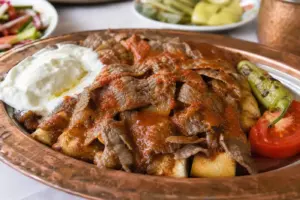 Iskender Kebab: How to Make Turkey’s Iconic Dish
Main image: AI-generated illustration. It may not show the place exactly as it looks.
 Turkish Tea: How to Brew and Serve It Like Istanbul Locals
Main image: AI-generated illustration. It may not show the place exactly as it looks.
 Turkish Coffee: How to Make It, Its History and Ritual
Main image: AI-generated illustration. It may not show the place exactly as it looks.
 Ayran: How to make Turkish yogurt drink at home
Main image: AI-generated illustration. It may not show the place exactly as it looks.
Browse more: All Food & Drink · All Other
FAQ
Is şıra alcoholic?
Şıra is a Turkish non-alcoholic drink made from slightly fermented grape juice. Fermentation does produce trace amounts of alcohol (typically under 1%), making it non-alcoholic by most standards. If you are concerned, ferment for only 1–2 days to minimize any alcohol production.
How is şıra different from plain grape juice?
Plain grape juice is unfermented and purely sweet. Şıra undergoes gentle fermentation that produces natural carbonation (fizz), a slightly tangy flavor, and subtle complexity. The fermentation process is what makes şıra distinct and gives it its characteristic taste.
Can I make şıra without yeast?
Yes, you can rely on natural yeasts on the grape skins. Omit the added yeast and let the juice ferment for 5–7 days at room temperature, covered loosely. The downside is less predictability and potential for spoilage. Adding commercial yeast is safer and faster (3–5 days).
How do I know when fermentation is finished?
Taste a small sample after day 3. Fermentation is done when the drink develops a mild tang and gentle fizz that you prefer. Most batches reach this point in 3–5 days. If you like more tang, wait longer; if you prefer less, stop earlier. Stop by refrigerating immediately.
Can I use grapes other than the ones I see in Istanbul markets?
Yes, any fresh grape variety works, though white grapes are traditional and ferment predictably. Dark grapes produce a deeper color and richer flavor. Avoid very small ornamental grapes or grapes treated with pesticides. Farm-fresh or farmers' market grapes are best.
What does şıra taste like?
It tastes sweet due to its high fructose content. The flavor is naturally sweet with a subtle tangy bite and mild fizz. If you ferment longer, it becomes more tangy and less sweet. The exact taste depends on the grape variety, sugar added, and how long you ferment.
Can I adjust the sweetness?
Yes, use less sugar (as little as 75 g) for a drier, more tangy result, or more sugar (up to 150 g) for a sweeter drink. Remember that fermentation also consumes some sugar, so the final drink is often less sweet than the base mixture. Taste and adjust in your next batch.
Is there mold in my jar? How do I tell?
True mold appears as fuzzy, discolored patches (white, gray, or green) on the surface or sides of the jar. A light foam or sediment is normal fermentation. If you see true mold, discard the entire batch. Mold means the fermentation went wrong and the drink is unsafe.
Istanbul Vibes is a one-person project. A coffee keeps it going
Looking for more on this? How to navigate Moscow offline with maps and translation apps (Moscow Vibes)

Take this guide with you
Get a free PDF of this guide to print or read offline: key facts, tips and a map link on a few clean pages.
Report an issue on this page
How we research and update our guides
About this guide: AI assistance and accuracy
This guide is created with the help of AI and is based on official sources where available. Mistakes can still happen. Opening hours, prices, rules and other details are given to the best of our knowledge as of the date shown and can change without notice. It offers general recommendations only, not professional, legal or travel advice. Please confirm important details with the official source before you travel; you are responsible for your own plans and decisions.
* Affiliate link: as an Amazon Associate we earn from qualifying purchases at no extra cost to you.
