

Built for Mihrimah Sultan, daughter of Sultan Suleiman the Magnificent and wife of Grand Vizier Rüstem Pasha, the Mihrimah Sultan Mosque was designed by Mimar Sinan and built between 1546 and 1548. The mosque sits prominently on the Bosphorus waterfront in Üsküdar, the historic center on Istanbul’s Asian shore.
Known locally as the İskele (Jetty) Mosque because of the ferry landing nearby, this early masterpiece by the empire’s greatest architect has remained a functioning place of worship and a key landmark in the neighborhood for nearly five centuries.
Quick Facts
| Turkish name | Mihrimah Sultan Camii |
|---|---|
| Built / opened | 1548 |
| Architect(s) | Mimar Sinan |
| Address | Mimar Sinan Caddesi, Üsküdar, Istanbul Google MapsApple MapsYandex Maps |
| District | Üsküdar |
| Admission | Free |
| Best time to visit | Spring (April–May) and autumn (September–October) offer the most pleasant weather and light for photography. Summer can be very hot and crowded. Winter is quieter and the light is softer, but afternoons shorten.Visit outside prayer times for unobstructed access to the interior. Prayer times change seasonally; they are earlier in winter and later in summer. Morning visits (before 10:00) are typically less busy and offer better light on the western façade.Avoid Fridays between noon and late afternoon, when congregational prayers draw large numbers of worshippers and the mosque may be closed to tourists. |
| Website | uskudar.bel.tr/en/main/pages/mihrimah-sultan-mosque/315 |
What Is (and Isn't) Part of a Visit to Mihrimah Sultan Mosque?
| Part | Status | Notes |
|---|---|---|
| Mosque prayer hall and interior | Included in the standard ticket | Open to respectful visitors outside of prayer times; modest dress required, shoes removed. |
| Courtyard and ablution fountain | Included in the standard ticket | Accessible during visiting hours; part of the original complex. |
| Madrasa complex and ancillary buildings | Separate ticket or institution | The madrasa and other parts of the original complex are not always open to general visitors; inquire locally for access. |
| Mihrimah Sultan Mosque, Edirnekapı | Outside / not part of it | A second, larger mosque with the same name located on the European side in the Edirnekapı neighborhood; built 1563–1570. This is a different building and a separate visit. |
| Photographs and sketching | Included in the standard ticket | Photography permitted for personal use outside prayer times; respect ongoing worship. |
Why Visit Mihrimah Sultan Mosque?
The Mihrimah Sultan is one of Sinan’s early mosques, where he made a structural experiment, choosing to flank the main dome on three sides with three half-domes—the first time Sinan used half-domes. The open portico is surmounted by five domes and carried by six columns along its northwest side. The mihrab is a marble niche with muqarnas carvings above. The waterfront location and relative quietness make it an ideal escape from the crowds of the European side.
How Mihrimah Sultan Mosque Is Laid Out
The mosque complex, built on a sloping site along İskele Square in Üsküdar, has a rectangular plan aligned on the northeast-southwest axis and is entered from a portal on the northwest, the central bay of a five-bay portico. Running along the northwest side of the mosque is a secondary arcade, carried over pointed arches resting on relatively slim columns. Inside the courtyard stands a madrasa, an infirmary, a school, and baths as part of the complex. The waterfront sits just beyond the southern side of the mosque; the Üsküdar ferry terminal is a short walk away.
Highlights of Mihrimah Sultan Mosque
The Half-Domes and Main Dome
This mosque was one of Mimar Sinan's structural experiments: he chose to flank the main dome on three sides with three half-domes, the first time he used this configuration. Inside, the domes and semi-domes are beautifully painted and there are a number of fine stained-glass windows. The interplay of light through the windows illuminates the spatial complexity Sinan created.
Tip: View the dome from the western side inside the mosque where the light best reveals the painted decoration and the structural arrangement of the half-domes.
The Five-Bay Portico
The portico is surmounted by five domes and carried by six columns along its northwest side. This covered entrance space serves as a transition between the waterfront and the prayer hall, and its columns and vaulting are an excellent example of Ottoman classical portico design.
Tip: Stand in the portico and look back toward the water; the framed view of the Bosphorus beyond the columns is one of the best perspectives of the building's relationship to its setting.
The Marble Mihrab with Muqarnas
The mihrab is a marble niche with muqarnas carvings above. This niche indicates the direction of prayer toward Mecca. The carved stone work is fine detail from the 1540s, representing the quality of Ottoman craftsmanship in the age of Suleiman.
Tip: Approach the mihrab on the southwest wall only during open visiting hours outside of prayer times. The carving detail is best seen in morning light coming through the side windows.
The Muezzin's Platform
The muezzin's platform (muezzin mahfili), which is carried over five piers, is articulated as a small square projection southwest of the entrance. This is where the muezzin (cantor) traditionally stands to lead prayers, and it showcases Sinan's careful spatial planning.
Tip: This platform is inside the prayer hall but visible from the entrance; it is a smaller, delicate feature that shows Sinan's attention to function within grand architectural spaces.
Waterfront Setting at İskele Square
The mosque sits on a sloping site along İskele Square in Üsküdar. The raised platform and waterfront location have always been integral to its identity; ferries arrive and depart constantly just beyond the mosque walls, creating a living connection between sacred space and urban commerce.
Tip: Walk around to the eastern and southern sides of the building to see how it rises above the water and dominates the waterfront. This view is best in late afternoon when the side elevation becomes visible.
The Ablution Fountain in the Courtyard
In the courtyard stands a traditional ablution fountain where worshippers perform ritual washing before prayer. The fountain is part of the integrated külliye (complex) design that made Ottoman mosques self-contained religious and social institutions.
Tip: The courtyard is open to visitors during non-prayer hours; the fountain is most photogenic in morning light when shadows define its architectural details.
Atmosphere
The waterfront location creates a distinctive atmosphere. The mosque is not a mere historical edifice but also a functioning mosque serving the local community, always full on Friday afternoons when adherents attend the Friday prayer. Ferry horns, water sounds, and the movement of boats create a maritime backdrop. The best spot to appreciate the building is behind the mosque in one of the cafes in the Ottoman nostalgia buildings, where you can see the complex interplay of domes and arches from a distance. Outside prayer times, the interior is cool and contemplative, with light filtering through windows and illuminating the painted surfaces.
History of Mihrimah Sultan Mosque
The Mihrimah Sultan Mosque was built for Mihrimah Sultan, daughter of Sultan Suleiman the Magnificent and wife of Grand Vizier Rüstem Pasha. It was designed by Mimar Sinan and built between 1546 and 1548. This was the earlier of the two Friday mosques in Istanbul commissioned by Mihrimah Sultan.
The Mihrimah Sultan is one of Sinan’s early mosques, where he made a structural experiment, choosing to flank the main dome on three sides with three half-domes. This was the first time Sinan used half-domes, with the end result that the spatial organization and the structural system of the mosque are not perfectly resolved. The asymmetry in the structure entailed both a heavy structure and an unusual configuration on the southeast elevation, which ended abruptly.
The complex included not only the mosque but also a madrasa (religious school), an infirmary, a school, and baths, reflecting the Ottoman ideal of the külliye—a comprehensive religious and charitable institution. The waterfront location near the ferry terminal made it a prominent civic and spiritual landmark.
Over the centuries, the mosque endured earthquakes and required restoration work. It remains one of Sinan’s most distinctive designs, notable both for its architectural innovation and for its enduring role in the life of Üsküdar’s waterfront community.
Legends and Myths about Mihrimah Sultan Mosque
The Two Mosques for Sun and Moon
Legend – historically unreliable. According to a myth, Mimar Sinan built the second mosque at Edirnekapı where exactly the sun disappears in Istanbul in March. With this, Mimar Sinan, famous with his symbolism, built two mosques in Istanbul and dedicated them to Mihrimah Sultan whose name means 'sun and moon' in Persian. On March 21st—the birthday of Mihrimah—while the sun goes down from Mihrimah Sultan Edirnekapı Mosque, the moon rises from the other Mihrimah Sultan Mosque located in Üsküdar.
Sinan's Unrequited Love
Legend – historically unreliable. A romantic legend holds that Mimar Sinan designed the second Mihrimah Sultan Mosque in Edirnekapı without the prior notice of Sultan Suleiman because he harbored feelings for the princess. Whether or not the architect admired her, he devoted his talents to creating two architectural masterpieces bearing her name—a rare honor in Ottoman architectural history.
Tickets and Booking for Mihrimah Sultan Mosque
| Ticket | Price | Includes |
|---|---|---|
| General entry | Free | Access to the mosque prayer hall, courtyard, and fountain during open hours outside prayer times. |
₺ budget · ₺₺ moderate · ₺₺₺ upscale · ₺₺₺₺ splurge. Price levels are estimates compared with typical prices for visitors.
There is no ticket or advance booking required. The mosque is open daily and free to enter. Simply arrive during the posted opening hours (as of October 2026, typically 06:00–17:00, though hours may vary seasonally).
What to know before you go:
- The mosque closes during the five daily prayer times (Fajr, Dhuhr, Asr, Maghrib, and Isha). Prayer times vary by season; check a prayer time app for exact times on your visit date.
- Visitors are welcome during open hours outside of prayers, but respectful dress is required: remove shoes, cover shoulders and knees, and women should cover their hair.
- No flash photography inside the prayer hall.
- Donations to the mosque’s upkeep are welcomed but not required.
For up-to-date opening hours and prayer times, check the official Üsküdar municipality website or ask at the Üsküdar ferry terminal, which is just steps away.
Suggested itineraries Mihrimah Sultan Mosque
30–45 minutes
Walk directly from the Üsküdar ferry terminal to the mosque entrance. Spend 15–20 minutes viewing the portico and courtyard, then enter the prayer hall to see the domes, windows, and mihrab. Exit via the same entrance and walk around the exterior to observe the building's profile from different angles, especially from the water-facing side.
1–1.5 hours
Begin at the ferry terminal and walk to the mosque. Spend time in the courtyard and interior. Then explore the surrounding neighborhood: walk to the nearby Şemsi Pasha Mosque (a 5-minute walk south), then return to the waterfront for tea or coffee in one of the cafés overlooking the Bosphorus and the mosque's silhouette.
Half day (3–4 hours)
Start with the Mihrimah Sultan Mosque. After your visit, explore Üsküdar's other landmarks: the Yeni Valide Mosque, Selimiye Mosque, and the Maiden's Tower viewpoint. Lunch in the Üsküdar waterfront area. If interested in Ottoman architecture, this allows time to absorb multiple examples from different periods. Consider an afternoon boat tour of the Bosphorus departing from the Üsküdar pier.
How to Get to Mihrimah Sultan Mosque
The mosque is located on the Bosphorus waterfront in central Üsküdar, very close to the main ferry terminal.
From the European side (Sultanahmet or Beyoğlu): Take a ferry from Eminönü or Karaköy to Üsküdar. The ferry ride takes about 15 minutes. Exit the ferry terminal and look for the mosque’s silhouette on the waterfront—it is a 2–3 minute walk south. Follow the waterfront promenade or ask locals for ‘İskele Camii’ (Jetty Mosque).
By metro: The nearest metro stations are Üsküdar and Kadıköy on the Asian-side lines, but both are about 1 km away. A taxi or walking may be easier from other parts of Üsküdar.
By taxi or car: Ask the driver for ‘Mihrimah Sultan Camii’ or ‘İskele Camii’ on Mimar Sinan Street in Üsküdar. Limited street parking is available nearby.
Accessibility
The mosque sits on a raised platform with steps leading up from street level. The portico has multiple columns but no handrails; access may be challenging for visitors with limited mobility or those using wheelchairs. The interior prayer hall is on the same level as the portico, so once inside there are no further steps. There are no dedicated accessible facilities. Visitors with mobility concerns should inquire locally about assistance or alternative viewing options.
Food Nearby
The area immediately around the mosque is primarily residential and devotional. However, the Üsküdar waterfront promenade, a short walk away, has numerous cafés and small restaurants. Look for traditional Turkish breakfast spots (kahvaltı), tea gardens overlooking the Bosphorus, and casual seafood restaurants near the ferry terminal. Grilled fish sandwiches and pastries are popular with locals. Many establishments are open from early morning through evening.
What to Bring
Bring a headscarf or light shawl if you are a woman, as head covering is expected inside the mosque. Comfortable walking shoes are essential, as you will remove them before entering the prayer hall. A light layer or jacket is useful even in warm weather, as the interior stays cool. Bring water, especially in summer. Small coins or notes are useful for donations. A camera or phone for photographs is welcome outside prayer times.
Best Views and Photo Spots of Mihrimah Sultan Mosque
The portico from the courtyard
Looking back toward the portico from inside the courtyard frames the five domes and six columns against the Bosphorus light. The arches, columns, and reflected light on stone create strong compositional lines.
Best time: Late morning (10:00–12:00) when sun illuminates the portico from the side, casting shadows that define the architectural details.
The waterfront southern side
From the small street or waterfront café area south of the mosque, the building's profile against the water and distant Asian shore is dramatic. The half-domes on the side elevation become visible and define the building's form.
Best time: Late afternoon (16:00–17:00) when the sun is low and warm light catches the stone, and the building is silhouetted against the Bosphorus.
Interior dome and windows
Looking upward into the main dome and half-domes reveals the painted surfaces and the geometry of light entering through multiple windows. The interplay of architectural form and illumination is striking.
Best time: Mid-morning (09:00–11:00) when direct sunlight streams through the east and south windows, illuminating the dome surfaces and painted details.
The courtyard and ablution fountain
The ablution fountain in the courtyard with the mosque's roofline and minarets in the background creates a layered, compositional view of Ottoman devotional architecture.
Best time: Early morning (06:30–08:00) when the courtyard is quiet, light is soft, and the fountain's marble reflects the surrounding stonework clearly.
Photography Rules
Photography is permitted for personal use in the courtyard and interior outside of prayer times. Do not use flash inside the mosque, as it can distract worshippers and damage painted surfaces. Tripods and professional equipment require permission; ask at the entrance. Respect the privacy of anyone in the mosque praying or performing ablutions.
Family Suitability
The mosque welcomes families and children respectfully. Young children may find the scale and quiet atmosphere engaging, though they should be prepared to remove shoes and follow basic behavior guidelines (quiet, respectful). The waterfront location and proximity to the ferry terminal make it easy to combine a mosque visit with other Üsküdar waterfront activities. Steps at the entrance may be challenging for very small children or families with strollers; older children and adults with good mobility will manage comfortably. Visits of 30–45 minutes are ideal for young children to maintain focus and respect the devotional setting.
Istanbul Vibes Tips
- Visit just after the morning prayer ends (around 08:00 in summer, earlier in winter) when the mosque is still quiet but most active visitors have arrived, and the interior is cool and peaceful.
- Do not miss the view from the cafés and small platforms on the water side of the mosque. This angle, looking back at the half-domes and side elevations, reveals Sinan's structural innovation more clearly than the front portico view.
- Ask a local or check prayer times beforehand to confirm when prayers are scheduled. This ensures you visit during open hours and helps you avoid the busiest times when the mosque is reserved for worship.
- The mosque is often less crowded than the major imperial mosques on the European side. Visit mid-week if possible to avoid tourist groups and Fridays, which are especially busy.
- Combine this visit with a ferry ride across the Bosphorus. The journey itself is scenic, and the mosque is a natural first stop after arriving in Üsküdar on foot from the terminal.
- Do not confuse this mosque with the larger Mihrimah Sultan Mosque in Edirnekapı on the European side, built about 15 years later. This Üsküdar mosque is the original and the smaller of the two; the Edirnekapı mosque has a more monumental dome visible from a greater distance.
Explore Nearby Mihrimah Sultan Mosque
Sights near Mihrimah Sultan Mosque
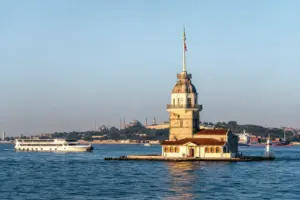 Maiden's Tower – about 1.2 km away (~19 min walk) · typical visit: 1–1.5 hoursOpen daily 09:00–18:00
Main image: AI-generated illustration. It may not show the place exactly as it looks.
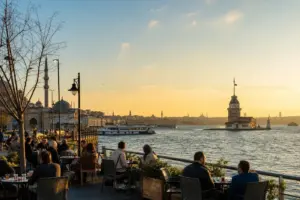 Üsküdar District – about 300 m away (~5 min walk) · typical visit: 3–4 hours (half day minimum)Open 24 hours
Main image: AI-generated illustration. It may not show the place exactly as it looks.
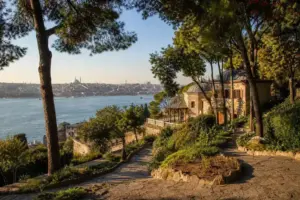 Fethi Pasha Grove – about 950 m away (~16 min walk) · typical visit: 1–2 hoursOpen daily 09:00–18:00
Main image: AI-generated illustration. It may not show the place exactly as it looks.
 Nakkaştepe National Garden – about 1.2 km away (~20 min walk) · typical visit: 2–3 hoursOpen daily 08:00–22:00
Main image: AI-generated illustration. It may not show the place exactly as it looks.
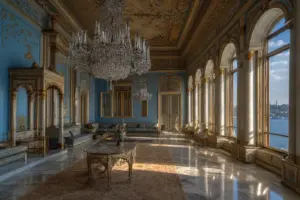 Dolmabahce Palace Harem – about 1.8 km away (~30 min walk) · typical visit: 2–3 hours14 min on foot from Kabataş metro, Open 09:00–17:00, closed Mon
Main image: AI-generated illustration. It may not show the place exactly as it looks.
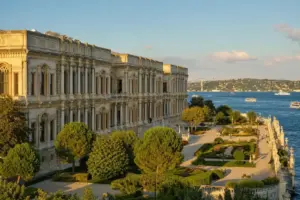 Dolmabahce Palace – about 1.9 km away (~30 min walk) · typical visit: 2–3 hours15 min on foot from Kabataş metro, Open 09:00–18:00, closed Mon
Main image: AI-generated illustration. It may not show the place exactly as it looks.
Restaurants and cafes near Mihrimah Sultan Mosque
 Kanaat Lokantası – about 100 m away (~2 min walk)Open daily 07:00–22:30
Main image: AI-generated illustration. It may not show the place exactly as it looks.
Nightlife near Mihrimah Sultan Mosque
 Tower Pubabout 800 m away (~13 min walk)
Main image: AI-generated illustration. It may not show the place exactly as it looks.
Train stations and river piers near Mihrimah Sultan Mosque
 Üsküdar Ferry Terminalabout 150 m away (~2 min walk)
Main image: AI-generated illustration. It may not show the place exactly as it looks.
 Harem Bus Terminalabout 1.7 km away (~28 min walk)
Main image: AI-generated illustration. It may not show the place exactly as it looks.
Related guides
 Asitane: Ottoman Palace Cuisine Beside the Chora Church
Main image: AI-generated illustration. It may not show the place exactly as it looks.
 Üsküdar and Salacak Walk: Waterfront Views and the Maiden’s Tower
Main image: AI-generated illustration. It may not show the place exactly as it looks.
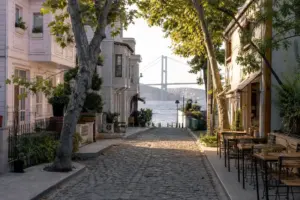 Kuzguncuk: A Quiet Wooden-House Village on the Bosphorus
Main image: AI-generated illustration. It may not show the place exactly as it looks.
 Barto’s Burger Place: Smash Burgers in Çengelköy
Main image: AI-generated illustration. It may not show the place exactly as it looks.
 Acıbadem Altunizade Hospital: JCI-Accredited Private Hospital in Üsküdar
Main image: AI-generated illustration. It may not show the place exactly as it looks.
Browse more: More in Üsküdar · All Landmarks · All Sightseeing
FAQ: Mihrimah Sultan Mosque
Is there a second Mihrimah Sultan Mosque in Istanbul?
Yes. This is the earlier of the two Friday mosques in Istanbul commissioned by Mihrimah Sultan. The first mosque with this name was built in the Asian part (Üsküdar) and the second on the European side. The Edirnekapı mosque, completed in 1570, is larger and has a more prominent dome. They are entirely separate buildings in different neighborhoods.
When is the mosque open to visitors?
As of October 2026, the mosque opens daily at 06:00 and closes at 17:00, though hours may vary seasonally. The mosque closes during prayer times. Check prayer times for your visit date (typically 5 daily prayer slots) and plan accordingly. Fridays see the largest congregations and longer closures around noon.
Is there an entrance fee?
No. Entry is free. Donations to the mosque's maintenance are welcome but not required.
What is the dress code?
Respectful dress is required. Remove shoes before entering the prayer hall. Cover shoulders and knees. Women should cover their hair with a scarf or shawl. Men should wear long pants and a shirt with sleeves. Visitors who arrive in very casual or revealing clothing may be asked to cover up or may be denied entry.
Is photography allowed inside?
Yes, for personal use during visiting hours outside prayer times. Flash photography is not permitted inside the mosque, as it can distract worshippers and damage painted surfaces. Professional photographers should ask permission at the entrance.
Who was Mihrimah Sultan?
Mihrimah Sultan was daughter of Sultan Suleiman the Magnificent and wife of Grand Vizier Rüstem Pasha. She was a prominent and influential figure at the Ottoman court. Mihrimah Sultan's name means 'sun and moon' in Persian.
Why are there so many domes and half-domes in this mosque?
The Mihrimah Sultan is one of Sinan's early mosques, where he made a structural experiment, choosing to flank the main dome on three sides with three half-domes—the first time Sinan used half-domes. This design was innovative for the time and created a unique spatial arrangement in Ottoman mosque architecture.
How long should I plan to spend here?
A basic visit (entering, viewing the interior, and leaving) takes 30–45 minutes. To also explore the courtyard and walk around the exterior, allow 1–1.5 hours. If you want to sit in a nearby café and reflect, add another 30 minutes to an hour.
Istanbul Vibes is a one-person project. A coffee keeps it going
Hotels near Mihrimah Sultan Mosque
- فندقي (150 m) Check prices (affiliate link, opens in a new tab)
- Sabiha Hanım Kız Öğrenci Yurdu (300 m) Check prices (affiliate link, opens in a new tab)
- Üsküdar Sahil Otel (700 m) Check prices (affiliate link, opens in a new tab)
Affiliate link (opens the booking site): we may earn a commission at no extra cost to you.
Restaurants near Mihrimah Sultan Mosque
- Aga Turkish Restaurant (600 m) Google Maps
Distances are straight-line, from OpenStreetMap data.

Take this guide with you
Get a free PDF of this guide to print or read offline: key facts, tips and a map link on a few clean pages.
Report an issue on this page
How we research and update our guides
About this guide: AI assistance and accuracy
This guide is created with the help of AI and is based on official sources where available. Mistakes can still happen. Opening hours, prices, rules and other details are given to the best of our knowledge as of the date shown and can change without notice. It offers general recommendations only, not professional, legal or travel advice. Please confirm important details with the official source before you travel; you are responsible for your own plans and decisions.
* Affiliate link: as an Amazon Associate we earn from qualifying purchases at no extra cost to you.
