

Sütlaç, Turkey’s beloved rice pudding, belongs in any cook’s repertoire of Ottoman comfort food. Whether you want to recreate what you’ve tasted in Istanbul’s pudding shops or simply master a dessert that takes minimal ingredients, this guide walks you through making authentic sütlaç. The most popular version is the simple stovetop pudding, though some prefer the bakery-style baked finish.
This article teaches you how to make Rice Pudding Sütlaç recipe how to make at home. You’ll learn the traditional method, understand why each step matters, and discover what mistakes to avoid. Plan about 45 minutes from start to finish.
Quick answer: Rinse short-grain rice, cook it in water until soft, then simmer in milk with sugar and a touch of cornstarch for thickening. The result is a creamy, comforting pudding best served warm with a sprinkle of cinnamon. Total time: about 45 minutes.
At a Glance
| Type | Desserts & sweets |
|---|---|
| Origin | Rice pudding known as sütlü aş or sütlü pirinç first appeared in medical books in the 15th century. Sütlaç has roots stretching back to the Ottoman Empire, where it was a favored dish in the imperial kitchens of Topkapi Palace. The word sütlaç originates from the Turkish word sut meaning milk, which is the main ingredient. Originally prepared as a medicinal dish for digestive comfort, sütlaç evolved from a practical remedy into an imperial delicacy and eventually became a cherished home dessert across Turkey. |
| Servings | 4 servings |
| Total time | 45 minutes |
| Difficulty | Easy |
History and Story of Rice Pudding (Sütlaç)
It is thought that sütlaç originated from preparing a dessert with milk, sugar, and rice for someone with an upset stomach. This dessert, considered medicinal because of the milk, is called sütlü aş which means milk-based dish. Sütlaç was one of the delicacies in the Ottoman palaces since rice and sugar were once expensive goods. Palace kitchens refined the dessert and contributed to its popularity during the empire. Over time, sütlaç began to find its place in Western kitchens and was first tried in Italy outside of the Ottoman Empire. Italians described sütlaç as riso turchesco, meaning Turkish-style rice. Later, sütlaç began to spread around the world by being served to guests at the wedding of Ercole d’Este, Duke of Ferrara, and Renée of France, daughter of King Louis XII of France.
Ingredients
- ½ cup short-grain rice
- 1 cup water
- 1 litre whole milk
- ½ cup sugar
- 1–2 tablespoons cornstarch or rice flour
- ¼ cup cold milk for dissolving starch
- 1 teaspoon vanilla extract (optional)
How Rice Pudding (Sütlaç) Is Made
Step 1: Rinse the rice
Rinse ½ cup of short-grain rice (such as arborio or baldo) under cold water until the water runs clear. This removes excess starch, which helps keep the pudding creamy rather than gluey. Use short-grain rice, not long-grain, as short grains release starch that naturally thickens the pudding.
Tip: Don't skip the rinsing step, but don't overdo it—you want to keep some starch for body.
Step 2: Cook rice in water
Place the rinsed rice in a pot with 1 cup of water. Bring to a boil over medium heat, then reduce to low heat. Cook, stirring occasionally, until the rice is soft and the water is absorbed, about 10–12 minutes. Watch carefully to prevent sticking to the bottom.
Tip: Stir occasionally to ensure even cooking and prevent the rice from burning.
Step 3: Add milk and simmer
Pour in 1 litre of whole milk and stir well. Bring gently to a simmer over medium-low heat, stirring frequently. Continue simmering for about 10 minutes, stirring often to prevent the milk from scorching on the bottom of the pot.
Tip: Use whole milk for the richest flavor and creamiest texture.
Step 4: Dissolve the thickener
While the pudding simmers, mix 1–2 tablespoons of cornstarch or rice flour with ¼ cup of cold milk in a small bowl, stirring until smooth with no lumps. Cornstarch creates the traditional texture, though some cooks prefer rice flour.
Tip: Make sure there are no lumps before adding to the hot pudding, or the mixture will be grainy.
Step 5: Add sugar and thickener
Stir ½ cup of sugar into the simmering pudding until dissolved. Slowly pour the cornstarch mixture into the pot while stirring constantly to avoid lumps. Continue stirring over low heat for 5–7 minutes until the pudding thickens to a smooth, creamy consistency.
Tip: Keep stirring as you add the starch mixture to distribute it evenly.
Step 6: Finish and serve
Remove from heat and stir in 1 teaspoon of vanilla extract if using. Pour the pudding into serving bowls. Sütlaç can be served warm, at room temperature, or chilled. Finish with a light dusting of ground cinnamon or crushed hazelnuts if desired.
Tip: Cinnamon is the traditional topping and adds warmth to the flavor.
Variants
- Fırın sütlaç (baked rice pudding): After preparing the pudding on the stovetop, pour it into ovenproof bowls or ramekins and place under the broiler for a few minutes to create a caramelized, golden-brown top. This is the signature bakery version served in Istanbul's pudding shops.
- Stovetop sütlaç: The simpler version cooked entirely on the stovetop with no baking step.
- Rose water sütlaç: Some traditional Ottoman recipes add a touch of rose water or orange blossom water for subtle floral notes.
- Regional variations: Different regions of Turkey prepare sütlaç with slight differences, some using more starch, others relying on the rice's natural starch alone.
Common Mistakes to Avoid
- Using long-grain rice instead of short-grain: Long-grain rice won't release enough starch and the pudding will be thin. Always use short or medium-grain varieties like arborio or baldo.
- Over-rinsing the rice: Rinsing too thoroughly removes the starch you need. A thorough but quick rinse is enough.
- Not stirring continuously: If you leave the pudding unattended, the milk scorches on the bottom and spoils the taste. Constant gentle stirring is essential.
- Adding the thickener directly to hot milk without tempering it: Lumps form if cornstarch hits hot liquid. Always dissolve it in cold milk first.
- Using low-fat or skim milk: This creates a thin, bland pudding. Whole milk is traditional and necessary for the creamy texture.
- Cooking at too high a temperature: High heat causes the milk to boil over and the pudding to become grainy. Gentle simmering is the key.
How to Order and Eat It
Sütlaç is typically served in small bowls, either warm or at room temperature. The pudding’s pale cream color contrasts beautifully with a dusting of ground cinnamon on top. Some serve it garnished with crushed hazelnuts, pistachios, or walnuts. In Istanbul’s pudding shops and restaurants, baked sütlaç arrives in a clay ramekin with the caramelized top still warm. The spoon should glide through easily, and you’ll notice the pudding’s distinctive creamy but not-too-thick consistency. It’s eaten slowly, savoring the subtle sweetness and the warmth of milk and vanilla.
To order: Bana bir sütlaç lütfen [bah-nah beer soot-lahch loo-tfen]
Where to Try Rice Pudding (Sütlaç)
 Bayramoğlu Döner Wood-fired döner with fresh lavaş
Main image: AI-generated illustration. It may not show the place exactly as it looks.
 Emirgan Sütiş Turkish breakfast and traditional desserts
Main image: AI-generated illustration. It may not show the place exactly as it looks.
 Pepo's Galata Turkish, Mediterranean
Main image: AI-generated illustration. It may not show the place exactly as it looks.
Istanbul Vibes Tips
- Buy rice specifically labeled as short-grain and check that it's not broken. Whole arborio or baldo rice gives the best results. Grocery stores in Istanbul stock these; choose the one in the simplest packaging without extra coatings.
- For the Istanbul bakery experience at home, divide the finished pudding into small ovenproof bowls and place them under a hot broiler for 2–3 minutes until the surface turns pale golden. Watch closely—it browns fast. This creates the signature crema-like top.
- Make sütlaç ahead: it keeps well refrigerated for 2–3 days. Let it come to room temperature before serving, or reheat gently on the stovetop with a splash of milk to restore creaminess.
- Don't rush the milk-cooking stage. Gentle heat for longer is better than high heat. If the pudding looks thin while cooking, resist the urge to raise the heat—it will thicken as it cools.
- If you can't find cornstarch, rice flour works well too. Some cooks even rely on the rice's natural starch alone, though the pudding will be slightly looser. Turkish grocery shops in Istanbul sell both.
Where to Find Rice Pudding (Sütlaç) in Istanbul
Related guides
 Baklava: How to Make This Ottoman Dessert at Home
Main image: AI-generated illustration. It may not show the place exactly as it looks.
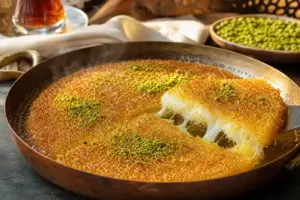 Kunefe: How to Make This Turkish Cheese Dessert at Home
Main image: AI-generated illustration. It may not show the place exactly as it looks.
 Turkish Delight: How to Make Lokum at Home
Main image: AI-generated illustration. It may not show the place exactly as it looks.
 Turkish Coffee: How to Make It, Its History and Ritual
Main image: AI-generated illustration. It may not show the place exactly as it looks.
Browse more: All Food & Drink · All Other
FAQ
What's the difference between sütlaç and muhallebi?
Both are creamy milk desserts, but muhallebi is thickened with ground rice or rice flour from the start, while sütlaç is made with whole rice grains that are cooked and then thickened with cornstarch or rice flour. Sütlaç has a more pudding-like texture; muhallebi is smoother and more mousse-like.
Can I make sütlaç without cornstarch?
Yes. While sütlaç is usually thickened by adding starch, some are happy with only the naturally thickening from the rice itself. The pudding will be slightly thinner, but still creamy from the rice starch. Some cooks consider this more authentic.
Is sütlaç served hot or cold?
Both. Sütlaç is delicious warm straight from the pot, at room temperature, or chilled from the refrigerator. In Istanbul, bakery sütlaç is usually warm with the caramelized top still hot, while home versions are often served at room temperature.
What type of rice should I use?
Use short or medium-grain rice like arborio, baldo, or calrose. These varieties release starch as they cook, creating the characteristic creamy pudding. Long-grain rice won't work—it stays firm and doesn't thicken the milk.
Does sütlaç contain gluten?
Not typically. Rice and cornstarch are naturally gluten-free. However, if using rice flour as a thickener, check the label to ensure it's certified gluten-free. Some commercial versions may have cross-contamination risks.
How long does homemade sütlaç keep?
Covered and refrigerated, sütlaç keeps for 2–3 days. You can reheat it gently on the stovetop with a splash of milk. Freezing is not recommended as the texture becomes grainy when thawed.
Why did my sütlaç turn out thin and watery?
This usually happens if you didn't cook it long enough, used too little rice, skipped the cornstarch, or used long-grain rice instead of short-grain. Make sure you're stirring enough to help the rice release its starch, and use the full amount of short-grain rice in the recipe.
Can I add other flavors like chocolate or fruit?
Traditional sütlaç is plain with only vanilla, cinnamon, or rose water. Adding chocolate or fruit changes the character of the dish. For an authentic experience, stick to the simple version. You can always add toppings after serving.
Istanbul Vibes is a one-person project. A coffee keeps it going

Take this guide with you
Get a free PDF of this guide to print or read offline: key facts, tips and a map link on a few clean pages.
Report an issue on this page
How we research and update our guides
About this guide: AI assistance and accuracy
This guide is created with the help of AI and is based on official sources where available. Mistakes can still happen. Opening hours, prices, rules and other details are given to the best of our knowledge as of the date shown and can change without notice. It offers general recommendations only, not professional, legal or travel advice. Please confirm important details with the official source before you travel; you are responsible for your own plans and decisions.
* Affiliate link: as an Amazon Associate we earn from qualifying purchases at no extra cost to you.
