
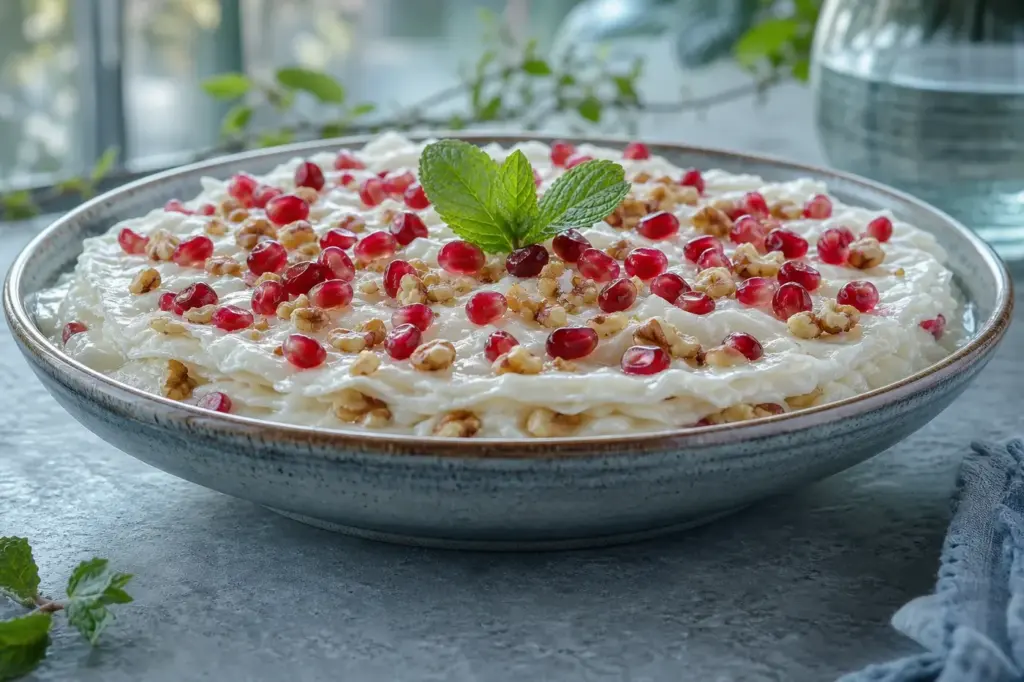
Güllaç is one of Turkey’s most elegant desserts, and learning how to make güllaç at home lets you create this refined dish yourself. The preparation is straightforward: you layer paper-thin starch sheets with crushed nuts, pour warm sweetened milk over them, and refrigerate until the sheets absorb the milk completely and set. The dessert is chilled and served cold, making it refreshing and light.
This guide walks you through ingredient selection, assembly, and timing so you can replicate the silky-textured, delicately flavoured dessert that has graced Turkish tables since the Ottoman Empire. No baking skill is required—just attention to the order of layers and the temperature of the milk.
Quick answer: Prepare a sweetened milk mixture with rose water, layer chilled güllaç sheets with chopped nuts in a tray, pour the milk over them, and refrigerate for 1–2 hours until set. Total time: 15 minutes active, plus 1–2 hours chilling.
At a Glance
| Type | Desserts & sweets |
|---|---|
| Origin | Ottoman Empire, 15th century, palace kitchens |
| Servings | 2–4 servings |
| Total time | 15 minutes active; 1–2 hours chilling |
| Difficulty | Easy |
History and Story of Güllaç (Güllaç)
The earliest recipes for güllaç date back to the 13th century. At that time, güllaç leaves were made by cooking a watery dough of wheat starch and water or beaten egg white on a griddle. During the Ottoman period, it gained prominence after entering the imperial kitchen in 1489. Ali Usta from Kastamonu introduced güllaç to the palace by combining its leaves with sweetened milk during a visit by palace officials and was later appointed head palace confectioner. It is consumed especially during Ramadan. Güllaç dough is now prepared with corn starch and wheat flour, although originally it was made only with wheat starch.
Ingredients
- 10–12 güllaç sheets (commercially produced, found in Turkish grocery stores)
- 1 litre whole milk
- 150–200 g caster sugar
- 100–150 g walnuts, pistachios or hazelnuts, roughly chopped
- 1 teaspoon rose water (optional)
- Pomegranate seeds or fresh fruit for garnish (optional)
- A shallow baking tray or serving dish
How Güllaç (Güllaç) Is Made
Step 1: Prepare the milk mixture
In a large saucepan, combine the milk and sugar over medium heat. Stir frequently until the sugar dissolves completely, and the milk is heated but not boiling. Add the rose water if using, then set aside to cool slightly. The milk should feel warm to touch, not hot—this prevents the starch sheets from cooking too quickly and becoming mushy.
Tip: Be sparing with the rose water—it can become overpowering fast, so use only the amount listed unless you want an overwhelming floral flavour.
Step 2: Arrange the first layer of sheets
Place a güllaç sheet in a serving tray, pour a ladle of warm milk over it, allowing it to soften and absorb the milk. Place it to fit; it will wrinkle and expand. Work carefully—the sheets are delicate, like wet tissue paper.
Tip: If your tray is not large enough for whole sheets, you can cut them into smaller pieces without affecting the final result.
Step 3: Add first layer of nuts
Spread the sliced almonds over the güllaç. You can also use chopped walnuts or pistachios. Repeat this process: soak another güllaç sheet in milk and lay it on top, then add another layer of nuts. Continue for about half your total amount of sheets.
Tip: Lightly toast your nuts beforehand for a deeper flavour if you prefer—this step is optional but recommended.
Step 4: Add remaining layers
Finish off with the remaining sheets and pour more milk over them. Some unabsorbed milk is acceptable. The top layers should be generously coated with milk so the sheets can absorb it during refrigeration.
Tip: Don't aim for a soupy dessert—use just enough milk so the sheets are covered and can soak evenly without pooling liquid.
Step 5: Chill and set
Keep the dessert you prepared in the refrigerator for 2 hours. This allows the sheets to fully absorb the milk and the dessert to firm up enough to cut cleanly into pieces.
Tip: You can prepare güllaç several hours in advance or even the day before. It keeps well covered in the refrigerator.
Step 6: Garnish and serve
Divide it into serving portions and garnish with strawberries, mint leaves, pistachios, and walnut powder. Pomegranate seeds are also traditional. Serve chilled directly from the refrigerator.
Tip: Cut güllaç into squares or rectangles with a sharp, wet knife—this helps the pieces hold their shape.
Variants
- Güllaç with clotted cream layered between sheets, as served in Ottoman palace kitchens
- Rolled güllaç bundles (muska shapes), where sheets are wrapped around the filling instead of layered flat
- Fried güllaç, where sheets are dipped in egg and fried before being soaked in syrup (a less common historical variation)
- Vegan güllaç, made with plant-based milk instead of dairy milk
Common Mistakes to Avoid
- Using milk that is too hot. If the milk is boiling or too hot when it touches the sheets, the starch will cook and the dessert becomes gluey and mushy instead of silky. Warm milk—comfortably warm to your finger—is correct.
- Oversaturating the dessert. Too much milk makes güllaç soggy and formless. Use only enough so the sheets are moistened and can absorb it during refrigeration; some milk should remain unabsorbed after chilling.
- Not allowing enough chilling time. Güllaç must chill for at least 1–2 hours so the sheets absorb the milk and the dessert sets firmly enough to cut and serve. Serving it while warm or barely cooled results in layers that don't hold together.
- Using rose water too liberally. Rose water's flavour is strong; too much overwhelms the delicate dessert. Start with 1 teaspoon and taste; you can always add more.
- Handling the sheets roughly. Güllaç sheets are extremely fragile. Dip, lift, and lay them gently and quickly. Don't stir or agitate the layers once assembled.
- Filling with sheets that are broken or damaged. Check each sheet before layering; torn edges won't absorb milk properly and can create weak spots in the final dessert.
How to Order and Eat It
Güllaç is eaten with a spoon, chilled directly from the refrigerator. The sheets are so soft after soaking that they break apart easily on the spoon. Each spoonful should contain pieces of sheet, milk, and nuts together. It is typically served as a dessert after the main meal, and pairs well with Turkish tea or coffee, though it can also be served as part of an iftar (meal to break the daily fast during Ramadan).
To order: Bir tabak güllaç, lütfen [Bir tabak güllaç, lütfen]
Istanbul Vibes Tips
- Güllaç contains walnuts between the layers that are put in milk. Vary the nut types—use pistachios for colour and delicate flavour, hazelnuts for richness, or walnuts for tradition. Mixing nuts creates complexity.
- The name of the dessert comes from the Turkish word "gül," which means "rose," as it is traditionally garnished with rose petals. If you can find edible rose petals, scatter them on top just before serving for visual elegance and authentic presentation.
- The glossy side of each sheet should face upward so it remains visible and attractive in the finished dessert. Lay sheets smooth-side up for better presentation.
- More than 80% of güllaç is consumed during Ramadan. If you cannot find fresh güllaç sheets outside Ramadan, check frozen sections of Turkish stores or order online; many grocers stock them year-round in freezer form.
- Do not use ultra-high-heat cooking or microwave to warm the milk. Gentle, direct heat over medium or medium-low preserves the delicate texture you need. The milk should never boil.
- Güllaç tastes best when freshly made and chilled. Prepare it no more than 24 hours ahead to keep the sheets tender and the milk flavour bright; after that it can become over-saturated.
Where to Find Güllaç (Güllaç) in Istanbul
Related guides
 Turkish Tea: How to Brew and Serve It Like Istanbul Locals
Main image: AI-generated illustration. It may not show the place exactly as it looks.
 Turkish Coffee: How to Make It, Its History and Ritual
Main image: AI-generated illustration. It may not show the place exactly as it looks.
 Baklava: How to Make This Ottoman Dessert at Home
Main image: AI-generated illustration. It may not show the place exactly as it looks.
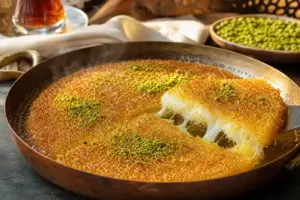 Kunefe: How to Make This Turkish Cheese Dessert at Home
Main image: AI-generated illustration. It may not show the place exactly as it looks.
Browse more: All Food & Drink · All Other
FAQ
Can I make güllaç without rose water?
The dessert may contain rose water or not, it's always optional, however it was used in palace kitchen due to its refreshing effect and sweet flavour. Yes—you can omit it entirely or replace it with orange blossom water, vanilla, or a pinch of ground mastic for a different but equally authentic flavour.
Where can I buy güllaç sheets?
Güllaç sheets are sold in Turkish grocery stores, usually in the dry goods or freezer section. They are also available online from specialty food retailers. Each package typically contains 10–12 sheets. Always check the expiry date and storage instructions on the package.
Can I prepare güllaç in advance?
Yes—güllaç can be made up to 24 hours ahead and kept covered in the refrigerator. It is best served chilled, so prepare it the morning of serving if possible. Do not freeze it, as freezing damages the delicate sheet texture.
Is güllaç suitable for vegans?
Traditional güllaç uses dairy milk, but you can substitute plant-based milk (soy, oat or almond milk work well) to make a vegan version. The preparation method remains the same, and the result is equally delicious.
Why is güllaç especially popular during Ramadan?
It is said that the sultan's cooks were tasked with creating a dessert that was light and refreshing, yet satisfying enough to break the daylong fast during Ramadan. Güllaç is easy to digest after fasting, naturally sweet, and refreshing.
What is the difference between güllaç and baklava?
Güllaç is considered by some as being the origin of baklava. The similarities between the two desserts are many, such as the use of thin layers of dough. The key difference: güllaç uses starch sheets soaked in milk; baklava uses phyllo dough soaked in syrup.
Can I use store-bought phyllo dough instead of güllaç sheets?
No—phyllo dough is much thicker and will not absorb milk the same way. Güllaç sheets are specially made from cornstarch and wheat starch to be paper-thin and absorbent. Using phyllo will give you a different texture and result.
How do I know if the güllaç is ready to serve?
After 1–2 hours of chilling, the sheets should be soft and have absorbed most of the milk. The dessert should hold its shape when cut—it should not be runny or soupy. If it is still very wet, leave it in the refrigerator longer. If it seems too dry, you can add a few more spoonfuls of cold milk.
Istanbul Vibes is a one-person project. A coffee keeps it going
Looking for more on this? How to navigate Moscow offline with maps and translation apps (Moscow Vibes)

Take this guide with you
Get a free PDF of this guide to print or read offline: key facts, tips and a map link on a few clean pages.
Report an issue on this page
How we research and update our guides
About this guide: AI assistance and accuracy
This guide is created with the help of AI and is based on official sources where available. Mistakes can still happen. Opening hours, prices, rules and other details are given to the best of our knowledge as of the date shown and can change without notice. It offers general recommendations only, not professional, legal or travel advice. Please confirm important details with the official source before you travel; you are responsible for your own plans and decisions.
* Affiliate link: as an Amazon Associate we earn from qualifying purchases at no extra cost to you.
