

Menengiç coffee is not coffee, yet it is served in the same small cups, in the same unhurried ritual as Turkish coffee has been since the 1500s. If you want to try how to make menengiç coffee at home, this guide shows you the simple technique that villagers in southeastern Turkey have used for generations.
Unlike Turkish coffee, menengiç coffee contains no caffeine and no coffee beans. It is brewed from ground roasted berries of the terebinth tree, a wild relative of the pistachio, and is simmered in milk or water until a light foam rises. The result is smooth, nutty and slightly sweet. The recommended way is to brew it slowly with milk in a small cezve (Turkish coffee pot), watching for the foam.
Quick answer: Pour cold milk into a cezve, add ground menengiç paste (about 1 heaped teaspoon per cup) and optional sugar, stir well, then heat slowly over low heat until foam rises to the surface. Pour into small cups with the foam on top. Total time: 5–10 minutes.
At a Glance
| Type | Drinks |
|---|---|
| Origin | Southeast Anatolia, especially Gaziantep. Archaeological evidence from Göbekli Tepe, a Neolithic settlement about 12,000 years old and two hours east of Gaziantep, includes wild pistachio remains and thousands of grinding stones, suggesting that people there may have crushed wild pistachios into pastes similar to menengiç sold in markets today. |
| Servings | 1–2 servings per batch |
| Total time | 5–10 minutes |
| Difficulty | Easy |
History and Story of Menengiç Coffee (Menengiç Kahvesi)
Menengiç is the Turkish name for the terebinth tree, a wild relative of the pistachio that grows across the Mediterranean and Southeast Anatolia. Every autumn its small branches hang heavy with pea-sized fruits, which villagers gather, dry in the sun, roast until dark, and grind into either powder or a thick oily paste. The roasted berries have long been used as a coffee-like drink in southeastern Turkey, especially around Gaziantep, Adıyaman and Diyarbakır. Gaziantep registered menengiç as a geographically indicated product in Turkey in 2020, and in 2024 it received EU geographical indication status as well. The name comes from the ritual—the same small cezve, the same small cups, the same unhurried sipping that has defined Turkish coffee since coffee reached Istanbul in the 1500s.
Ingredients
- 250 ml whole milk per serving
- 1–2 heaped teaspoons ground menengiç paste or powder per cup
- 1–2 teaspoons sugar, optional
- Small cezve (Turkish coffee pot) or saucepan
How Menengiç Coffee (Menengiç Kahvesi) Is Made
Step 1: Measure the milk
Pour cold milk into a small saucepan or cezve—about one coffee cup (250 ml) per serving. Milk gives the drink a creamy texture; water is lighter but also works.
Tip: Use whole milk for the richest, creamiest result.
Step 2: Add the menengiç and sugar
Add menengiç paste or powder (one heaped teaspoon per cup) and optional sugar to taste. Stir gently to mix the menengiç thoroughly with the milk.
Tip: Menengiç is naturally mildly sweet, so you may not need added sugar.
Step 3: Heat slowly without boiling
Place the pot over low or medium-low heat. As the mixture warms, watch the surface for foam to form. Remove the pot from the heat as soon as the foam rises—avoid boiling to prevent the milk from curdling or spilling over.
Tip: Keep the heat low and watch constantly so the foam does not overflow.
Step 4: Wait before pouring
Let the mixture rest for about a minute after removing from the heat before pouring. This allows the ingredients to settle slightly.
Tip: This brief rest gives you better foam for serving.
Step 5: Pour with the foam
Pour into small coffee cups, spooning the foam on top, and serve hot.
Tip: Serve with a small glass of cold water on the side as is traditional.
Variants
- Made with water instead of milk: produces a lighter, thinner drink, sometimes preferred in warm weather.
- Mixed with regular Turkish coffee: adds coffee flavor and a touch of caffeine while keeping some of the nutty menengiç character.
- With cardamom or cinnamon: a pinch of ground spice sprinkled on top adds warmth and aroma.
Common Mistakes to Avoid
- Boiling too hard: Overheating causes the milk to curdle and the pot to overflow, ruining the drink. Heat slowly over low heat and remove as soon as foam appears.
- Not stirring at the start: If menengiç paste is not mixed well with cold milk before heating, it clumps and does not dissolve smoothly.
- Skipping the initial stir: The paste will not disperse evenly in the liquid unless thoroughly stirred before heating.
- Using water instead of milk without realizing the difference: Water makes a thinner, lighter drink. Milk creates the signature creamy body and rich taste.
How to Order and Eat It
Menengiç coffee tastes nutty, resinous and slightly sweet, with a thick, creamy body and light foam. It is served in small cups, often with a glass of water on the side. Sip slowly and warm, as you would Turkish coffee. It is traditionally served as a gesture of hospitality, often alongside Turkish delight or dried fruits. The drink is meant to be enjoyed unhurried, a moment to pause and settle.
To order: Bana bir fincan menengiç kahvesi, lütfen [Bana bir fincan menengiç kahvesi lütfen]
Istanbul Vibes Tips
- Buy it ready-ground: Menengiç is sold as a paste or ground powder in markets and cafés across Turkey. You do not need to roast and grind raw terebinth berries yourself; the paste is widely available and much easier.
- Cold milk first: Always start with cold milk, then add the menengiç and stir. Trying to dissolve menengiç in hot milk creates lumps.
- Watch the foam: The foam rising to the surface is your signal to stop heating. Once it appears, remove from the heat immediately or it will spill over.
- Use a small cezve: Tradition brews it in a cezve, simmered low until the surface foams. A small pot (around 250–300 ml capacity) gives you better control than a large one.
- The drink is naturally caffeine-free, so you can enjoy it at any time of day without worrying about staying awake at night.
Where to Find Menengiç Coffee (Menengiç Kahvesi) in Istanbul
Related guides
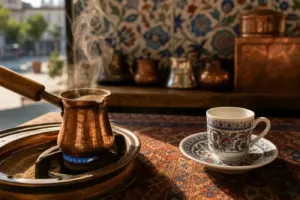 Turkish Coffee: How to Make It, Its History and Ritual
Main image: AI-generated illustration. It may not show the place exactly as it looks.
 Ayran: How to make Turkish yogurt drink at home
Main image: AI-generated illustration. It may not show the place exactly as it looks.
 Rakı: How to Drink Turkey’s National Spirit in Istanbul
Main image: AI-generated illustration. It may not show the place exactly as it looks.
 Turkish Tea: How to Brew and Serve It Like Istanbul Locals
Main image: AI-generated illustration. It may not show the place exactly as it looks.
Browse more: All Food & Drink · All Other
FAQ
Is menengiç coffee actually coffee?
No. Menengiç coffee is made with completely different beans, not coffee beans at all. It is made from the beans of a Pistacia terebinthus tree, a wild pistachio tree native to southeastern Turkey. There is no coffee in it—no beans, no blend, no caffeine.
Does it contain caffeine?
It is a caffeine-free alternative to traditional Turkish coffee. This makes it suitable for evening drinking or for anyone sensitive to caffeine.
What does it taste like?
It tastes nutty, resinous and slightly sweet, with a thick, creamy body and light foam. Expect a nutty, roasty cup with a faint pine edge—closer to dark-roasted pistachio than to actual coffee.
Can I make it with water instead of milk?
Yes, you can make it with water as well as milk. Water produces a lighter drink; milk creates a creamier texture and richer flavor.
Where does menengiç coffee come from?
The heartland is Southeast Anatolia. Gaziantep—a UNESCO Creative City of Gastronomy—treats menengiç coffee as civic property, poured after long meals as the table winds down.
Is it safe for people with nut allergies?
Since menengiç coffee is made directly from pistachio seeds, individuals with nut allergies should avoid consuming it to prevent potential allergic reactions. It typically contains tree nuts.
Can I buy menengiç coffee ready-made in Istanbul?
Some coffee shops in Istanbul, such as Okkalı Kahve in Kadıköy neighborhood, offer menengiç on their menu. You can also buy ground menengiç paste in Turkish grocery shops and prepare it at home.
How much menengiç should I use?
In traditional recipes, approximately one heaped teaspoon of menengiç per person is a common measure. Adjust to taste—more for a richer drink, less for a lighter one.
Istanbul Vibes is a one-person project. A coffee keeps it going
Looking for more on this? How to navigate Moscow offline with maps and translation apps (Moscow Vibes)

Take this guide with you
Get a free PDF of this guide to print or read offline: key facts, tips and a map link on a few clean pages.
Report an issue on this page
How we research and update our guides
About this guide: AI assistance and accuracy
This guide is created with the help of AI and is based on official sources where available. Mistakes can still happen. Opening hours, prices, rules and other details are given to the best of our knowledge as of the date shown and can change without notice. It offers general recommendations only, not professional, legal or travel advice. Please confirm important details with the official source before you travel; you are responsible for your own plans and decisions.
* Affiliate link: as an Amazon Associate we earn from qualifying purchases at no extra cost to you.
